Artwork
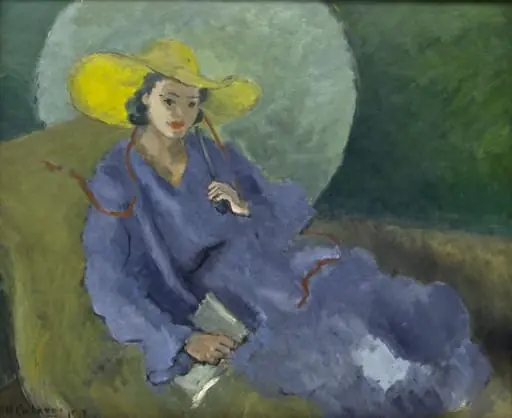
Femeie în albastru pe canapea
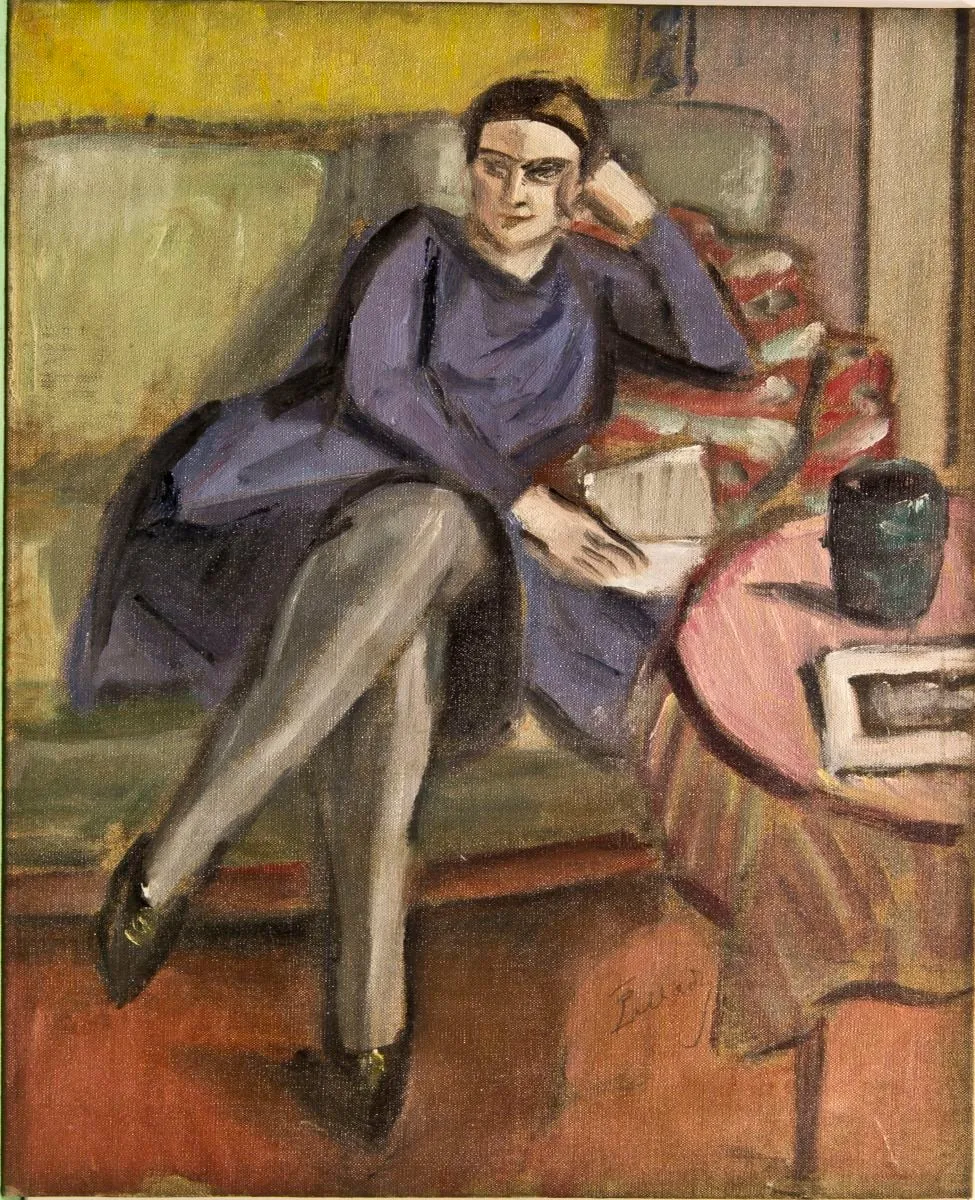
Femeie în albastru pe canapea is an unspecified painting by Theodor Pallady. It is held in the collection of the National Museum of Art of Romania. This painting depicts a woman seated on a couch, rendered with loose, textured brushwork that emphasizes motion over precision.
About this work
Overview
This painting depicts a woman seated on a couch, rendered with loose, textured brushwork that emphasizes motion over precision. The palette is restrained—dominated by deep blue and muted grays—with soft blurring that diffuses edges and lends the scene a quiet intimacy. The immediacy of the brushstrokes suggests a spontaneous observation, capturing a private moment rather than a formal pose.
Subject & Meaning
The woman, absorbed in reading, appears withdrawn yet composed. Her crossed legs and resting head convey stillness, while the book in her hand implies inner thought. The absence of facial detail invites interpretation, shifting focus from identity to mood. The setting, sparse and unadorned, reinforces a sense of solitude, suggesting domestic quietude rather than narrative drama.
Technique & Style
The blurred contours and muted contrasts soften the image, aligning with a mode of painting that prioritizes atmosphere over clarity.
Paint is applied thickly in places, creating visible texture and a sense of physical presence. Brushstrokes are energetic but controlled, avoiding fine detail in favor of suggestive forms. The blurred contours and muted contrasts soften the image, aligning with a mode of painting that prioritizes atmosphere over clarity. This approach aligns with early modernist tendencies to convey emotion through gesture and materiality.
History & Provenance
The painting’s origins are undocumented in public records, and no known exhibition history or collector lineage has been established. It is attributed to an artist working in the early 20th century, likely influenced by post-impressionist and expressionist currents. Its informal character suggests it may have been a private study rather than a commissioned work.
Context
Created during a period when artists increasingly turned to intimate, everyday scenes, the work reflects a broader shift away from academic idealism. Domestic interiors and unposed figures became subjects of artistic interest, valued for their authenticity. The painting’s lack of ornamentation and emphasis on tactile paint echo contemporaneous experiments in France and Northern Europe.
Legacy
Though not widely exhibited, the painting exemplifies a quiet strand of modernist portraiture that favored emotional resonance over formal perfection. Its use of impasto and blurred form anticipates later developments in expressive realism. It remains a modest but resonant example of how ordinary moments could be elevated through material sensitivity and compositional restraint.
Artist & collection
Artist
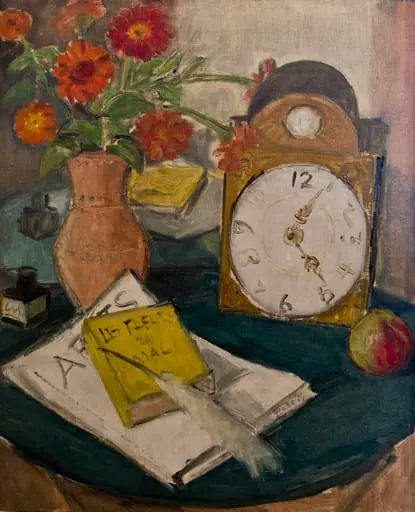
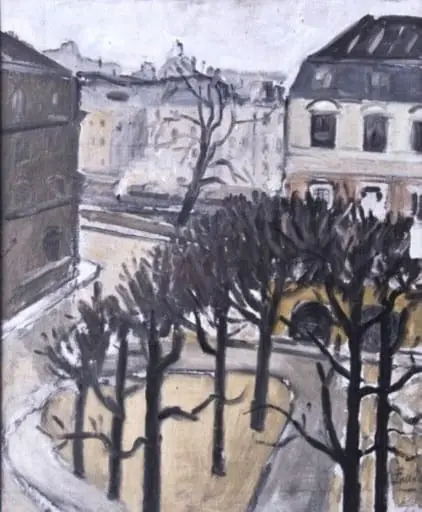
Theodor Pallady made still lifes and interiors in early 20th-century Bucharest. His Place Dauphine shows a quiet Parisian square, while Natură moartă (Ulcică cu flori și chibrituri) piles everyday objects on a table.…