Artwork
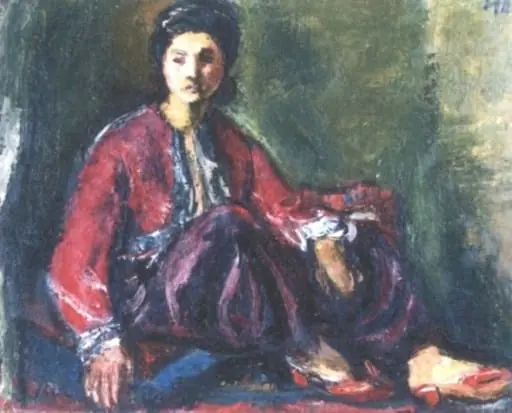
Odaliscă așezată
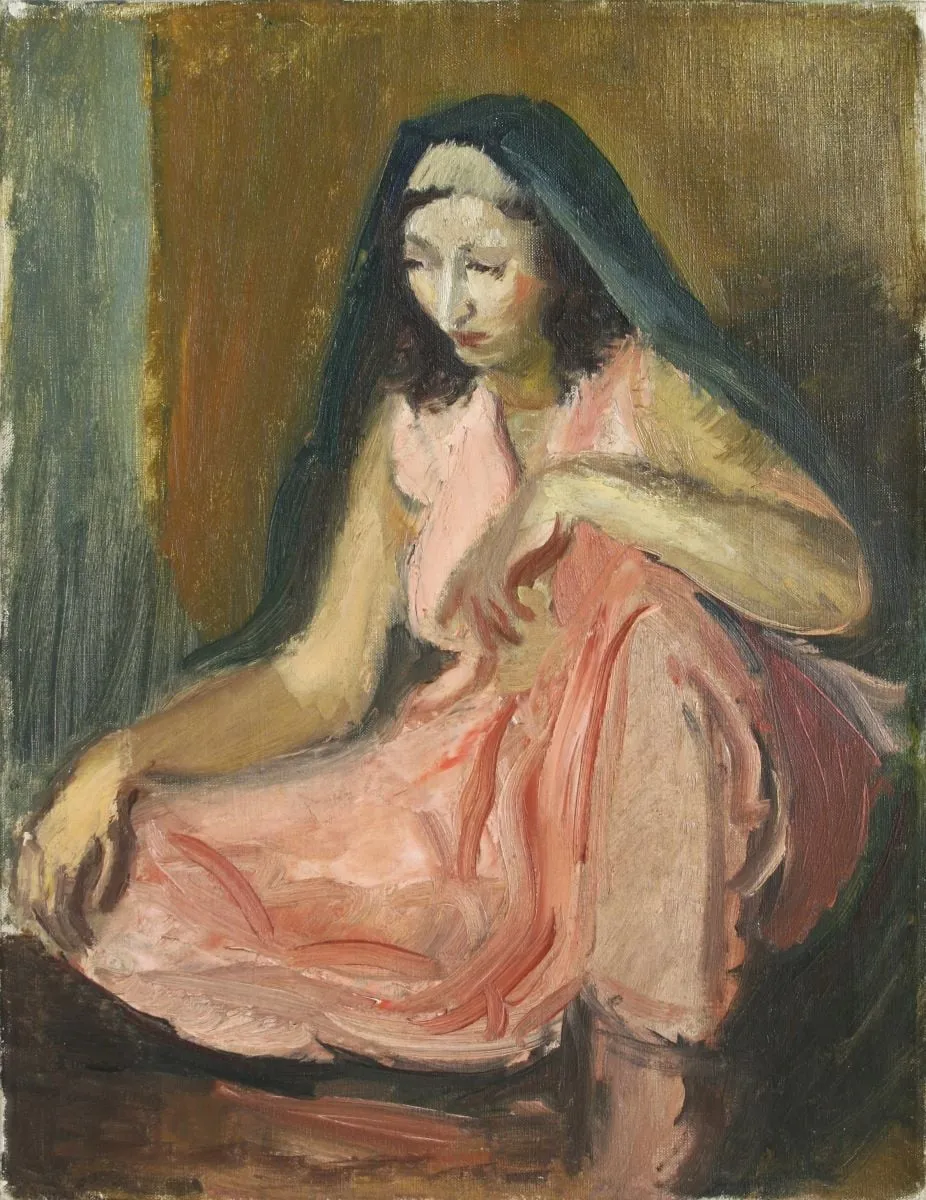
Odaliscă așezată is a print by Iosif Iser. It dates from 1949 and is held in the collection of the Gavrilă Simion Eco-Museum Research Institute Tulcea - Art Museum.
About this work
Overview
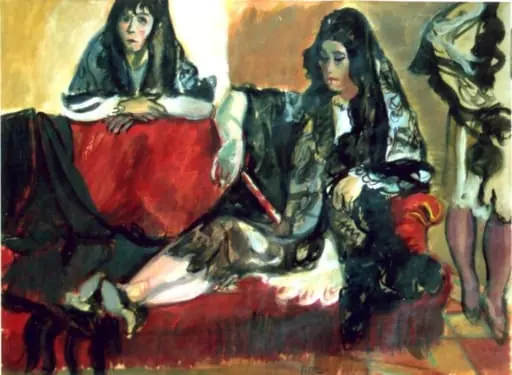
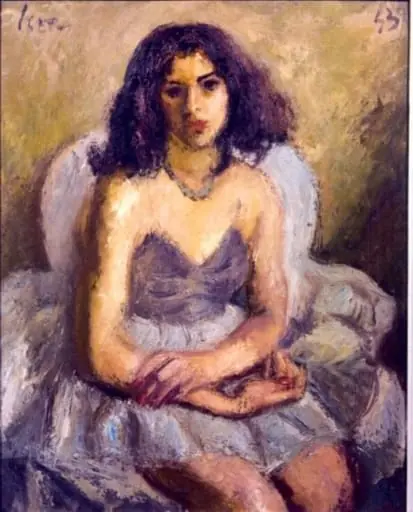
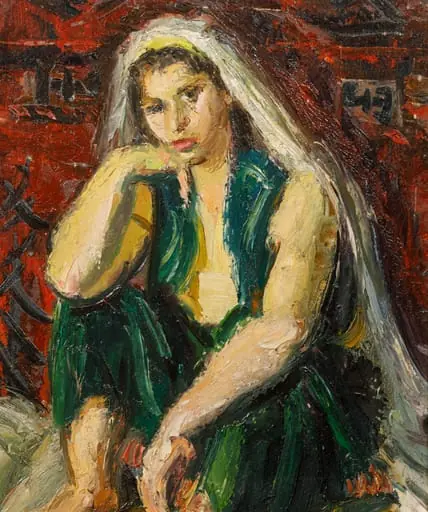
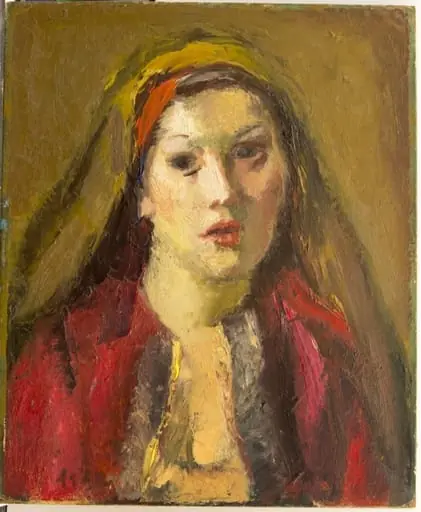
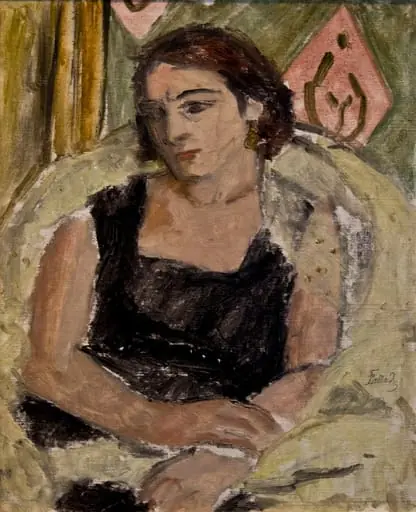
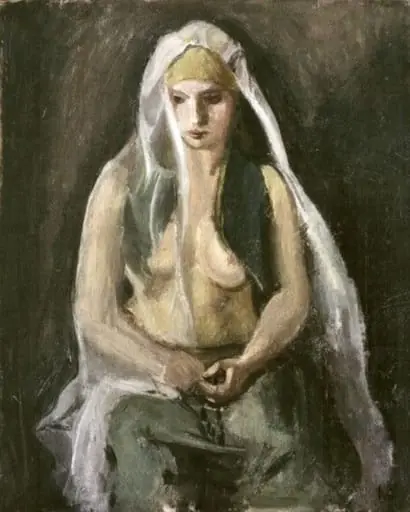
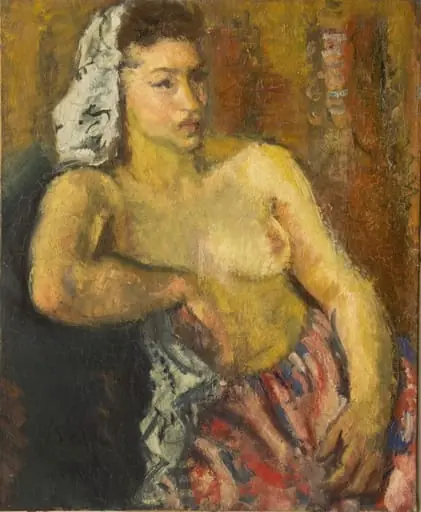
Created around 1949 by Iosif Iser, this painting is titled Odaliscă așezată or Femeie așezată. It is part of the collection at the Museum of Ethnography. The work presents a solitary female figure in a seated posture, rendered with restrained color and careful composition. Its quiet demeanor and intimate scale distinguish it from more dramatic portrayals of the period.
Subject & Meaning
The subject is a woman dressed in a pink gown, her head covered, seated with composed stillness. Her right hand rests on her knee; her left arm curves gently near her chest, suggesting introspection. The pose, combined with the modest attire, evokes a sense of private dignity rather than theatricality. The image avoids narrative or symbolic overload, focusing instead on presence and quietude.
Technique & Style
Iser employs soft, blended brushwork to define form and fabric, avoiding sharp contours. The palette is muted, dominated by warm pinks, earthy browns, and muted greens that unify the figure and background. Light falls evenly, eliminating strong shadows, which enhances the sense of calm. The composition centers the figure, isolating her within a shallow, ambiguous space.
History & Provenance
The painting was completed near the end of Iser’s career, during a period when Romanian artists navigated shifting cultural policies. It entered the Museum of Ethnography’s collection in the mid-20th century, likely through direct acquisition or donation. Its preservation there reflects institutional interest in domestic, non-monumental portrayals of everyday life.
Context
While official art emphasized collective labor and heroism, Iser’s focus on individual stillness and personal attire offers a quieter counterpoint.
Painted in postwar Romania, the work exists alongside state-promoted socialist realism but diverges in tone. While official art emphasized collective labor and heroism, Iser’s focus on individual stillness and personal attire offers a quieter counterpoint. The subject’s attire and posture may reference regional dress, yet the painting resists ethnographic categorization, favoring psychological nuance.
Legacy
Though not widely exhibited, the painting remains a quiet example of Iser’s later style—subdued, introspective, and formally controlled. It contributes to understanding how Romanian modernists maintained personal expression under political constraints. Its presence in an ethnographic museum underscores its ambiguous position between art and cultural documentation.
Artist & collection

Museum
Gavrilă Simion Eco-Museum Research Institute Tulcea - Art Museum
Continue through works from the same source collection.