Artwork
Nud de turcoaică
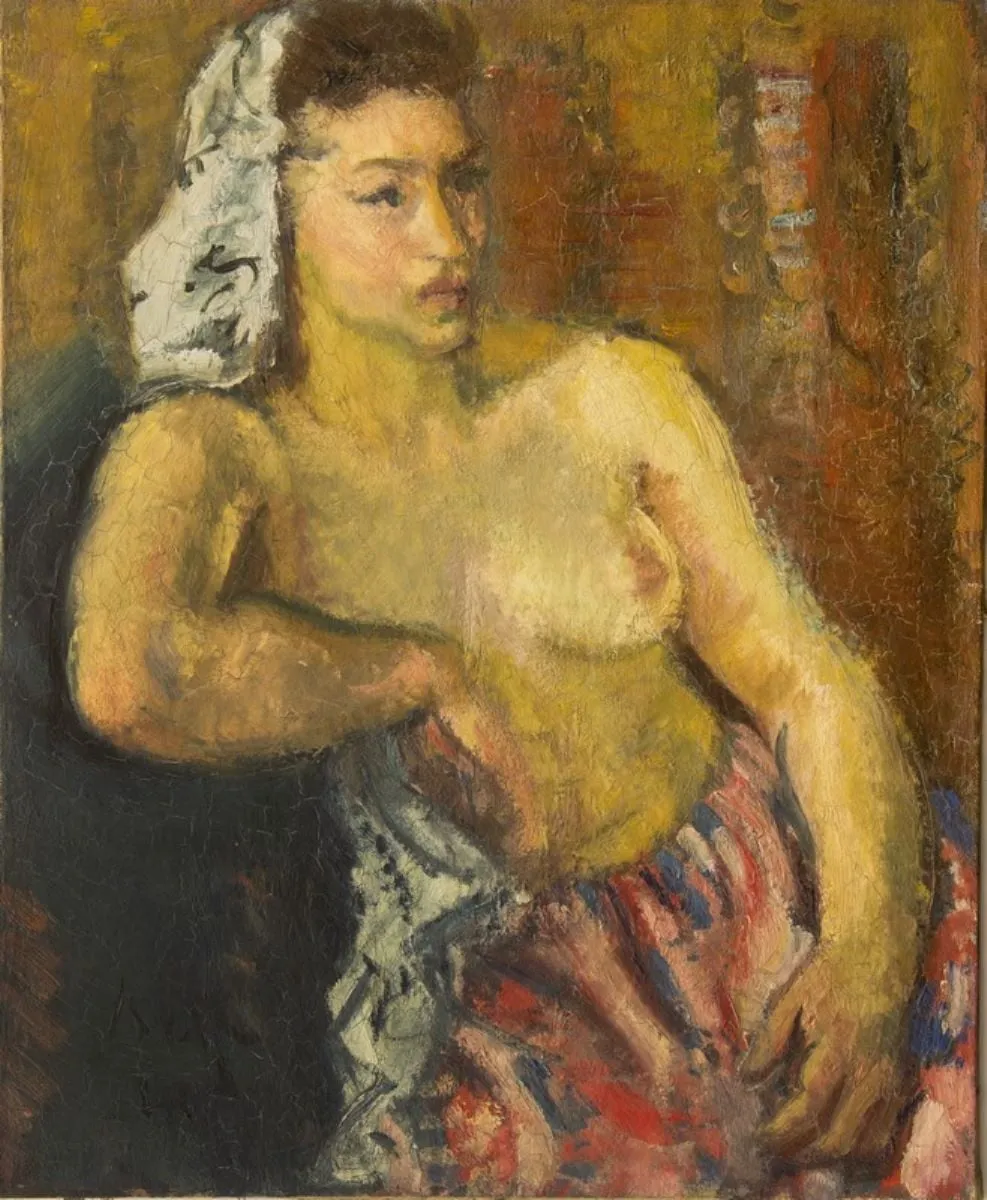
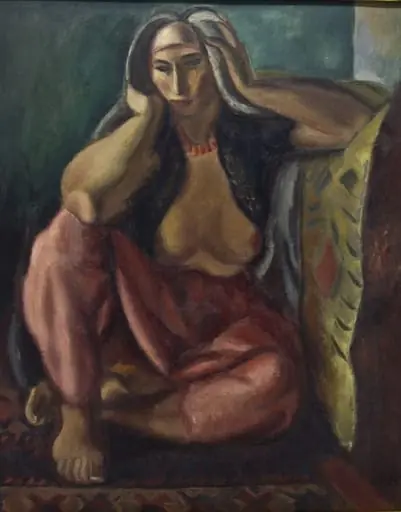
Nud de turcoaică is a print by Iosif Iser. It dates from 1929 and is held in the collection of the National Museum of Art of Romania.
About this work
Overview
The background is rendered in soft, warm earth tones, creating a restrained atmosphere that draws focus to the figure’s stillness and the texture of the fabric.
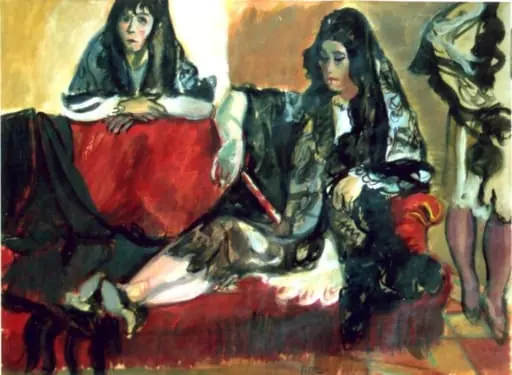
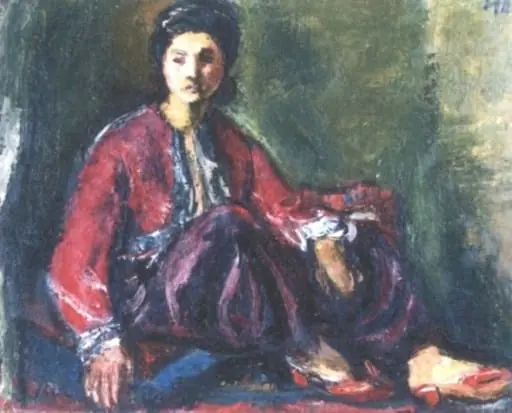
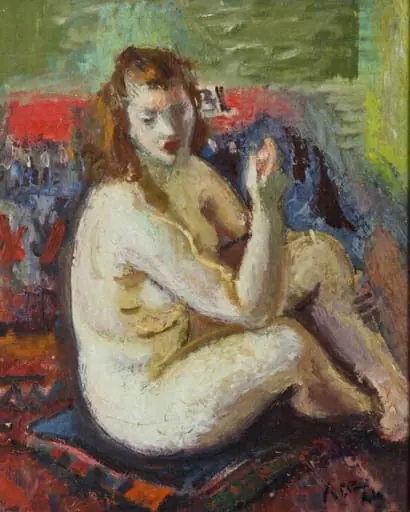
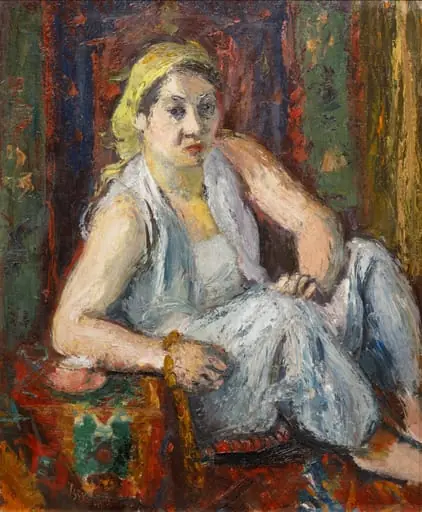
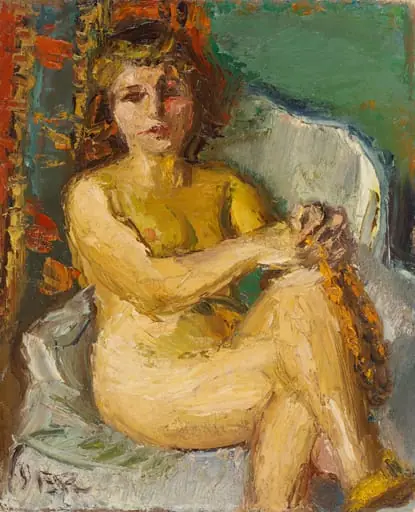
Nud de turcoaică, painted around 1929 by Iosif Iser, is a modestly scaled figure study depicting a woman in a quiet, introspective pose. The composition centers on her bare upper torso, contrasted with a draped, patterned textile that wraps her lower body. The background is rendered in soft, warm earth tones, creating a restrained atmosphere that draws focus to the figure’s stillness and the texture of the fabric.
Subject & Meaning
The subject is a woman of unspecified identity, presented without narrative context or symbolic embellishment. Her neutral gaze and relaxed posture suggest contemplation rather than performance. The title, referencing a Turkish-style garment, hints at cultural associations but does not impose a specific story. The work emphasizes presence over symbolism, inviting observation of form and quiet dignity rather than interpretation.
Technique & Style
Iser employs a muted palette with subtle tonal variations, allowing the vibrant textile to serve as the sole chromatic accent. Brushwork is deliberate but not overly detailed, favoring smooth transitions and soft edges that enhance the figure’s serenity. The rendering of skin and fabric shows a sensitivity to light and texture, reflecting an interest in tactile realism without academic idealization.
History & Provenance
The painting was created during Iser’s mature period, following his involvement with Romanian modernist circles in the 1920s. It likely remained in private hands or within artistic networks in Romania, as no major public acquisition or exhibition history is widely documented. Its survival reflects its status as a personal, rather than public, artistic statement.
Context
In late 1920s Romania, artists were navigating between traditional academic norms and emerging modernist tendencies. Iser’s work, including this piece, reflects a quiet departure from grand historical themes toward intimate, contemplative subjects. The focus on the nude, rendered without eroticism or mythological framing, aligns with broader European trends toward psychological realism in figurative art.
Legacy
Nud de turcoaică exemplifies Iser’s quieter contribution to Romanian modernism—unassuming, formally refined, and emotionally restrained. While not widely exhibited, it remains a representative example of his approach to the human form: grounded in observation, free from spectacle, and attentive to the subtleties of light, texture, and stillness.
Artist & collection