Artwork
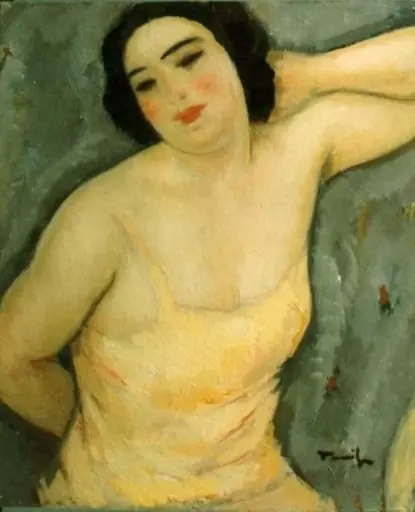
Nud cu cămașă roz
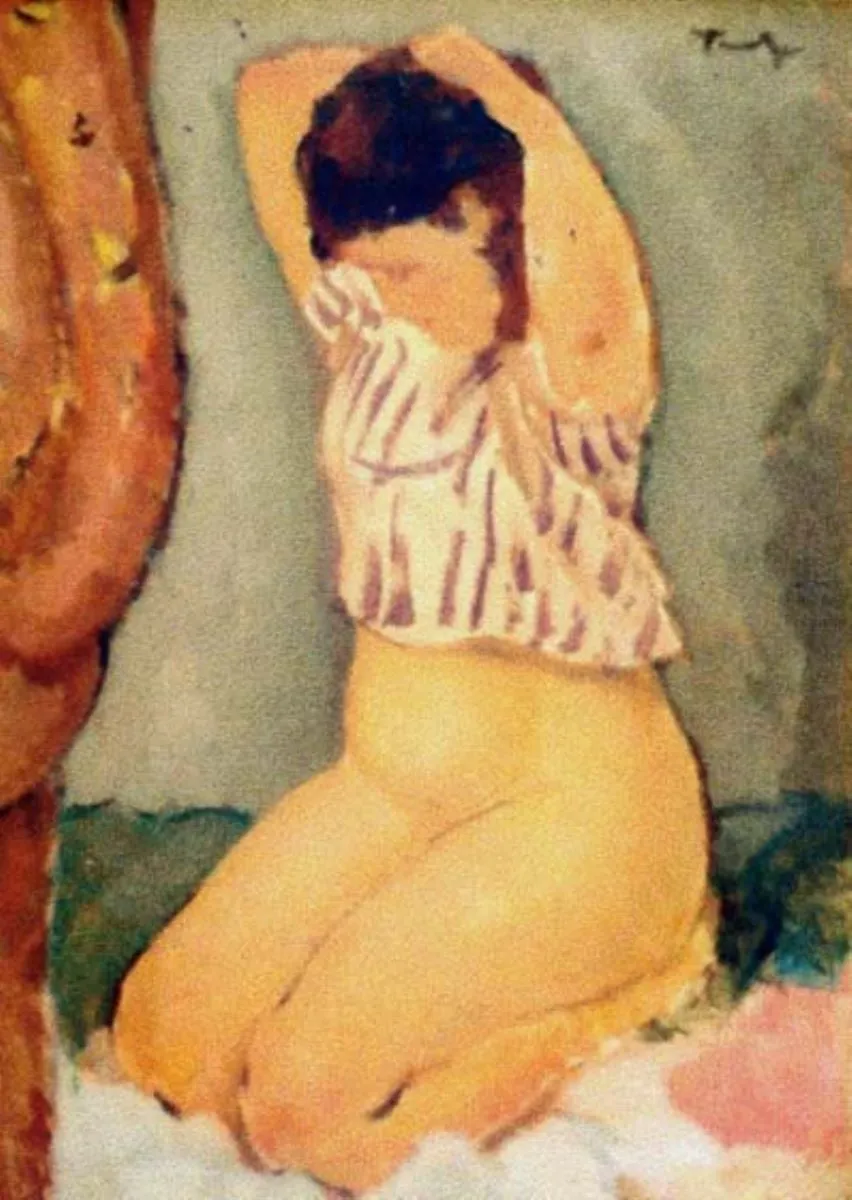
Nud cu cămașă roz is an unspecified painting by Nicolae Tonitza. It dates from 1923 and is held in the collection of the Art Museum of Constanta.
About this work
Overview
Created around 1923, this oil on canvas by Romanian painter Nicolae Tonitza is part of the collection of the Museum of Ethnography. The work portrays a solitary figure seated on a bed, dressed only in a loosely draped, striped shirt of soft pink hues. The composition is intimate, with a blurred backdrop that hints at additional forms without drawing attention away from the central figure.
Subject & Meaning
The sitter appears relaxed yet introspective, legs folded and one arm supporting the head while the other rests on the knee. The turned-away gaze and partially concealed face create an ambiguous emotional tone, inviting viewers to contemplate a moment of private contemplation rather than a narrative scene. The simplicity of the setting emphasizes the personal over the theatrical.
Technique & Style
Tonitza employs a muted palette of warm pinks, beiges, and subdued grays, allowing the striped shirt to become a subtle focal point. Brushwork is soft and blended, producing a slightly out‑of‑focus background that enhances the figure’s presence. The overall effect is one of quiet realism, with an emphasis on atmospheric light and the tactile quality of fabric.
History & Provenance
The painting entered the Museum of Ethnography’s holdings after its creation, though specific acquisition details remain limited.
The painting entered the Museum of Ethnography’s holdings after its creation, though specific acquisition details remain limited. Its dating to the early 1920s places it within Tonitza’s mature period, when he frequently explored domestic interiors and the nuanced psychology of everyday subjects. The work continues to be displayed as part of the museum’s representation of early twentieth‑century Romanian art.
Artist & collection

Artist
Nicolae Tonitza was a Romanian painter, engraver, lithographer, journalist and art critic. Drawing inspiration from Post-Impressionism and Expressionism, he had a major role in introducing modernist guidelines to local art.