Artwork
Peisaj
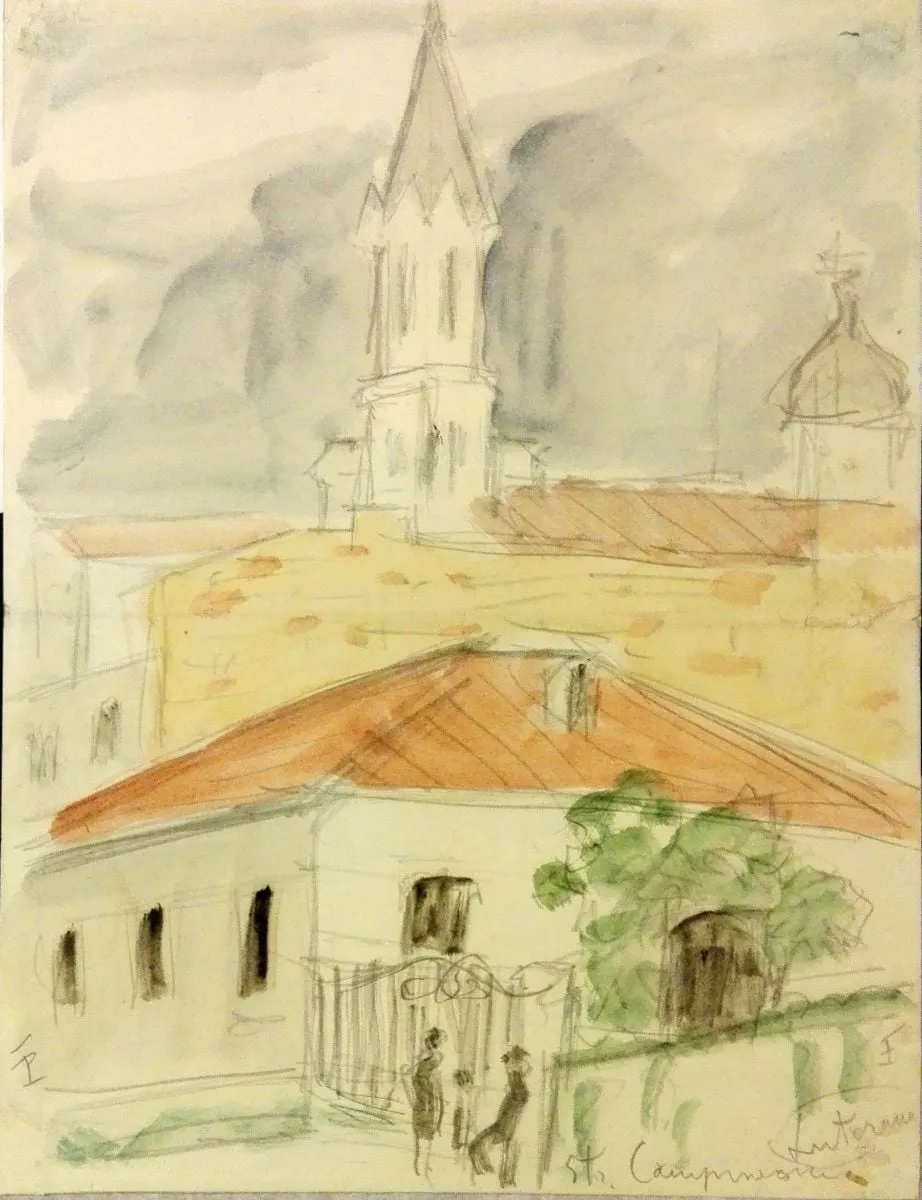
Peisaj is an unspecified painting by Theodor Pallady. It is held in the collection of the Bucharest Municipality Museum.
About this work
Overview
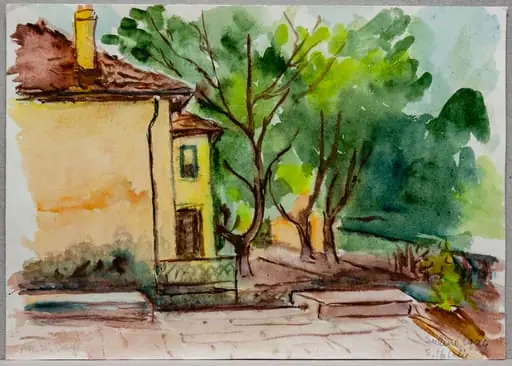
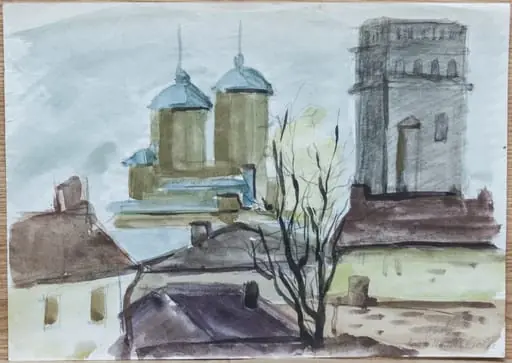
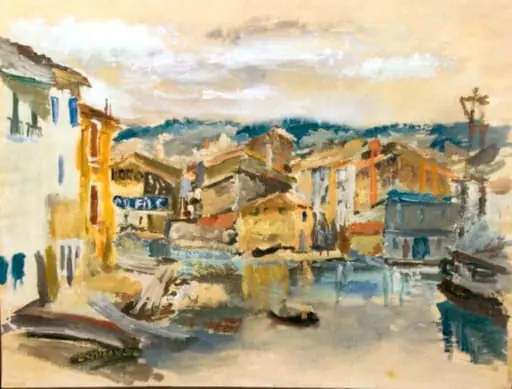
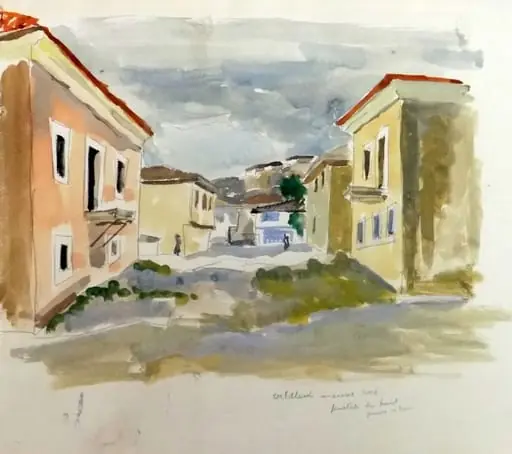
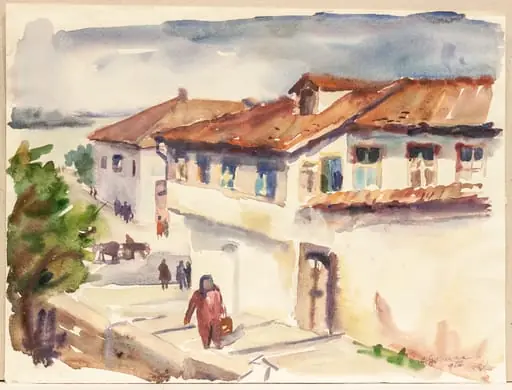
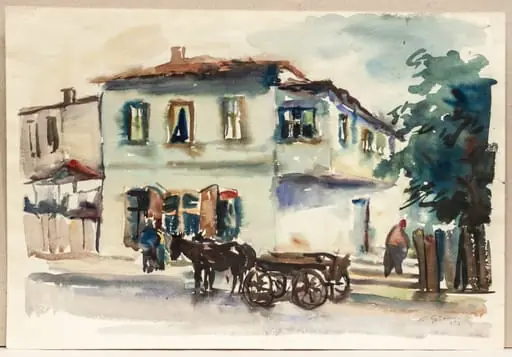
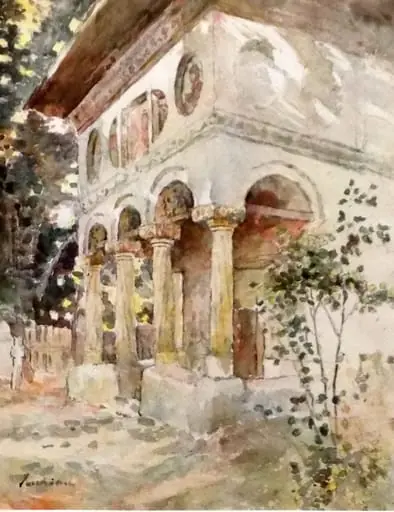
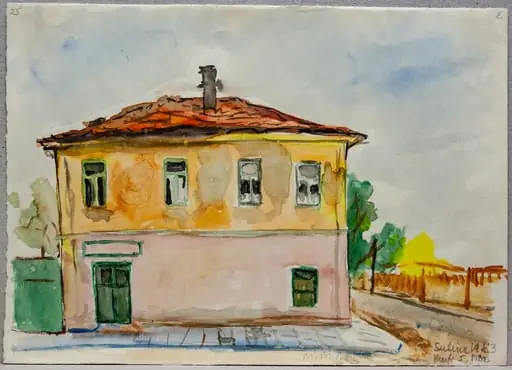
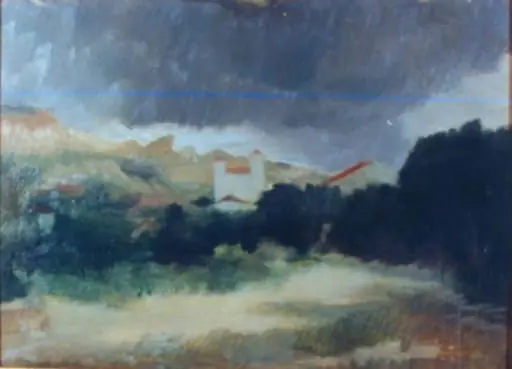
Peisaj presents a rural vista dominated by a modest settlement beneath a distant church whose tall steeple and dome rise against the horizon. Red‑tiled roofs punctuate the foreground, while a handful of figures linger among the buildings. The composition balances built forms with surrounding foliage, creating a tranquil yet inhabited scene.
Subject & Meaning
The work captures a moment of everyday life in a small community, emphasizing the relationship between the sacred structure and the secular dwellings. The church, positioned in the background, serves as a visual anchor, suggesting communal identity and spiritual presence, while the ordinary activities of the townspeople foreground the continuity of daily routine.
Technique & Style
Executed in a muted palette of browns and greens, the painting employs loose, expressive brushwork that conveys a sense of movement across the landscape. The handling of paint allows forms to dissolve slightly at their edges, creating atmospheric depth and a lively surface texture that contrasts with the solidity of the architectural elements.
History & Provenance
Peisaj is held in the collection of the Museum of Ethnography. The museum acquired the piece as part of its effort to document regional visual culture, though specific details of its earlier ownership or date of creation are not recorded in the available documentation.
Artist & collection
Artist
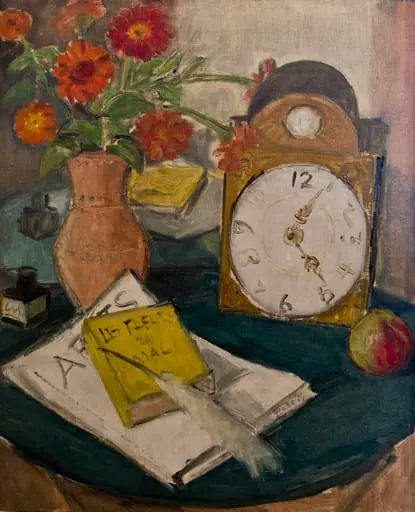
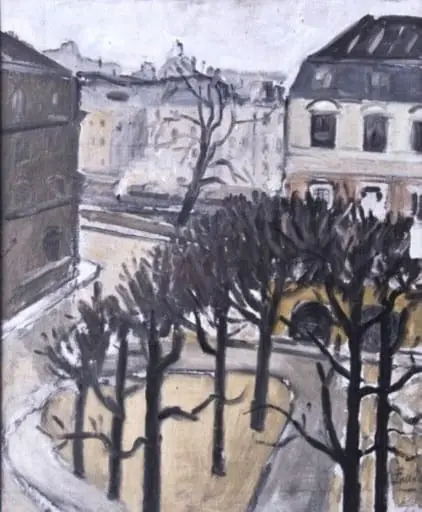
Theodor Pallady made still lifes and interiors in early 20th-century Bucharest. His Place Dauphine shows a quiet Parisian square, while Natură moartă (Ulcică cu flori și chibrituri) piles everyday objects on a table.…