Artwork
Turnul Golia
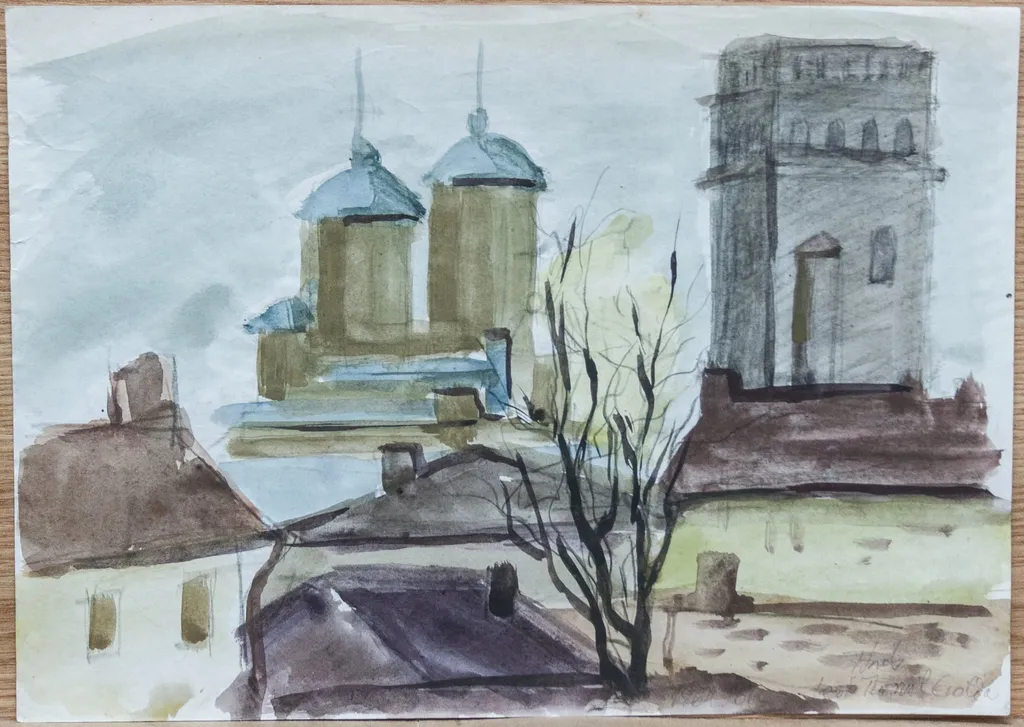
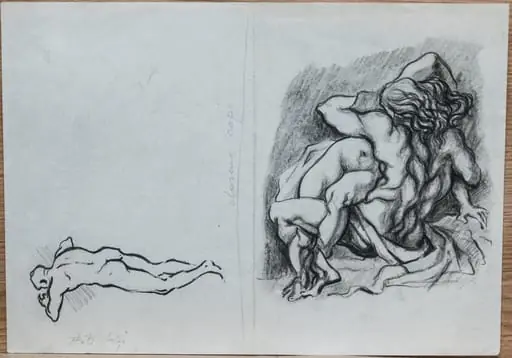
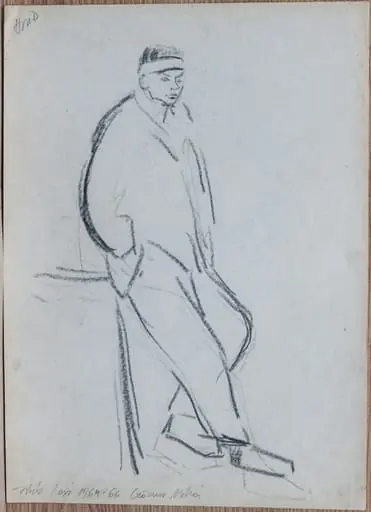
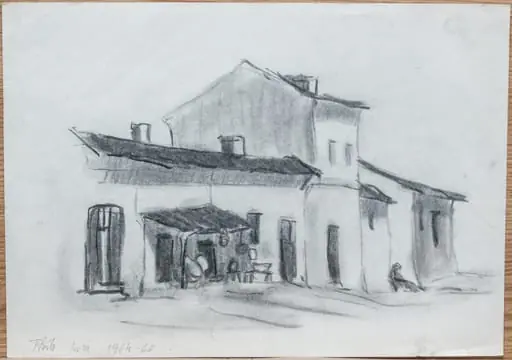
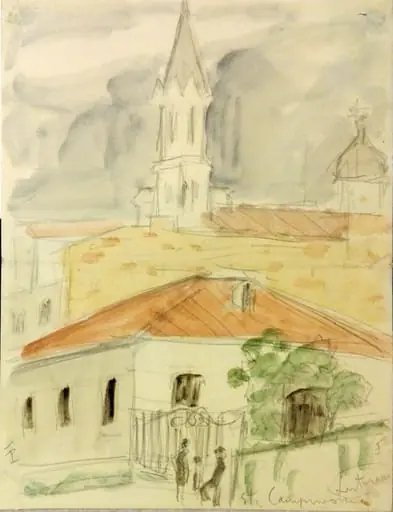
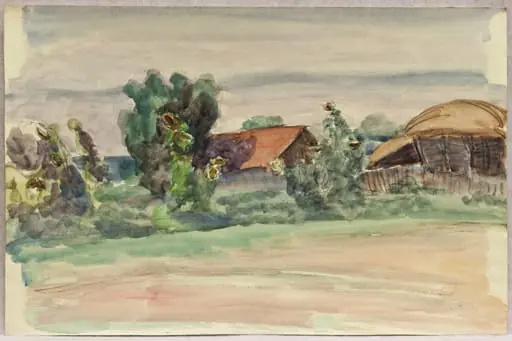
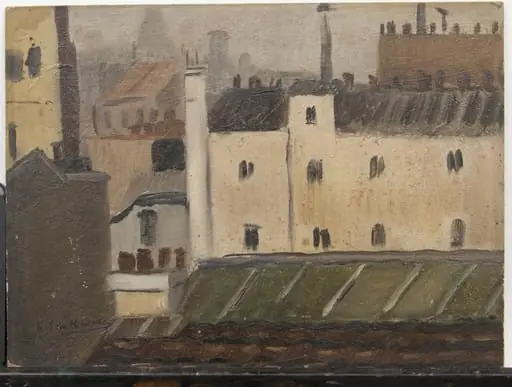
Turnul Golia is a print by Teodor Hrib. It dates from 1950 and is held in the collection of the Gavrila Simion Eco-Museum Research Institute Tulcea.
About this work
Overview
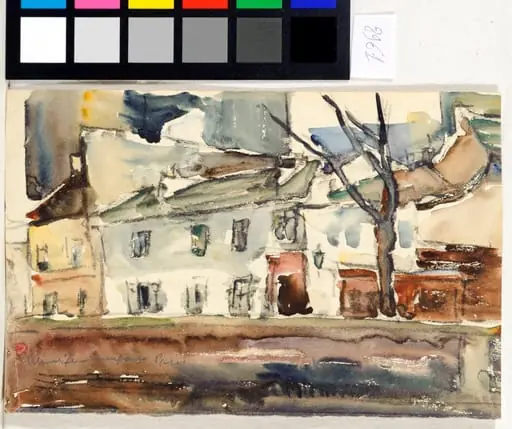
Turnul Golia is a watercolor created around 1950 by Romanian artist Teodor Hrib. The work is part of the collection of the Museum of Ethnography, where it is displayed as an example of mid‑century urban sketching.
Subject & Meaning
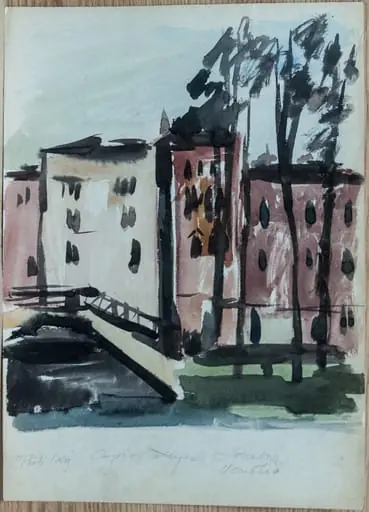
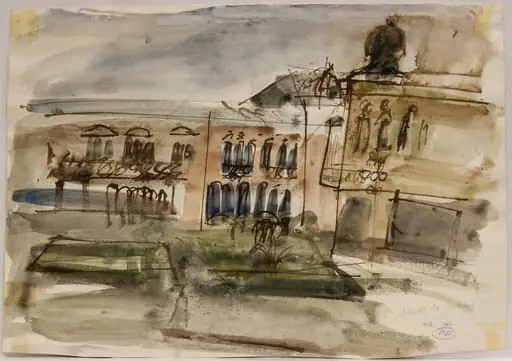
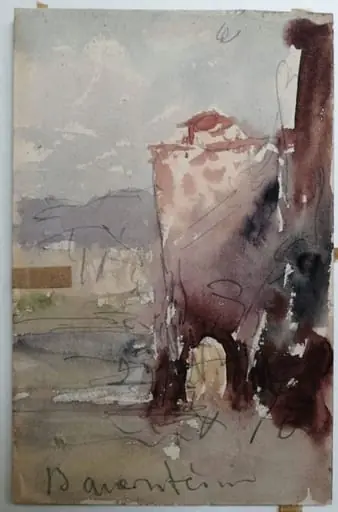
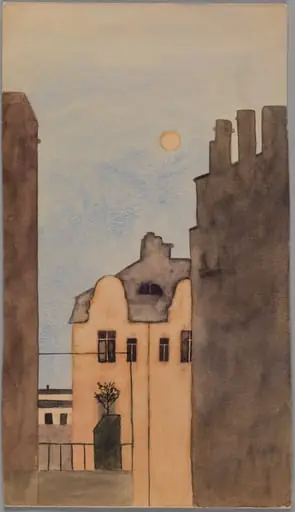
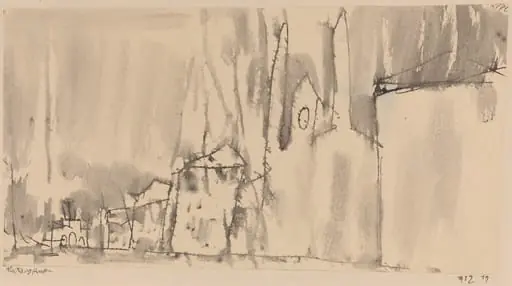
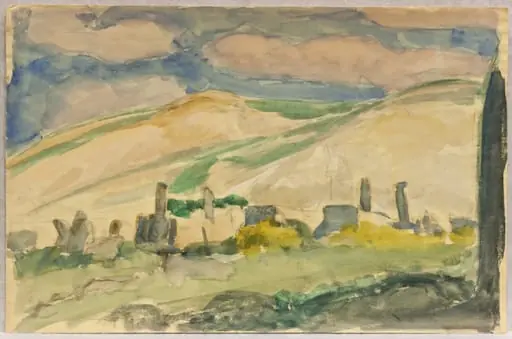
The composition depicts a modest cityscape: a few low‑rise structures and a solitary, leafless tree occupy the foreground, while a taller building with a handful of windows rises on the right. In the distance a lighter‑toned edifice capped with twin domes suggests a more prominent civic or religious landmark.
Technique & Style
Executed in a loose, sketch‑like manner, the watercolor relies on muted browns, grays and pale tones. Broad, fluid brushstrokes convey form rather than detail, giving the scene an impression of immediacy that hints at a study or rapid plein‑air observation.
History & Provenance
The painting entered the Museum of Ethnography’s holdings sometime after its creation, though precise acquisition details are not recorded. It remains attributed to Hrib’s early period, reflecting his interest in documenting everyday urban environments.
Artist & collection
Artist
Teodor Hrib shaped small plaster figures and ink drawings in the 1800s academic tradition.
Museum
Gavrila Simion Eco-Museum Research Institute Tulcea
Continue through works from the same source collection.