Artwork
Peisaj din Saint Tropez
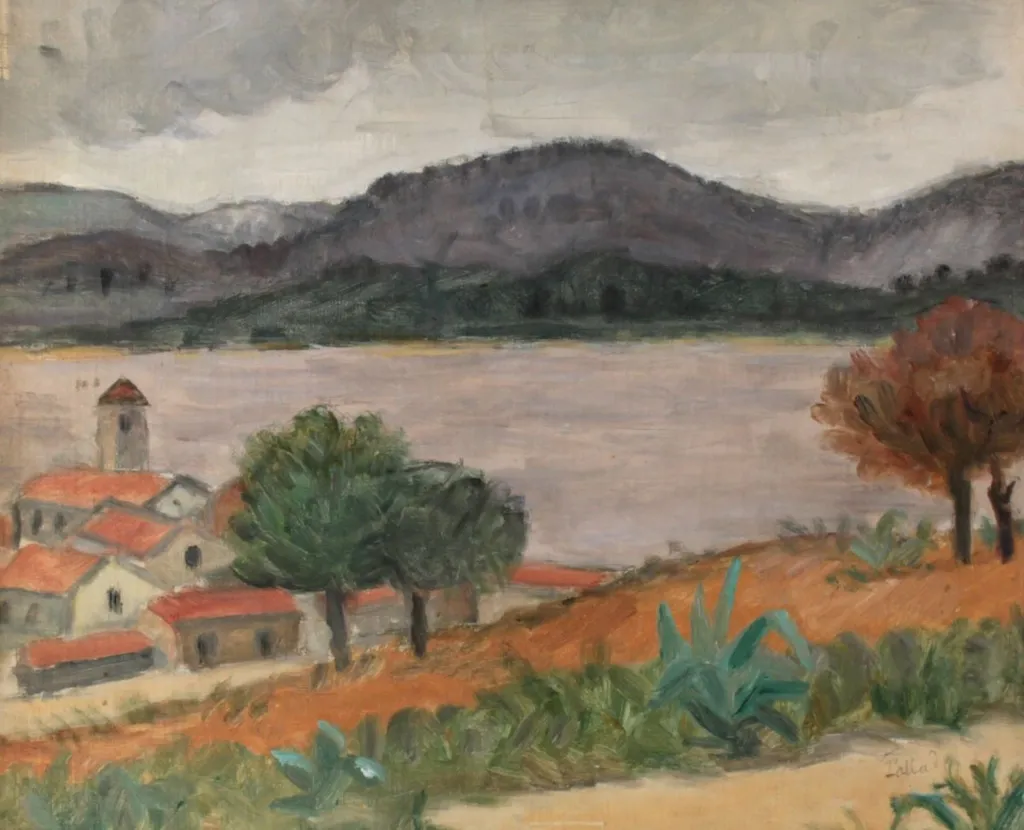
Peisaj din Saint Tropez is an unspecified painting by Theodor Pallady. It is held in the collection of the Art Museum of Constanta.
About this work
Overview
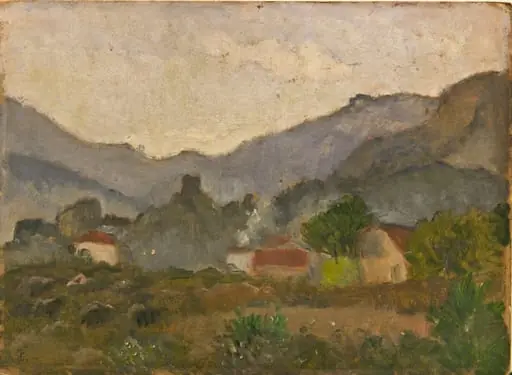
Peisaj din Saint Tropez is a landscape painting by Romanian artist Theodor Pallady, created during his time in southern France.
Peisaj din Saint Tropez is a landscape painting by Romanian artist Theodor Pallady, created during his time in southern France. Though often mischaracterized as religious, the work depicts a tranquil village scene near the Mediterranean coast. It is currently held in the collection of the Museum of Ethnography in Bucharest, where it is displayed as an example of early 20th-century Romanian modernism influenced by French post-impressionist practices.
Subject & Meaning
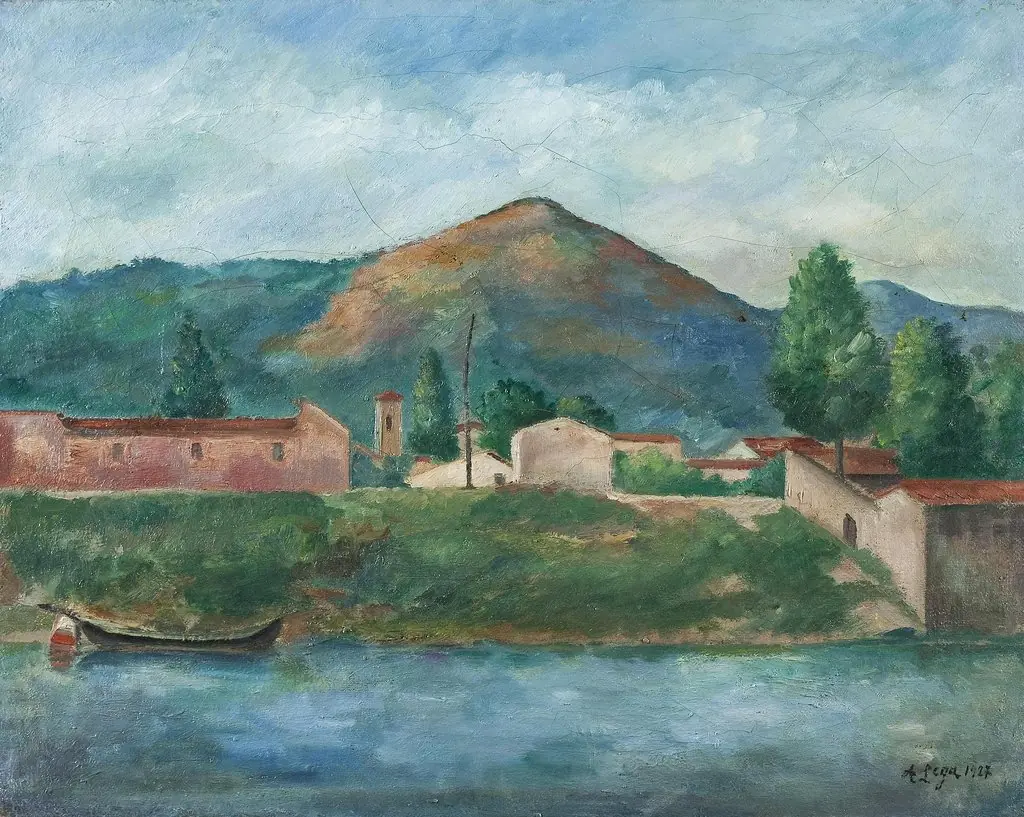
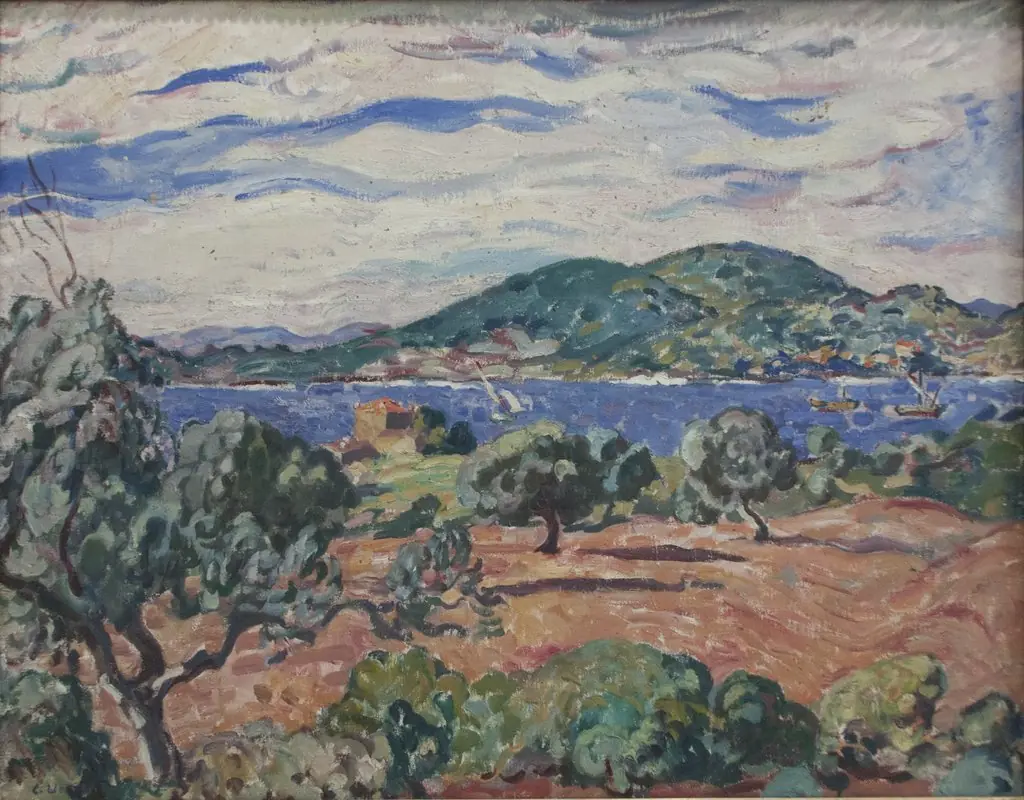
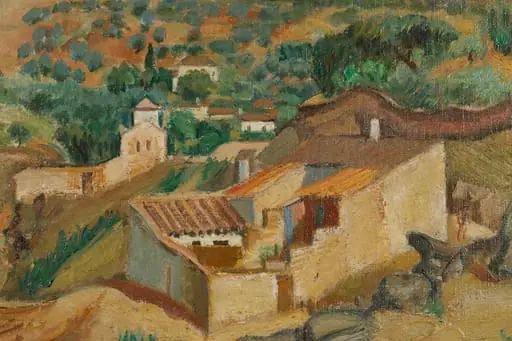
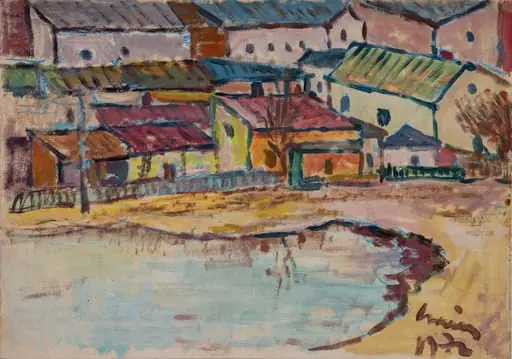
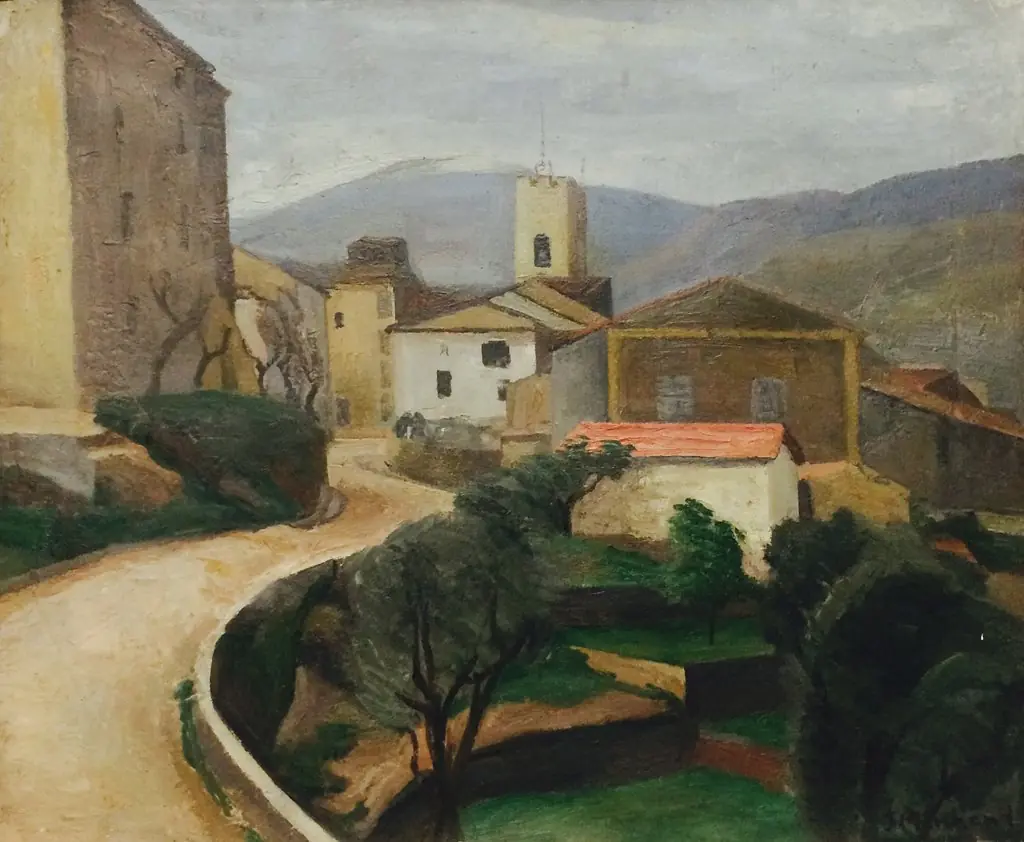
The painting presents a quiet, sunlit village nestled beside a still body of water, with modest dwellings and a single church spire rising above the rooftops. There is no narrative or symbolic figure—only the quiet rhythm of daily life. The absence of human activity invites contemplation of place and atmosphere rather than story, reflecting Pallady’s interest in mood over drama.
Technique & Style
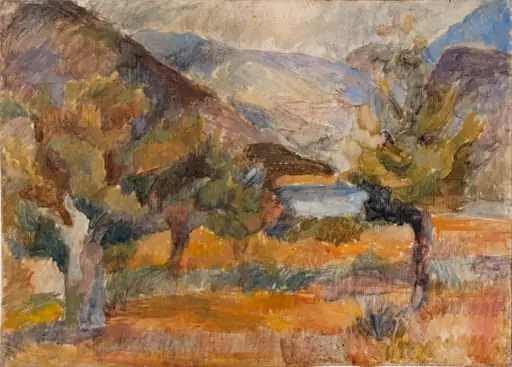
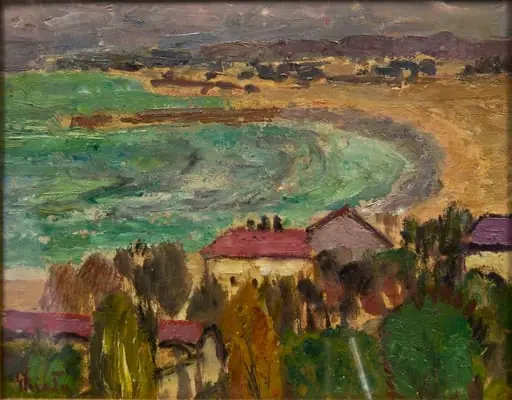
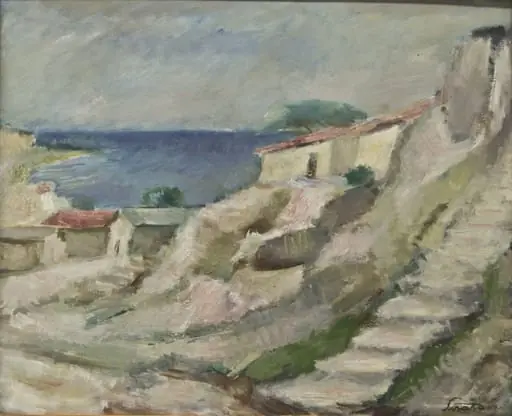
Pallady employed loose, visible brushwork and a restrained palette of earthy browns, muted greens, and soft blues. The paint is applied with a light touch, creating a sense of atmospheric haze rather than sharp definition. While not heavily impastoed, the texture of the strokes suggests an intuitive, spontaneous approach, aligning with post-impressionist tendencies to prioritize sensory impression over precise detail.
History & Provenance
Painted during Pallady’s stay in Saint-Tropez around the early 1900s, the work emerged from his engagement with French artistic circles. It entered the Museum of Ethnography’s collection in the mid-20th century, likely through state acquisition or donation. Its classification as an ethnographic object reflects Romania’s postwar effort to document cultural expressions of its artists abroad.
Context
Pallady’s work in Saint-Tropez coincided with broader European trends toward landscape as a vehicle for personal expression. Influenced by artists like Cézanne and the Nabis, he moved away from academic rigidity toward tonal harmony and simplified forms. This painting reflects the quiet revolution in Romanian art, where modernism was absorbed through direct exposure to French practices rather than theoretical doctrine.
Legacy
Peisaj din Saint Tropez remains a key example of how Romanian modernists synthesized foreign influences into a distinctive visual language. Though not widely exhibited, it is studied for its subtle balance between observation and emotion. Its presence in an ethnographic museum underscores its role as a cultural artifact, bridging national identity and international artistic currents.
Artist & collection
Artist
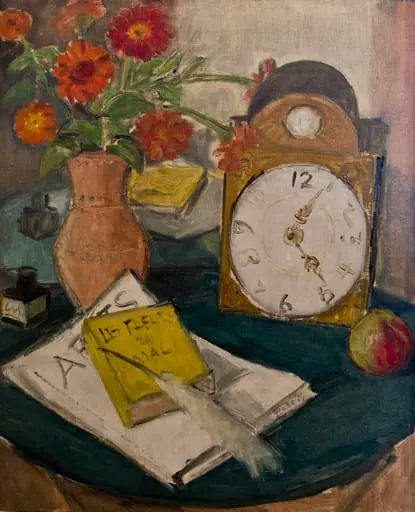
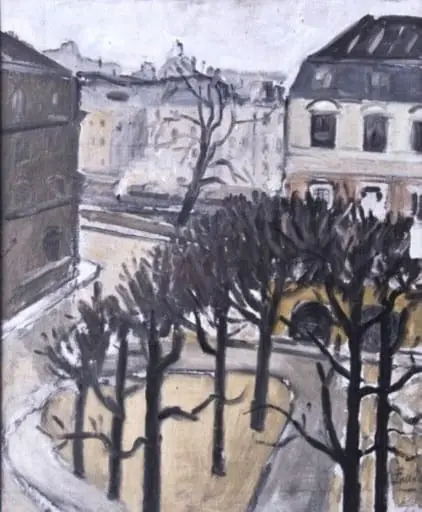
Theodor Pallady made still lifes and interiors in early 20th-century Bucharest. His Place Dauphine shows a quiet Parisian square, while Natură moartă (Ulcică cu flori și chibrituri) piles everyday objects on a table.…