Artwork
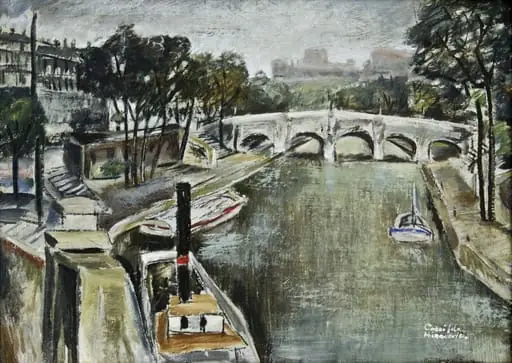
Podul Artelor
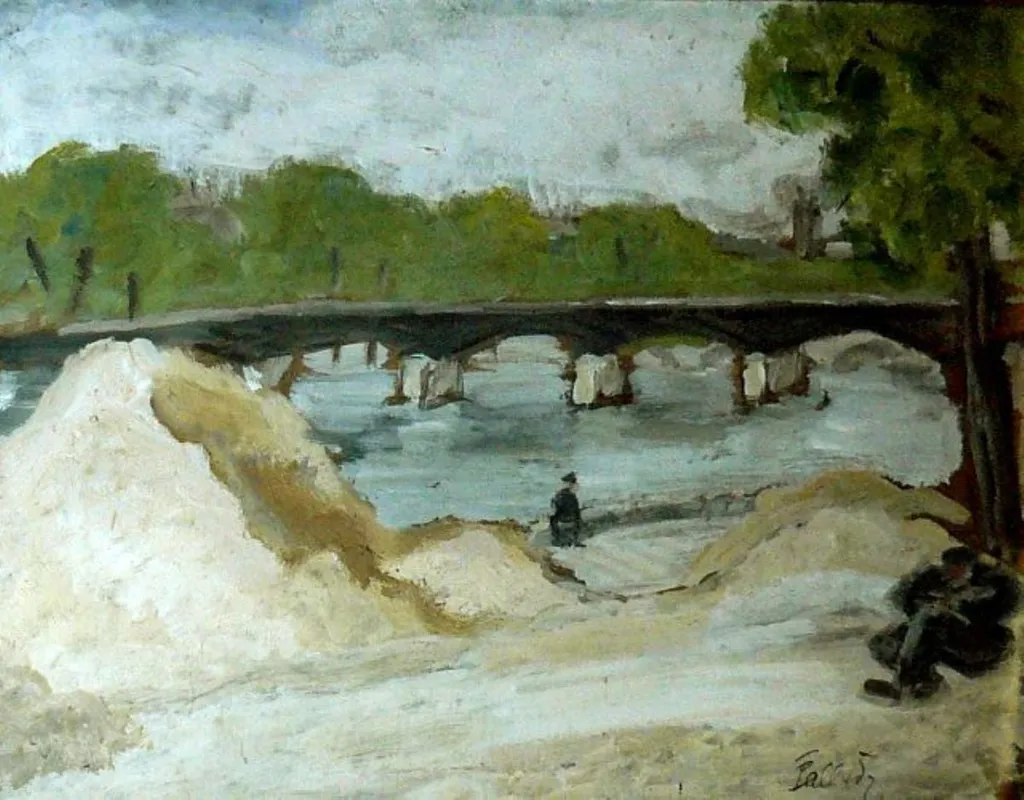
Podul Artelor is an unspecified painting by Theodor Pallady. It dates from 1949 and is held in the collection of the Art museum of Craiova.
About this work
Overview
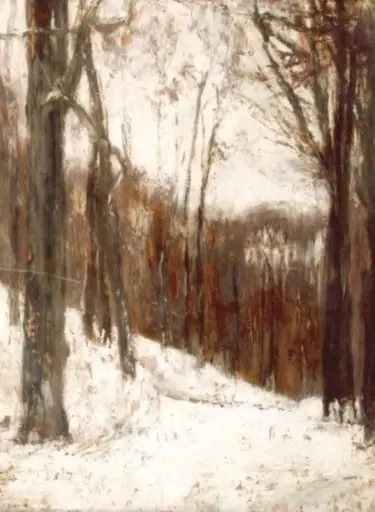
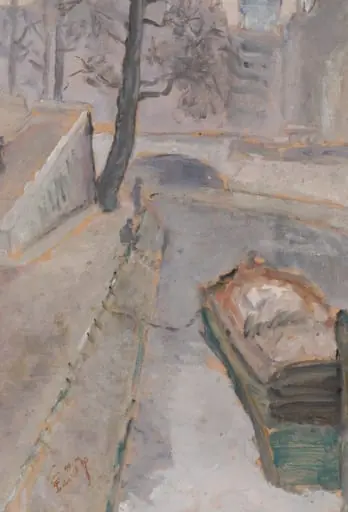
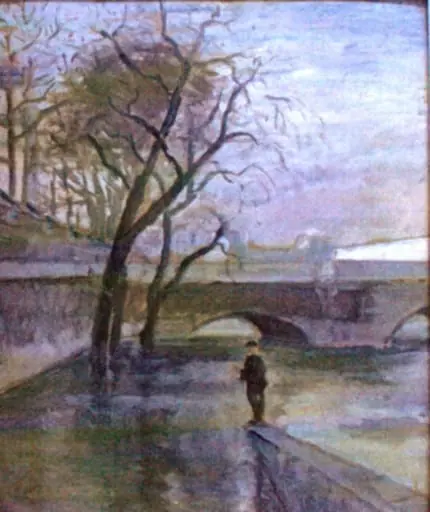
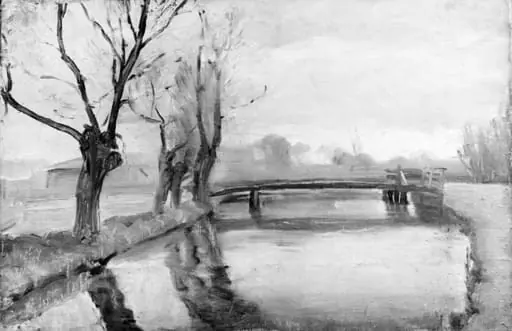
The painting titled Podul Artelor, executed by Romanian artist Theodor Pallady around 1949, is part of the collection of the Museum of Ethnography. It depicts a wintry river scene dominated by a stone bridge, with snow‑laden banks and a solitary, bundled figure standing near the water, while another person is seated on the snow‑covered ground to the right.
Subject & Meaning
The composition centers on a frozen river crossing, suggesting themes of isolation and endurance in a harsh climate. The lone, warmly dressed individual confronting the icy flow may evoke contemplation of human vulnerability, while the seated figure adds a quiet, perhaps contemplative counterpoint, emphasizing the stillness of the winter landscape.
Technique & Style
Pallady employs a pronounced impasto technique, laying thick layers of paint especially on the snow and water surfaces. The textured brushwork creates a tactile quality that conveys the roughness of the frozen river and the weight of the snow, enhancing the viewer’s sense of physical presence within the scene.
History & Provenance
Created circa 1949, the work entered the Museum of Ethnography’s holdings at an unspecified date, where it remains on display. Its acquisition reflects the museum’s broader interest in documenting Romanian visual culture of the mid‑twentieth century.
Context
The painting emerges in the post‑World War II period, a time when Romanian artists often turned to rural and natural subjects to explore national identity and resilience. Pallady’s focus on a stark, snow‑bound environment aligns with contemporary trends toward realism infused with personal observation.
Artist & collection
Artist
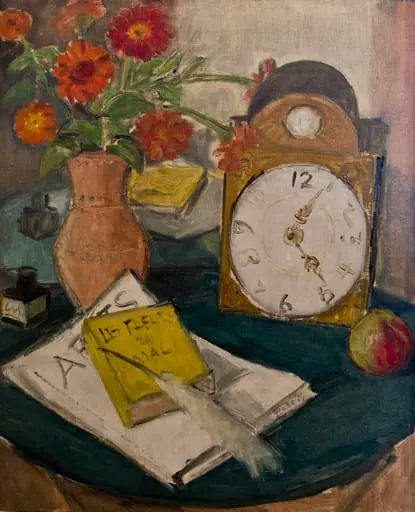
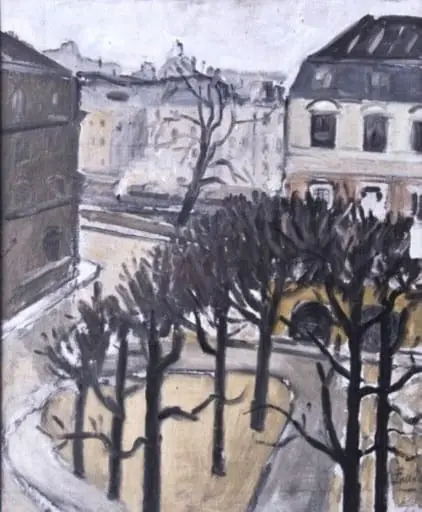
Theodor Pallady made still lifes and interiors in early 20th-century Bucharest. His Place Dauphine shows a quiet Parisian square, while Natură moartă (Ulcică cu flori și chibrituri) piles everyday objects on a table.…