Artwork
Remorcher pe Sena
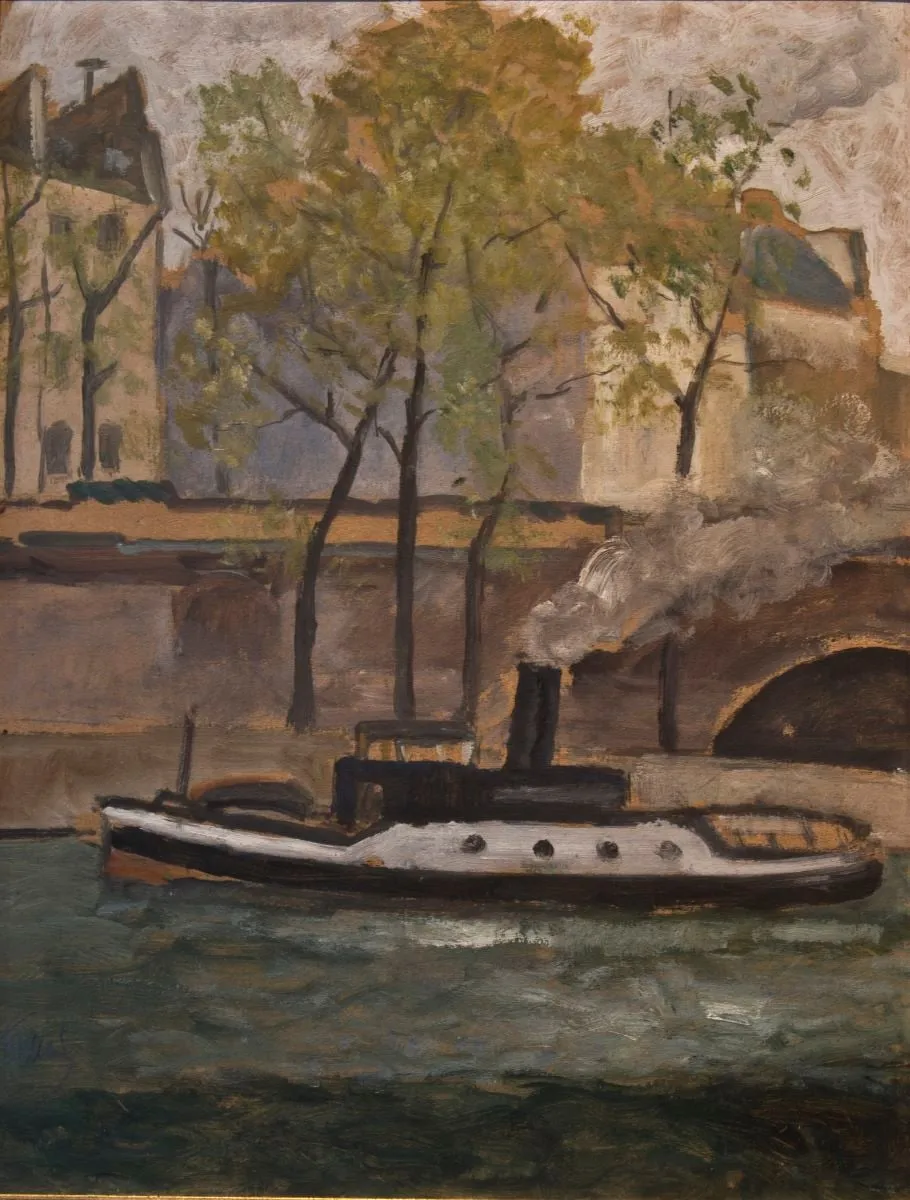
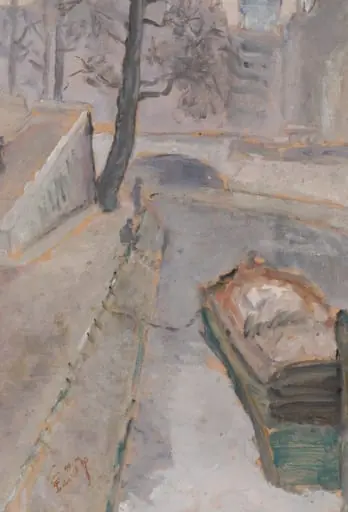
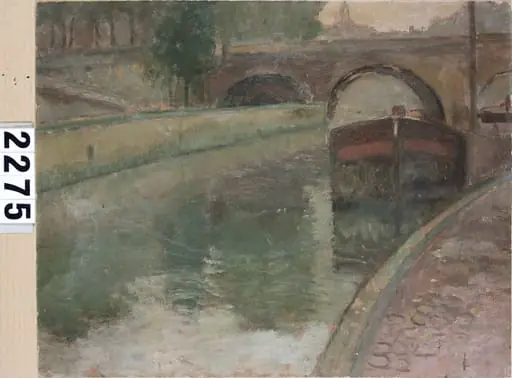
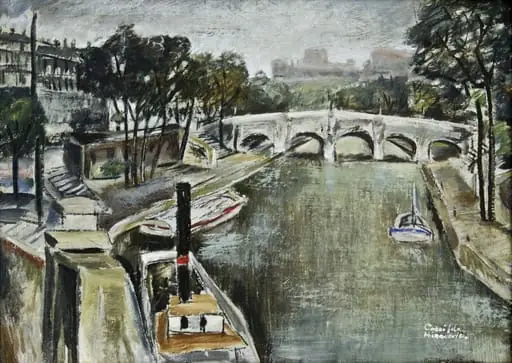
Remorcher pe Sena is an unspecified painting by Theodor Pallady. It is held in the collection of the National Museum of Art of Romania. This painting depicts a small tugboat, identified by its name *Remorquer*, moving along a river under a stone arch bridge.
About this work
Overview
This painting depicts a small tugboat, identified by its name *Remorquer*, moving along a river under a stone arch bridge.
This painting depicts a small tugboat, identified by its name *Remorquer*, moving along a river under a stone arch bridge. Bare trees line the banks, and weathered buildings with simple forms rise on the opposite shore. The vessel emits dark smoke from its chimney, contrasting with the muted tones of the landscape. Thick, textured brushwork gives the scene a tactile quality, emphasizing movement and materiality over fine detail.
Subject & Meaning
The tugboat, a working vessel designed to haul larger ships, anchors the composition as a symbol of industrial labor. Its presence amid quiet, aging architecture suggests a quiet tension between mechanized progress and the enduring, decaying rural environment. The absence of human figures reinforces a sense of solitude, focusing attention on the machine’s solitary passage through a landscape shaped by time.
Technique & Style
The artist employs impasto to build up paint in thick, visible strokes, particularly in the water, smoke, and bark of the trees. This technique adds physical depth and rhythmic energy to the scene. The palette is restrained—grays, browns, and muted blacks—enhancing the somber mood. Brushwork is deliberate but not refined, favoring texture and gesture over polished realism.
History & Provenance
The painting’s origin and early ownership are not documented in available records. It appears to be a lesser-known work, possibly from the late 19th or early 20th century, reflecting regional industrial scenes common in European art of the period. No major exhibitions or collector histories are associated with it to date.
Context
During the late 1800s, river transport remained vital for commerce, and tugboats like the one depicted were essential to port economies. Artists increasingly turned to industrial subjects, capturing the quiet integration of machinery into everyday landscapes. This work aligns with a broader trend of depicting labor and infrastructure without romanticizing or dramatizing it.
Legacy
Though not widely exhibited or studied, the painting contributes to a quiet tradition of industrial realism in regional art. Its unembellished treatment of a working vessel and its environment offers a modest but persistent record of technological change in rural waterways, valued for its honesty rather than its prominence.
Artist & collection
Artist
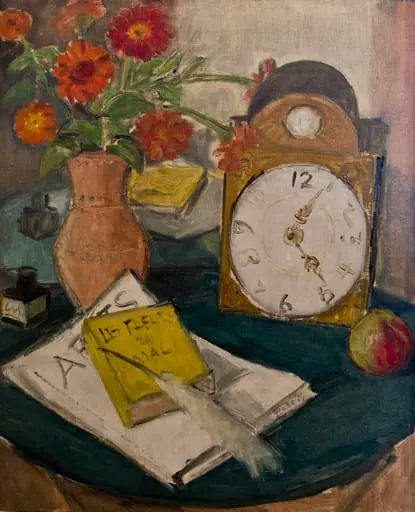
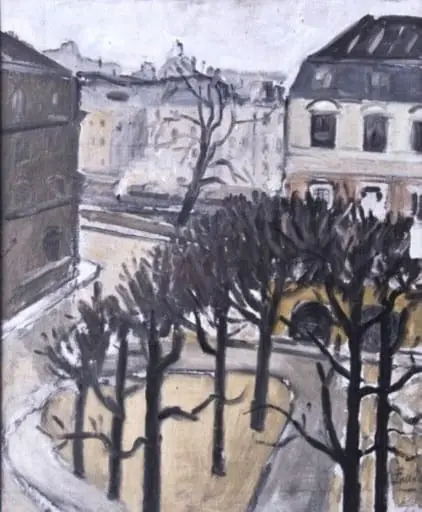
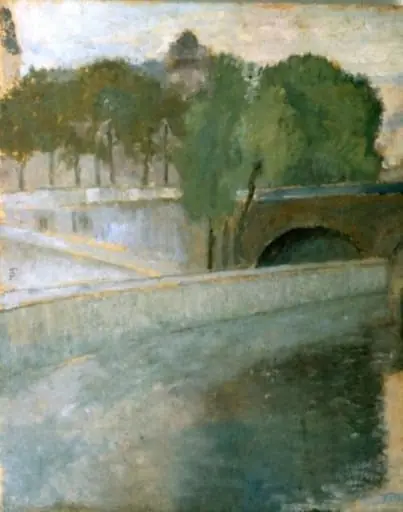
Theodor Pallady made still lifes and interiors in early 20th-century Bucharest. His Place Dauphine shows a quiet Parisian square, while Natură moartă (Ulcică cu flori și chibrituri) piles everyday objects on a table.…