Artwork
Sena
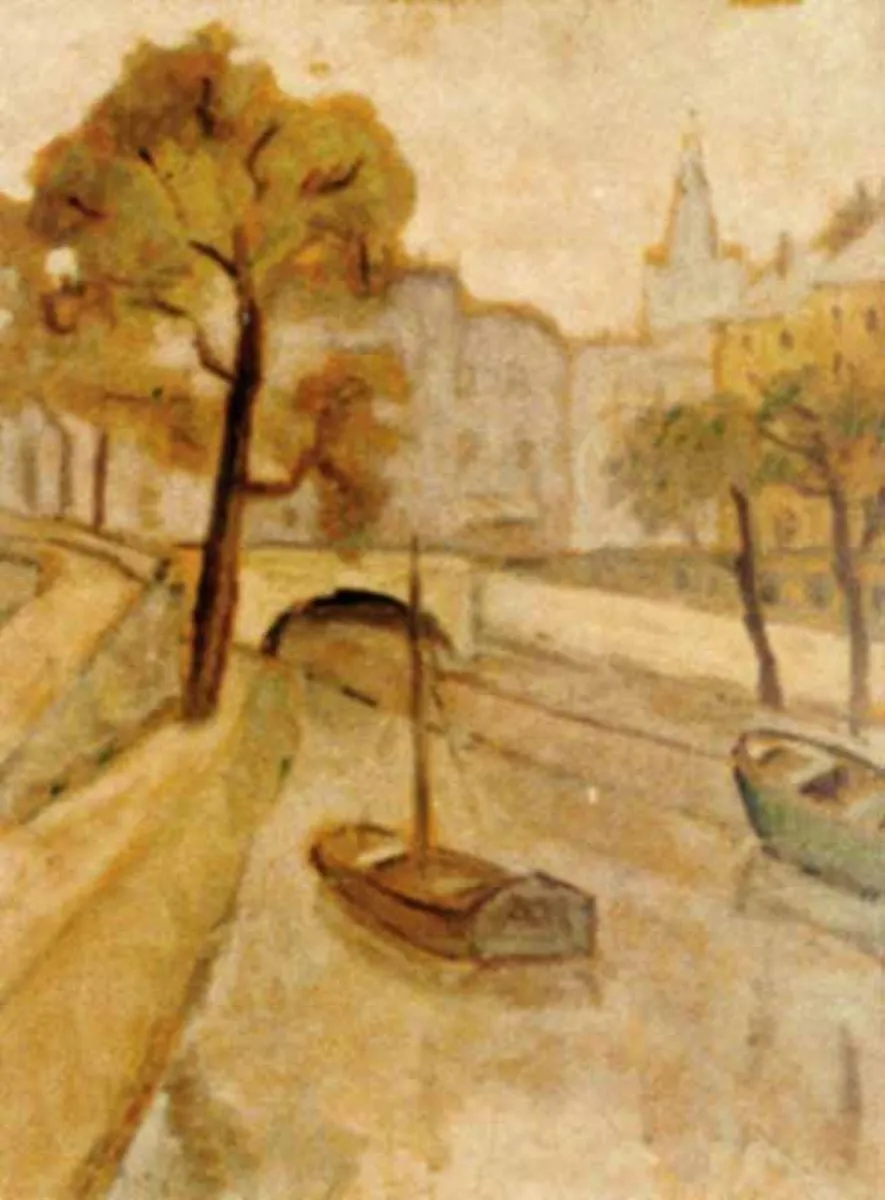
Sena is an unspecified painting by Theodor Pallady. It dates from 1921 and is held in the collection of the Art Museum of Constanta.
About this work
Overview
Sena, painted around 1921 by Theodor Pallady, is a quiet landscape depicting a solitary boat resting on dry ground. The scene is spare and contemplative, with minimal figures or activity. It is part of the collection at the Museum of Ethnography, where it reflects Pallady’s interest in subdued, atmospheric environments rather than narrative drama.
Subject & Meaning
The painting presents an abandoned boat, a leaning pole, and a bucket beside it, suggesting a moment of pause in coastal labor. The distant stone wall, sparse trees, and faint buildings imply a rural shoreline, possibly in the Balkans or Black Sea region. The stillness evokes transience—tools left behind, the sea out of reach—without overt symbolism.
Technique & Style
Pallady employs loose, fluid brushwork to blur boundaries between land, sky, and water. Colors are restrained—ochres, grays, and muted blues—creating a hazy, atmospheric tone. The boat’s faint blue hue contrasts subtly with the earthy palette, drawing attention without disruption. The composition avoids sharp detail, favoring a meditative softness.
History & Provenance
Sena entered the Museum of Ethnography’s collection in the early 20th century, likely through institutional acquisition or donation. Its placement among ethnographic materials suggests an interest in everyday life and regional culture rather than fine art traditions. The work’s origin as a personal study or travel sketch remains undocumented.
Context
Created after Pallady’s return to Romania from Paris, Sena reflects his engagement with post-Impressionist sensibilities and local landscapes. While European modernism emphasized abstraction, Pallady retained a quiet realism, focusing on ordinary moments. This work aligns with broader interwar trends that valued introspection over spectacle.
Legacy
Sena exemplifies Pallady’s quieter, less celebrated works—those that prioritize mood over monumentality. Though not widely reproduced, it contributes to understanding his evolution beyond academic training toward a personal, lyrical style. Its presence in an ethnographic museum underscores its role as a document of place and routine.
Artist & collection