Artwork
Rochia cenușie
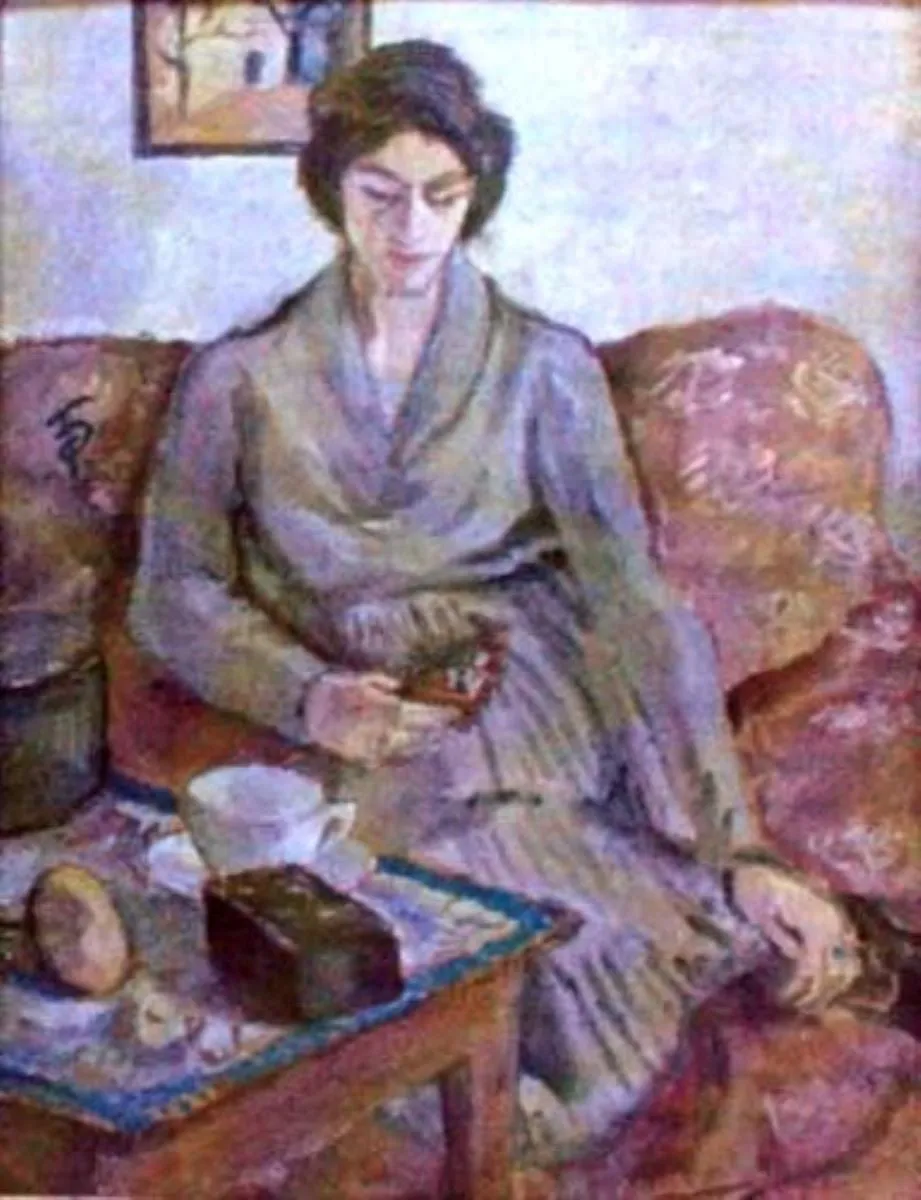
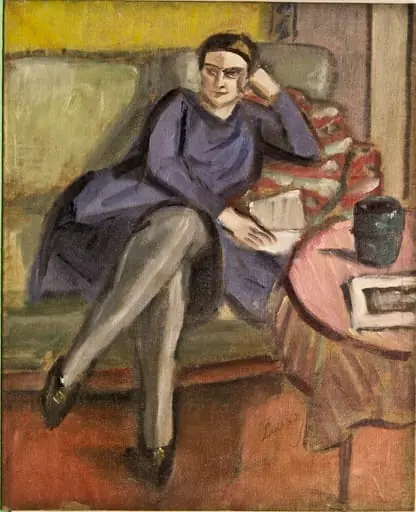
Rochia cenușie is an unspecified painting by Theodor Pallady. It dates from 1924 and is held in the collection of the National Museum of Art of Romania.
About this work
Overview
The work reflects Pallady’s interest in intimate, unembellished moments, grounded in observation rather than narrative.
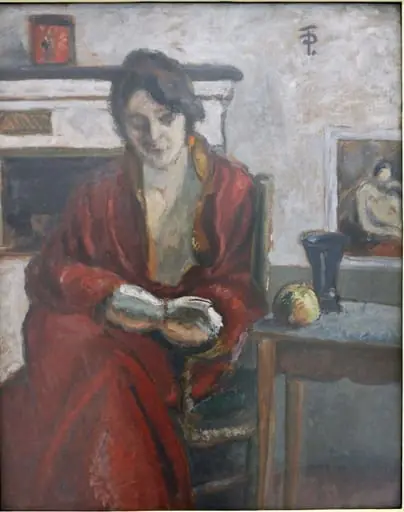
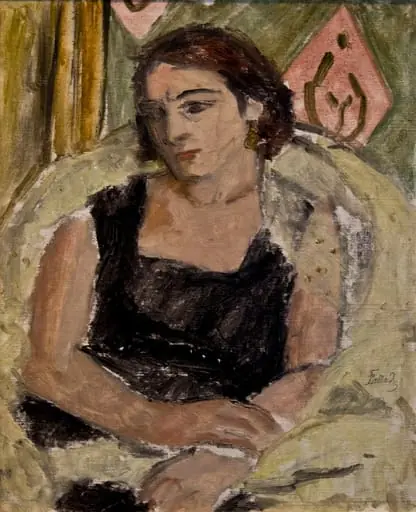
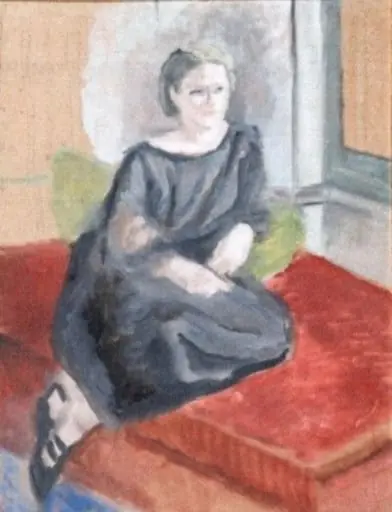
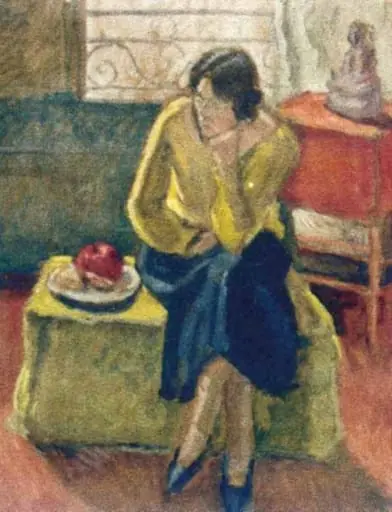
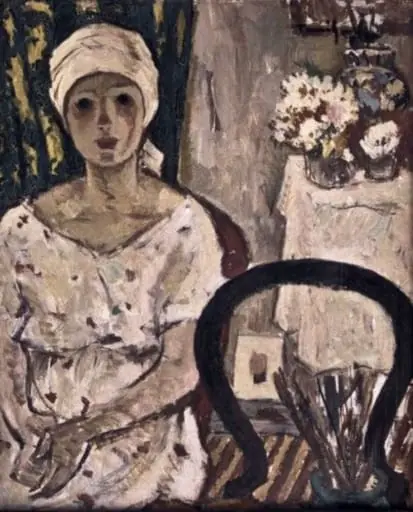
Rochia cenușie, dated around 1924, is a quiet interior scene by Romanian artist Theodor Pallady. It captures a solitary woman in a modest domestic setting, rendered with a restrained palette and fluid brushwork. The composition avoids dramatic tension, instead emphasizing stillness and the subtle rhythms of ordinary life. The work reflects Pallady’s interest in intimate, unembellished moments, grounded in observation rather than narrative.
Subject & Meaning
The figure, dressed in a soft gray garment, sits with a small object cradled in her hands, perhaps a token or keepsake. A tea tray rests on her lap, and an open book lies nearby, suggesting a pause in routine. The scene conveys solitude without melancholy — a moment of quiet reflection. The absence of clear action invites contemplation of inner life, not external events, aligning with Pallady’s preference for psychological subtlety over storytelling.
Technique & Style
Pallady employs loose, sketch-like brushstrokes that suggest form without rigid definition. Colors are muted and layered, with areas of blended tone alongside flat, unmodulated passages. The fabric of the dress and couch appears worn, rendered with thin washes rather than thick impasto. This deliberate contrast between fluidity and flatness enhances the sense of quiet realism, avoiding embellishment while preserving tactile presence.
History & Provenance
Created during Pallady’s mature period in Romania, the work emerged after years spent in Paris, where he absorbed influences from Impressionism and Post-Impressionism. While details of its early ownership are sparse, it has remained within Romanian collections since its creation. Its preservation reflects its recognition as a representative example of early 20th-century Romanian modernism focused on domestic introspection.
Context
In the 1920s, Romanian artists increasingly turned from grand historical themes to personal, everyday subjects. Pallady’s work aligned with this shift, echoing European trends toward psychological realism while retaining a distinctly local sensibility. The subdued tones and unadorned setting reflect a broader cultural movement valuing quiet dignity over spectacle, particularly in post-war artistic expression.
Legacy
Rochia cenușie exemplifies Pallady’s enduring contribution to Romanian art: a quiet, introspective modernism rooted in observation. It influenced later generations who sought to elevate ordinary life through restrained technique and emotional nuance. The work remains a touchstone for discussions on domesticity and gender in interwar Romanian painting, valued for its understated humanity rather than formal innovation.
Artist & collection
Artist
Theodor Pallady made still lifes and interiors in early 20th-century Bucharest. His Place Dauphine shows a quiet Parisian square, while Natură moartă (Ulcică cu flori și chibrituri) piles everyday objects on a table.…