Artwork
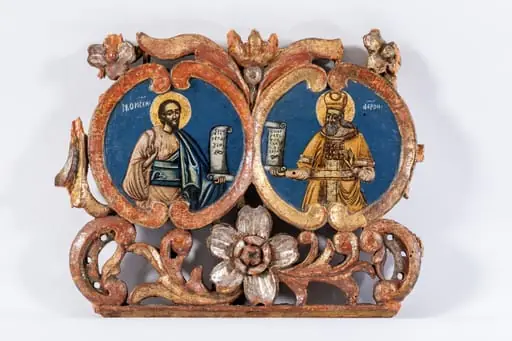
Ghedeon
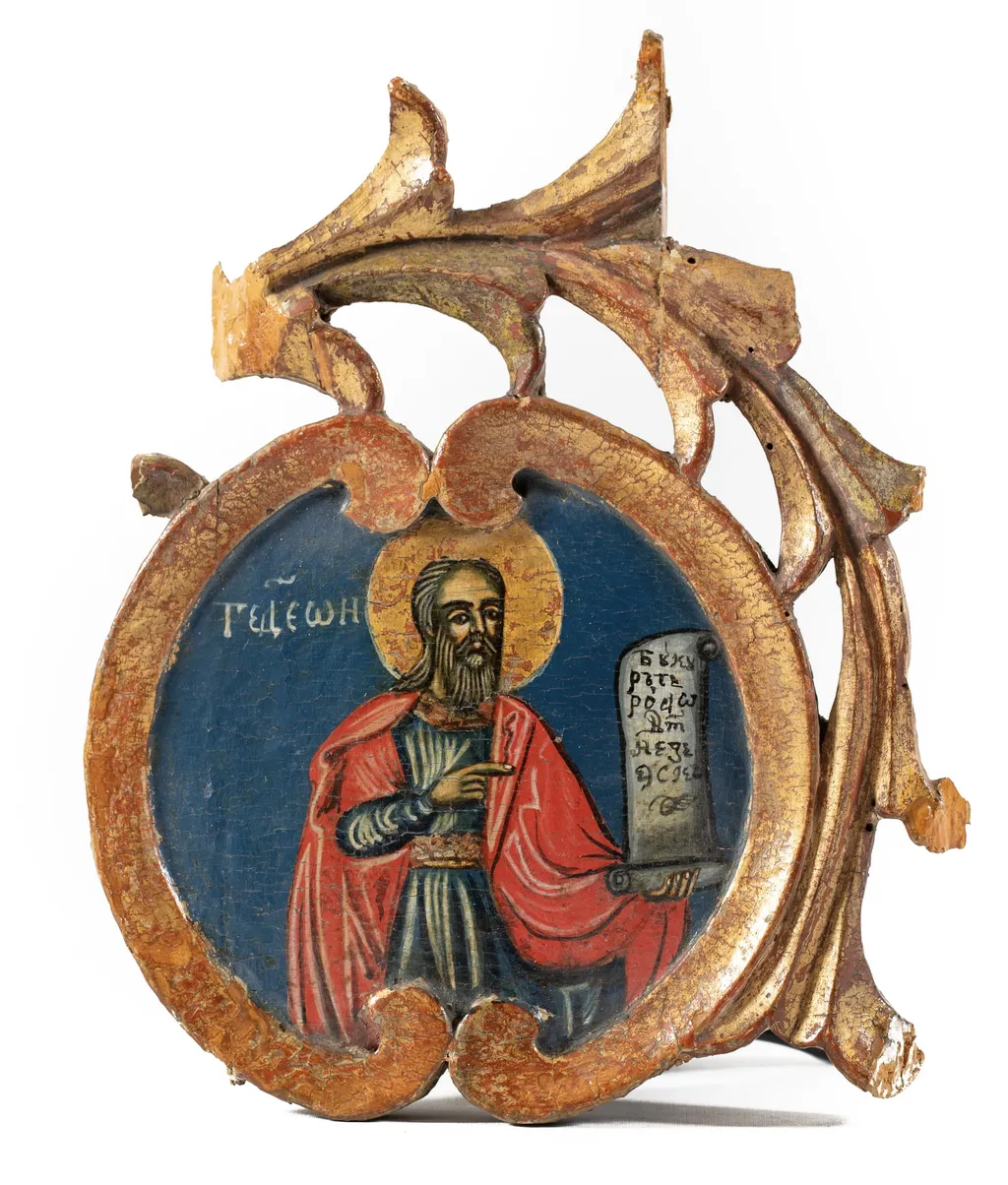
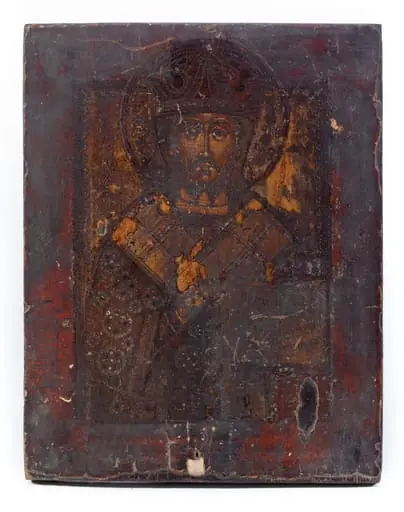
Ghedeon is an unspecified painting by Hugo Kołłątaj. It is held in the collection of the Moldova National Museum Complex. This small devotional image portrays a bearded male figure in a red robe and blue tunic, standing before a plain blue field.
About this work
Overview
This small devotional image portrays a bearded male figure in a red robe and blue tunic, standing before a plain blue field.
This small devotional image portrays a bearded male figure in a red robe and blue tunic, standing before a plain blue field. He holds a scroll in his left hand while gesturing toward it with his right. A gold halo encircles his head, signaling sacred status. The figure is enclosed in a circular, gilded frame topped with a cross, its surface showing signs of age and wear. The work is held by the Museum of Ethnography, though its origin remains unconfirmed.
Subject & Meaning
The figure is likely a prophet or saint, identified by the halo and scroll, symbols of divine revelation. The pointing gesture suggests emphasis on the text’s authority, possibly indicating teaching or prophecy. The presence of unintelligible script above him implies liturgical or sacred inscription, common in religious icons where language itself carries spiritual weight. The composition prioritizes symbolic clarity over narrative detail.
Technique & Style
Painted with flat, non-modelled forms and limited color, the image follows traditional iconographic conventions. The gold halo and ornate frame are applied separately, indicating possible assembly from multiple components. The background lacks depth, focusing attention on the figure. Brushwork is restrained, with pigment applied in even layers, typical of portable devotional panels from medieval or early modern traditions.
History & Provenance
The painting’s exact origin and maker are undocumented. Its frame, though worn, retains its circular form with a cross, suggesting Eastern Christian or Byzantine influence. It entered the Museum of Ethnography’s collection without detailed provenance, possibly acquired during ethnographic expeditions in the 19th or early 20th century. Its preservation suggests it was venerated or carefully stored before institutional acquisition.
Context
This image aligns with devotional practices in Orthodox Christian and related traditions, where portable icons served personal or communal worship. The combination of halo, scroll, and sacred script reflects a broader visual language used across the Eastern Mediterranean and Slavic regions. Its inclusion in an ethnographic museum implies it was collected as an artifact of religious culture rather than fine art.
Legacy
Though not widely known outside institutional circles, the work contributes to understanding how religious imagery was produced and used in non-Western European contexts. Its preservation highlights the role of ethnographic collections in safeguarding small-scale devotional objects that might otherwise have been lost. It remains a quiet testament to localized spiritual practices.
Artist & collection
Artist
This Polish folk painter worked in the late eighteenth and early nineteenth centuries, creating religious scenes with bold colors and simple shapes.
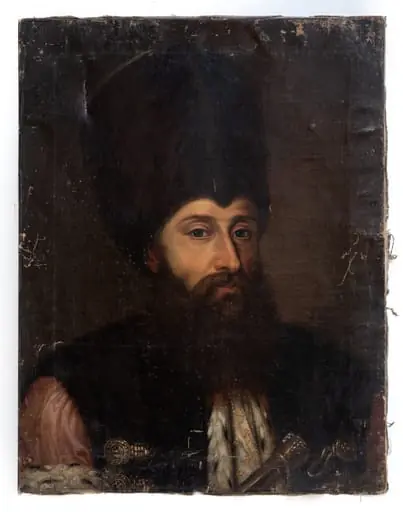 Alexandru Ipsilanti
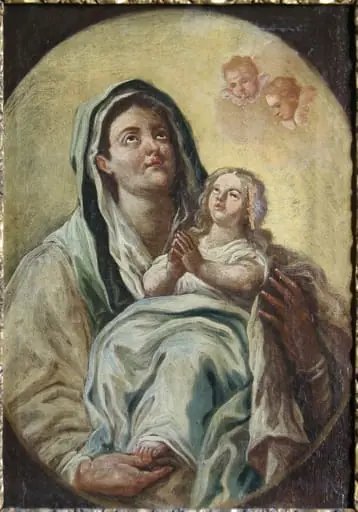 Fecioara Maria cu Pruncul Isus (în Reg. Inv.: Maria cu copilul Isus)
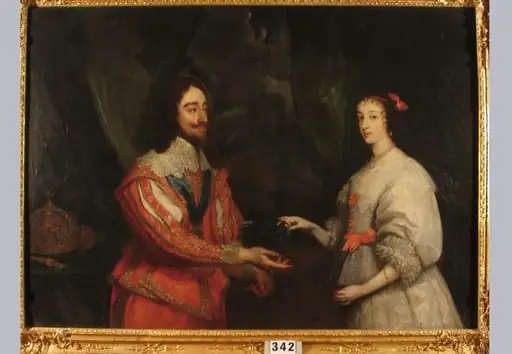 Regele Charles I Stuart al Angliei și soția sa Henrietta Maria de Franța (în Reg. Inv.: Carol I al Angliei și soția sa Henriette din Franța)
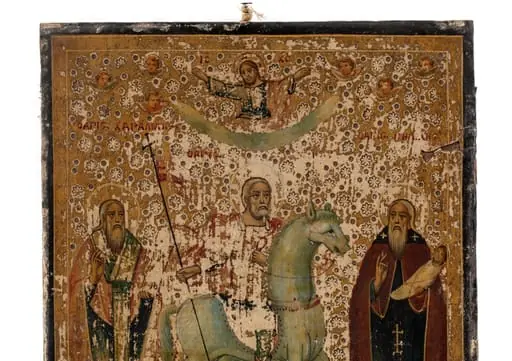 Sfântul Haralambie cu alți doi sfinți
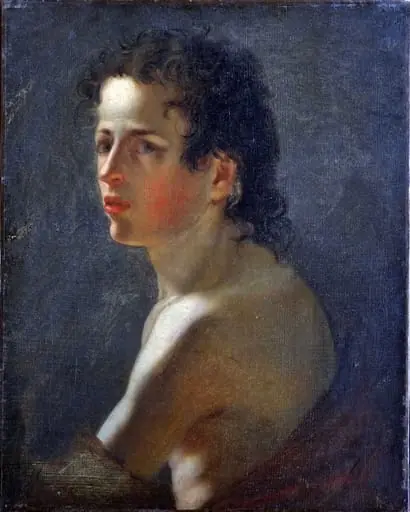 Portret de bărbat
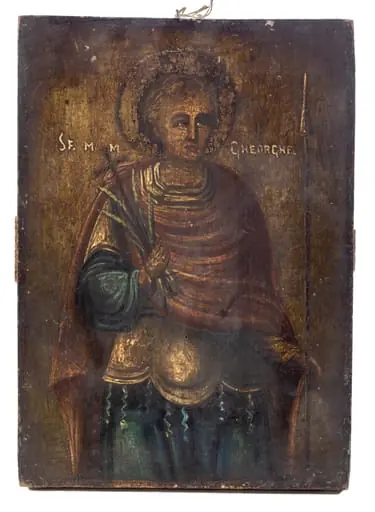 Sfântul Gheorghe
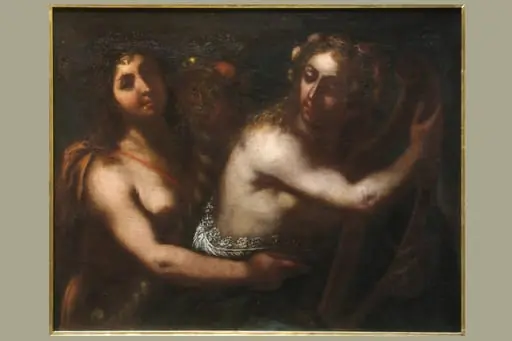 Vertumnus și Pomona (în Reg. Inv.: Vertumnus și Flora)
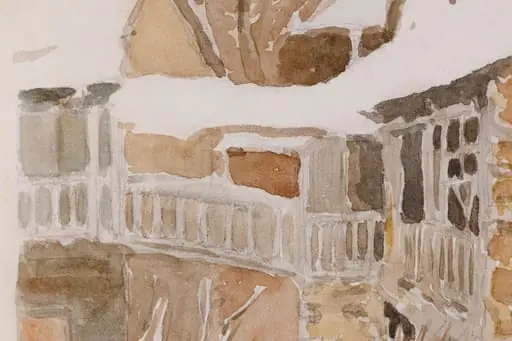 Iarnă
Iarnă
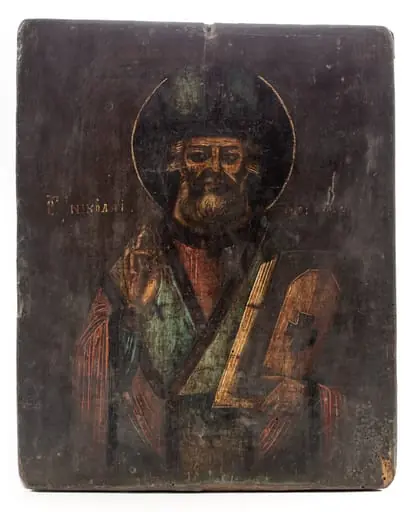 Sfântul Nicolae
 Moise
Moise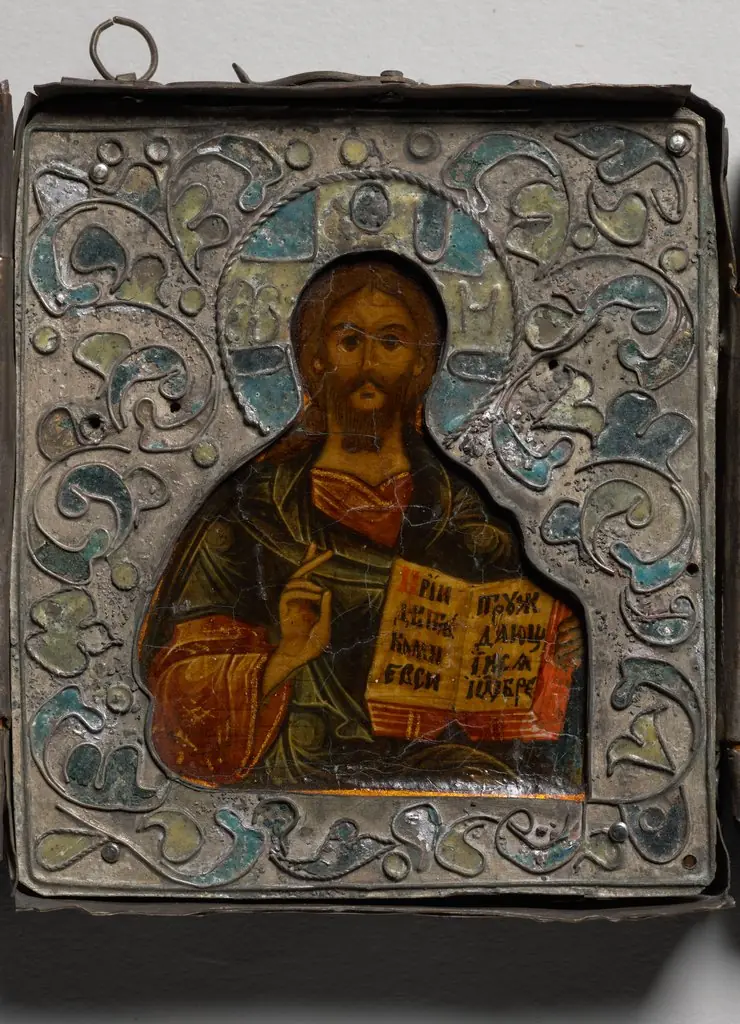 Christ
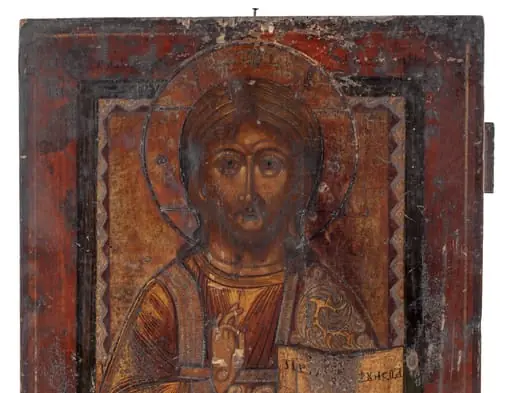 Iisus Christos (Iisus Hristos)
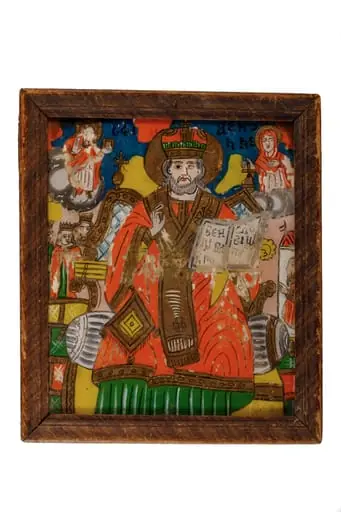 Icoană pictată pe sticlă reprezentând pe Sf. Nicolae. Sfântul este prezentat pe tron, față, bărbat tânăr, plete, barbă scurtă, cu dreapta binecuvântând, iar în stânga ține Evanghelia. Sus este încadrat de Iisus și Maria care îi oferă Evanghelia și omoforul. Stânga, la nivelul brațului, trei personaje în picioare și în dreapta o clădire și o mână (?) întinsă. Omoforul auriu cu cruci se evidențiază pe haina roșie cu linii ce marchează anatomia corpului. Icoana este înrămată.
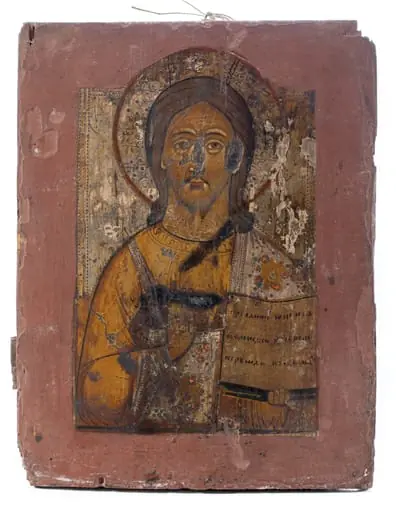 Christ binecuvântând
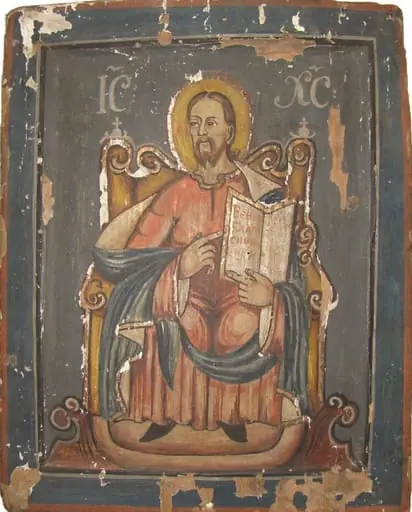 Iisus Hristos Învățător, tronând
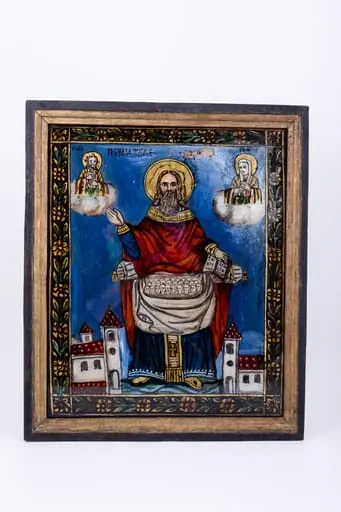 Icoana îl reprezintă central, supradimensional, pe Sfântul Cuvios Părinte Avraam, îmbrăcat în veșminte roșii și albastre, cu un ștergar alb legat de brâu, în care are nenumărați creștini. Acest ștergar reprezintă, de fapt, sânul lui Avraam, adică o parte a Împărăției Cerurilor, acolo unde este fericirea mult-dorită. În mâna stângă ține Sfânta Scriptură - Biblia - deschisă, iar cu mâna dreaptă binecuvântează neamurile și noroadele. În registrul superior este Dumnezeu Binecuvântând și Maica Domnului ocrotind. În registrul inferior sunt elemente arhitecturale, reprezentând spațiul concret al istoriei neamurilor. Fondul este albastrul regal al cerului. Întreaga icoană este încadrată de un chenar fitomorf, format dintr-o ghirlandă de flori galbene și frunze, pe un lujer agățător. Inscripția din româno-chirilică se traduce IC XC Iisus Hristos MP Maica Domnului Părintele Avraam. Icoana este de pe Valea Sebeșului. Cromatica este armonioasă și elegantă, discretă: roșu vermillon, stacojiu, albastru regal, verde, galben, gri, alb, negru.
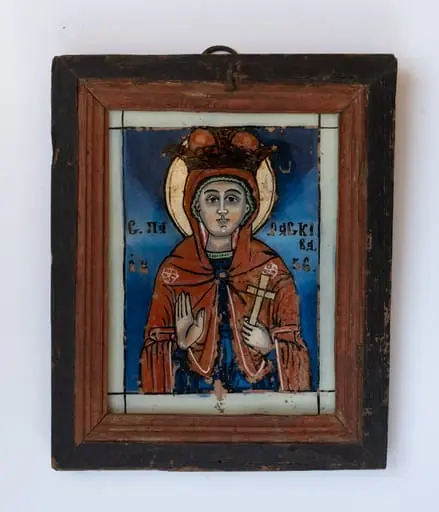 Sfânta Parascheva
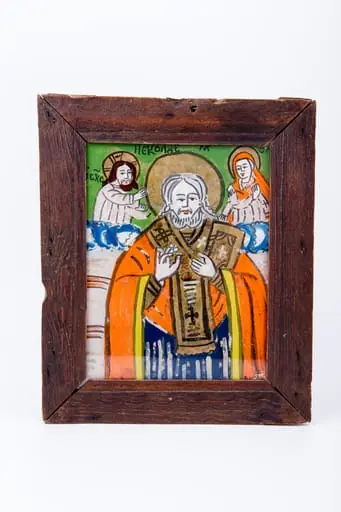 Sfântul Mare Ierarh Nicolae Făcătorul de minuni este redat central, ținând în mâna stângă Sfânta Evanghelie închisă și binecuvântează cu mâna dreaptă. Veșmintele arhierești liturgice ale sfântului ierarh sunt într-o alternanță cromatică de orange- verde-albastru-galben citronne și alb și negru. Epitrahilul, patrafirul este brun-bronziu, cu patru cruci pe el, sacosul orange-roșu vermillon. Poartă mithră și are aureolă. Ține în mâna stângă Sfânta Evanghelie închisă și binecuvântează. În registrul superior îndepărtat sunt Dumnezeu-Tatăl și Maica Domnului, care ating aureola Sfântului Nicolae. Pe fondul verde, Mântuitorul și Maica Domnului au veșminte gri, crem, orange. Inscripția din româno-chirilică se traduce Sf Nicolae ICXC MP Iisus Hristos Maica Domnului. Icoana are o cromatică puternic-vie, specifică Țării Oltului: verde, albastru ceruleum, orange, gri, galben citronne, alb, negru.
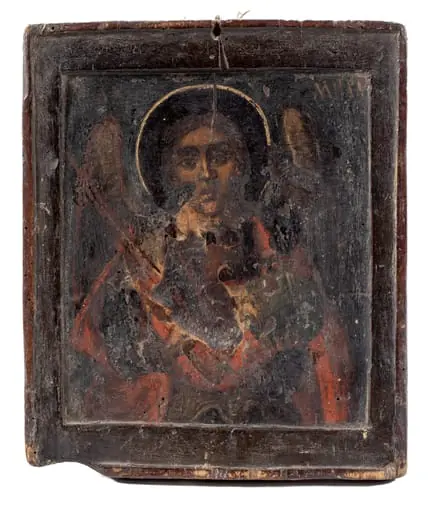 Arhanghelul Mihail
 Sfântul Nicolae