Artwork
Moise
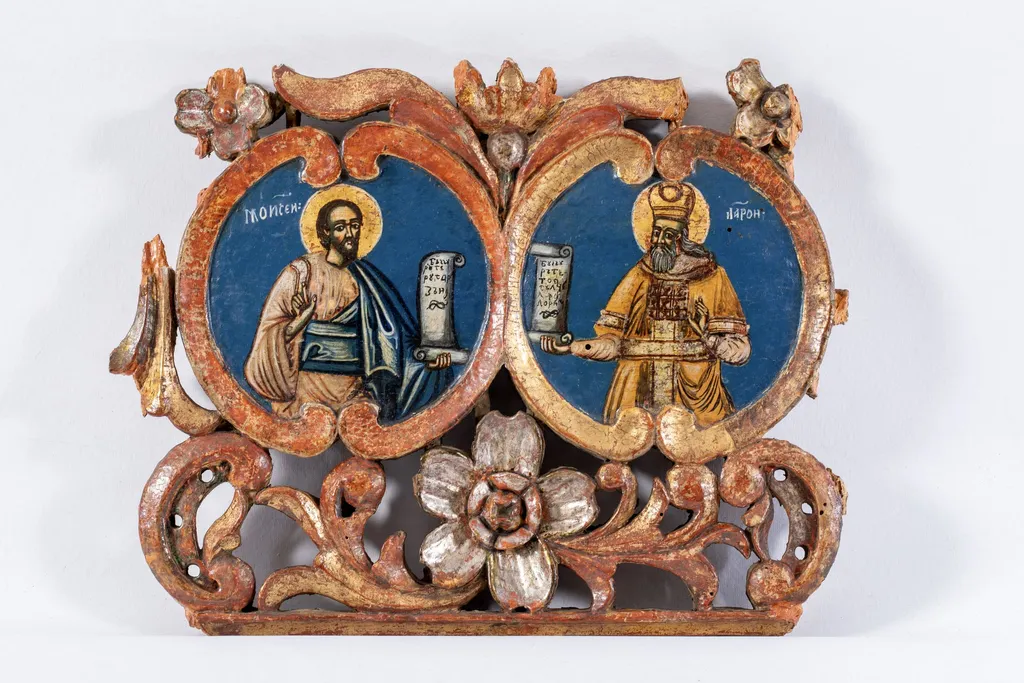
Moise is an unspecified painting by the Byzantine icon painting artist Hugo Kołłątaj. It is held in the collection of the Moldova National Museum Complex. The work presents a pair of figures framed within circular medallions, each clutching a scroll.
About this work
Overview
Set against a deep blue field, the composition is enlivened by red and gold ornamental swirls that radiate outward.
The work presents a pair of figures framed within circular medallions, each clutching a scroll. Set against a deep blue field, the composition is enlivened by red and gold ornamental swirls that radiate outward. The left figure is modestly dressed in plain robes, his expression tranquil, while the right figure is adorned in elaborate gold garments and a crown, indicating elevated status. The piece shows signs of age, with softened edges and a patina of wear.
Subject & Meaning
The two men likely represent contrasting spiritual or hierarchical roles, suggested by their differing attire and the inscriptions on the scrolls they hold. The calm, simply clothed figure may symbolize humility or a prophetic voice, whereas the richly attired, crowned individual could denote authority, perhaps a saint or ecclesiastical dignitary. The juxtaposition invites contemplation of earthly modesty versus divine or regal authority within a religious framework.
Technique & Style
Executed with gold leaf and vivid pigments, the image employs a traditional iconographic palette that emphasizes contrast between the luminous gold and the darker background. The circular frames and decorative swirls echo Byzantine and post‑Byzantine decorative motifs common in liturgical art. The lettering above each head is rendered in an archaic script, reinforcing the work’s devotional purpose and its placement within a sacred visual program.
Context
The composition aligns with the visual language of iconostases, the screen-like structures that separate sanctuary from nave in Eastern Christian churches. Such paired figures would have been integrated into a larger ensemble of icons, contributing to the theological narrative displayed to worshippers. The work’s material richness and formal qualities suggest it was intended for a specific ecclesiastical setting rather than a private collection.
Artist & collection
Artist
This Polish folk painter worked in the late eighteenth and early nineteenth centuries, creating religious scenes with bold colors and simple shapes.
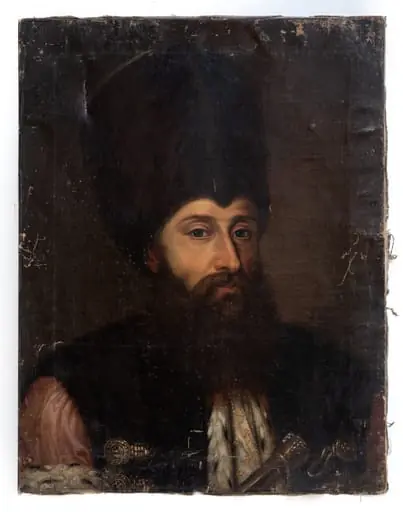 Alexandru Ipsilanti
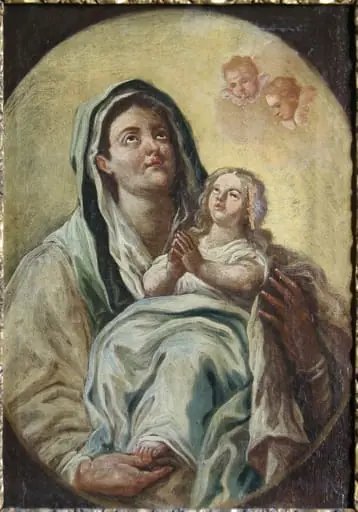 Fecioara Maria cu Pruncul Isus (în Reg. Inv.: Maria cu copilul Isus)
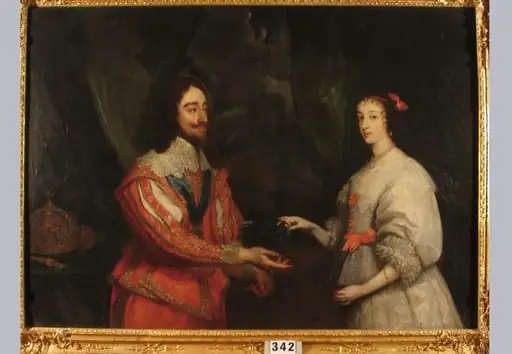 Regele Charles I Stuart al Angliei și soția sa Henrietta Maria de Franța (în Reg. Inv.: Carol I al Angliei și soția sa Henriette din Franța)
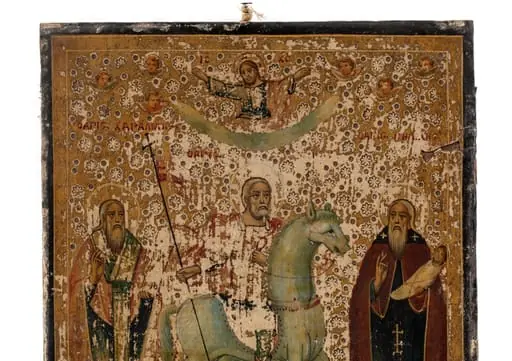 Sfântul Haralambie cu alți doi sfinți
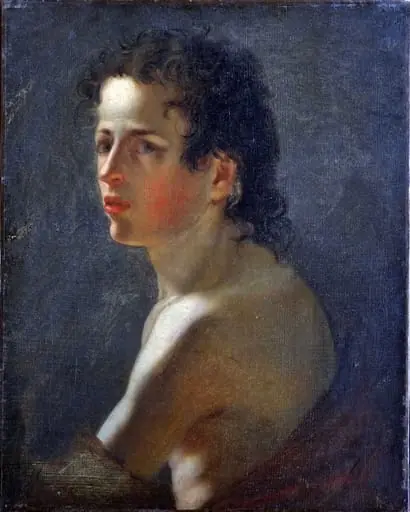 Portret de bărbat
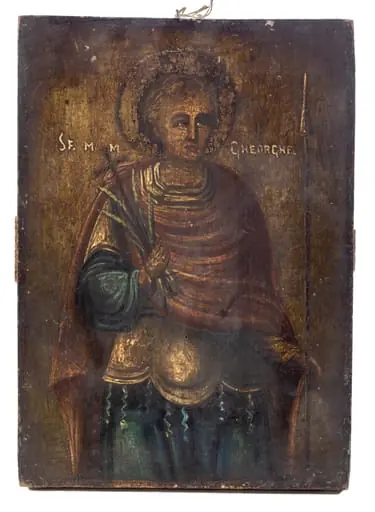 Sfântul Gheorghe
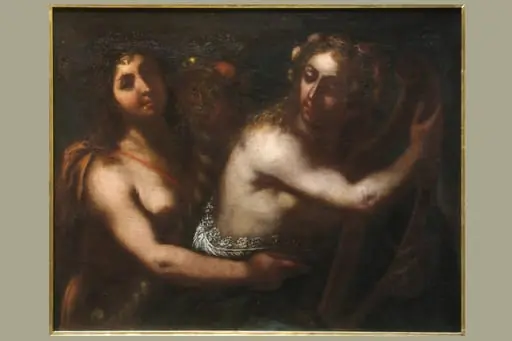 Vertumnus și Pomona (în Reg. Inv.: Vertumnus și Flora)
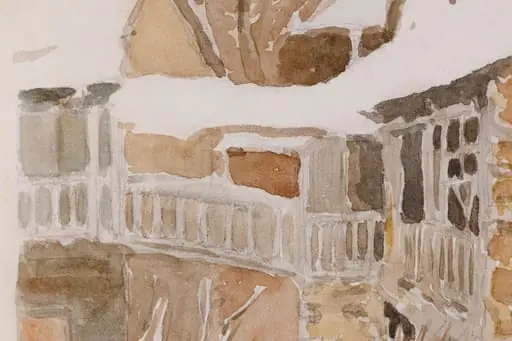 Iarnă
Iarnă
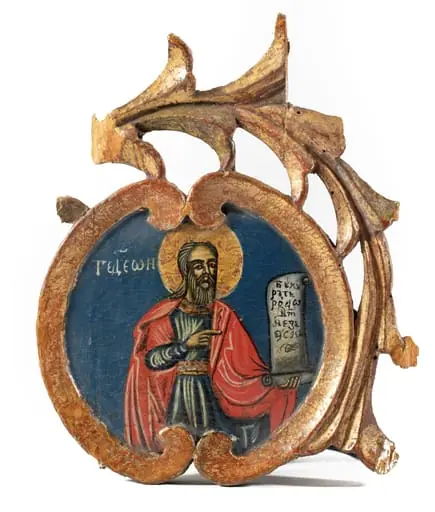 Ghedeon
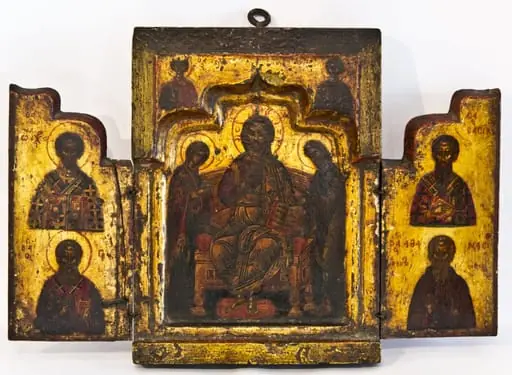 Iisus Hristos Mare Invățător, Mica Deisis
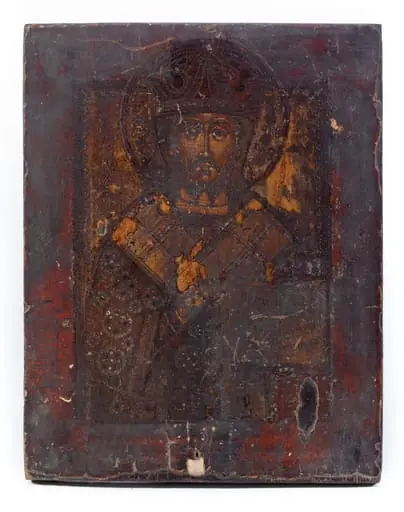
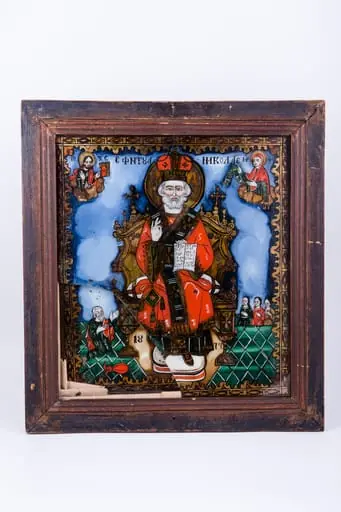 Sfântul Mare Ierarh Nicolae Făcătorul de minuni este redat central, fiind așezat pe un tron arhieresc, bogat ornamentat cu detalii arhitecturale, ținând în mâna stângă Sfânta Evanghelie închisă și binecuvântează cu mâna dreaptă. Veșmintele arhierești liturgice ale sfântului ierarh sunt într-o alternanță cromatică de roșu vermillon - verde - kaki - brun- bronziu. Epitrahilul, patrafirul este brun-kaki, cu patru cruci pe el, sacosul roșu vermillon. Poartă mithră și are aureolă. Ține în mâna stângă Sfânta Evanghelie deschisă și binecuvântează. În registrul superior îndepărtat sunt Dumnezeu-Tatăl și Maica Domnului, care binecuvântează și ocrotesc. Pe fondul albastru ceruleum în degrade cu albastru regal și alb, Mântuitorul și Maica Domnului au veșminte roșii și verzi. În registrul inferior sunt cele trei fete salvate de sfântul ierarh de la sărăcie și păcat și tatăl fetelor, care îngenuncheat, mulțumește pentru minunea și binefacerile primite. Inscripția din româno-chirilică se traduce Sf Nicolae ICXC Iisus Hristos MP Maica Domnului. Icoana are o cromatică puternic-vie, specifică Țării Oltului: roșu vermillon, verde, albastru ceruleum, gri, galben chihlimbar, alb, negru. Icoana este încadrată de un chenar decorativ geometrizant, format dintr-o dantelărie aurie. Icoana aparține lui Savu Moga, din Arpașu de Sus, Țara Făgărașului. Icoana este datată 1877.
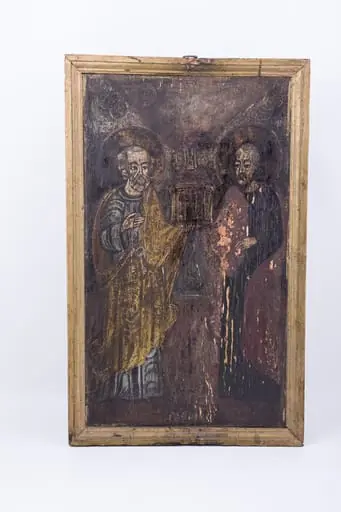 Icoana îi prezintă pe Sfinții Apostoli Petru și Pavel. Sfântul Petru, înveșmântat în verde și roșu, are în mâna dreaptă cheile Împărăției Cerești și în mâna stângă Sfânta Evanghelie. Apostolul Pavel, este înveșmântat în roșu și galben, are sabia și spada Cuvântului. Prezentarea celor doi apostoli este una simetrică și echilibrat-compozițională. Sfinții Apostoli susțin cu mâinile o Biserică, simbolul bisericii apostolice și sobornicești, un chivot sfințit. Chipurile sunt foarte expresive, cu trăsături fine. Cromatica este armonioasă: roșu vermillon, albastru bleu-ciel, brun, galben-ocru, alb, negru. Inscripția este indescifrabilă.
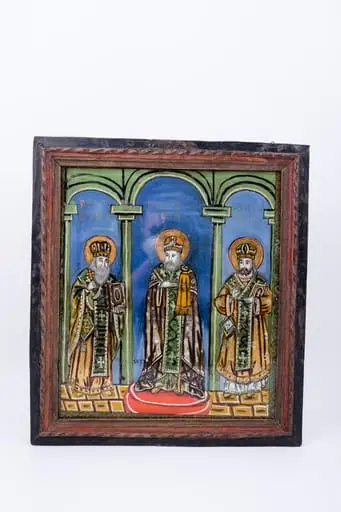 Cei Trei Sfinți Ierarhi Vasile cel Mare, Grigorie de Dumnezeu Cuvântătorul și Ioan Gură-de-Aur slujesc și săvârșesc Sfânta Liturghie împreună. Sunt înveșmântați în veșminte liturgice: sacos, felon și epitrahil verde, brun-ocru, kaki, brun-bronziu cu câte patru cruci pe mijlocul patrafirului. Sfântul Vasile cel Mare binecuvântează cu crucea în mâna dreaptă și ține în mâna stângă Sfânta Evanghelie. Sfântul Ioan Gură-de-Aur este în mijloc, așezat cu picioarele pe o pernă rotundă roșie, are mâna dreaptă lipită la piept, în semn de evlavie și cu mâna stângă ține cârja arhierească, Sfântul Grigorie binecuvântează cu mâna dreaptă și ține în mâna stângă Sfânta Evanghelie. Fondul este albastru ceruleum în registrul superior, în registrul inferior este un caroiaj brun-ocru-galben chihlimbar. Cromatica este armonioasă și săracă în nuanțe: verde smarald, absint, kaki, alb, roșu vermillon, albastru, alb, negru. Este o icoană specifică picturii de Valea Sebeșului, cu un desen fin cu conturul negru și cromatica pastelată. Inscripția din româno-chirilică se traduce Sfântul Vasile Sfântul Ioan Sfântul Grigorie.
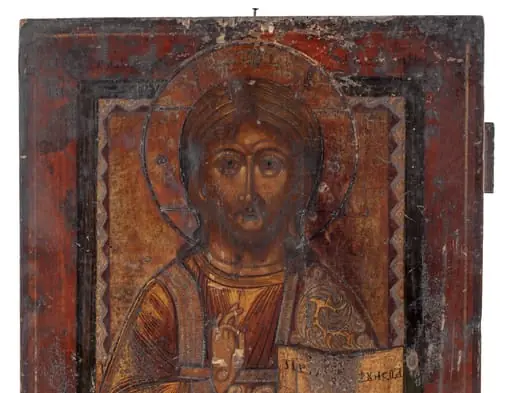 Iisus Christos (Iisus Hristos)
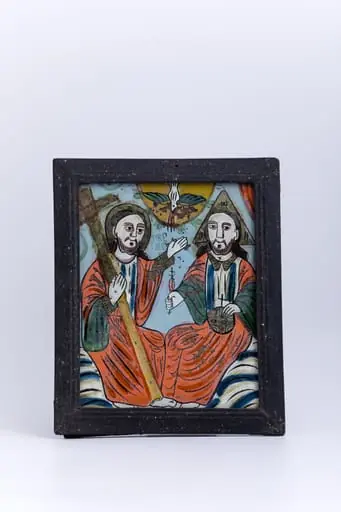 Icoana reprezintă Sfânta Treime. Dumnezeu-Tatăl are globul pământesc albastru pe genunchi și arătă către Fiul Iisus Hristos Binecuvântând lumea. Dumnezeu-Fiul are Crucea galbenă-aurie pe umărul drept și arătă către Dumnezeu-Tatăl. Dumnezeu-Tatăl și Dumnezeu-Fiul sunt înveșmântați în roșu vermillon și verde smarald cu albastru cobalt. Deasupra, în registrul superior este un soare galben, din care pe un mănunchi de raze luminoase, se pogoară Sfântul Duh, sub forma porumbelului alb. Astfel este prezentă întreaga Sfântă Treime. Între Dumnezeu-Tatăl și Fiul este un spațiu luminos de galben. Fondul icoanei este cerul albastru cobalt-regal, înconjurat de lumina galbenă-solară. Cromatica este luminoasă și armonioasă: roșu vermillon, albastru regal și cobalt, galben chihlimbar, verde smarald, gri, alb, negru.Inscripția din româno-chirilică se traduce Treime. Icoana este din Nordul Transilvaniei, Nicula.
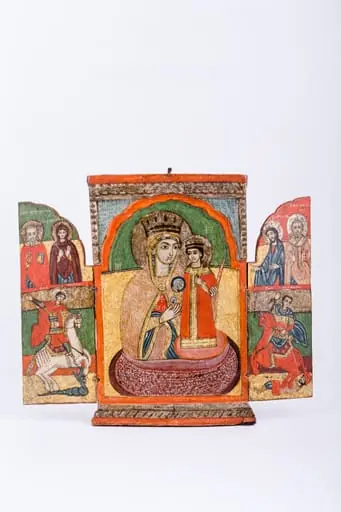 Icoana este un triptic - ansamblu de trei panouri pictate, unite prin conținut tematic iconografic comun și prin balamalele, prin care fețele laterale se închid de cea centrală. Tripticul este asemenea unei cărți sau ferestre, deschise-închise. Având stabilitate icoana centrală, tripticul poate avea valoarea de altar zburător. Tema centrală, care dă și titlul întregului ansamblu este Maica Domnului ține în brațe Pruncul Iisus Hristos, care Binecuvântează cu mâna dreaptă și ține globul pământesc cu crucea. Mântuitorul stă în picioare pe genunchii Maicii Domnului. Maica Domnului este înveșmântată în mantie cu maforion gălbui-crem-bej cu interiorul verde-roșu și ciupag auriu, are coroană și aureolă. Pruncul Iisus Hristos este înveșmântat în roșu sângeriu, cu bordură dantelată aurie, cu aureolă. Fondul icoanei este galben, în registrul inferior și verde în registrul superior. Icoana este încadrată de un chenar orange, portocaliu și un chenar crestat, basorelief, motivul funiei, de culoarea naturală a lemnului. În tematica fețelor laterale sunt reprezentați Sfântul Mare Mucenic Gheorghe purtător de biruință, Sfântul Mare Mucenic Dimitrie izvorâtor de mir, Sfânta Mare Cuvioasă Parascheva, Sfântul Ioan Botezătorul și doi sfinți ierarhi. Ușițe tripticului închizânduse, se realizează o imagine boltită, asemenea unor uși de biserică, pe care este inscripția în româno-chirilică: IC XC NIKA Iisus Hristos Biruiește! Cromatică: roșu vermillon, roșu-portocaliu, galben, verde, acajou, stacojiu, brun, bej,olive, auriu, negru. Inscripția pe icoana centrală, din româno-chirilică se traduce MP IC XC Maica Domnului Iisus Hristos.
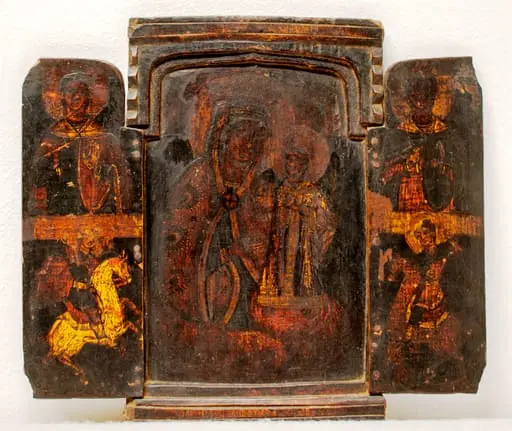 Pe panoul central este reprezentată Maica Domnului Hodighitria(Călăuzitoarea). Pruncul stă în picioare, amândoi fiind înveșmântați în straie împărătești. Maica ține Pruncul cu mâna stângă, cu dreapta arată către El. Voleul stâng, jumătatea inferioară - Sfântul Gheorghe călare pe cal alb. Înveșmântat în costum românesc de oștean medieval, mantie roșie. Calul cu picioarele din față ridicate, harnașament de culoare roșie. Deasupra e posibil să fie tot sfântul Gheorghe, în stânga ținând crucea, cu dreapta face gestul păcii, al liniștii.(prin analogie cu 34530). Simetric, pe latura dreaptă a tripticului se află jos, Sf. Dumitru, călare pe cal roșu, în poziție asemănătoare cu a SF. Gheorghe, iar sus probabil tot el, în altă ipostază iconografică(analogie) . Veșmintele au culorile inversate(tunica roșie -dreapta, albastru-stânga, mantie roșu -stânga, albastru - dreapta), la fel la sfinții războinici, probabil în legătură cu reprezentarea populară a timpului. Inițial, tripticul se închidea, dovadă inscripția care se continuă pe cele două uși. Ulterior a fost fixat cu cuie de fier, iar prinderea se făcea cu o sfoară legată de două cuie bătute pe cant.
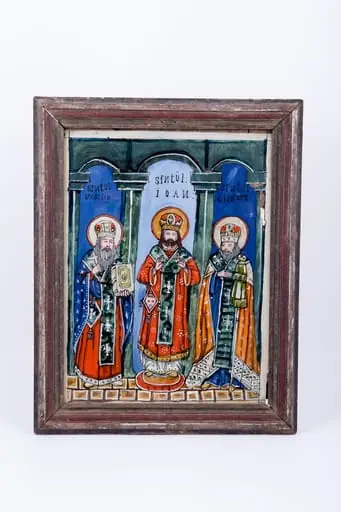 Cei Sfinți Trei Ierarhi Vasile cel Mare, Grigorie de Dumnezeu Cuvântătorul și Ioan Gură-de-Aur slujesc și săvârșesc Sfânta Liturghie împreună. Sunt înveșmântați în veșminte liturgice: sacos, felon și epitrahil mithră și aureolă. Cromatica veșmintelor este vie și luminoasă: roșu vermillon, orange-cărămiziu, galben-ocru și albastru ceruleum și bleu-ciel, verde și alb. Sfântul Vasile cel Mare are crucea în mâna dreaptă și binecuvântează și în mâna stângă ține Sfânta Evanghelie închisă. Sfântul Ioan Gură-de-Aur, central, tânăr cu barba brunetă, binecuvântează cu ambele mâini și are pe bedernița romboidală un chip de sfânt, element antrpomorf. Alături este Sfântul Grigorie care ține în mâna stângă cârja-sceptrul arhiepiscopală și binecuvântează. Fondul întregii tematici iconografice este albastru ceruleum în exterior și central bleu-ciel. Sfinții trei ierarhi sunt încadrați de coloane și arcade-bolți, schițându-se astfel structura arhitecturală de biserică. În registrul inferior este un un caroiaj alb-ocru, o lespede de fundație puternică - reprezentând credința creștin-ortodoxă. Cromatica este luminoasă și armonioasă: roșu vermillon, orange, verde spanac-avocado, galben-ocru, brun, albastru ceruleum și bleu-ciel, gri, alb și negru. Este o icoană de Valea Sebeșului. Inscripiția din româno-chirilică se traduce: Sfântul Vasilie Sfântul Ioan Sfântul Grigorie. Icoana este datată 1908.
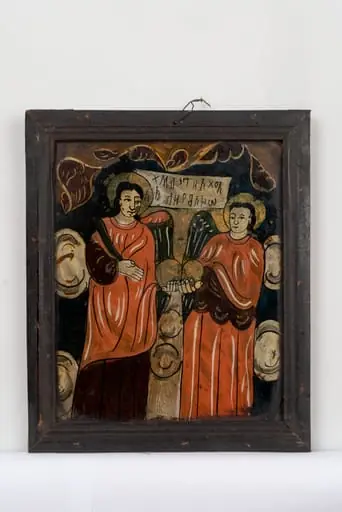 Icoana îi reprezintă pe Sfinții Arhangheli Mihail și Gavriil, pictați frontal, în picioare, în veșminte lungi și asemănători unul cu celălalt. Amândoi arhanghelii țin spre miljoc o sferă, iar sfântul arhanghel Mihail ține în mâna dreaptă o sabie. Fondul icoanei e compus din nori stilizați în partea inferioară a compoziției și ornamente din registrul vegetal în partea superioară. Cromatica icoanei se compune din tonuri de roșu, ocru, alb, verde, albastru, maro, negru și gri. Rama icoanei e profilată, băițuită și e formată din îmbinarea a patru baghete de lemn.
 Sfântul Nicolae