Artwork
Alexandru Ioan Cuza
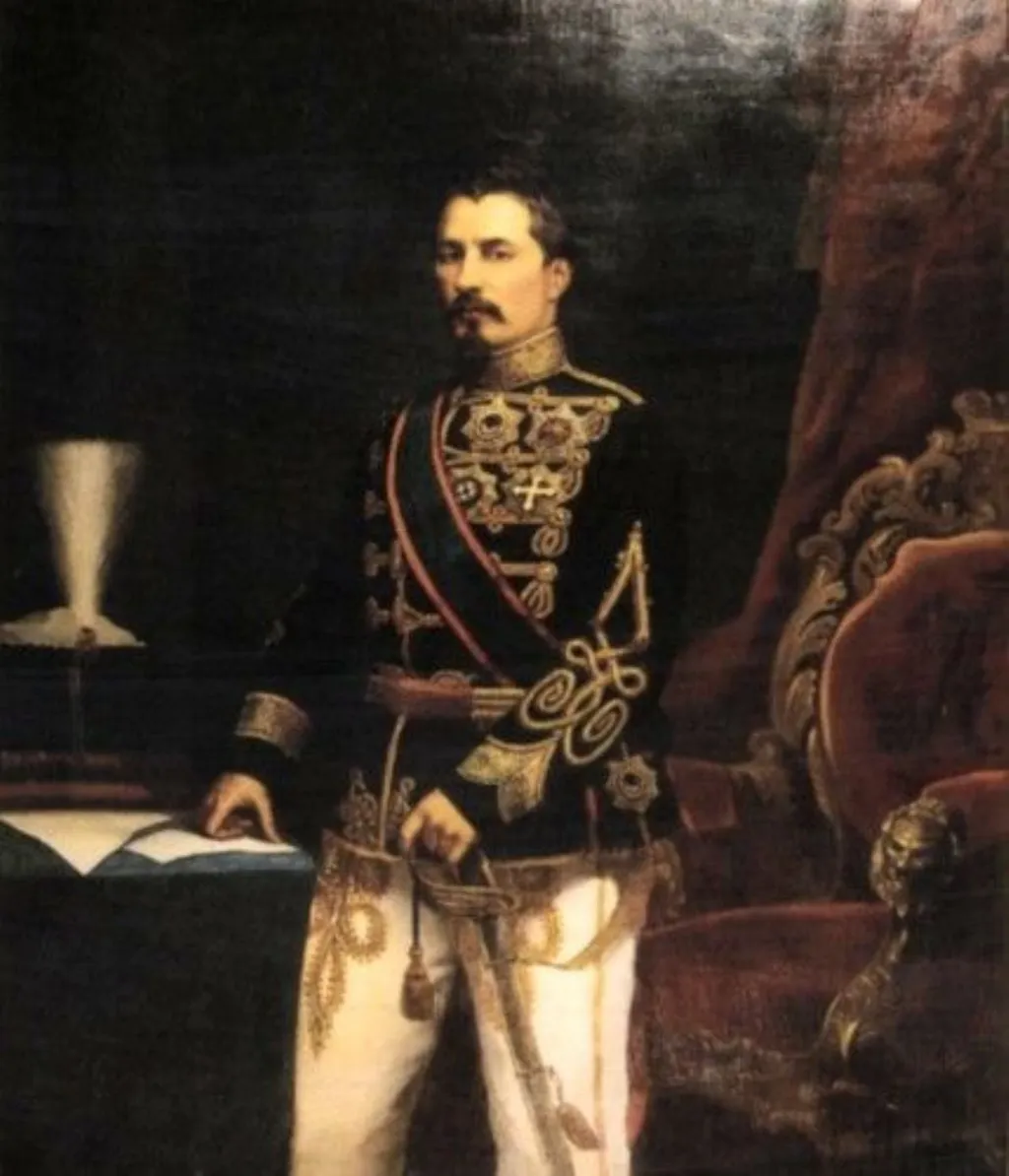
Alexandru Ioan Cuza is an unspecified painting by the Impressionist artist Carol Szathmari. It dates from 1864 and is held in the collection of the National Museum of Romanian History.
About this work
Overview
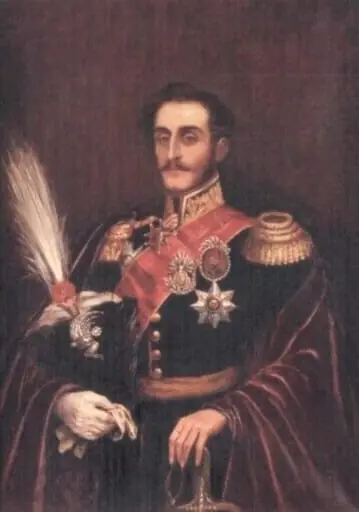
This portrait, completed in 1864 by Carol Szathmari, depicts Alexandru Ioan Cuza, the first ruler of the united Romanian Principalities.
This portrait, completed in 1864 by Carol Szathmari, depicts Alexandru Ioan Cuza, the first ruler of the united Romanian Principalities. Rendered in oil on canvas, the image captures Cuza in formal military attire, emphasizing his political authority. The composition is tightly framed, focusing on the figure against a dimly lit interior, with minimal background detail to direct attention to the subject’s presence and attire.
Subject & Meaning
Cuza is portrayed in the uniform of a high-ranking military officer, adorned with medals and gold embroidery, signifying his dual role as a statesman and commander. The sword he holds, with its curved hilt, alludes to tradition and authority. The presence of a book on the table suggests intellectual engagement, reinforcing his image as a reformer. The solemn expression and upright posture convey dignity and resolve, aligning with his public role during a period of national consolidation.
Technique & Style
Szathmari employs chiaroscuro to sculpt the figure with strong contrasts between light and shadow, enhancing the three-dimensionality of the uniform and facial features. The dark background recedes, allowing the rich textures of the gold trim and white trousers to emerge with clarity. Brushwork is precise yet restrained, avoiding overt flourish; the effect is one of quiet gravitas, characteristic of mid-19th-century portraiture aimed at projecting institutional authority rather than personal charisma.
History & Provenance
Commissioned shortly after Cuza’s ascension as Domnitor in 1859, the portrait was likely intended for official use, possibly for government buildings or diplomatic gifts. It remained in Romanian state collections through the 20th century. The painting’s survival through political upheavals, including the fall of the monarchy and communist era, underscores its status as a symbol of early Romanian statehood, preserved as part of national heritage.
Context
Created during a period of modernization and unification, the portrait reflects the new Romanian state’s desire to project legitimacy through visual culture. Szathmari, already known for his photographic work, adapted his precision to oil painting to meet the demand for authoritative imagery. The portrait aligns with European trends in state portraiture, where military dress and controlled environments conveyed stability and continuity amid political transformation.
Legacy
The portrait endures as one of the most recognizable images of Alexandru Ioan Cuza, frequently reproduced in textbooks and official publications. Its restrained aesthetic and symbolic elements have influenced later depictions of Romanian leaders. While not widely exhibited abroad, it holds enduring significance within Romania as a visual anchor of the nation’s foundational moment, representing the transition from fragmented principalities to a unified entity.
Artist & collection
Artist
Carol Szathmari made paintings and one sculpture in the mid-1800s, mostly portraits and scenes from everyday life.

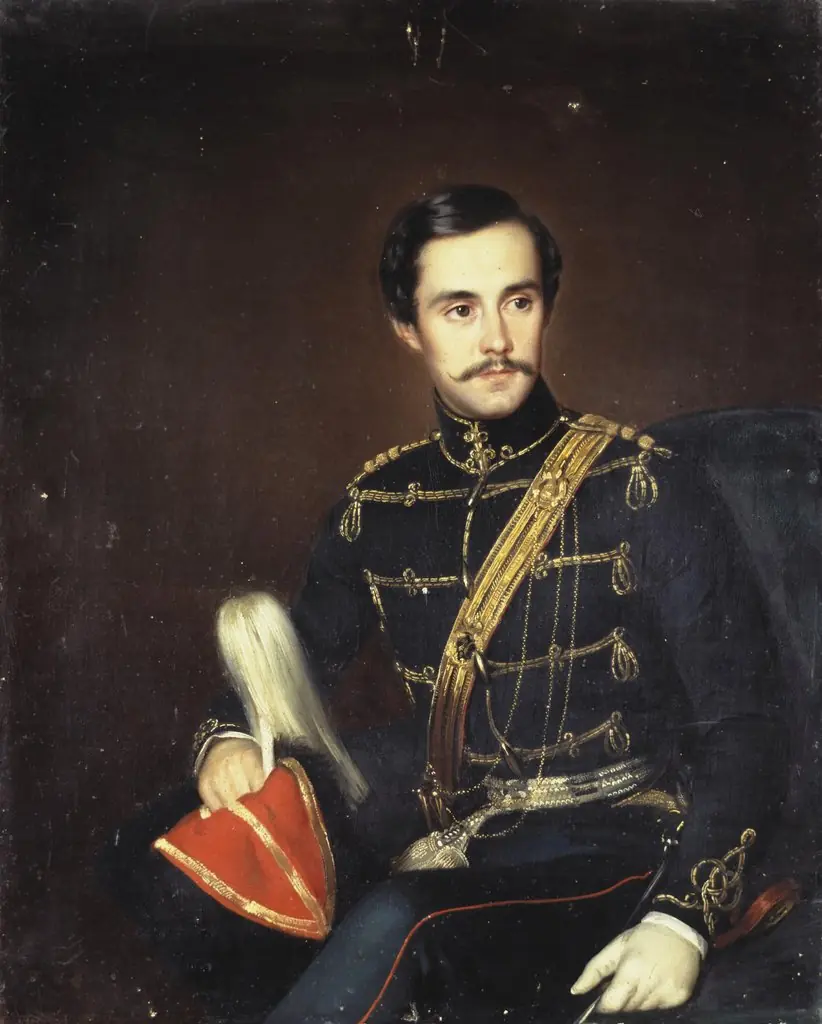 Portrait of Nikolai Monsey
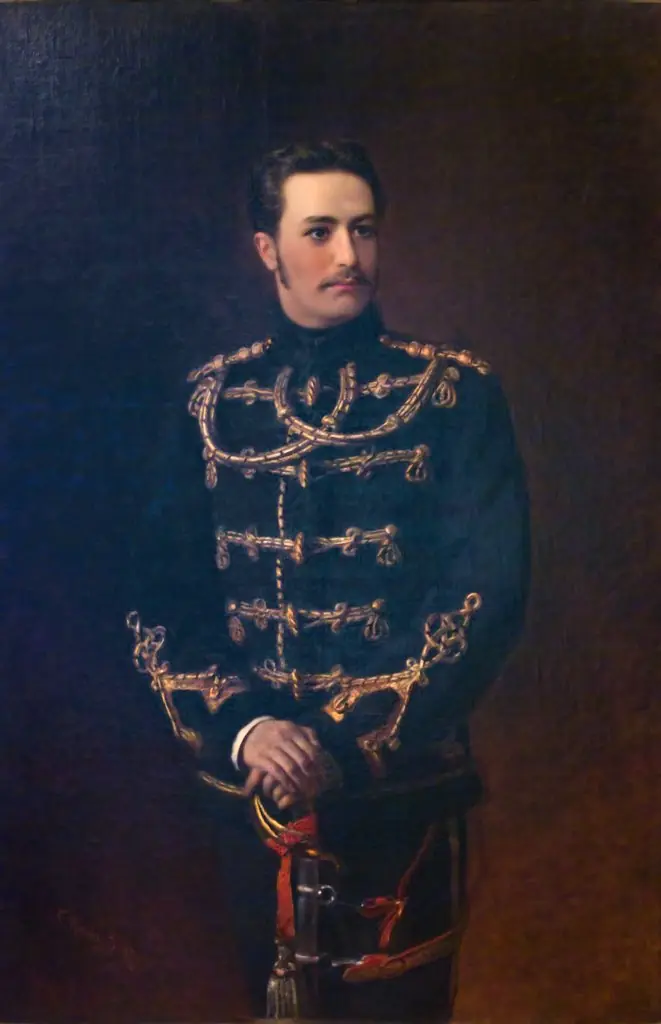 Portrait of Count Vladimir Bobrinsky, Lieutenant of the Life-Guards Hussar Regiment
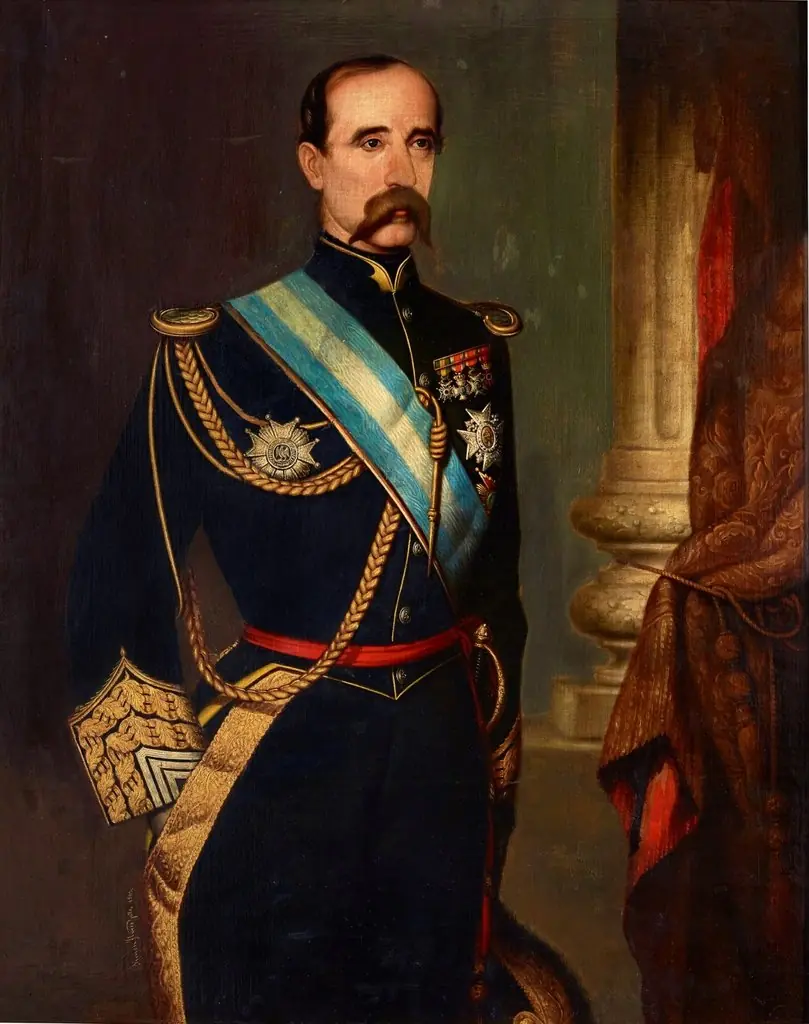 José Lemery e Ibarrola Ney y González
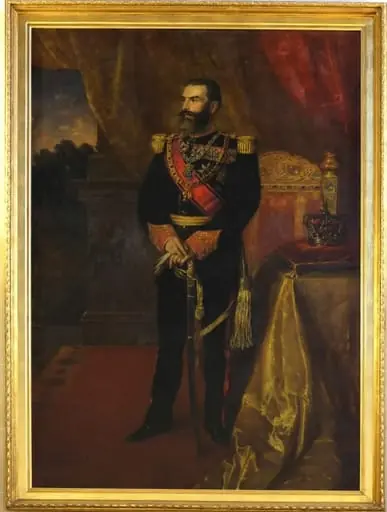 Portretul regelui Carol I
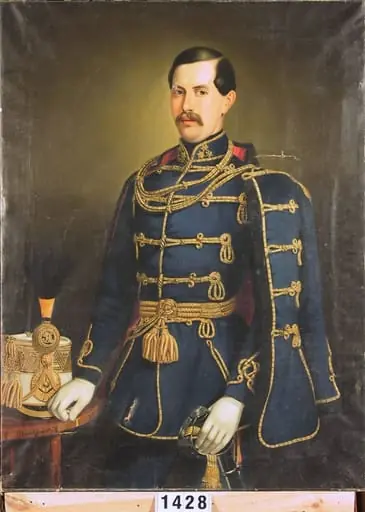 Căpitanul Carl Ehrenreich Hartmayer, auditor al Regimentului chezaro-crăiesc de husari nr. 2 (în registrul inventar: C. E. Hartmayer)
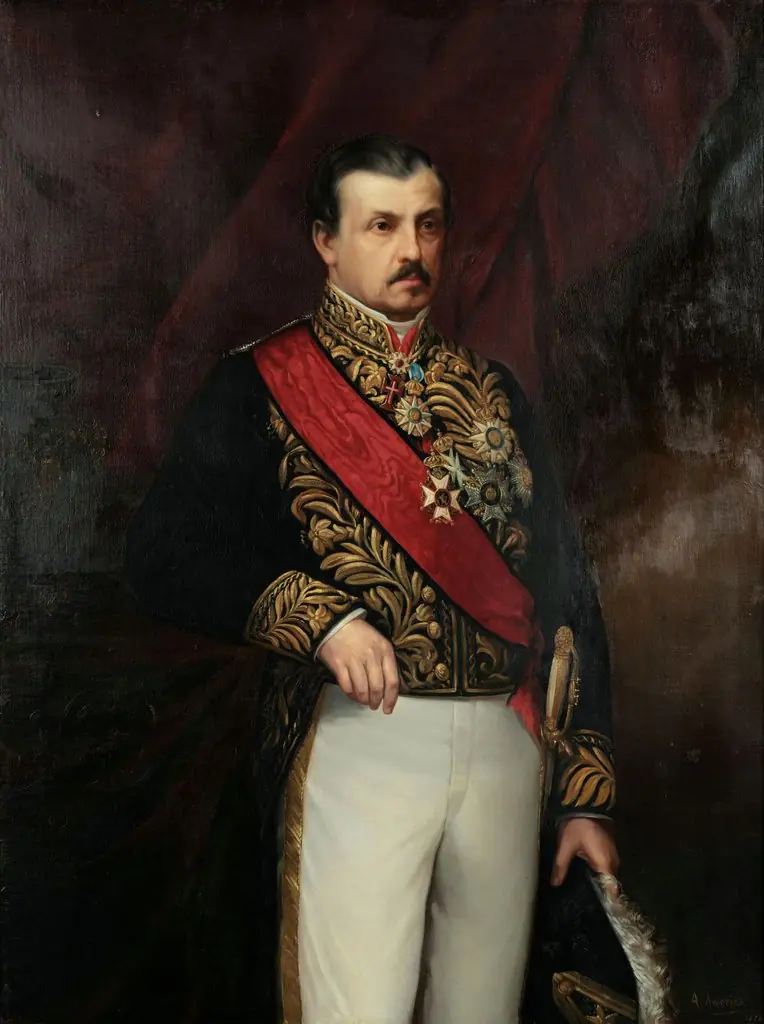 Portrait of the Viscount of Santo Amaro
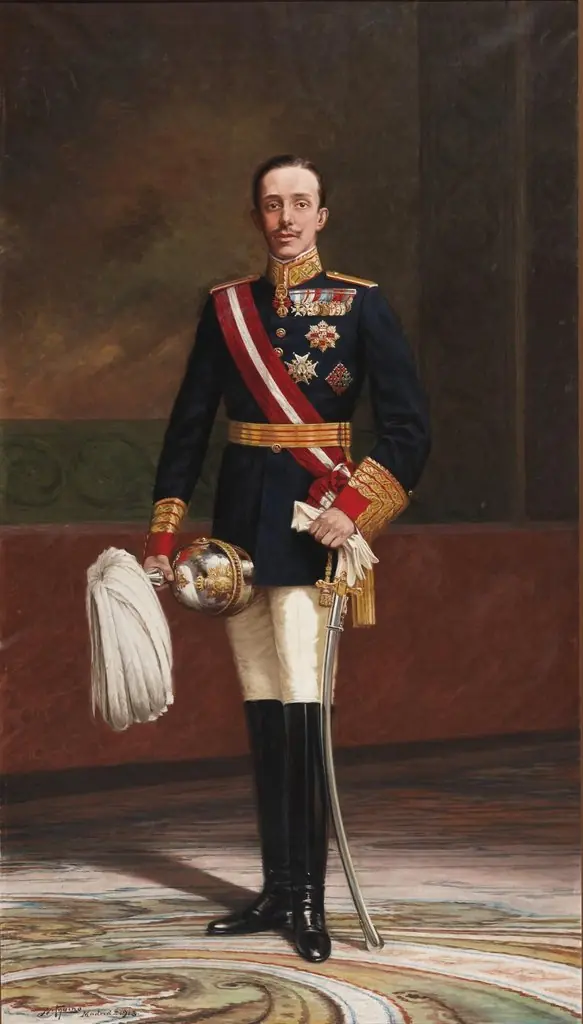 Alfonso XIII con uniforme de capitán general
 Portrait of General-Adjutant Count Vasily Alekseevich Perovsky
 Principele Grigore Ghica
 Portrait of Alexander P. von Benckendorff (1819 – 1851)
 Împăratul Franz Joseph I (în registrul inventar: Împăratul Frans Joseph II)
 Domnitorul Mihail Sturdza