Artwork
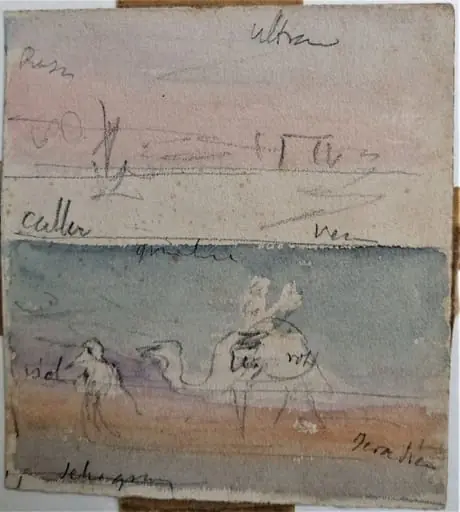
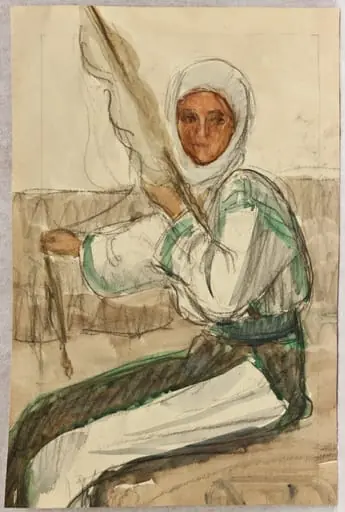
Arab șezând
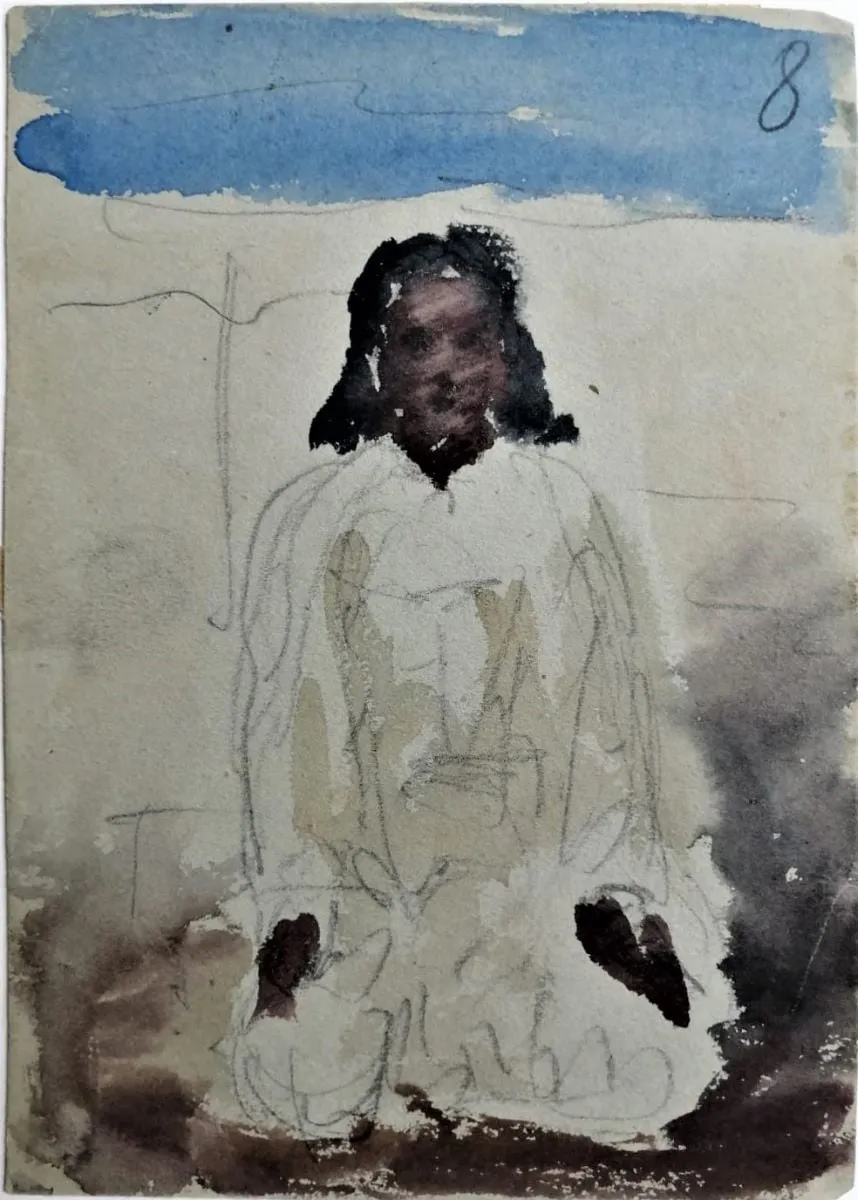
Arab șezând is an unspecified painting by Carol Szathmari. It dates from 1850 and is held in the collection of the Bucharest Municipality Museum.
About this work
Overview
Created around 1850, “Arab șezând” is a modestly sized drawing by the Hungarian‑born photographer and painter Carol Szathmari. The work is part of the collection of the Museum of Ethnography, where it is displayed as an example of mid‑nineteenth‑century Orientalist sketching.
Subject & Meaning
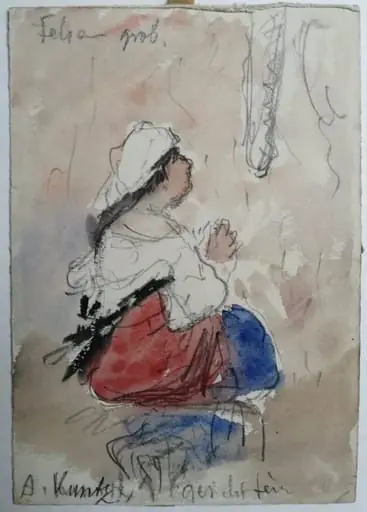
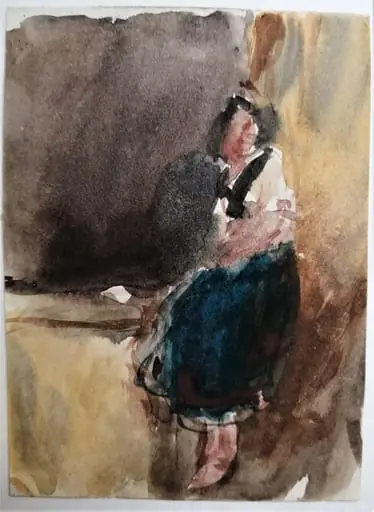
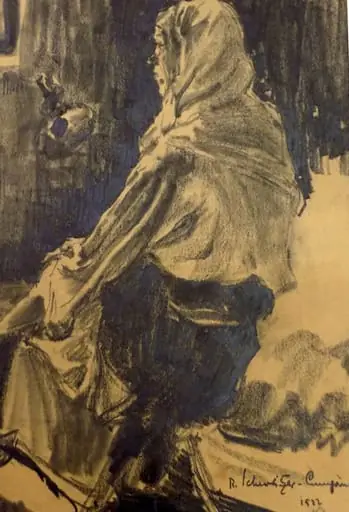
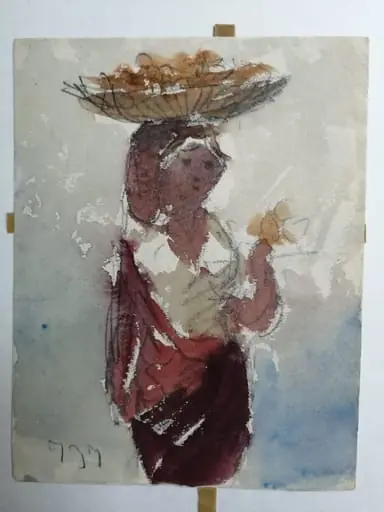
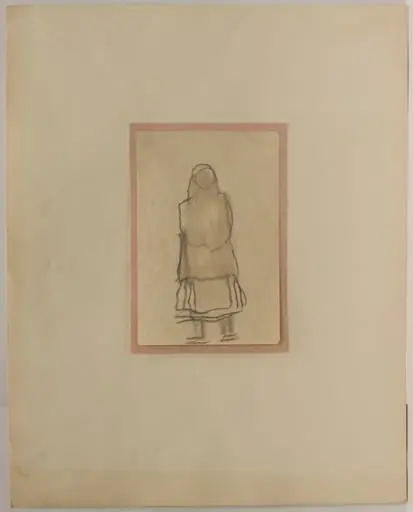
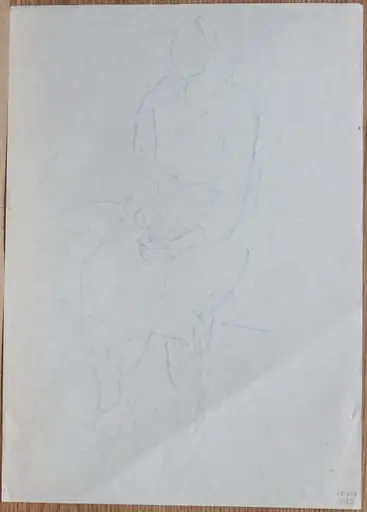
The image depicts a solitary figure seated on the ground, cloaked in a loosely draped robe that suggests a Middle‑Eastern costume. The sitter’s face is rendered in deep shadow, revealing only vague contours, which directs attention to the garment and the posture rather than a precise portrait.
Technique & Style
Executed with rapid, uneven brushstrokes, the drawing retains the texture of the artist’s hand. The robe and hands are suggested with rough, almost erased marks, while a pale blue wash fills the background. The unfinished quality indicates a quick study rather than a polished composition, emphasizing gesture over detail.
History & Provenance
Carol Szathmari, known for his early photographic work in the Ottoman Empire, produced this piece during his travels in the region. After changing hands among private collectors, the drawing entered the Museum of Ethnography’s holdings, where it has remained as part of the institution’s representation of 19th‑century ethnographic art.
Context
The drawing belongs to a broader European fascination with Oriental subjects in the mid‑1800s, a period when artists and photographers documented the cultures of the Ottoman world. Szathmari’s dual practice as a photographer and painter allowed him to capture both documentary detail and spontaneous sketching, as seen in this work.
Artist & collection
Artist
Carol Szathmari made paintings and one sculpture in the mid-1800s, mostly portraits and scenes from everyday life.