Artwork
Cămilă în deșert
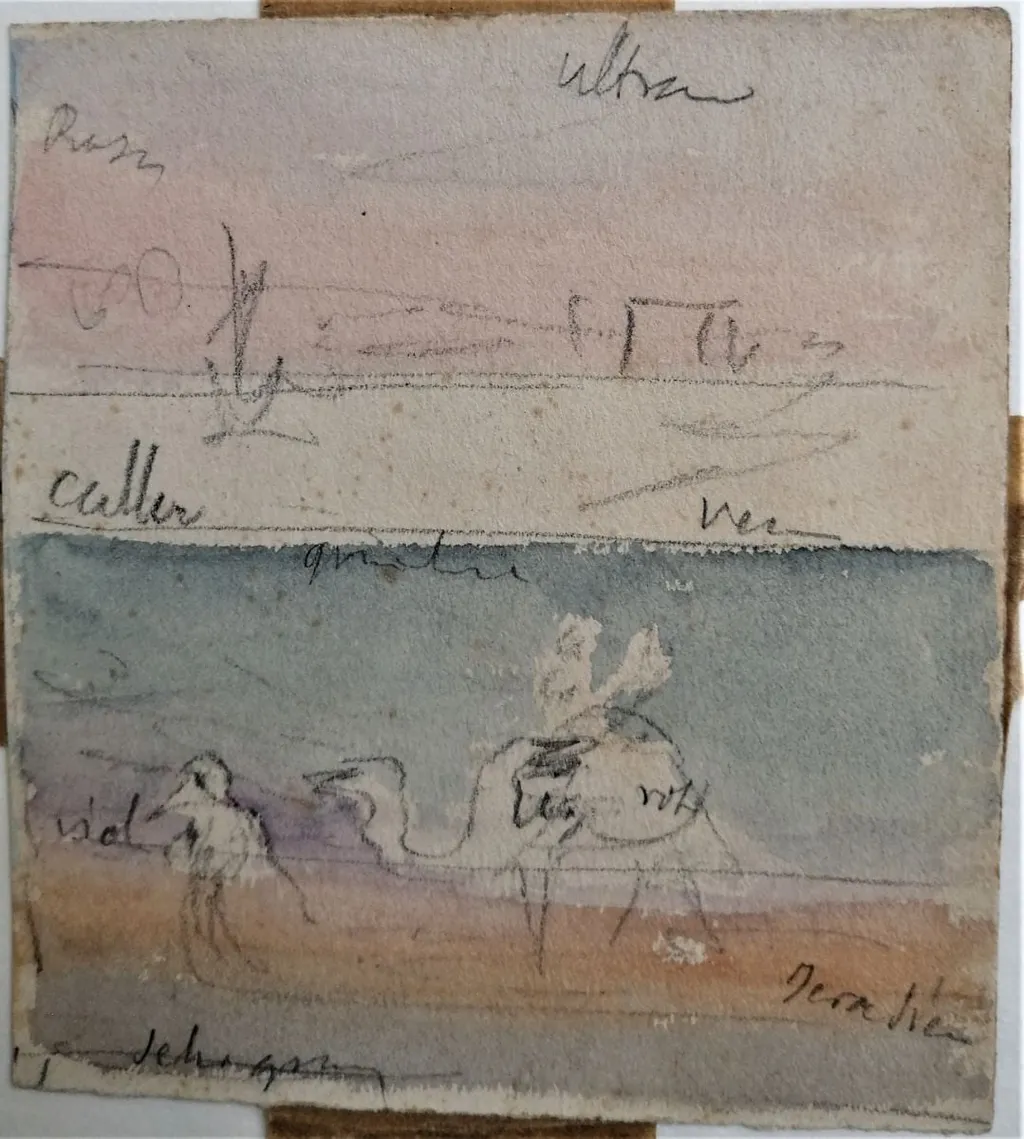
Cămilă în deșert is an unspecified painting by Carol Szathmari. It dates from 1850 and is held in the collection of the Bucharest Municipality Museum.
About this work
Overview
Cămilă în deșert, dated around 1850, is a watercolor work by Romanian artist Carol Szathmari.
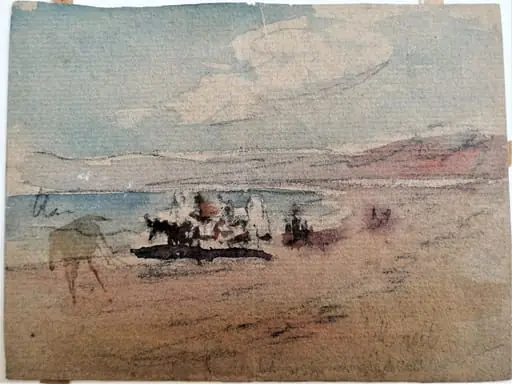
Cămilă în deșert, dated around 1850, is a watercolor work by Romanian artist Carol Szathmari. It depicts a solitary camel and rider traversing a barren landscape. The piece is part of the collection at the Museum of Ethnography in Budapest. Unlike grand historical narratives common in mid-19th-century art, this image focuses on quiet observation, reflecting Szathmari’s interest in documenting everyday scenes from the regions he traveled.
Subject & Meaning
The central figure is a camel bearing a robed rider, both rendered with careful attention to posture and attire. The scene suggests travel across arid terrain, possibly in the Ottoman Balkans or Near East, regions Szathmari visited. The absence of dramatic action or symbolic elements implies a documentary intent—capturing a moment of transit rather than conveying allegory. The rider’s anonymity reinforces the focus on the environment and the animal’s role within it.
Technique & Style
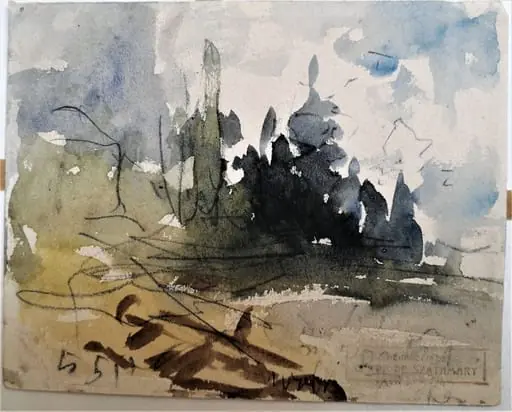
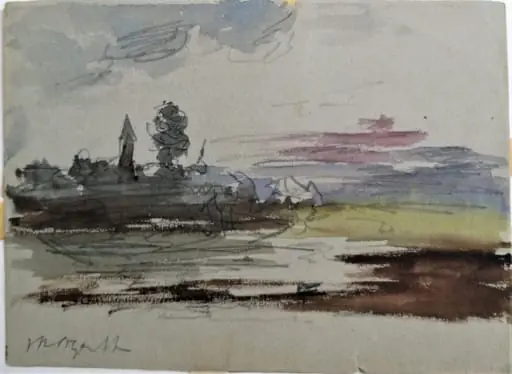
Szathmari employs a restrained palette of browns and beiges, evoking the desert’s muted tones. The camel and rider are rendered with precise, controlled brushwork, highlighting texture in fur and fabric. In contrast, the background uses looser, more fluid strokes to suggest dunes and distant rocks, creating depth without detailed rendering. This juxtaposition of realism and suggestion reflects a transitional approach between topographical accuracy and atmospheric impression.
History & Provenance
Created during Szathmari’s travels in the 1840s–1850s, the work likely originated from his field sketches made during journeys through Ottoman territories. It entered the Museum of Ethnography’s collection in the late 19th or early 20th century, alongside other ethnographic materials gathered by Romanian and Hungarian scholars. Its preservation reflects early institutional interest in visual records of non-European life, though its exact provenance prior to museum acquisition remains undocumented.
Context
In the mid-19th century, European artists increasingly turned to regional and ethnographic subjects as travel became more accessible and colonial interest grew. Szathmari’s work aligns with this trend but avoids exoticism; his approach is observational rather than romanticized. His watercolors served both personal documentation and scholarly use, contributing to emerging fields of ethnography and anthropology in Eastern Europe.
Legacy
Cămilă în deșert stands as a modest but significant example of early Romanian visual ethnography. While Szathmari is better known for his photographic work, this watercolor reveals his sensitivity to landscape and cultural detail. The piece contributes to a broader understanding of how Eastern European artists engaged with non-Western subjects—not as spectacle, but as quiet, lived reality.
Artist & collection
Artist
Carol Szathmari made paintings and one sculpture in the mid-1800s, mostly portraits and scenes from everyday life.