Artwork
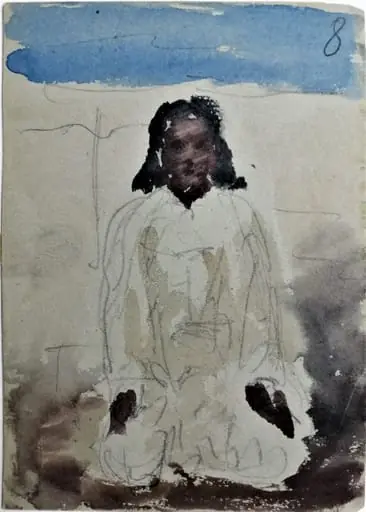
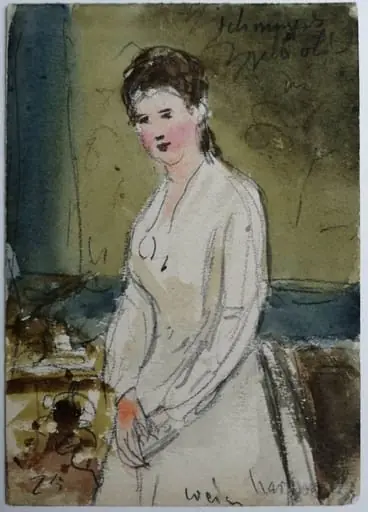
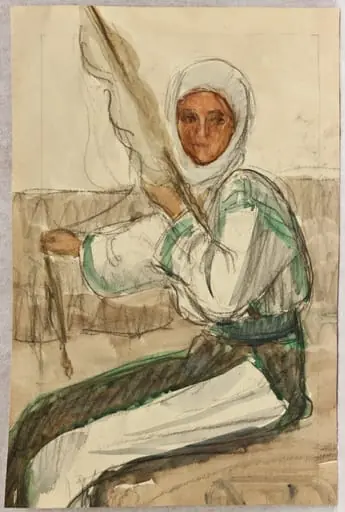
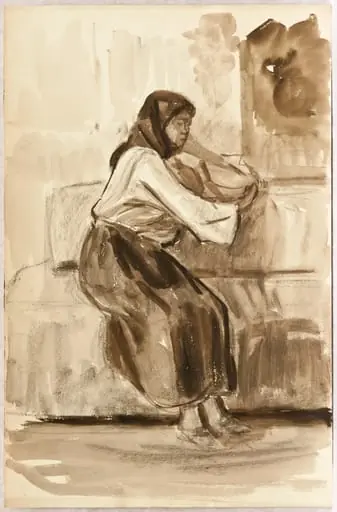
Femeie stând jos
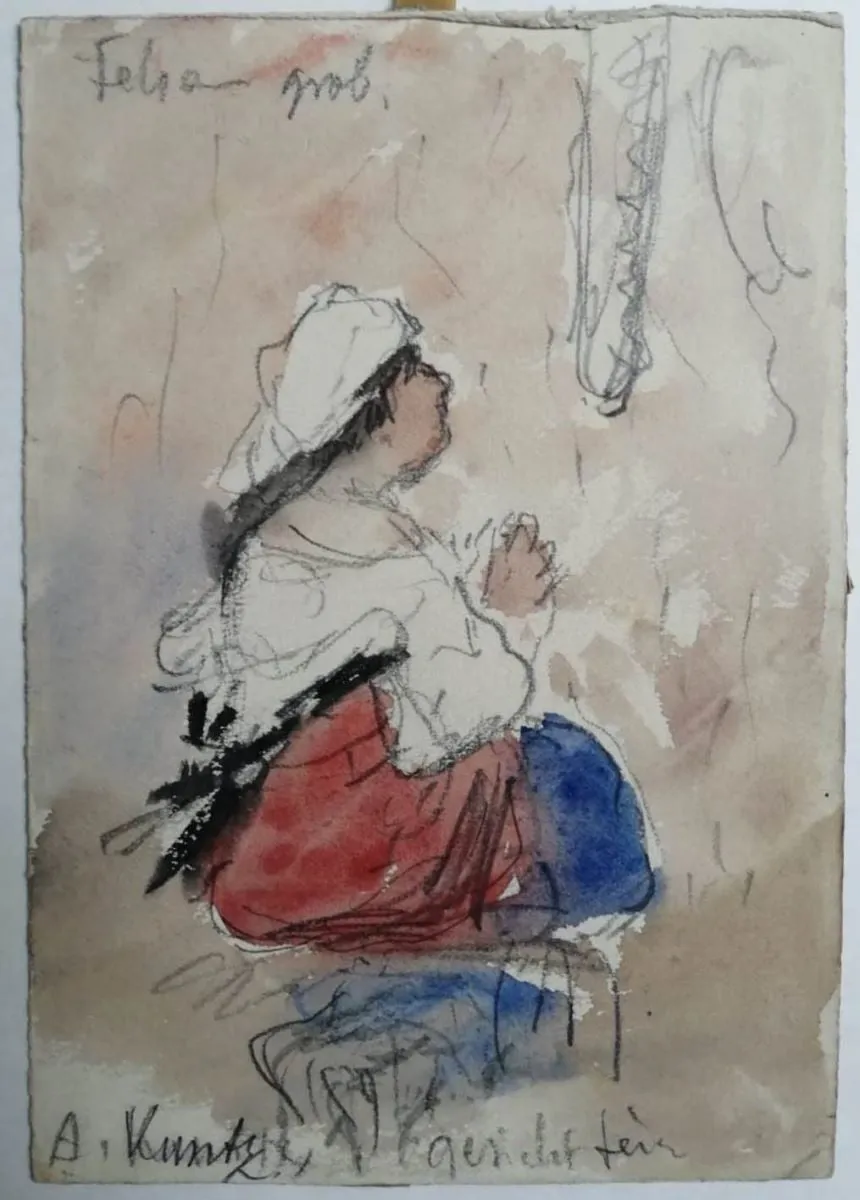
Femeie stând jos is an unspecified painting by Carol Szathmari. It dates from 1850 and is held in the collection of the Bucharest Municipality Museum.
About this work
Overview
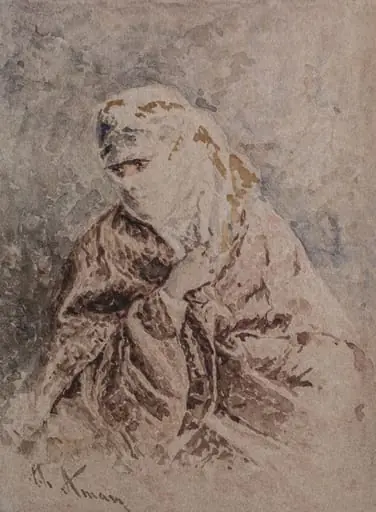
Femeie stând jos is a small, intimate drawing attributed to Carol Szathmari, dated around 1850. Executed in a spontaneous manner, it captures a seated woman in a moment of quiet stillness. The work is held in the collection of the Museum of Ethnography and reflects Szathmari’s interest in documenting everyday life through direct observation rather than formal portraiture.
Subject & Meaning
The subject is a woman seated with hands clasped, dressed in traditional regional attire: a white headscarf, a red skirt, and a blue apron or shawl. Her posture suggests contemplation or rest, and the absence of context or narrative detail invites focus on her presence rather than her identity. The work avoids idealization, presenting a figure grounded in ordinary experience.
Technique & Style
The sketchlike quality and visible artist’s handwriting in the upper left suggest a personal, on-the-spot record rather than a finished composition.
Szathmari employed swift, uneven brushwork and limited pigments to convey form with minimal detail. Colors are applied boldly but sparingly, emphasizing contrast over nuance. The background is suggested with faint, loose lines, leaving space for the viewer’s imagination. The sketchlike quality and visible artist’s handwriting in the upper left suggest a personal, on-the-spot record rather than a finished composition.
History & Provenance
The work has remained in the collection of the Museum of Ethnography since at least the early 20th century, though its exact acquisition history is undocumented. Its survival as a modest study among Szathmari’s more widely known photographic works highlights its role as a private exercise in visual observation, possibly made during fieldwork in rural areas.
Context
Created during a period when Szathmari was actively documenting Romanian folk life through both photography and drawing, this piece aligns with broader 19th-century ethnographic efforts to record regional dress and customs. Unlike his photographic portraits, this drawing captures immediacy and gesture, reflecting a more personal engagement with his subjects beyond technical documentation.
Legacy
Though not widely exhibited, Femeie stând jos contributes to understanding Szathmari’s multidisciplinary approach to visual anthropology. Its raw, unpolished character offers insight into his process, revealing how observation informed his more formal works. It stands as a quiet testament to the value of informal studies in preserving cultural detail.
Artist & collection
Artist
Carol Szathmari made paintings and one sculpture in the mid-1800s, mostly portraits and scenes from everyday life.