Artwork
Bărci cu pânze
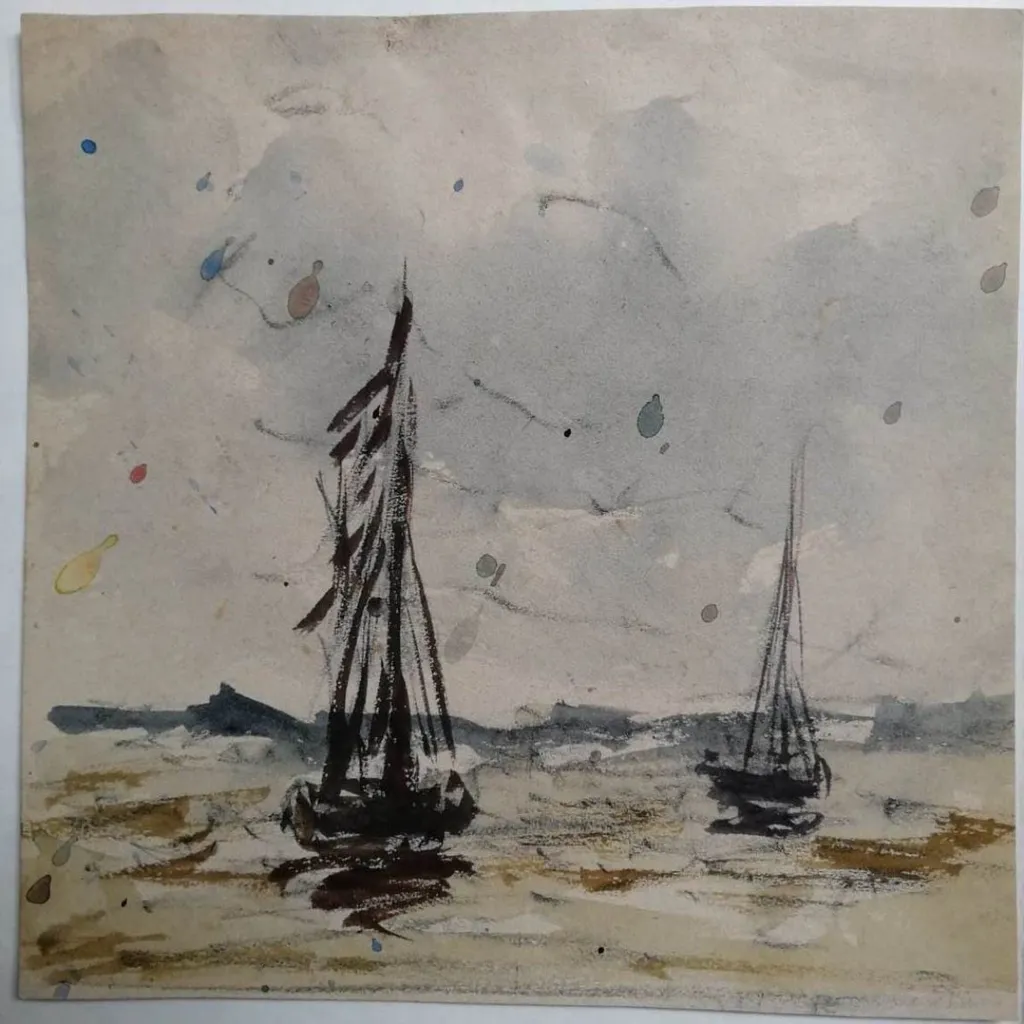
Bărci cu pânze is an unspecified painting by Carol Szathmari. It dates from 1850 and is held in the collection of the Bucharest Municipality Museum.
About this work
Overview
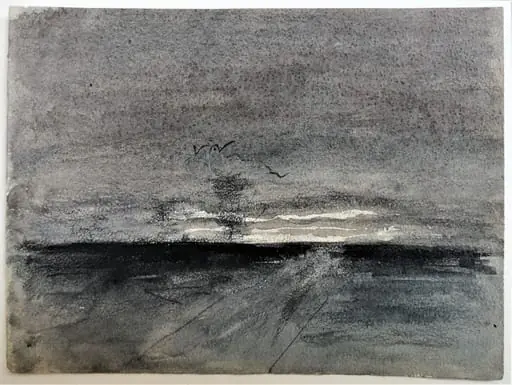
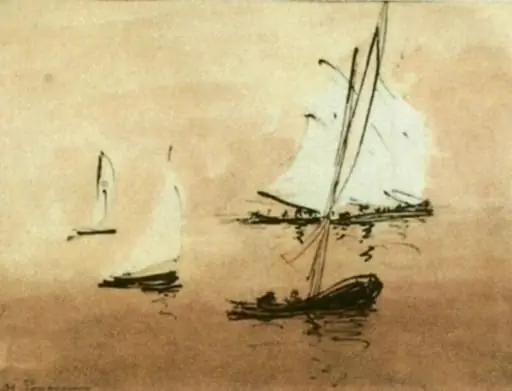
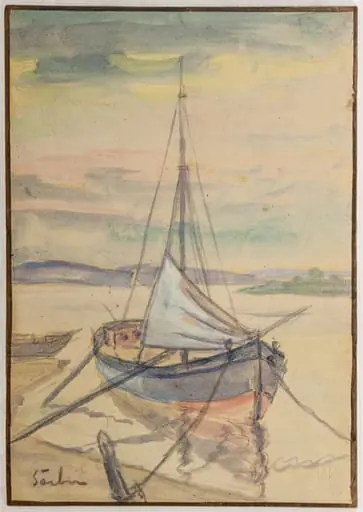
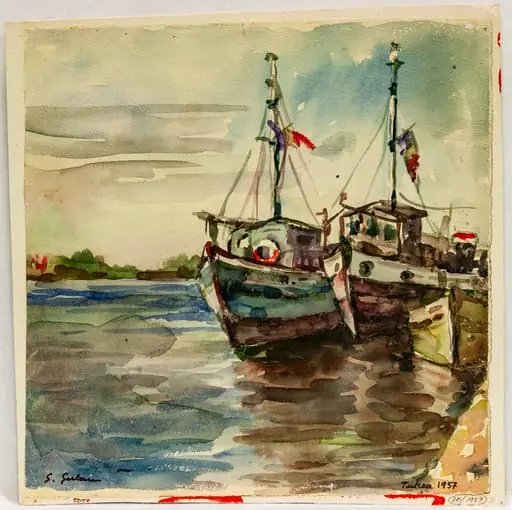
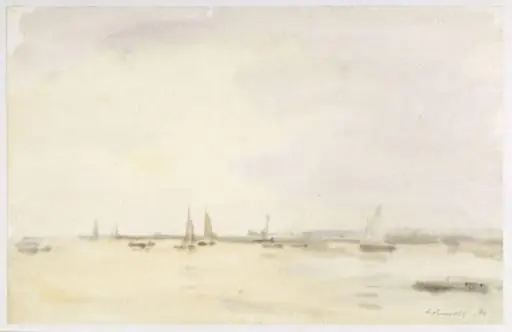
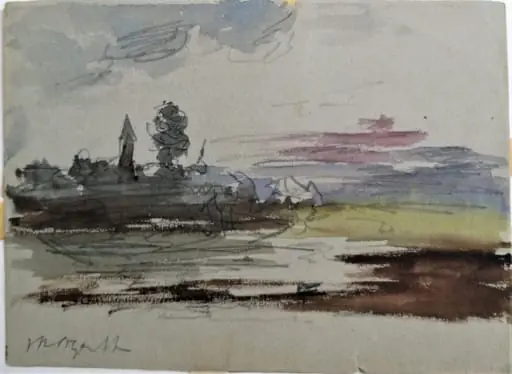
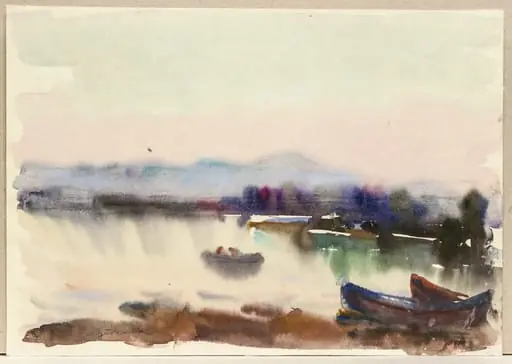
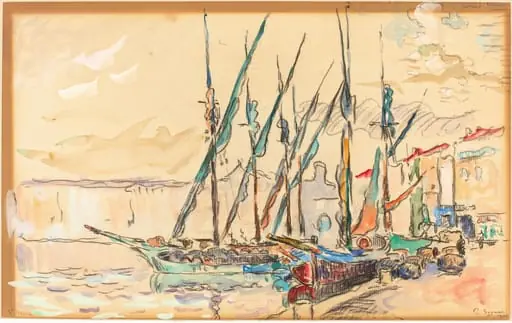
Bărci cu pânze, dated around 1850, is a watercolor work by Carol Szathmari depicting two sailboats on a quiet, mist-laden sea.
Bărci cu pânze, dated around 1850, is a watercolor work by Carol Szathmari depicting two sailboats on a quiet, mist-laden sea. The piece is part of the collection at the Museum of Ethnography. Its subdued palette and atmospheric rendering reflect an early interest in capturing transient natural conditions, aligning with emerging 19th-century tendencies toward observational immediacy rather than polished finish.
Subject & Meaning
The painting presents two modest sailboats adrift on a calm, hazy expanse of water. No human figures are visible, and the vessels appear isolated, suggesting a quiet contemplation of labor and nature. The absence of dramatic action or narrative cues shifts focus to the mood of the scene—solitude, stillness, and the subtle rhythm of wind and tide.
Technique & Style
Szathmari employed loose, fluid brushwork to suggest movement in the water and the flutter of sails. The sky and sea merge with minimal contrast, enhancing the sense of atmospheric haze. Sails are rendered with minimal detail, resembling quick notations. Color is restrained, with only faint hints of blue and red adding subtle emphasis, reinforcing the work’s intimate, sketch-like quality.
History & Provenance
Created in the early 1850s, the work entered the collection of the Museum of Ethnography, where it remains today. Its origins lie in Szathmari’s broader practice of documenting Romanian rural life and landscapes during a period of cultural self-definition. Though not widely exhibited in his lifetime, the piece reflects his role as an early visual chronicler of regional scenes.
Context
In mid-19th-century Romania, artists like Szathmari began turning from formal portraiture and historical themes toward everyday subjects. This shift coincided with growing national consciousness and access to new materials like watercolor. Bărci cu pânze exemplifies this transition, valuing direct observation over idealized composition.
Legacy
The work contributes to an understudied strand of Romanian visual culture that prioritized atmosphere and spontaneity. While not widely influential beyond regional circles, it stands as an early example of plein air sensibility in Eastern European art, anticipating later movements that valued immediacy and natural light over academic precision.
Artist & collection
Artist
Carol Szathmari made paintings and one sculpture in the mid-1800s, mostly portraits and scenes from everyday life.