Artwork
O ruină din München
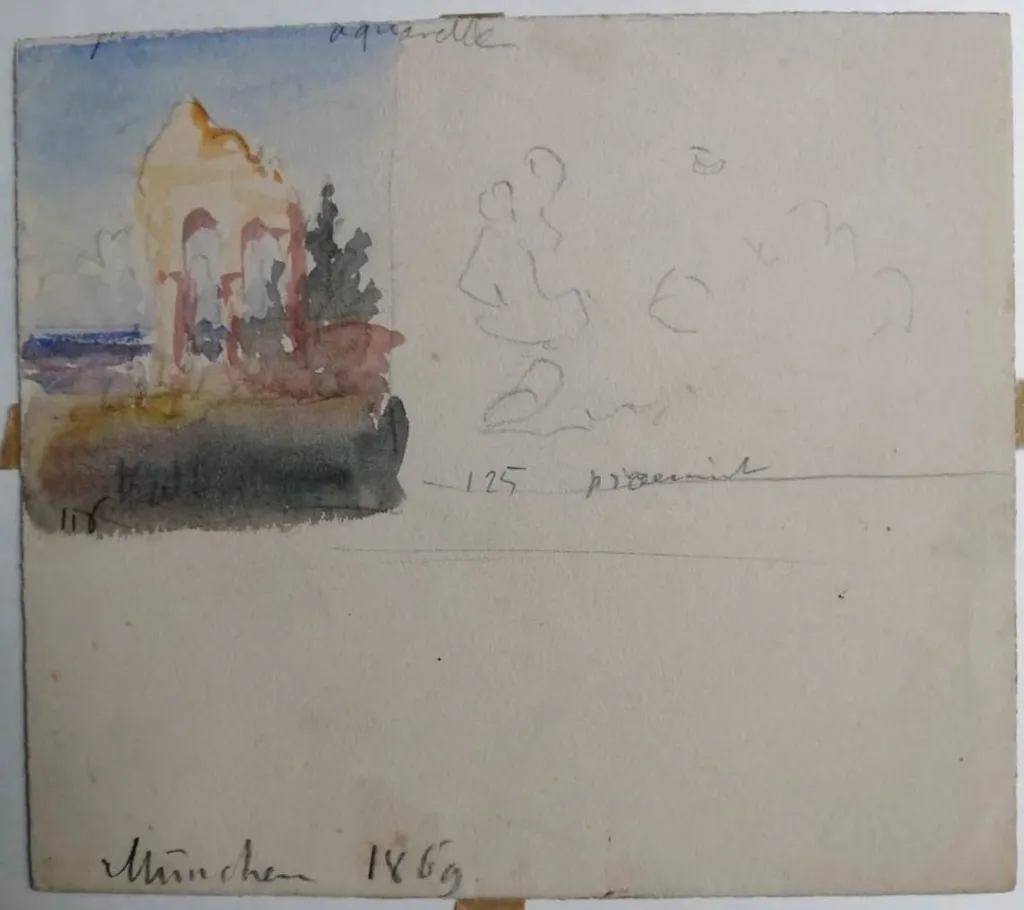
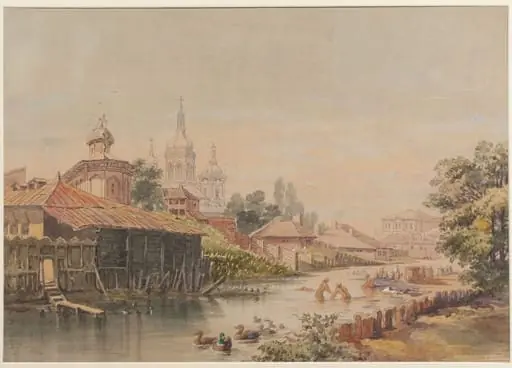
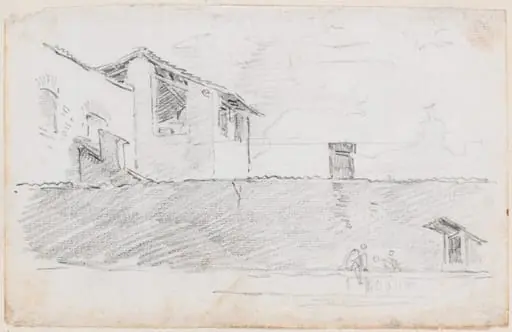
O ruină din München is a print by the Impressionist artist Carol Pop de Szathmári. It dates from 1869 and is held in the collection of the Bucharest Municipality Museum.
About this work
Overview
The piece functions as a visual record rather than a finished composition, capturing a moment of observation rather than a polished representation.
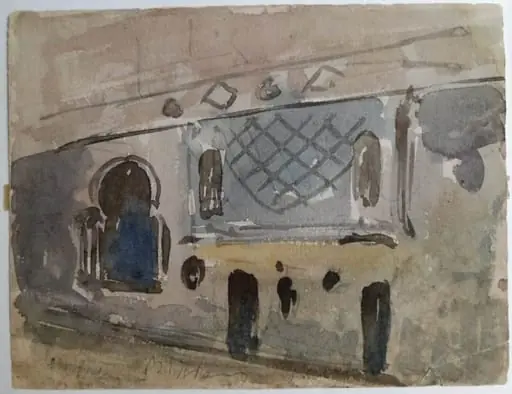
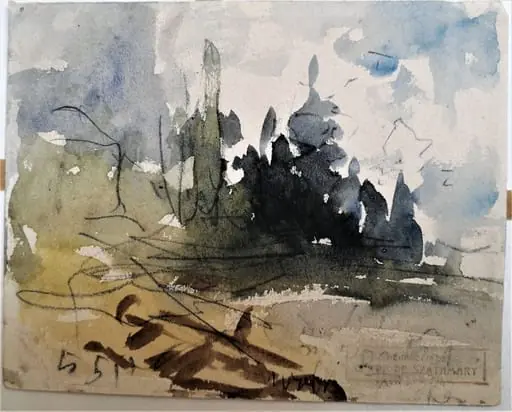
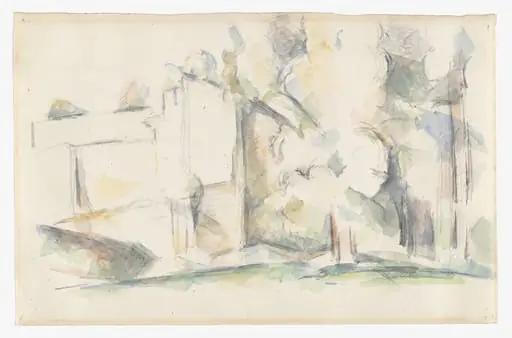
Created in 1869 by Carol Szathmari, *O ruină din München* is a watercolor sketch depicting a partially collapsed structure in Munich. Though Szathmari is best known for his photographic documentation of the Crimean War, this work reflects his continued engagement with architectural subjects through drawing. The piece functions as a visual record rather than a finished composition, capturing a moment of observation rather than a polished representation.
Subject & Meaning
The subject is a ruined building, likely a fragment of Munich’s architectural past, rendered with minimal detail but clear structural cues: arched windows, a pointed roof, and weathered stonework. The ruin evokes transience and the passage of time, themes common in 19th-century European visual culture. Szathmari’s focus on decay suggests an interest in historical memory, possibly tied to his broader documentation of places and monuments across Europe.
Technique & Style
Executed in watercolor on a light beige ground, the sketch employs loose, fluid brushwork and subtle tonal gradations. The architecture is outlined with confident, spontaneous strokes, while the surrounding scribbles—likely measurements or observational notes—reveal the artist’s working process. The absence of heavy shading or chiaroscuro emphasizes immediacy over dramatic effect, aligning the piece with the tradition of field studies rather than studio composition.
History & Provenance
The work originates from Szathmari’s later years, following his pioneering photographic campaigns in the 1850s. By 1869, he had returned to drawing and watercolor, possibly as a personal or pedagogical exercise. Its provenance traces to his personal archive in Bucharest, where many of his sketches remained unpublished during his lifetime. The piece was preserved as part of his broader collection of architectural studies, not intended for public exhibition.
Context
In the late 1860s, European artists and antiquarians increasingly documented ruins as cultural artifacts amid rapid urban change. Szathmari, though based in Romania, traveled widely and recorded architectural remnants across Central Europe. This sketch aligns with a broader trend of topographical studies, where artists acted as visual archivists, preserving structures threatened by modernization or neglect.
Legacy
While not widely exhibited during his lifetime, *O ruină din München* contributes to understanding Szathmari’s multifaceted practice beyond photography. It illustrates his methodical approach to visual documentation and his ability to transition between media. Today, such sketches help contextualize his role as an early chronicler of European architecture, bridging the gap between artistic observation and historical preservation.
Artist & collection
Artist
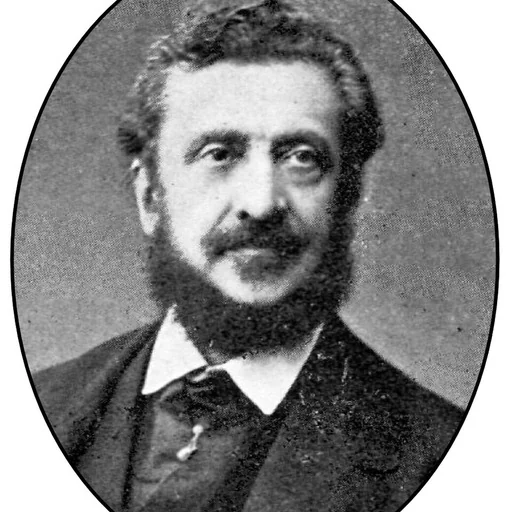
Carol Szathmari (Romanian: Carol Popp de Szathmari, Hungarian: Szathmáry Pap Károly; 11 January 1812, Kolozsvár – 3 July 1887, Bucharest) was a Romanian painter, lithographer, and photographer of Transylvanian Hungarian…
![The Ripetta in Rome [verso], by Augustin Pajou](https://artifactworldgallery.com/img/augustin-pajou--the-ripetta-in-rome-verso--4bc04e9c9476a91b-w320.webp)