Artwork
Grup de țărani
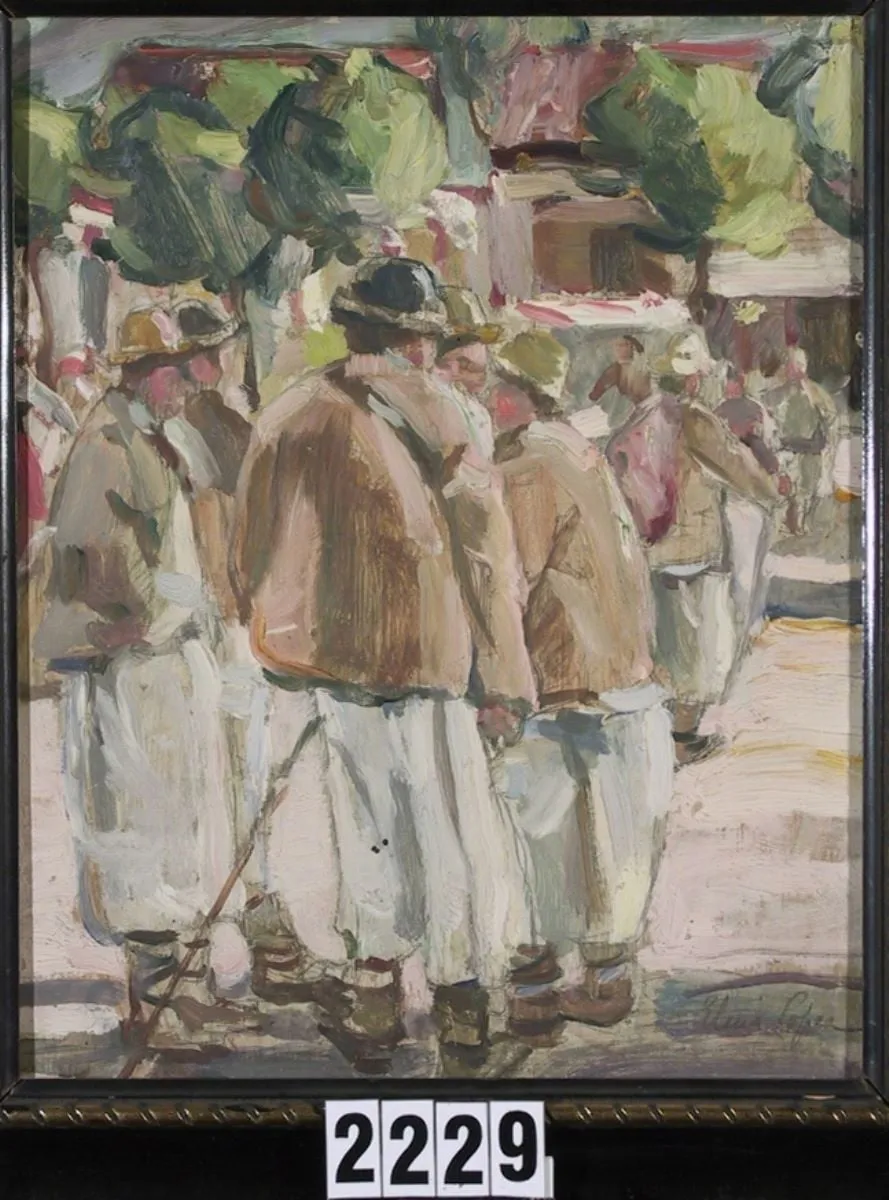
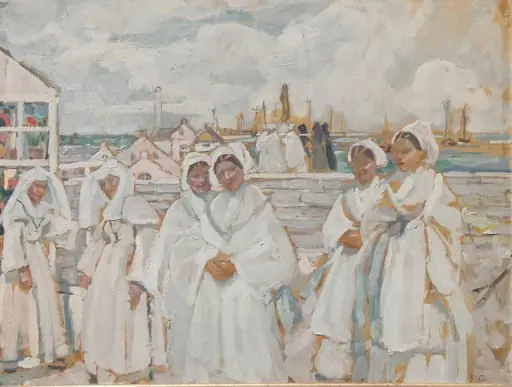
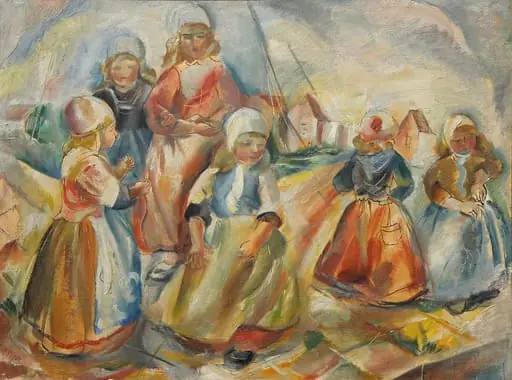
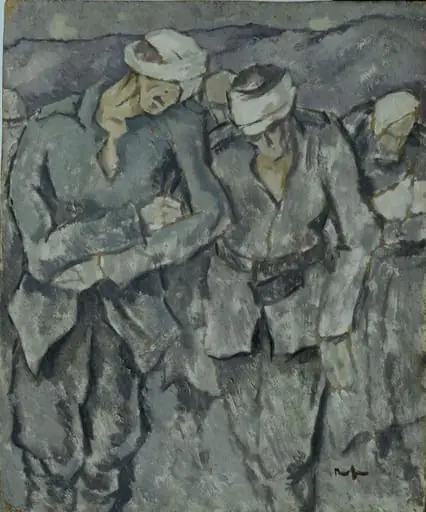
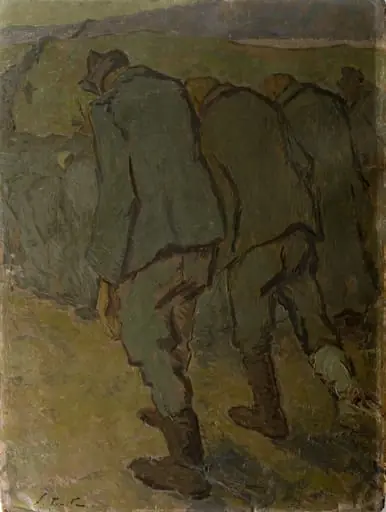
Grup de țărani is a print by Elena Popea. It dates from 1920 and is held in the collection of the Brukenthal National Museum.
About this work
Overview
The painting captures a moment of collective movement, emphasizing the rhythm and quiet dignity of peasant labor without idealization or narrative drama.
Created around 1920 by Elena Popea, *Grup de țărani* is a rural scene rendered in oil paint with a tactile, expressive technique. Popea, an Austro-Hungarian-born artist active in Romania, focused on everyday life in the countryside during a period of artistic experimentation. The painting captures a moment of collective movement, emphasizing the rhythm and quiet dignity of peasant labor without idealization or narrative drama.
Subject & Meaning
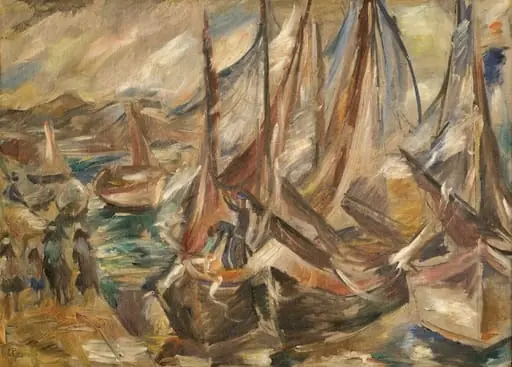
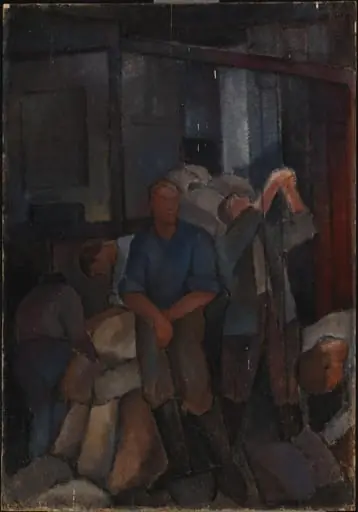
The painting depicts a group of peasants walking in unison, their backs turned to the viewer, suggesting anonymity and unity rather than individual identity. Their simple attire and shared motion imply a routine, communal activity—perhaps returning from fieldwork or traveling between villages. The absence of facial features shifts focus to the group’s physical presence and the land they inhabit, reinforcing themes of endurance and quiet resilience.
Technique & Style
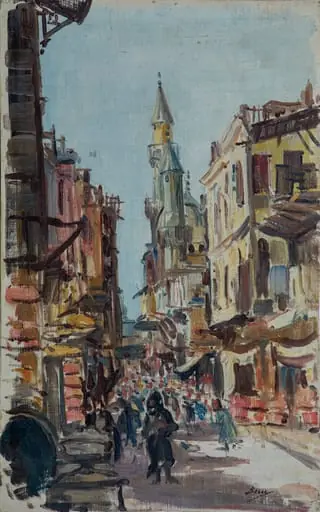
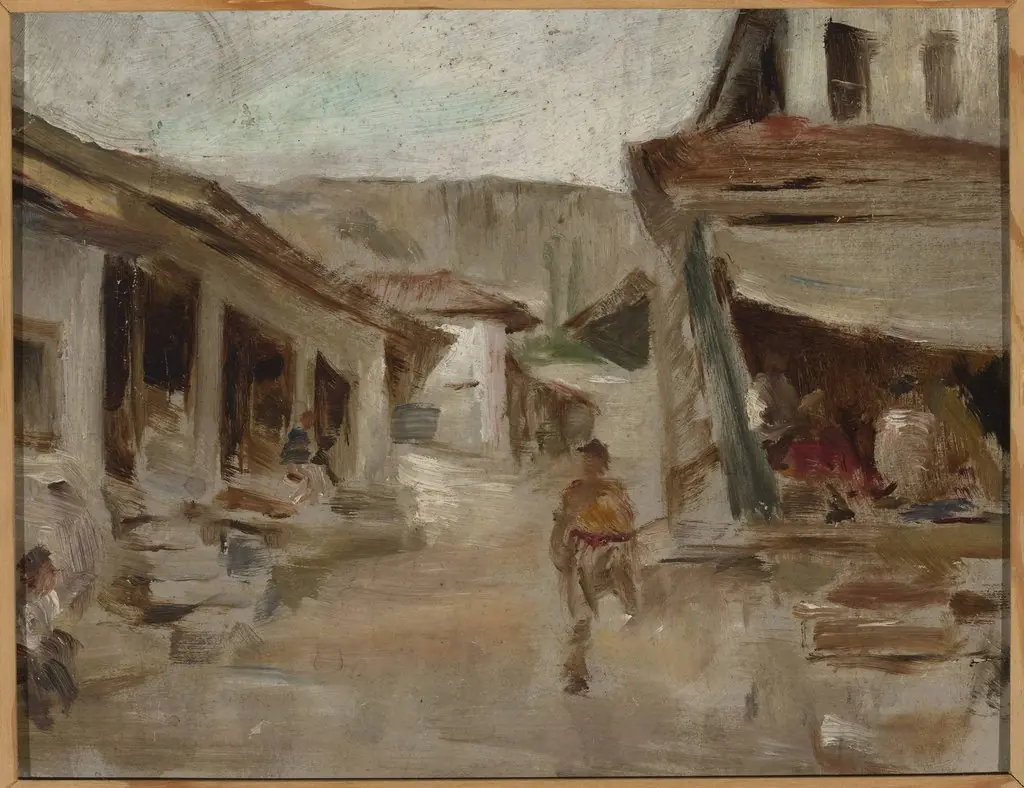
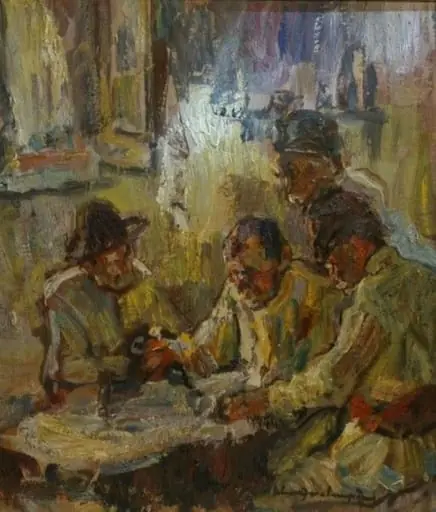
Popea employs thick, loose brushwork characteristic of impasto, building texture across the canvas to convey movement and atmosphere. The palette is dominated by muted earth tones—ochres, browns, and greens—with selective accents of red and yellow in the distant background. This restrained color scheme, combined with fragmented forms and visible brushstrokes, reflects a synthesis of Impressionist light, Expressionist emotion, and Cubist simplification.
History & Provenance
Elena Popea produced this work during her most active period in Romania, following her training in Vienna and exposure to European modernist movements. While her oeuvre includes landscapes and still lifes, *Grup de țărani* stands as a key example of her engagement with rural subjects. The painting’s early 20th-century origins place it within Romania’s broader cultural shift toward documenting national identity through vernacular life, though its exact provenance remains undocumented in public records.
Context
In early 20th-century Romania, artists increasingly turned to peasant life as a symbol of authentic national character, distinct from urban or foreign influences. Popea’s work aligns with this trend, yet avoids romanticism. Her style, shaped by exposure to Western modernism, diverges from academic realism, instead embracing emotional immediacy and formal experimentation. This places her among a generation redefining Romanian art through personal vision rather than institutional norms.
Legacy
Though less widely known than her male contemporaries, Popea’s work contributes to a nuanced understanding of Romanian modernism. *Grup de țărani* exemplifies how female artists engaged with national themes through innovative technique, often overlooked in dominant narratives. Her use of texture and gesture to convey collective experience anticipates later developments in postwar European painting, affirming her role as a quiet but significant figure in the country’s artistic evolution.
Artist & collection
Artist
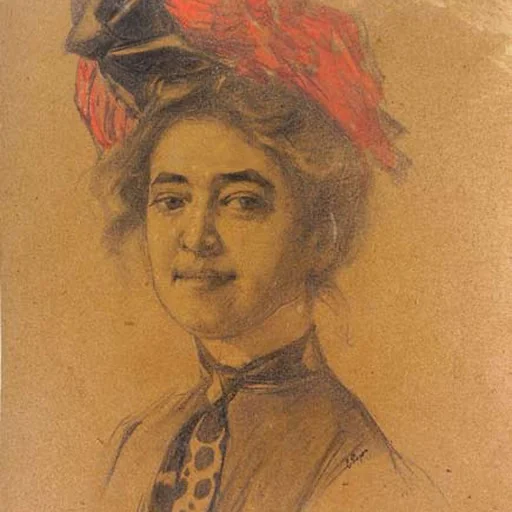
Elena Popea (15 April 1879, Brașov – 19 June 1941, Bucharest) was an Austro-Hungarian-born Romanian Modernist painter whose influences included Impressionism, Expressionism and Cubism.