Artwork
Spălătoreasa
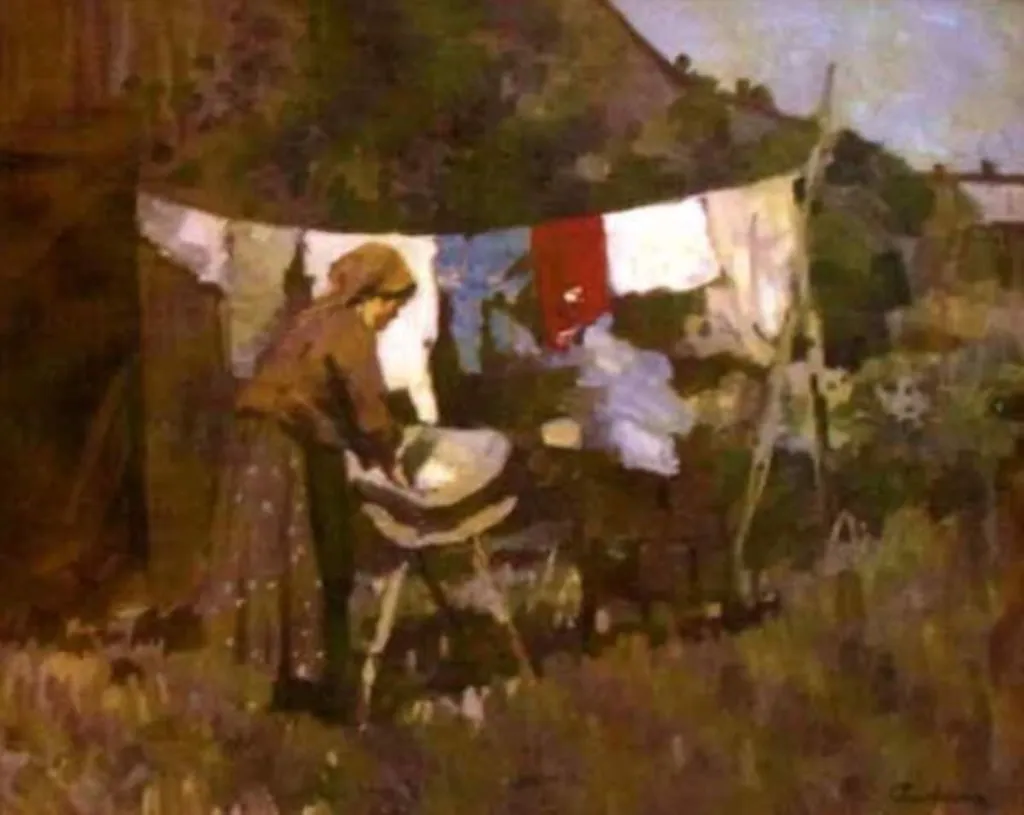
Spălătoreasa is an unspecified painting by Ștefan Luchian. It dates from 1906 and is held in the collection of the National Museum of Art of Romania.
About this work
Overview
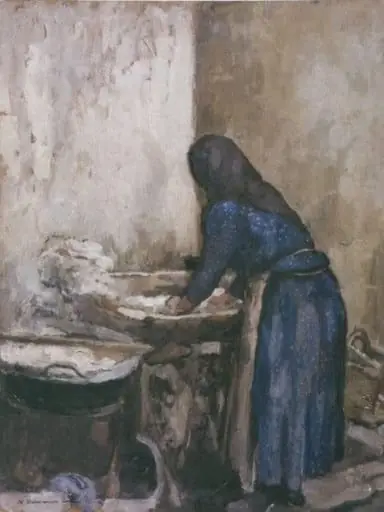
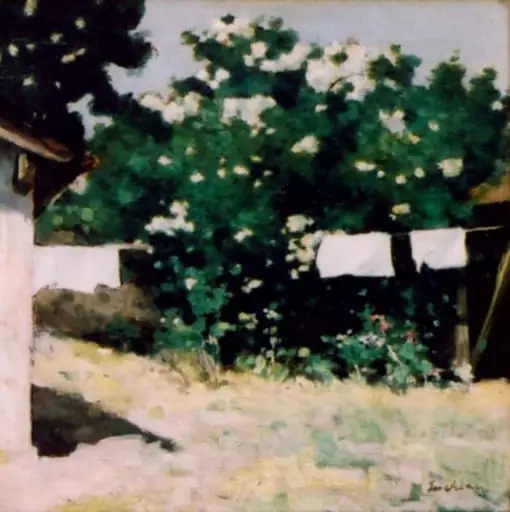
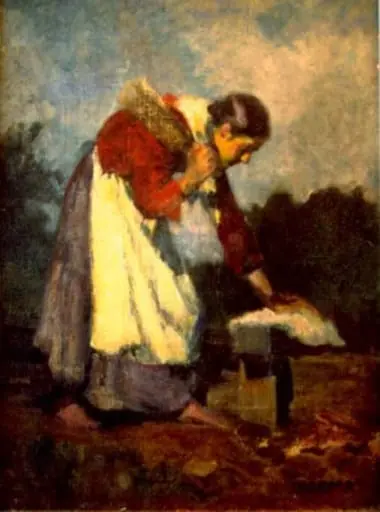
Ștefan Luchian’s oil painting Spălătoreasa, executed around 1906, depicts a solitary figure engaged in the everyday task of washing clothes.
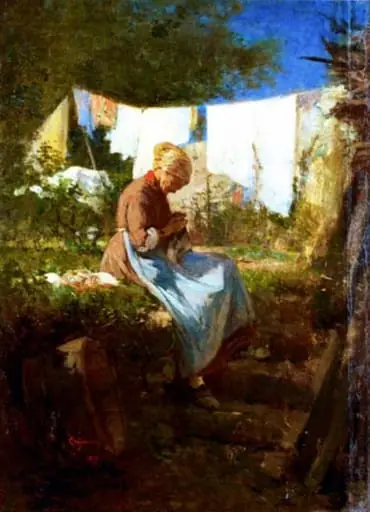
Ștefan Luchian’s oil painting Spălătoreasa, executed around 1906, depicts a solitary figure engaged in the everyday task of washing clothes. The composition is set in an open, grassy landscape with a distant hill, and a line of freshly laundered garments—white shirts, a red apron and other items—hung on a rope in the foreground. The work combines a modest domestic scene with a clear, naturalistic setting.
Subject & Meaning
The central figure, a woman in a plain brown dress and headscarf, bends over a basin, her posture conveying the physical effort of labor. Though her face is indistinct, the gesture emphasizes the dignity of work and the rhythm of rural life. The vivid red of the apron draws attention, suggesting both the presence of the individual and the vitality of ordinary chores within the landscape.
Technique & Style
Luchian employs a restrained palette of earth tones punctuated by the bright red apron, creating visual contrast against the surrounding greens. Subtle modeling of light and shadow—an application of chiaroscuro—gives the figure and hanging garments a sense of volume and depth. The brushwork remains relatively smooth, allowing the scene’s quiet realism to emerge without overt dramatization.
History & Provenance
Created in the early twentieth century, Spălătoreasa belongs to Luchian’s mature period, when he turned increasingly toward genre scenes of Romanian peasant life. The painting has remained in public collections in Romania, reflecting its role in documenting the country’s social history and the artist’s commitment to portraying everyday subjects with sincerity.
Artist & collection
Artist
Ștefan Luchian painted quiet scenes of daily life in late-1800s Romania: sunlit houses, country roads, and a single studio work called Atelierul from 1894.