Artwork
Tătăroaice
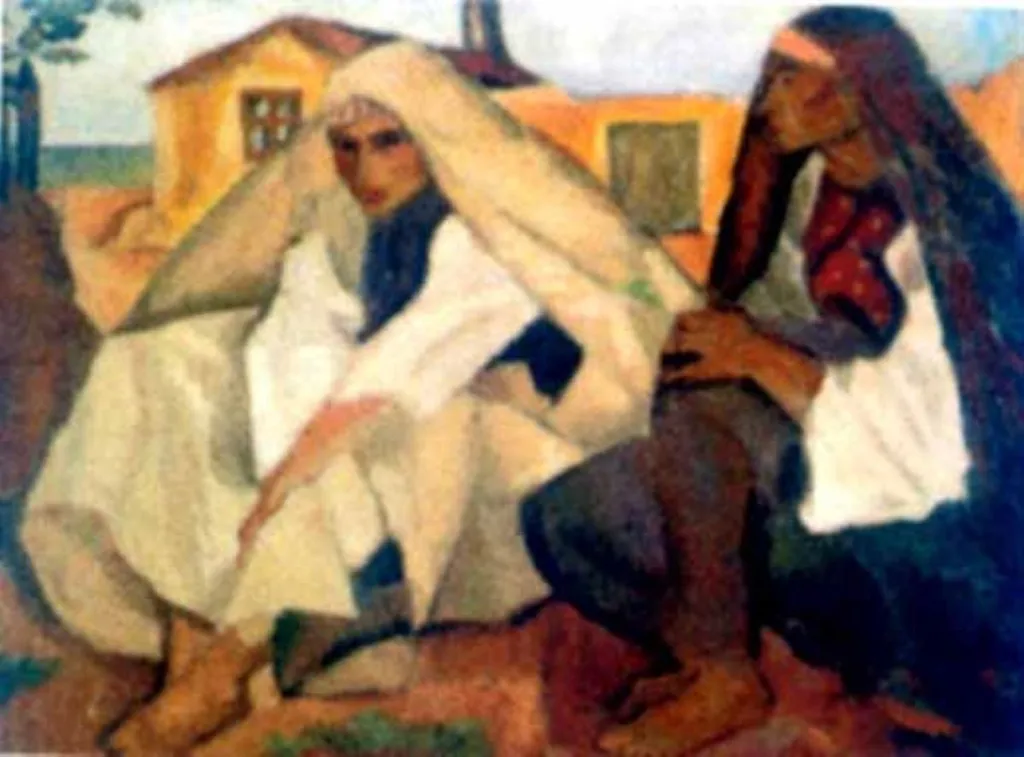
Tătăroaice is an unspecified painting by Iosif Iser. It is held in the collection of the Art Museum of Constanta.
About this work
Overview
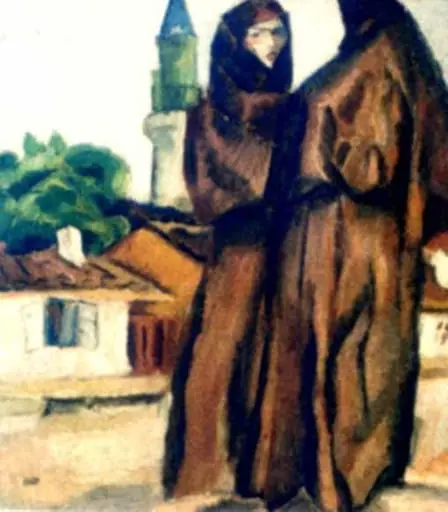
The composition centers on their traditional garments and the modest architecture behind them—a yellow-walled structure with a brown roof.
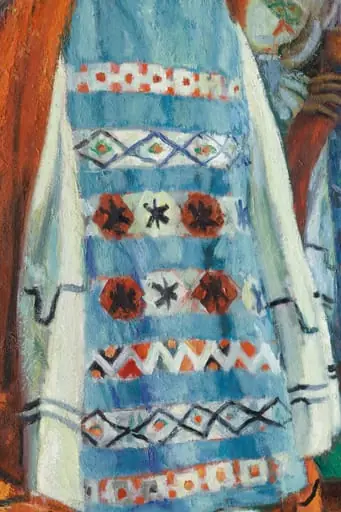
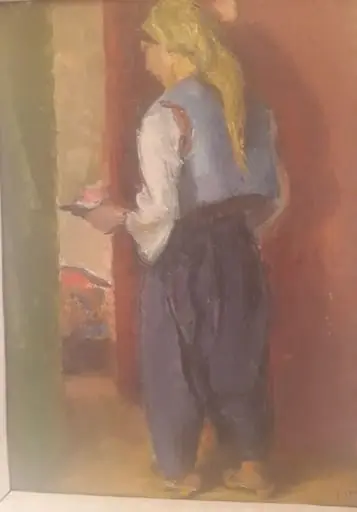
Tătăroaice is a painted depiction of two women seated on the ground, rendered in a style marked by strong outlines and saturated hues. The composition centers on their traditional garments and the modest architecture behind them—a yellow-walled structure with a brown roof. The scene avoids narrative detail, instead focusing on the quiet presence of the figures and the harmony of their surroundings through deliberate color and form.
Subject & Meaning
The two women, dressed in distinct regional attire, are portrayed without overt symbolism or action. Their seated posture and direct engagement with the viewer suggest a moment of stillness, possibly reflecting daily life in a rural or ethnic community. The emphasis on clothing and setting implies cultural identity as the core subject, inviting observation rather than interpretation.
Technique & Style
The artist employs bold, simplified lines to define forms and uses flat areas of vivid color to distinguish fabric, skin, and architecture. Shadows are minimal, and perspective is flattened, enhancing the decorative quality of the scene. The palette—dominated by white, red, yellow, and dark tones—creates visual rhythm and reinforces the warmth of the environment without realism.
History & Provenance
The painting is attributed to Iosif Iser, a Romanian artist active in the early 20th century known for his interest in ethnographic subjects. While specific details of its creation or early ownership are not widely documented, it aligns with his broader body of work that records folk life in Romania during a period of cultural documentation and national identity formation.
Context
Created during a time when Romanian artists increasingly turned to rural and minority communities for subject matter, Tătăroaice reflects a broader movement to preserve and represent regional traditions. The painting’s focus on dress and setting echoes ethnographic interests of the era, though it avoids romanticization, presenting its subjects with quiet dignity.
Legacy
Tătăroaice contributes to a body of work by Iser that documents everyday life in Romania’s diverse communities. Though not widely exhibited, it remains a representative example of early 20th-century Romanian painting that values cultural specificity over dramatic narrative, influencing later artists interested in folk realism and visual anthropology.
Artist & collection
Artist
Iosif Iser painted everyday life with a focus on people and places. His 1933 work *Paris. Strada Mouffetard* shows a lively street scene in Paris, while *Nud pe fotoliu* depicts a seated nude figure. His brushwork…