Artwork
Regele nebun
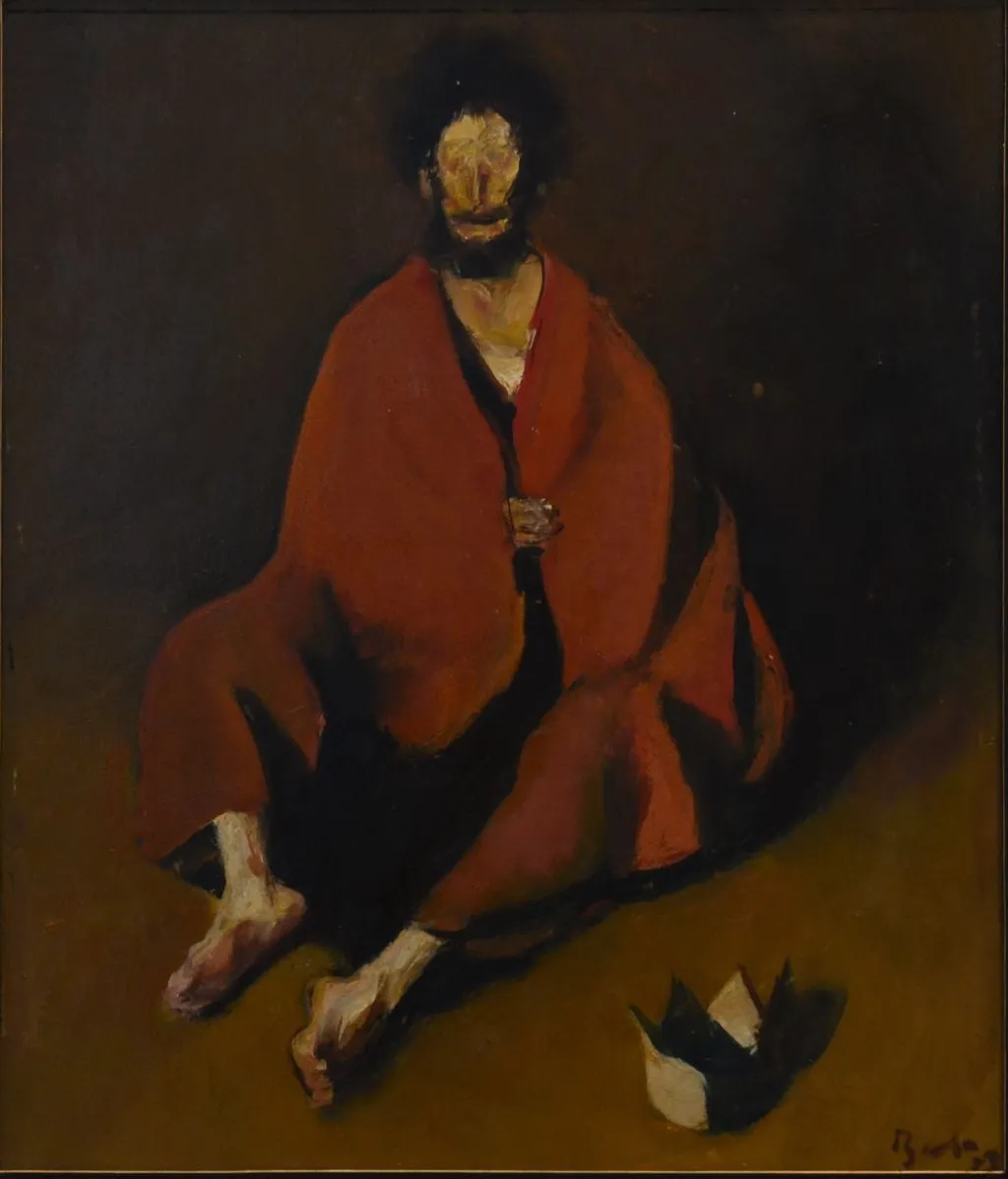
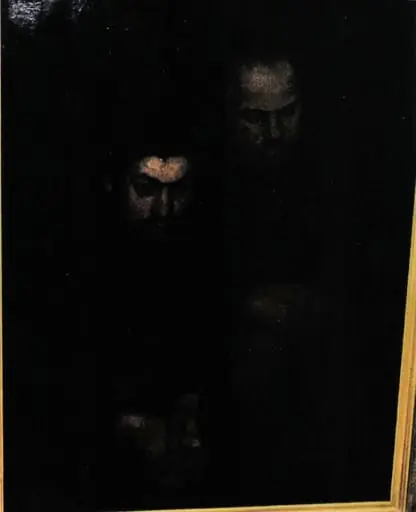
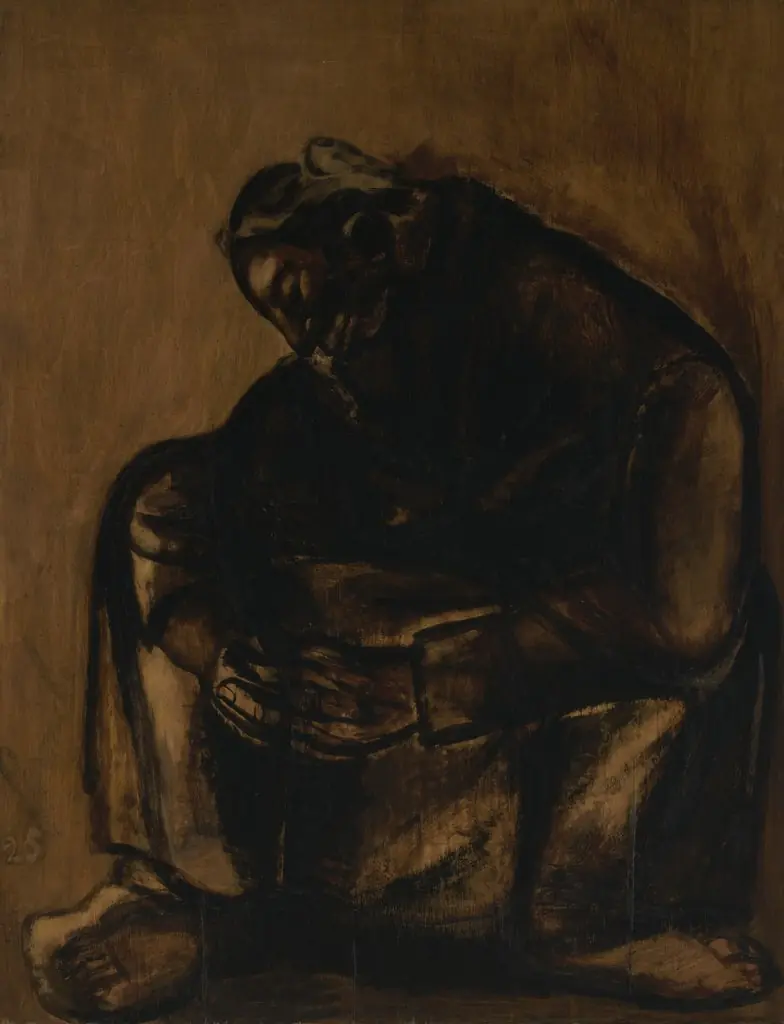
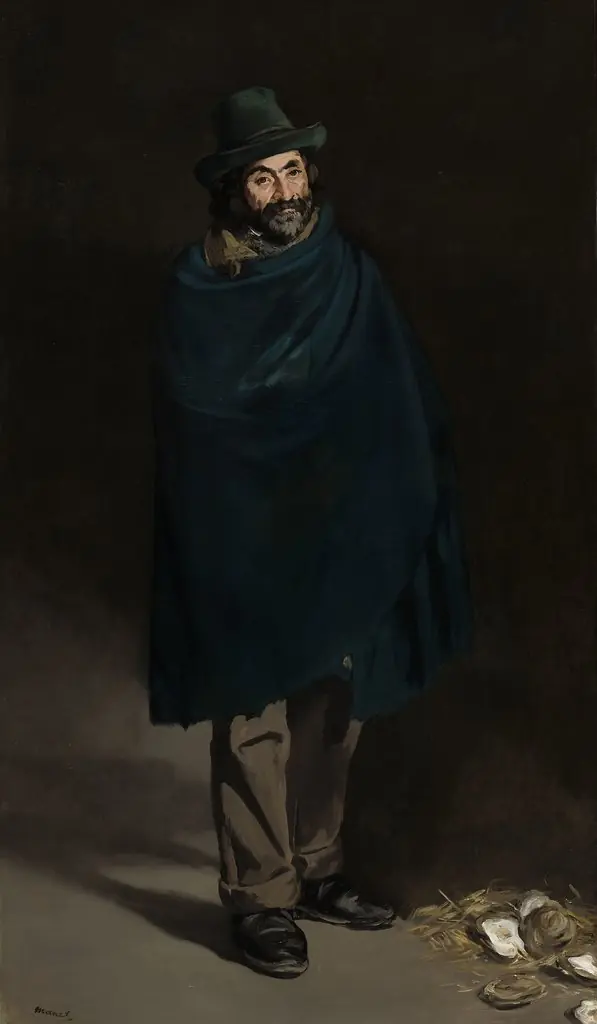
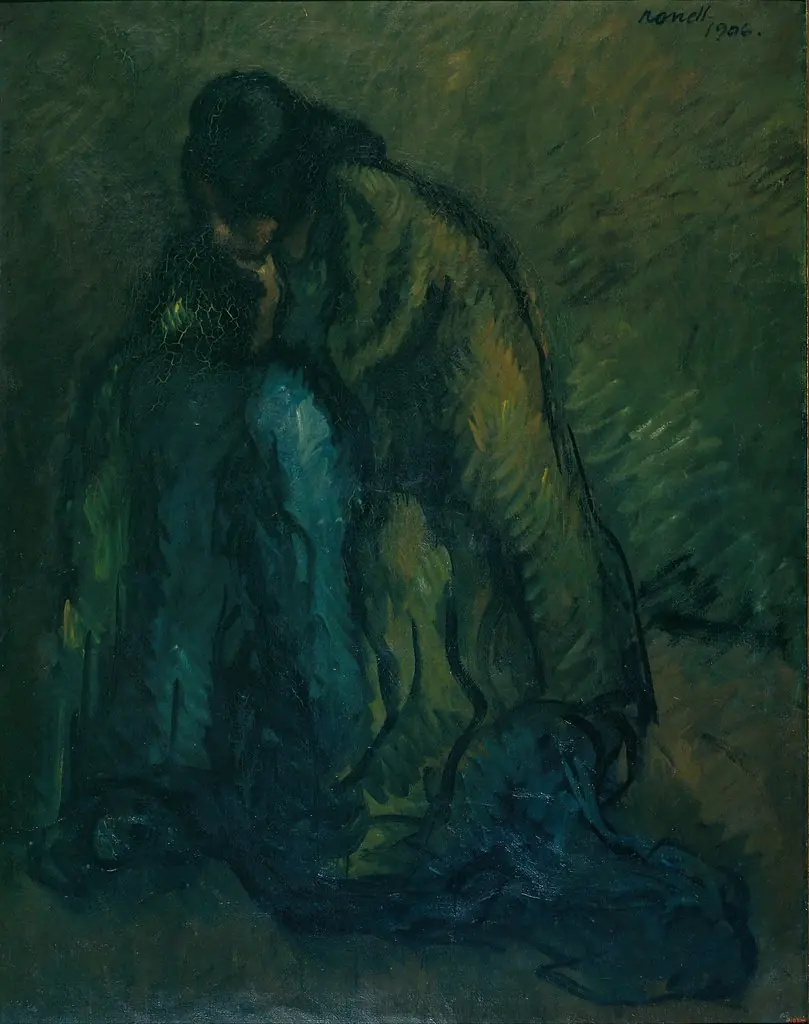
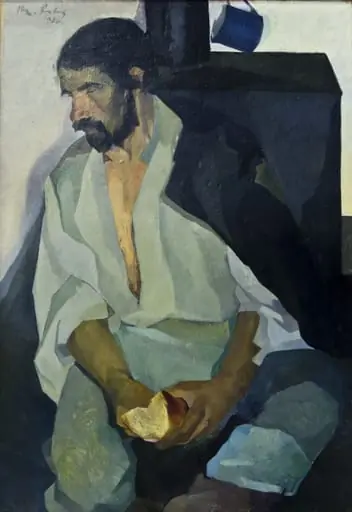
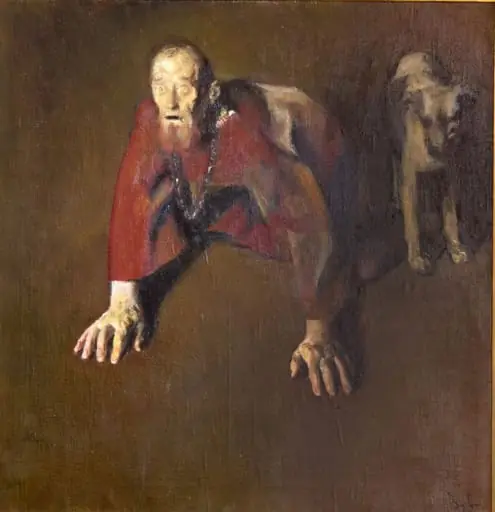
Regele nebun is an unspecified painting by Corneliu Baba. It dates from 1978 and is held in the collection of the Art Museum of Constanta.
About this work
Overview
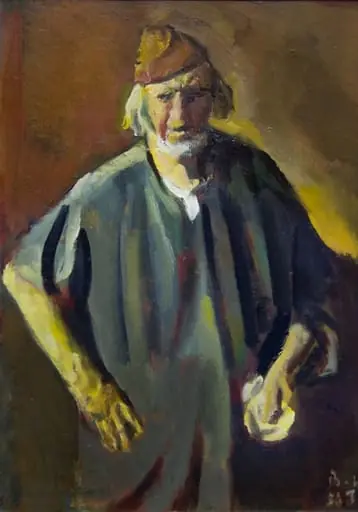
Painted in 1978 by Corneliu Baba, Regele nebun is an oil on canvas work currently held in the collection of the Museum of Ethnography. The composition centers on a solitary figure seated on the ground, rendered with vigorous brushwork and a limited palette dominated by a vivid red cloak. The stark contrast between the figure and the dark background emphasizes isolation and physical vulnerability.
Subject & Meaning
The figure, clad in a bright red coat with bare legs, appears withdrawn and contemplative, holding a small, indistinct object. The title, meaning 'The Mad King,' suggests a symbolic rather than literal portrayal—perhaps a commentary on marginalization, power stripped of authority, or inner turmoil. The lack of context and ambiguous gesture invites interpretation without narrative resolution.
Technique & Style
Baba employed thick, textured impasto strokes to build the figure’s form, particularly in the red coat, giving it a tactile, almost sculptural presence. The background is rendered in muted, shadowy tones, allowing the saturated red to dominate visually. Forms are simplified, edges are rough, and detail is minimized, prioritizing emotional resonance over realism.
History & Provenance
Created during the later years of Baba’s career, the painting entered the Museum of Ethnography’s collection shortly after its completion. Its acquisition reflects institutional interest in Romanian modernist works that engaged with human condition themes beyond official socialist realism. No significant changes in ownership or restoration are documented.
Context
In late 1970s Romania, artistic expression was constrained by state ideology, yet Baba continued to explore psychological depth and existential themes. Regele nebun aligns with his broader interest in outsiders and marginalized figures, drawing from folk imagery and expressionist traditions while resisting state-sanctioned aesthetics.
Legacy
The painting remains a key example of Baba’s mature style—uncompromising in its emotional intensity and formal economy. It has influenced later Romanian artists seeking to convey inner states through raw, non-idealized representation. Its presence in a museum of ethnography underscores its resonance with broader cultural narratives of identity and alienation.
Artist & collection
Artist
Corneliu Baba made prints and paintings that feel like quiet stories, often borrowing from older art.