Artwork
Liniștea eternă
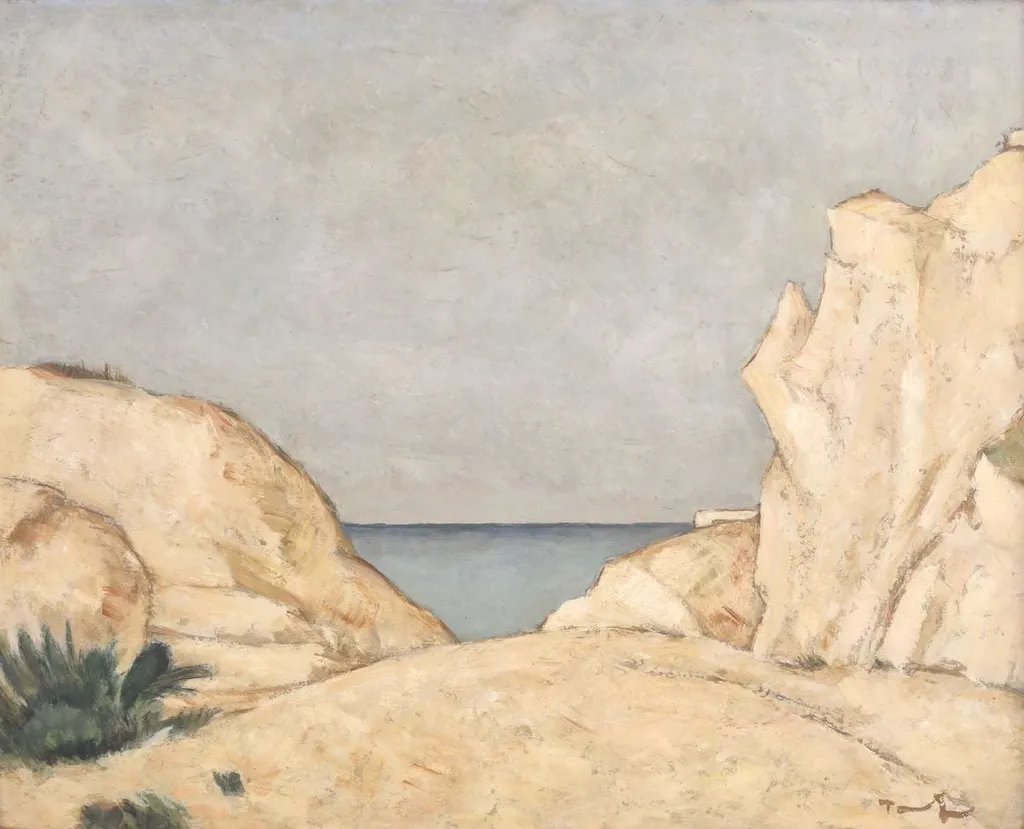
Liniștea eternă is an unspecified painting by Nicolae Tonitza. It dates from 1933 and is held in the collection of the Colecție particulară - București.
About this work
Overview
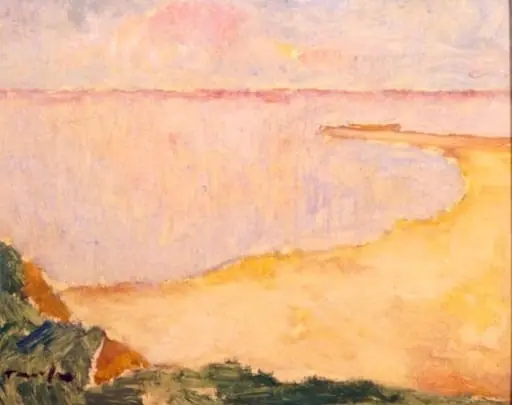
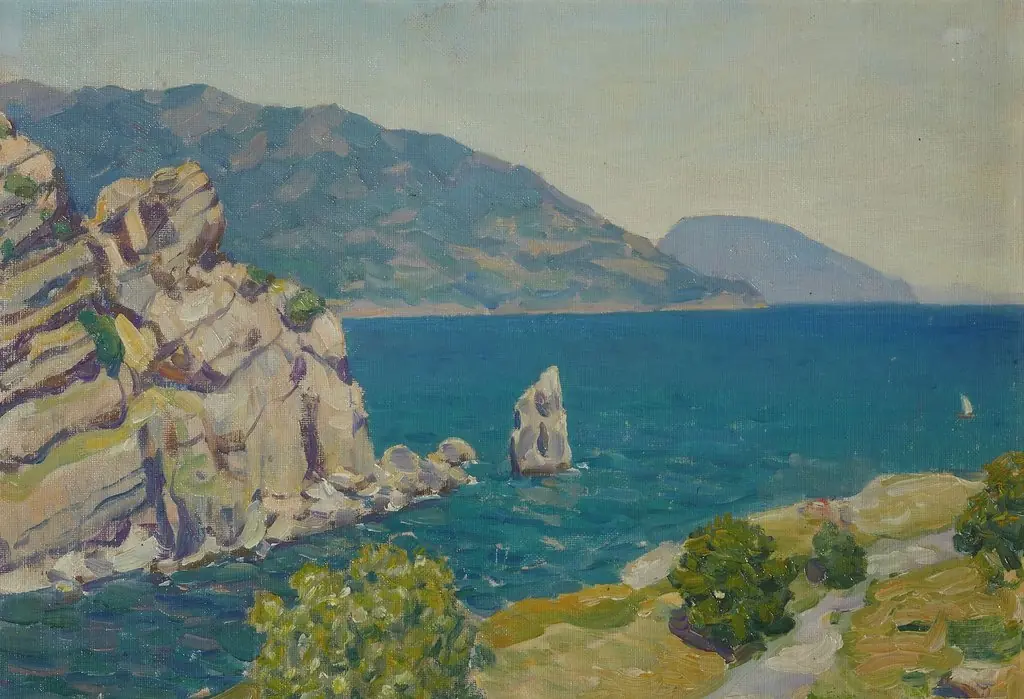
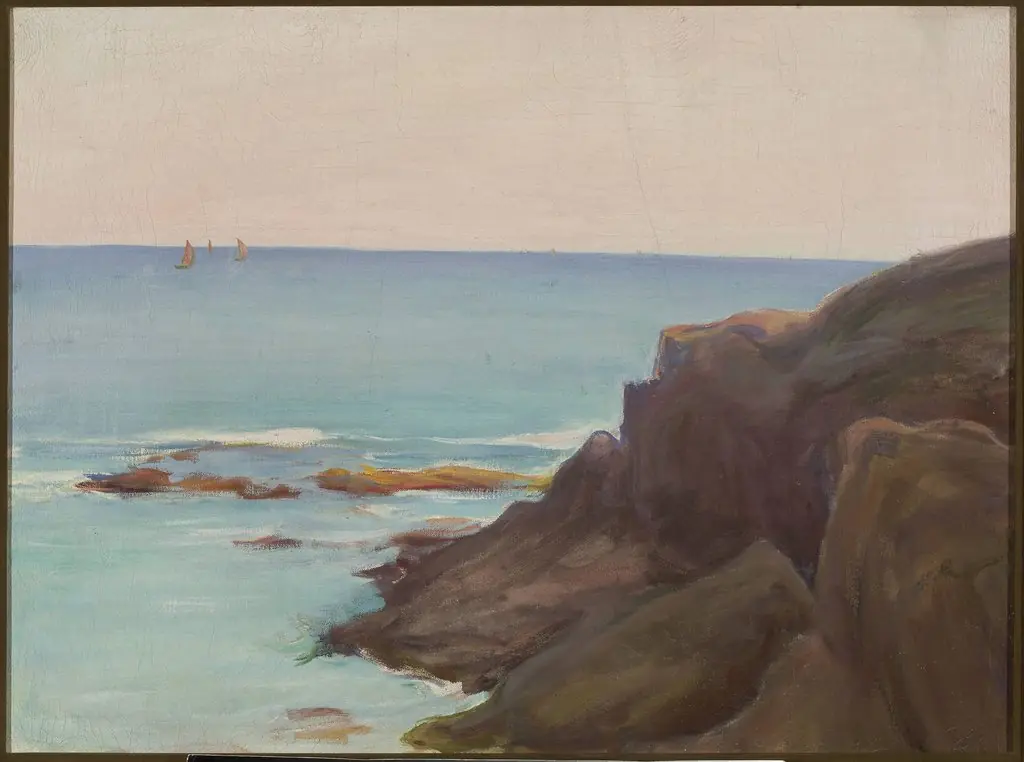
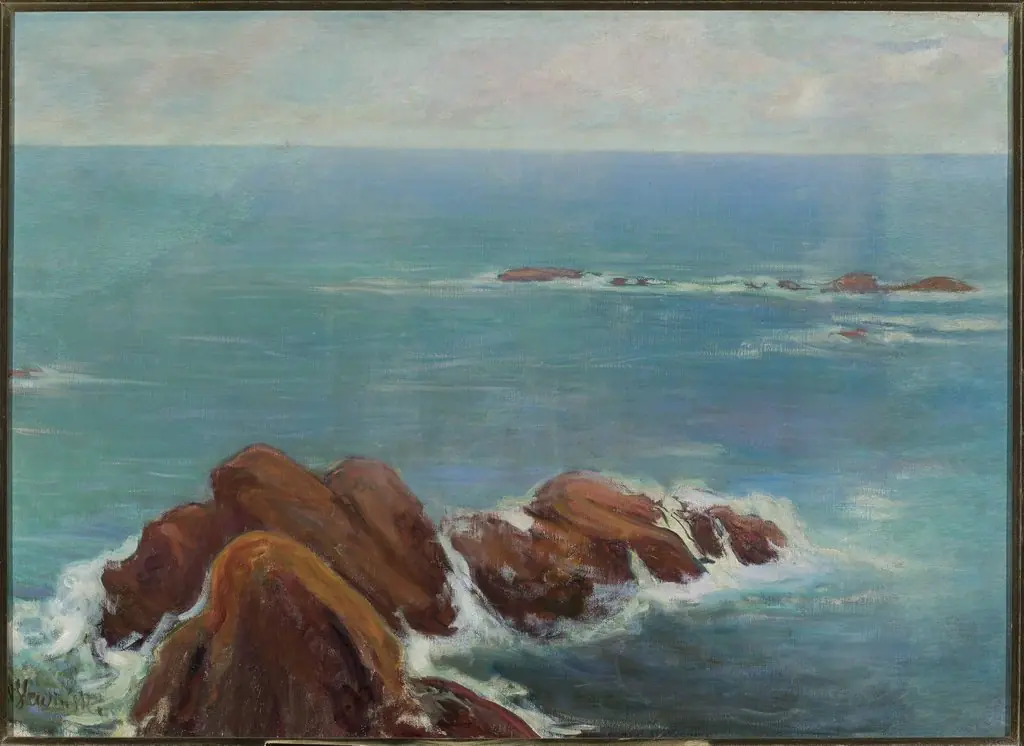
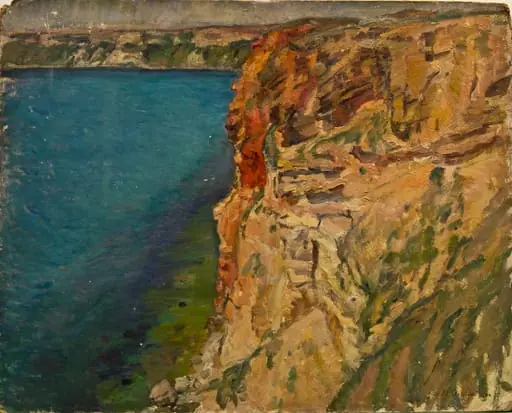
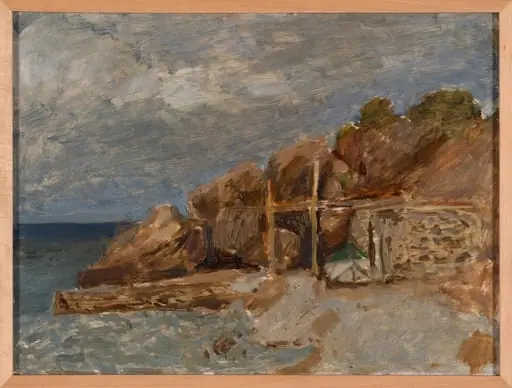
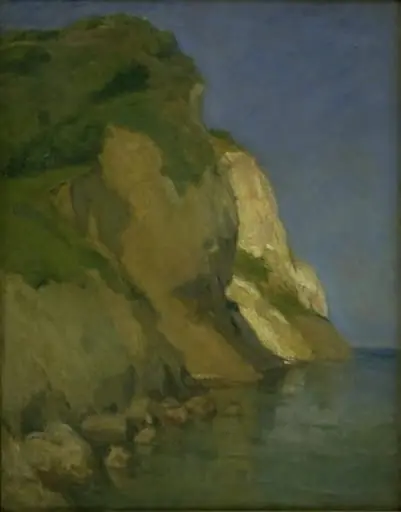
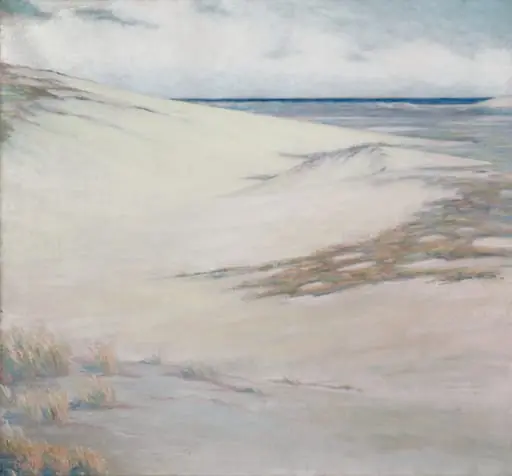
Its composition centers on a calm sea, flanked by two prominent rocks, with subtle vegetation near the left edge and a softly graded sky above.
Liniștea eternă, painted in 1933 by Romanian artist Nicolae Tonitza, is a quiet landscape that captures a still coastal scene. The work is part of the collection at the Museum of Ethnography in Bucharest. Its composition centers on a calm sea, flanked by two prominent rocks, with subtle vegetation near the left edge and a softly graded sky above. The painting avoids dramatic elements, instead emphasizing stillness through restrained visual language.
Subject & Meaning
The painting presents a natural setting untouched by human activity, suggesting a meditation on time and serenity. The unbroken horizon and motionless water imply an enduring calm, possibly reflecting a personal or cultural longing for peace amid societal change. The absence of figures or signs of life reinforces a sense of solitude, inviting contemplation rather than narrative interpretation.
Technique & Style
Tonitza employed soft, blended brushwork and a muted palette of pale blues, grays, and greens to evoke tranquility. Forms are simplified, with no sharp edges or strong contrasts. The sky and sea merge gently, and the rocks are rendered with subtle tonal shifts rather than detailed texture. This approach aligns with a lyrical modernism that prioritizes mood over realism, characteristic of Tonitza’s later work.
History & Provenance
Created in 1933, the painting entered the Museum of Ethnography’s collection shortly after its completion. It remained in Romania throughout the 20th century, surviving political shifts without public exhibition changes. Its placement in an ethnographic institution, rather than a fine arts museum, suggests its perceived connection to national identity or cultural atmosphere rather than formal artistic innovation.
Context
Tonitza painted Liniștea eternă during a period of increasing political tension in Romania, as authoritarian regimes began to take hold. While many artists turned to overtly nationalistic or propagandistic themes, Tonitza retreated into introspective landscapes. This work reflects a broader trend among Romanian modernists who sought solace in nature, using quiet scenes to preserve inner freedom amid external pressures.
Legacy
Though not widely reproduced, Liniștea eternă is recognized within Romanian art history as a quiet exemplar of Tonitza’s mature style. It exemplifies his ability to convey emotional depth through minimal means. The painting continues to be studied for its understated aesthetic and its role in illustrating how artists navigated personal expression under restrictive cultural conditions in interwar Eastern Europe.
Artist & collection
Artist
Nicolae Tonitza painted quiet still lifes and village scenes, often showing colorful vegetables on a table or blooming flowers in simple pots.