Artwork
Barbu Lăutaru
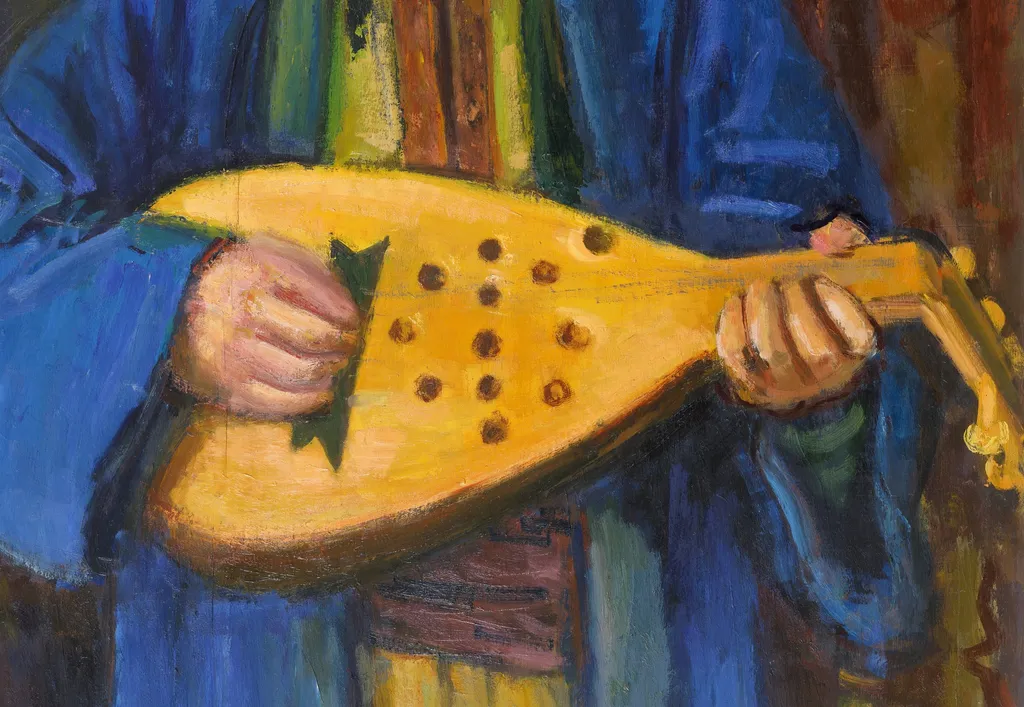
Barbu Lăutaru is an unspecified painting by Iosif Iser. It dates from 1850 and is held in the collection of the National Museum of Art of Romania.
About this work
Overview
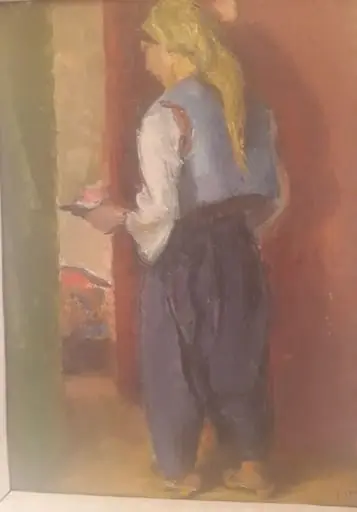
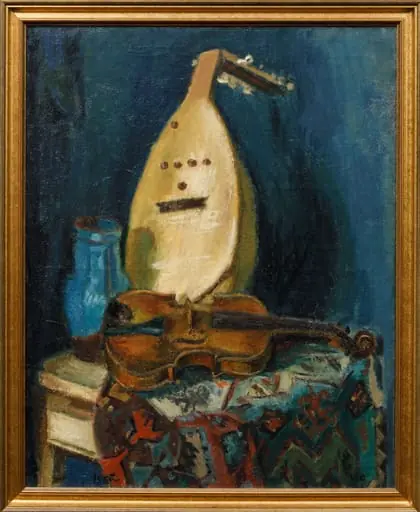
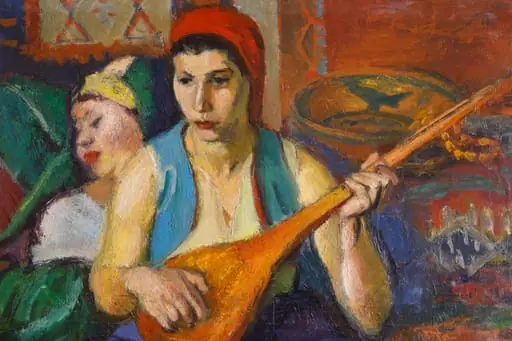
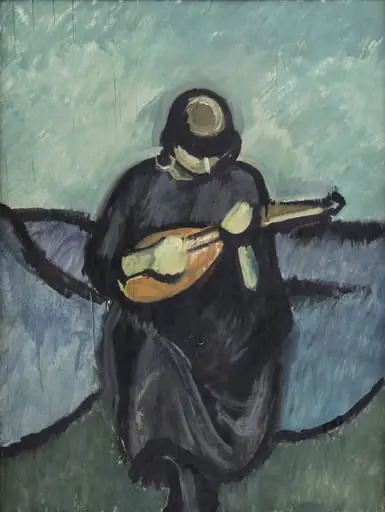
Created around 1850 by Romanian painter Iosif Iser, “Barbu Lăutaru” presents a close‑up study of a lute in the hands of an unseen musician. The composition isolates the instrument against a muted, indistinct backdrop, drawing immediate attention to the vivid yellow wood and the gesture that supports it.
Subject & Meaning
The work focuses on a pair of hands clasping a lute, an instrument traditionally associated with folk music and itinerant performers in Eastern Europe. By emphasizing the tactile contact and the instrument’s bright hue, Iser hints at the cultural vitality of the lăutar tradition without depicting a specific individual.
Technique & Style
Iser employs a pronounced impasto technique, applying thick, textured paint especially on the lute’s surface. The tactile brushwork creates a near‑sculptural quality, rendering the wood grain and the round tuning holes with a sense of three‑dimensionality. The dark, loosely rendered background contrasts sharply with the detailed foreground, enhancing the visual focus.
History & Provenance
The painting is dated circa 1850, placing it early in Iser’s career when he was exploring genre scenes and national motifs. Its provenance is limited to museum records that list it as part of a 19th‑century Romanian collection, with no further documented changes of ownership.
Own this work as a print
Artist & collection
Artist
Iosif Iser painted everyday life with a focus on people and places. His 1933 work *Paris. Strada Mouffetard* shows a lively street scene in Paris, while *Nud pe fotoliu* depicts a seated nude figure. His brushwork…