Artwork
Evantaiul
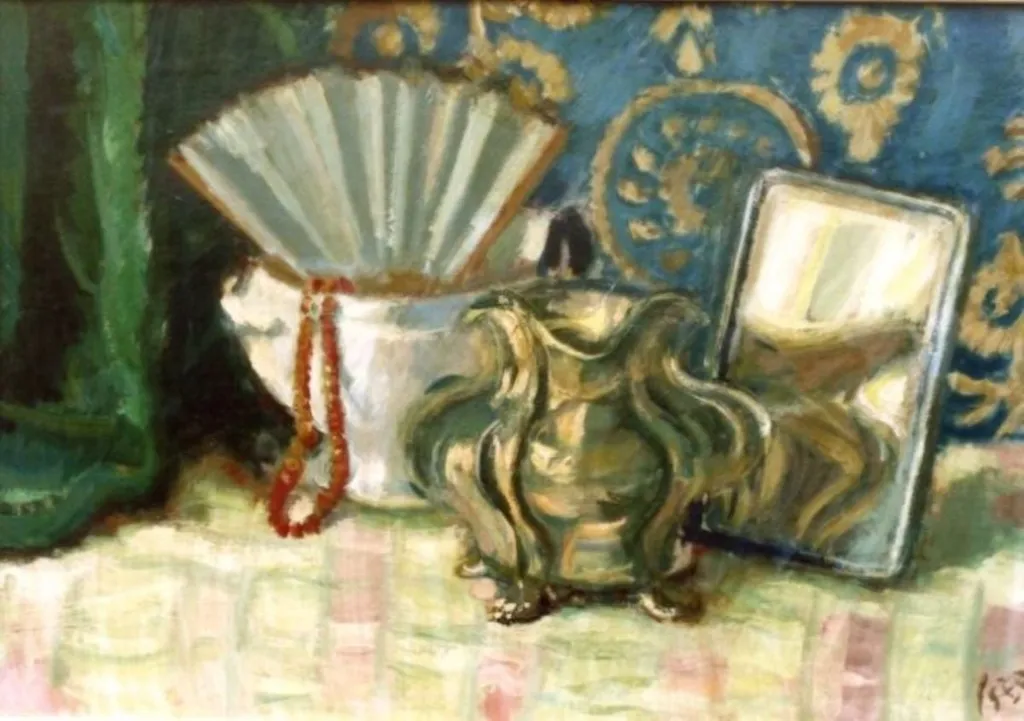
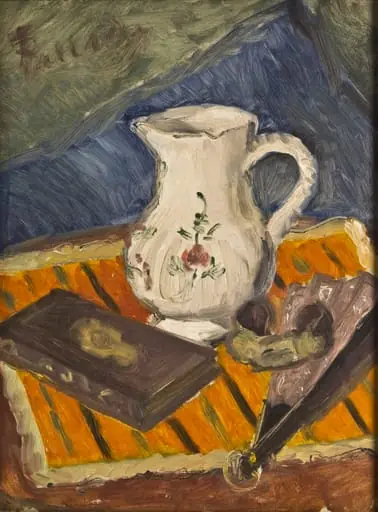
Evantaiul is an unspecified painting by Iosif Iser. It is held in the collection of the Bucharest Municipality Museum. This small-scale painting depicts a domestic interior centered on a cat seated on a wooden table.
About this work
Overview
The composition includes a white vase with a red ribbon, a leaning fan, and a mirror reflecting fragments of the scene.
This small-scale painting depicts a domestic interior centered on a cat seated on a wooden table. The composition includes a white vase with a red ribbon, a leaning fan, and a mirror reflecting fragments of the scene. The background features a blue-green wall with a subtle floral pattern, creating a quiet, intimate setting. The work’s immediacy suggests a spontaneous observation rather than a formal portrait.
Subject & Meaning
The cat, as the sole living subject, anchors the scene with quiet presence. Its placement among household objects—vase, fan, mirror—hints at domestic routine, yet the absence of human figures leaves the narrative open. The mirror’s reflection adds depth and ambiguity, suggesting observation without direct engagement. The animal becomes a silent witness to the stillness of the space.
Technique & Style
The cat’s fur is rendered with thick, tactile brushstrokes, creating a sense of volume and movement. Colors are applied with visible energy, edges slightly blurred or uneven, suggesting rapid execution. The impasto technique gives texture to the fur, contrasting with the smoother surfaces of the vase and mirror. This approach prioritizes sensory immediacy over polished finish.
History & Provenance
The painting’s origin and early ownership remain undocumented. No signature, date, or exhibition record has been verified. Its informal subject and loose handling suggest it may have been a private study or personal exercise rather than a commissioned work. The lack of provenance limits contextual placement but underscores its intimate character.
Context
This work aligns with 19th-century domestic genre scenes that elevated ordinary moments and animals as subjects. Its informal style echoes the growing interest in everyday life among artists moving away from academic conventions. The use of mirrors and reflective surfaces reflects broader trends in still-life and interior painting during this period.
Legacy
Though not widely exhibited or reproduced, the painting exemplifies how informal techniques could convey emotional resonance without grand narrative. Its emphasis on texture and immediacy anticipates later modernist interests in materiality and spontaneous brushwork. It remains a quiet example of how small, unassuming works can capture the rhythm of daily life.
Artist & collection
Artist
Iosif Iser painted everyday life with a focus on people and places. His 1933 work *Paris. Strada Mouffetard* shows a lively street scene in Paris, while *Nud pe fotoliu* depicts a seated nude figure. His brushwork…
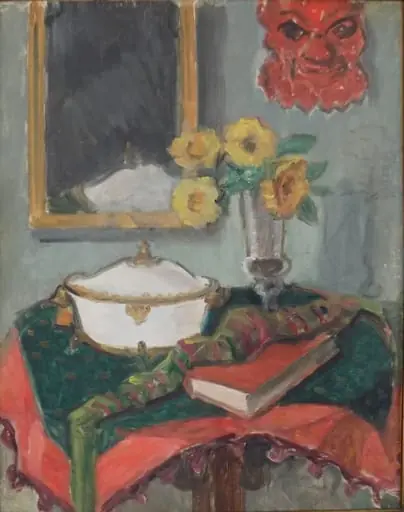 Natură statică cu masă
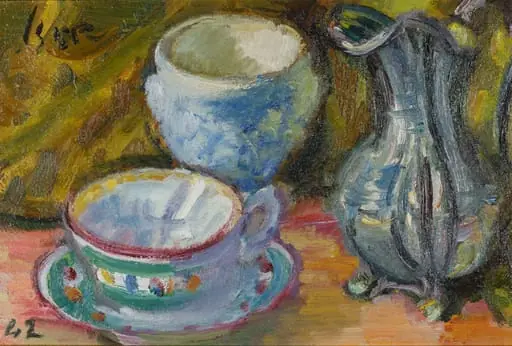 Natură moartă cu ceașcă de cafea
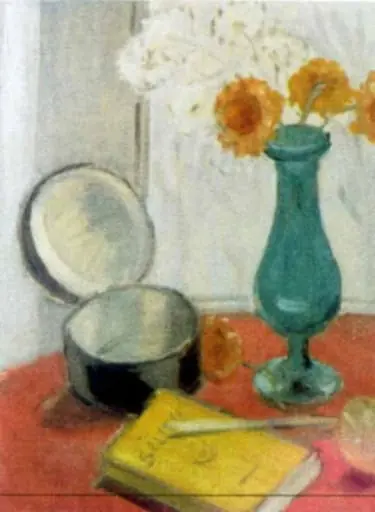 Natură moartă (Flori de soc și gălbenele)
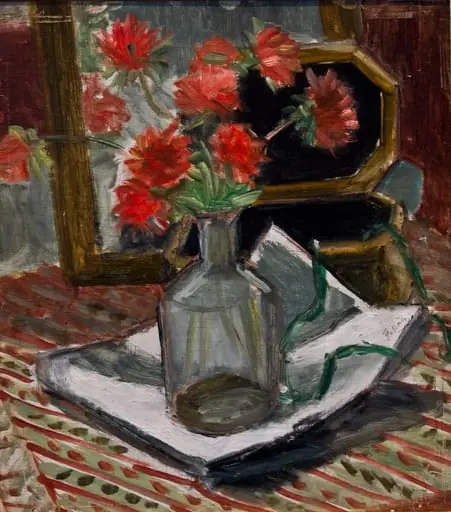 Natură statică cu flori roșii
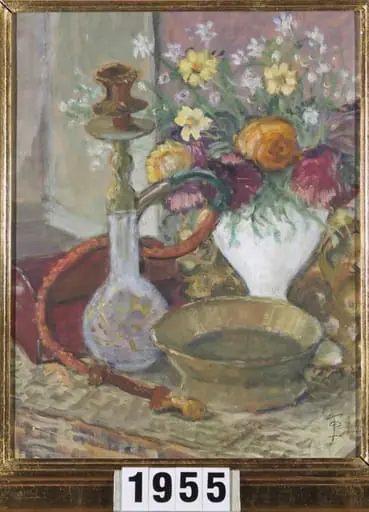 Natură moartă cu flori
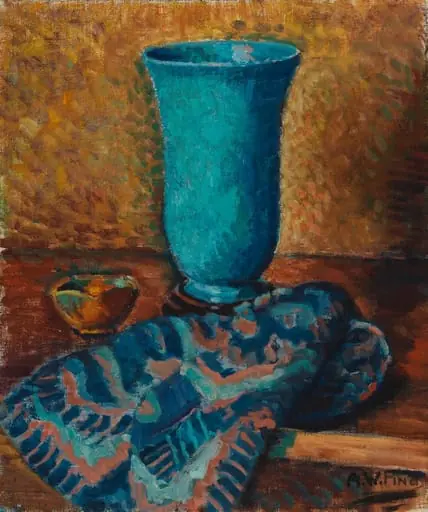 Sininen maljakko
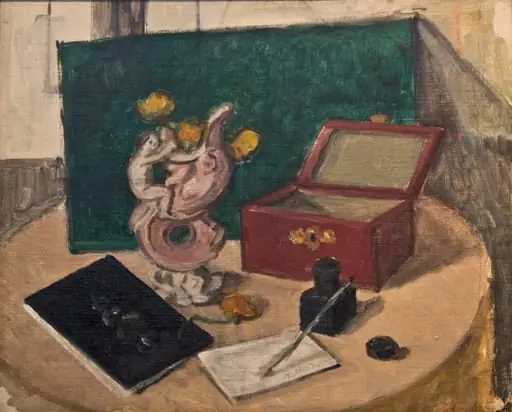 Natură statică cu casetă roșie
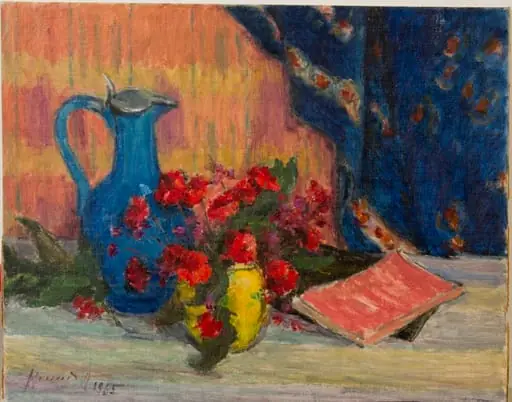 Flori în vas galben de pământ
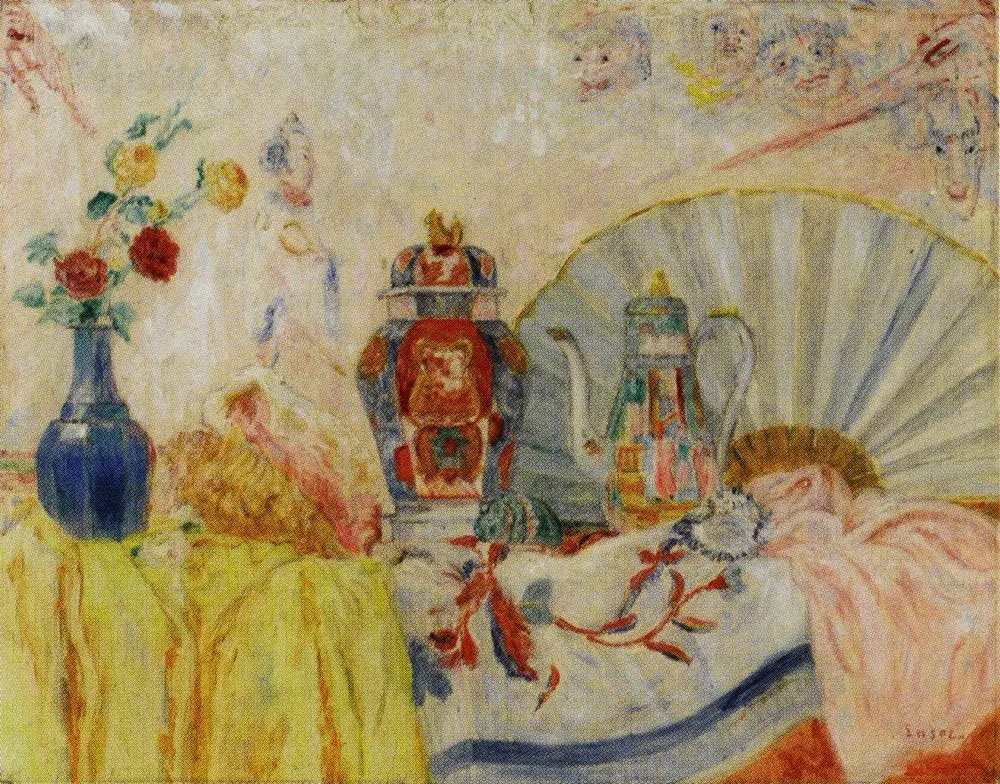 Porcelaines et Masques
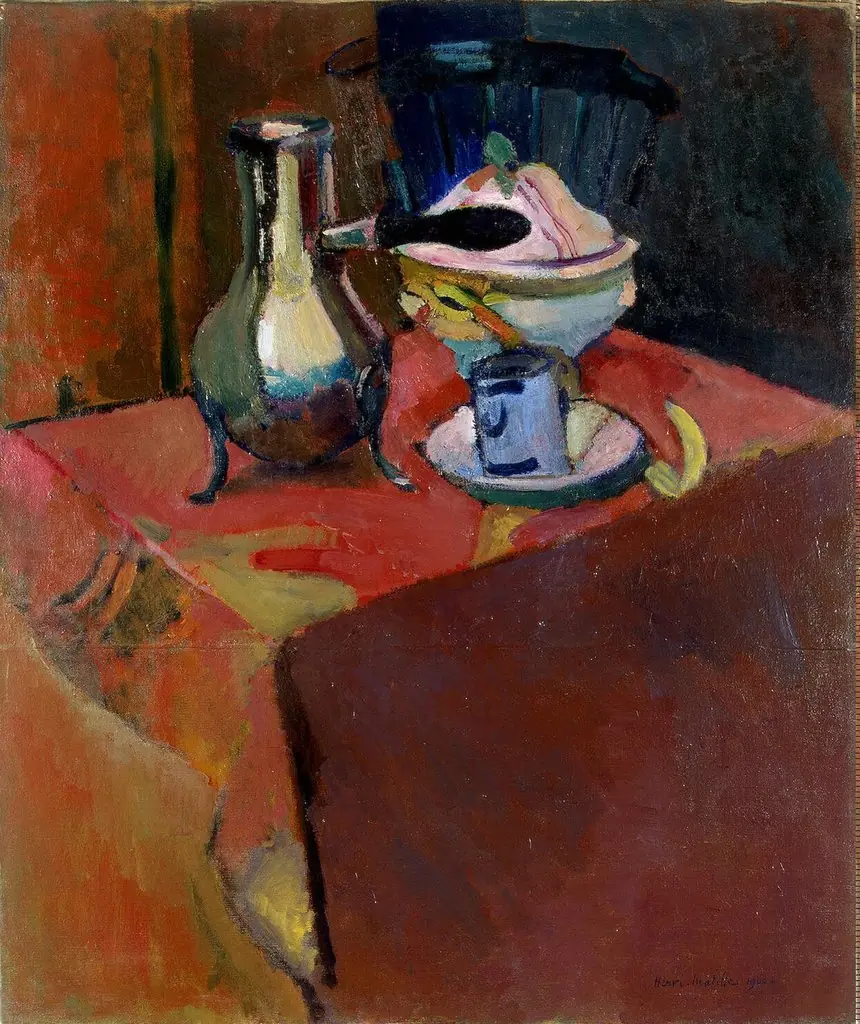 Crockery on a Table
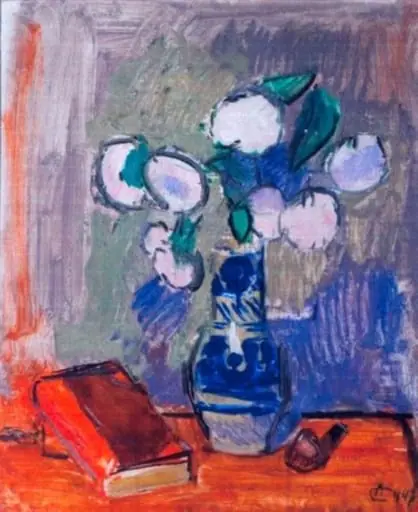 Natură statică cu ulcică
 Natură statică cu cană și evantai