Artwork
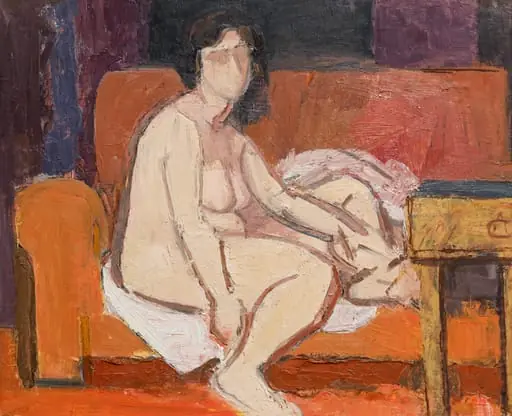
Nud pe canapea
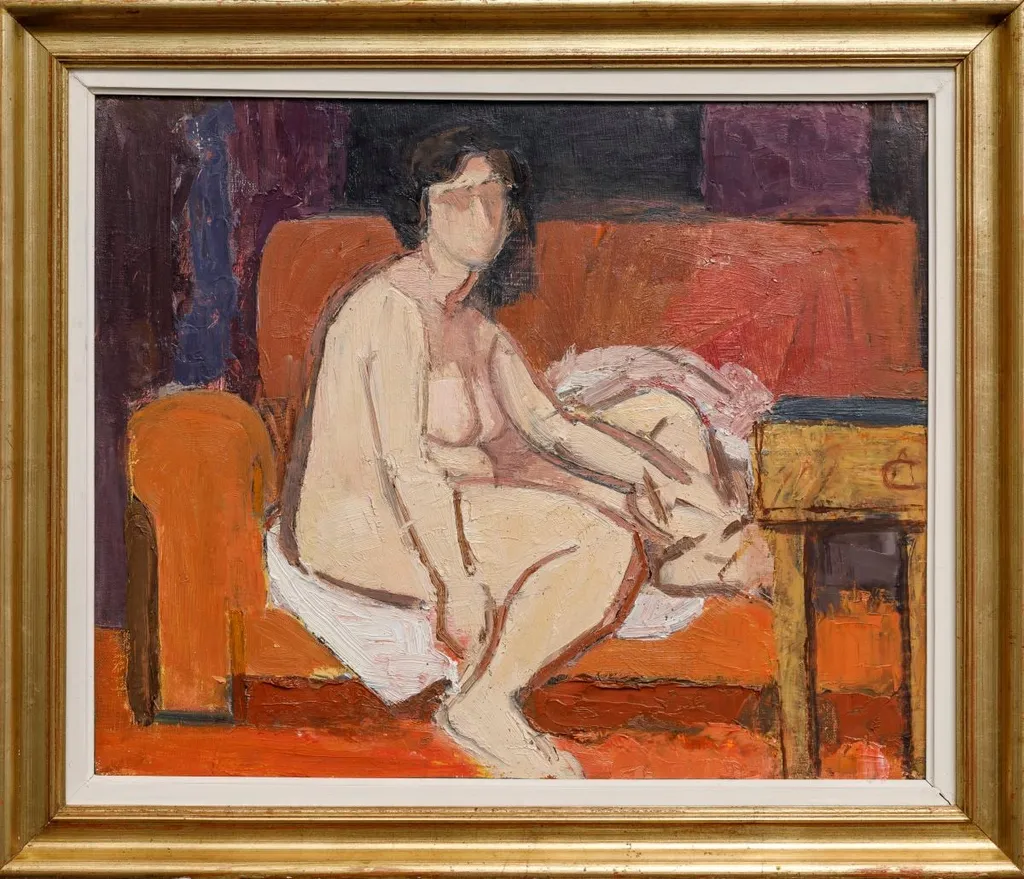
Nud pe canapea is an unspecified painting by Alexandru Ciucurencu. It dates from 1948 and is held in the collection of the National Museum of Art of Romania.
About this work
Overview
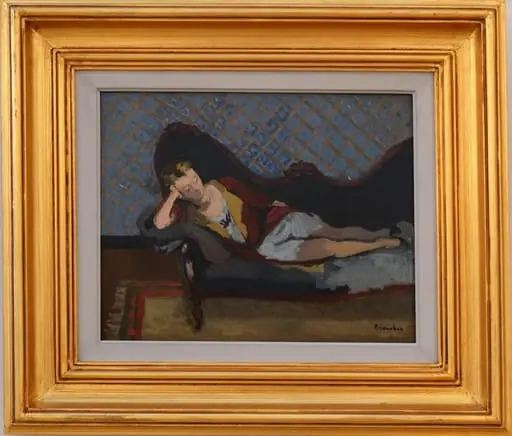
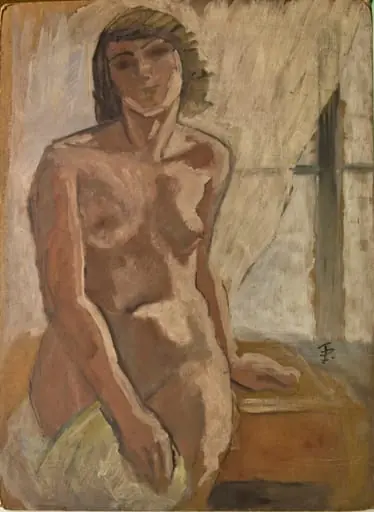
It depicts a seated female figure on a vibrant orange couch, rendered with a deliberate sense of rawness in form and color.
Nud pe canapea, dated around 1948, is a painting by Romanian artist Alexandru Ciucurencu. It depicts a seated female figure on a vibrant orange couch, rendered with a deliberate sense of rawness in form and color. The composition avoids idealization, favoring a direct, unembellished portrayal of the human body in a domestic setting. The work reflects Ciucurencu’s interest in everyday subjects and his departure from academic conventions.
Subject & Meaning
The figure, nude and seated, appears at ease, her gaze lowered in quiet introspection. The absence of narrative or symbolic elements shifts focus to the presence of the body itself. The setting—a simple interior with abstracted wall patterns—grounds the scene in ordinary life. The painting conveys intimacy not through drama, but through stillness and unadorned realism, suggesting a moment of private repose.
Technique & Style
Ciucurencu employs a loose, textured brushwork that emphasizes surface over polish. Colors—particularly the orange couch and the purple-orange wall rectangles—are applied with visible, uneven strokes, creating a sense of immediacy. Forms are simplified and edges softened, avoiding precise delineation. This approach aligns with post-war tendencies in Eastern European art that valued expressive gesture over refined finish.
History & Provenance
Created in the late 1940s, the painting emerged during a period of cultural restriction in Romania under early communist rule. While official art promoted socialist realism, Ciucurencu continued exploring personal, non-political themes. Nud pe canapea remained in private hands for decades, reflecting its marginal status in state-sanctioned exhibitions. Its survival underscores the persistence of individual expression amid ideological pressure.
Context
In postwar Romania, artistic freedom was curtailed, yet some painters like Ciucurencu subtly resisted conformity by focusing on intimate, non-heroic subjects. Nud pe canapea’s domestic setting and unidealized nude contrasted with state-mandated depictions of labor and collective life. Its quietness made it a quiet act of defiance, rooted in the artist’s commitment to personal vision over ideological conformity.
Legacy
Though not widely exhibited during its time, Nud pe canapea has come to represent a quieter strand of Romanian modernism—one that prioritized emotional authenticity over propaganda. Contemporary scholars recognize it as an example of how artists navigated political constraints through understated, human-centered imagery. Its enduring interest lies in its restraint and unassuming presence.
Artist & collection
Artist
Alexandru Ciucurencu painted scenes from everyday life and the human body in the mid-20th century.