Artwork
Țigancă
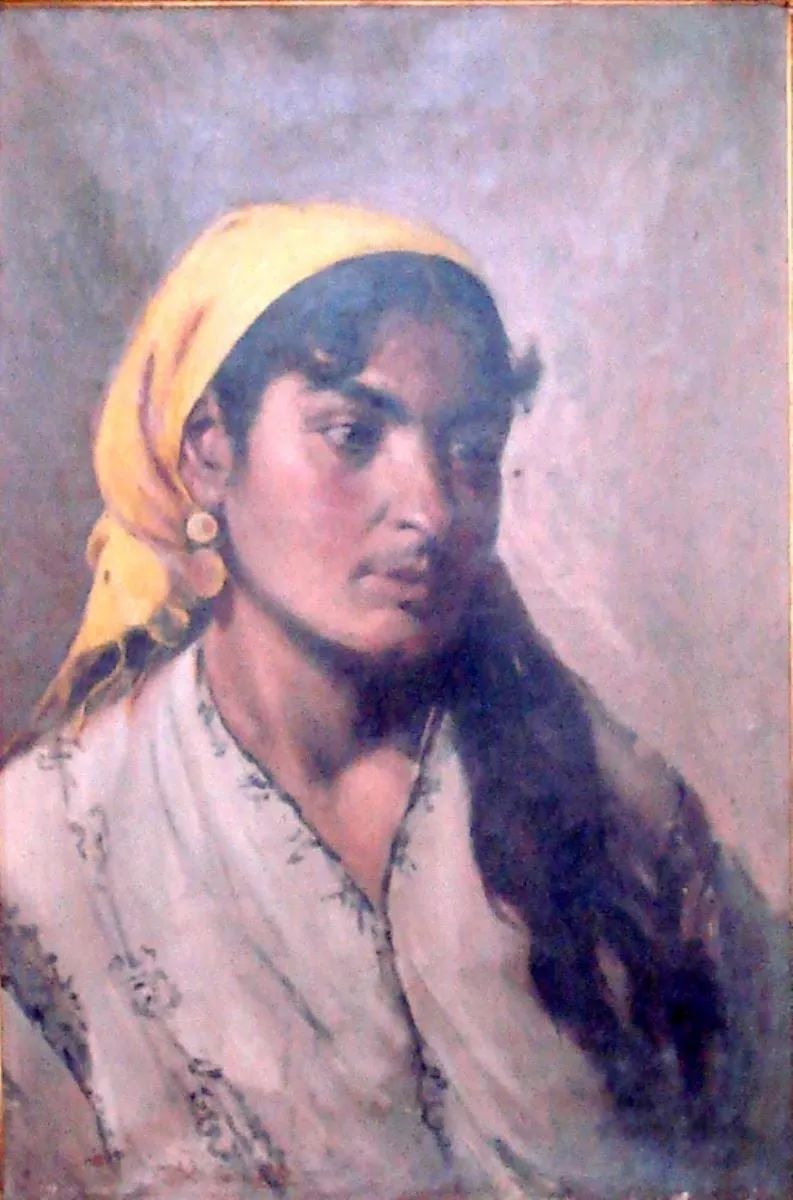
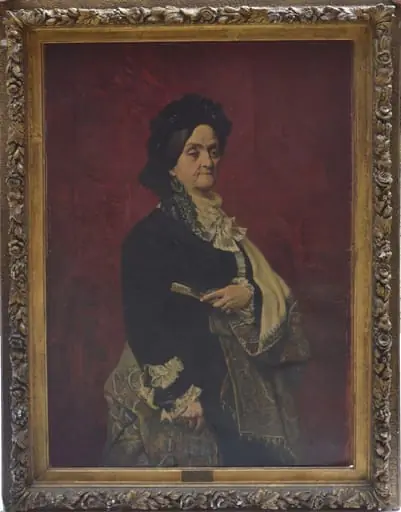
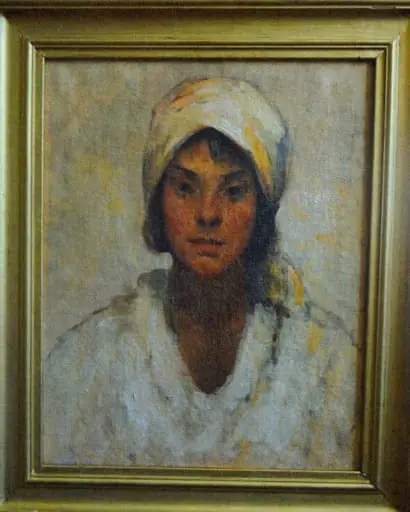
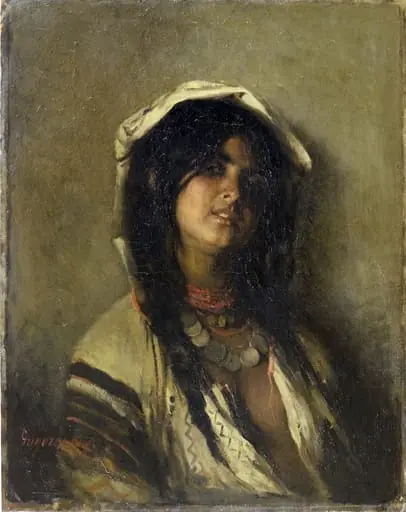
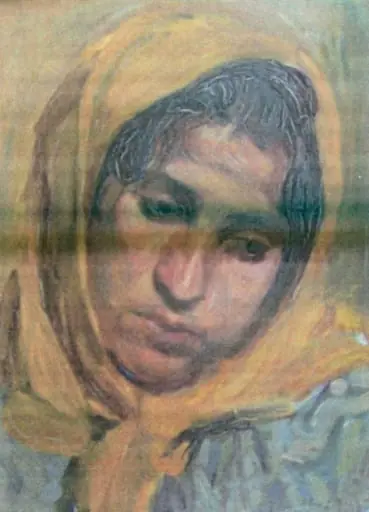
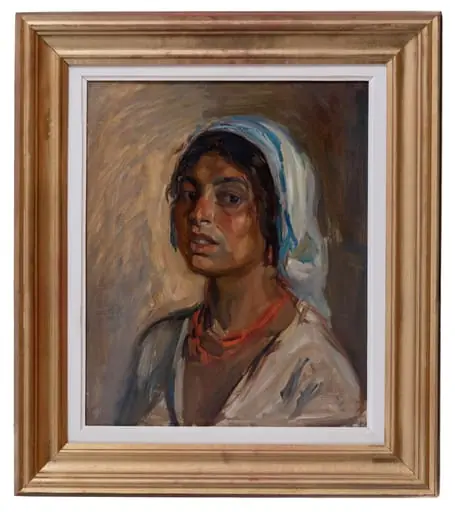
Țigancă is an unspecified painting by Theodor Aman. It is held in the collection of the Bucharest Municipality Museum. This portrait depicts a Romani woman rendered in loose, impressionistic brushwork.
About this work
Overview
This portrait depicts a Romani woman rendered in loose, impressionistic brushwork. The composition centers on her face and upper torso, set against a muted, undetailed background that enhances her presence. The painting’s quiet intimacy and restrained palette suggest a focus on individual presence rather than narrative or symbolism.
Subject & Meaning
The subject is a woman wearing a yellow headscarf and a light, patterned shirt, her gaze turned slightly away with a composed expression. A single small earring draws subtle attention to her identity. The lack of contextual clues—no setting, no props—invites contemplation of her humanity rather than her social role, emphasizing quiet dignity over stereotype.
Technique & Style
The artist employs loose, visible brushstrokes that avoid fine detail, creating a sense of immediacy and spontaneity. Light falls gently on the face, contrasting with the dimmer surroundings, a technique aligned with chiaroscuro. This selective illumination draws focus to the subject’s expression while preserving the painting’s unpolished, atmospheric quality.
History & Provenance
The painting’s origin and early ownership are not documented in available records. It appears to have been created in the late 19th or early 20th century, likely within a regional artistic context that valued direct observation over idealized representation. Its survival suggests it was preserved privately rather than exhibited publicly.
Context
During the period it was made, Romani individuals were often portrayed through exoticizing or sentimental lenses in European art. This work diverges by avoiding overt narrative or cultural labeling, instead presenting the subject with neutrality and psychological presence, reflecting a quieter, more personal artistic approach.
Legacy
The painting contributes to a lesser-known strand of portraiture that prioritizes quiet observation over dramatic storytelling. Its unadorned treatment of a marginalized subject offers a counterpoint to more stylized or stereotypical depictions of the time, quietly expanding the scope of who was deemed worthy of intimate artistic attention.
Artist & collection
Artist