Artwork
Femeie cu maramă
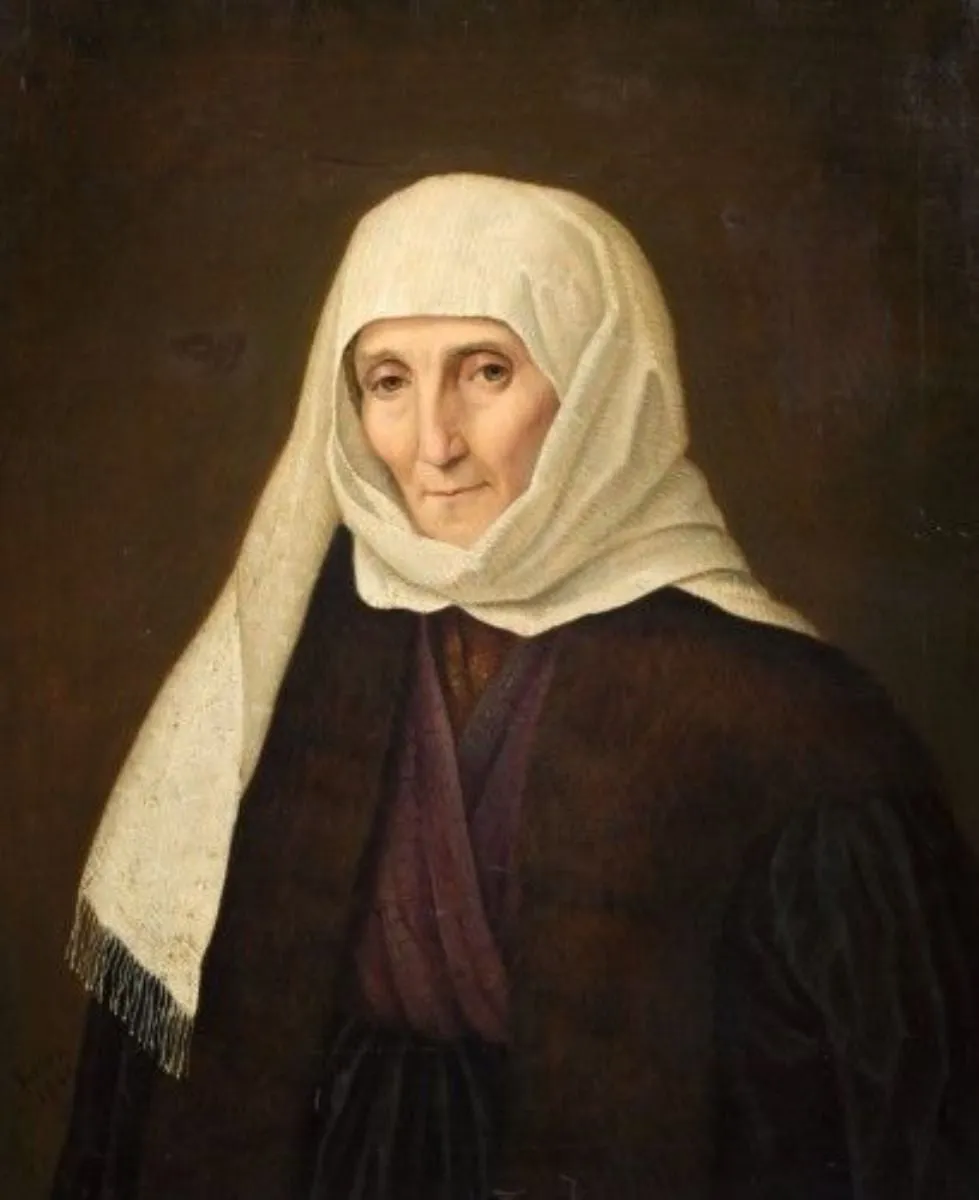
Femeie cu maramă is an unspecified painting by the Romanticist artist Constantin Lecca. It dates from 1846 and is held in the collection of the National Museum of Art of Romania.
About this work
Overview
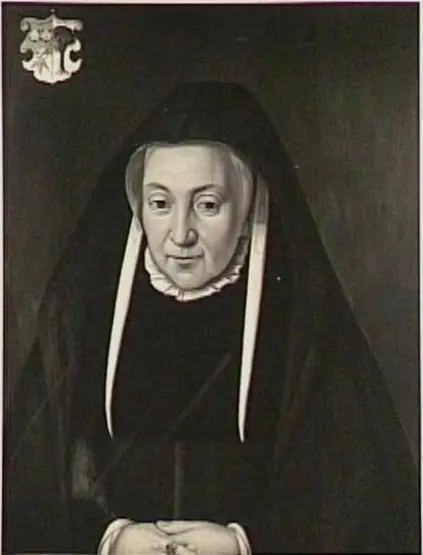
Painted in 1846 by Constantin Lecca, Femeie cu maramă is a portrait of a woman depicted in quiet stillness. The composition centers on her figure, framed against a uniform dark background that isolates her from any contextual setting. The work emphasizes presence over narrative, focusing on the subtle interplay of light and fabric to convey a sense of inner stillness.
Subject & Meaning
The subject is a woman dressed in modest, layered garments, including a white headscarf that falls over her shoulders and back.
The subject is a woman dressed in modest, layered garments, including a white headscarf that falls over her shoulders and back. A purple scarf encircles her neck, and a dark outer garment conceals her form. Her neutral expression and averted gaze suggest introspection rather than engagement. The painting conveys dignity through restraint, reflecting cultural norms of female modesty in mid-19th-century Romania.
Technique & Style
Lecca employs chiaroscuro to model the woman’s form, using sharp contrasts between light and shadow to define the folds of her scarf and the contours of her face. The brushwork is precise yet unobtrusive, avoiding decorative flourish. The solid dark background enhances the three-dimensionality of the figure, drawing attention to texture and volume rather than environment or symbolism.
History & Provenance
Created in 1846, the painting emerged during Lecca’s early career, a period when Romanian artists were beginning to develop a distinct national visual language. It was likely painted for private patronage, as no public exhibition record from the time survives. The work remained within private collections until its acquisition by a Romanian cultural institution in the 20th century.
Context
In mid-19th-century Romania, portraiture was gaining traction as a genre among artists seeking to document everyday life beyond aristocratic or religious subjects. Lecca’s focus on an ordinary woman, rendered with psychological subtlety, aligns with broader European trends toward realism, though rooted in local dress and social customs of the time.
Legacy
Femeie cu maramă is recognized as an early example of Romanian portraiture that prioritizes emotional quietude over theatricality. It influenced later artists who sought to portray common people with dignity and psychological depth. The painting remains a reference point in discussions of national identity and the evolution of Romanian visual culture.
Artist & collection
Artist

 Bildnis einer alten Frau
 Portrait of an Old Woman
 Senhora com Rosário
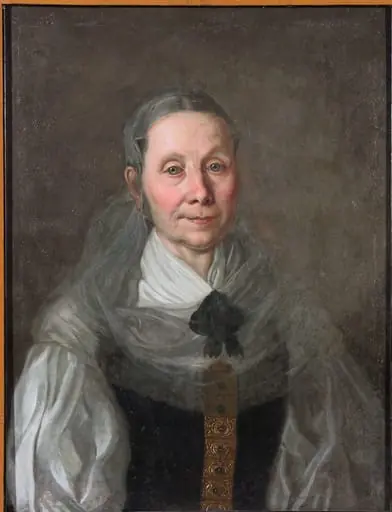 Soția lui J.G. Graf
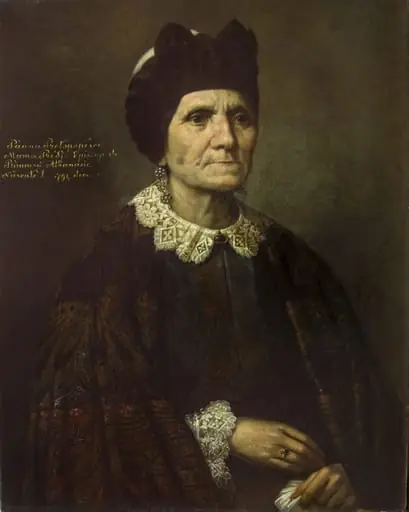 Păuna Protopopescu, mama episcopului Atanasie al Râmnicului
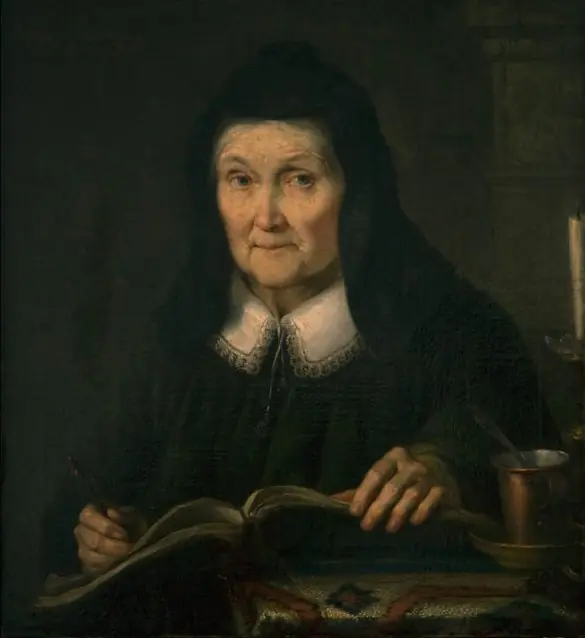 Portrait of Julianna Hadziewicz, mother of the artist
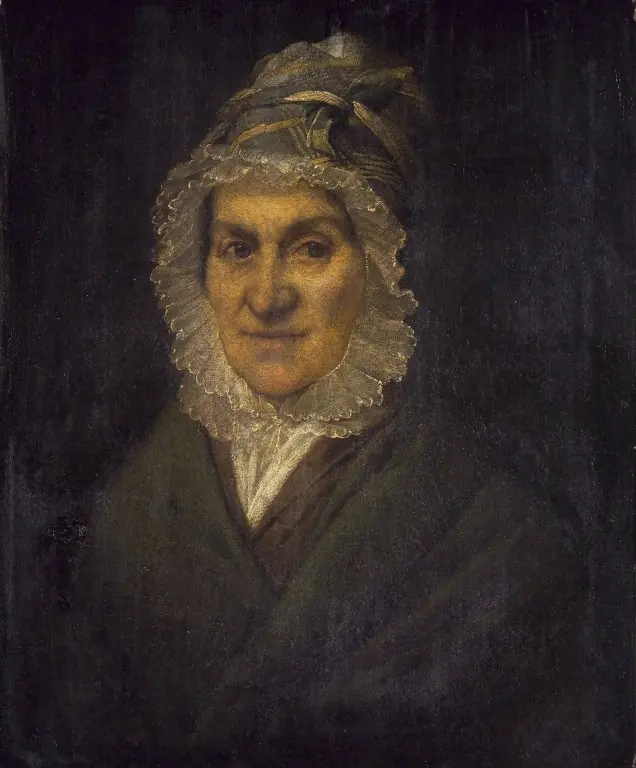 Portrait of an old woman
 Portrait of Sabina of Bavaria
 Mama pictorului
 Portrait of an old woman
 Portret van een vrouw
 Portrait of Clara Boogaart (...-1560)