Artwork
Αλήθεια -3- Μελέτη για Γλυπτό
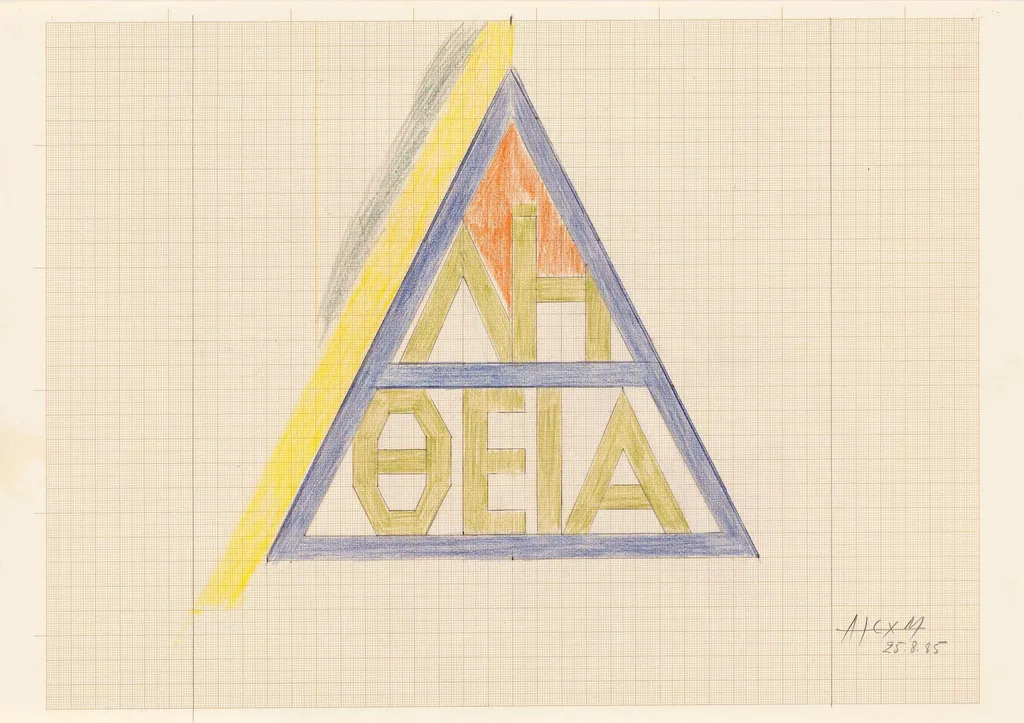
Αλήθεια -3- Μελέτη για Γλυπτό is a drawing by Mylona Alex. It is held in the collection of the Metropolitan Organisation of Museums of Visual Arts of Thessaloniki – MOMus.
About this work
Overview
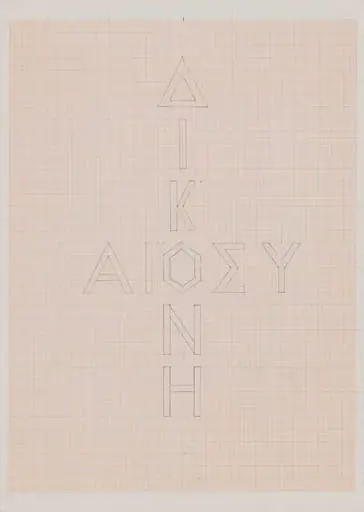
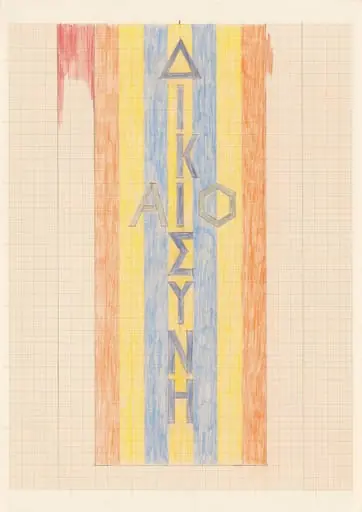
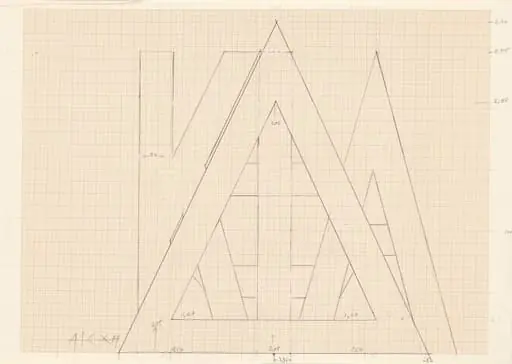
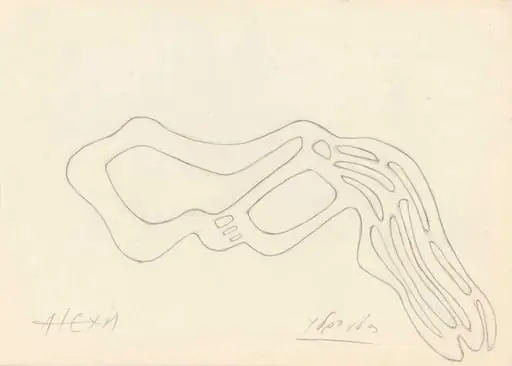
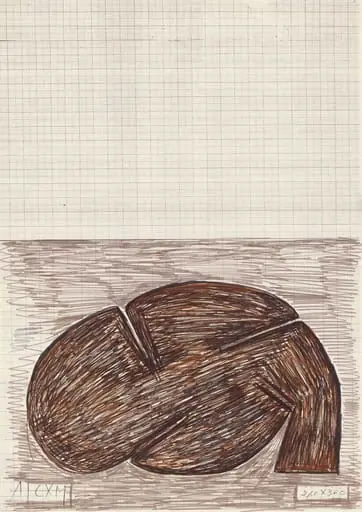
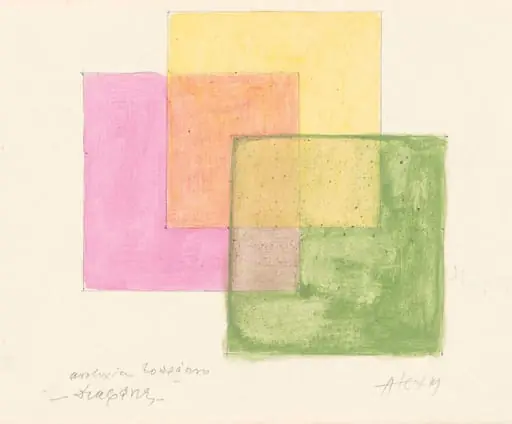
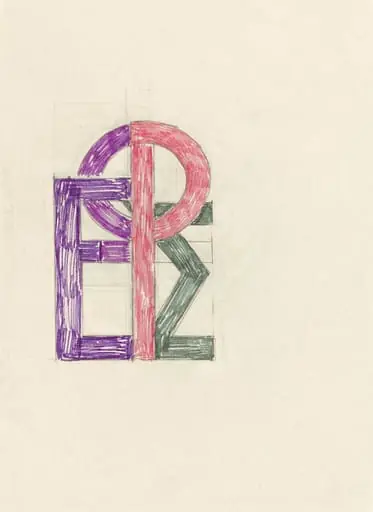
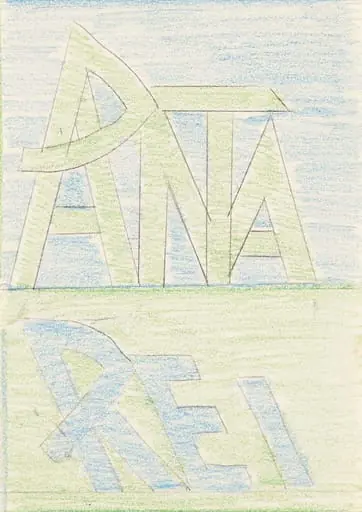
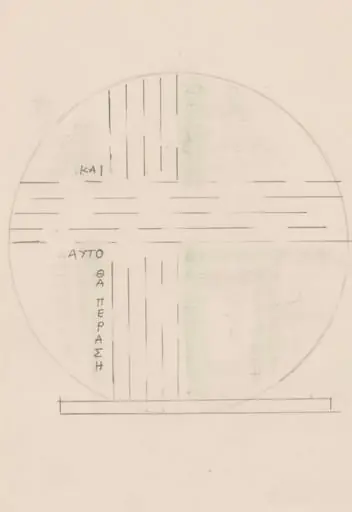
Created in the mid‑1980s, this image is a preparatory study by Greek artist Alex Mylona for a series of sculptural works that would render abstract concepts as three‑dimensional block letters. The drawing records the Greek word “Αλήθεια” (Truth) rendered in solid, floating lettering, achieved through a combination of cross‑hatching and stippling.
Subject & Meaning
Mylona’s project centered on fundamental human values—Love, Truth, Justice, Fairness, Peace, and Eros—intended to become visual statements in public space. By isolating each term in bold typographic form, the artist sought to make the concepts physically present, encouraging viewers to contemplate their societal significance.
Technique & Style
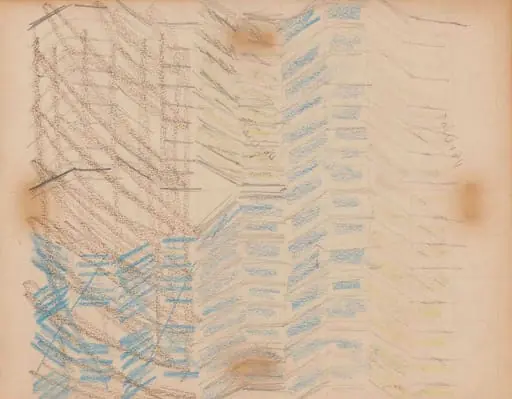
The study employs a dense network of cross‑hatches and stippled dots to model volume and shadow, giving the letters a tactile, almost sculptural quality while remaining on paper. Variations in color and composition across the series reveal Mylona’s experimental approach to how light and surface might translate into three‑dimensional form.
History & Provenance
The drawing belongs to a body of work produced during the 1980s when Mylona explored the transition from drawing to sculpture. From this series, the words “Love” and “Justice” were realized as large‑scale installations in the courtyard of the Museum of Contemporary Art at the Thessaloniki International Fair (D.E.T.H.).
Context
Mylona’s practice aligns with a broader 1980s interest in text as visual art, intersecting conceptual art’s focus on language with public sculpture’s civic ambitions. The Greek setting underscores the use of native script to anchor universal ideas within a specific cultural framework.
Legacy
Although only a study, the piece illustrates Mylona’s methodical process of converting linguistic symbols into spatial objects, a technique that continues to inform contemporary explorations of text, form, and public art.
Artist & collection
Artist
Museum
Metropolitan Organisation of Museums of Visual Arts of Thessaloniki – MOMus
Continue through works from the same source collection.