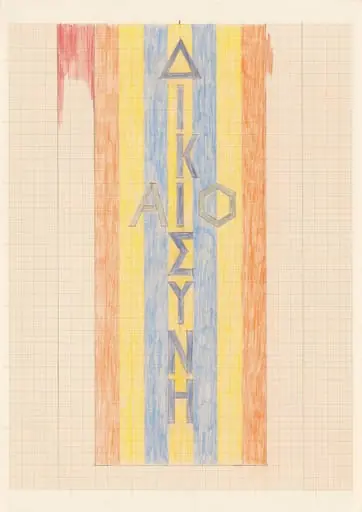
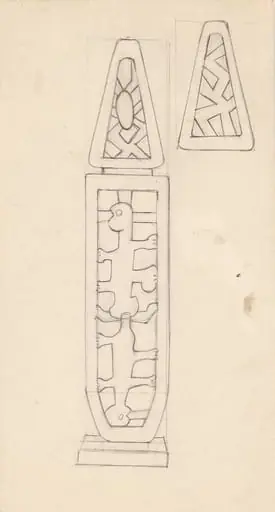
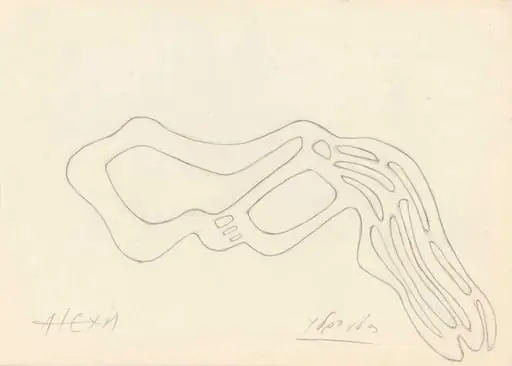
Artwork
Και αυτό θα περάσει
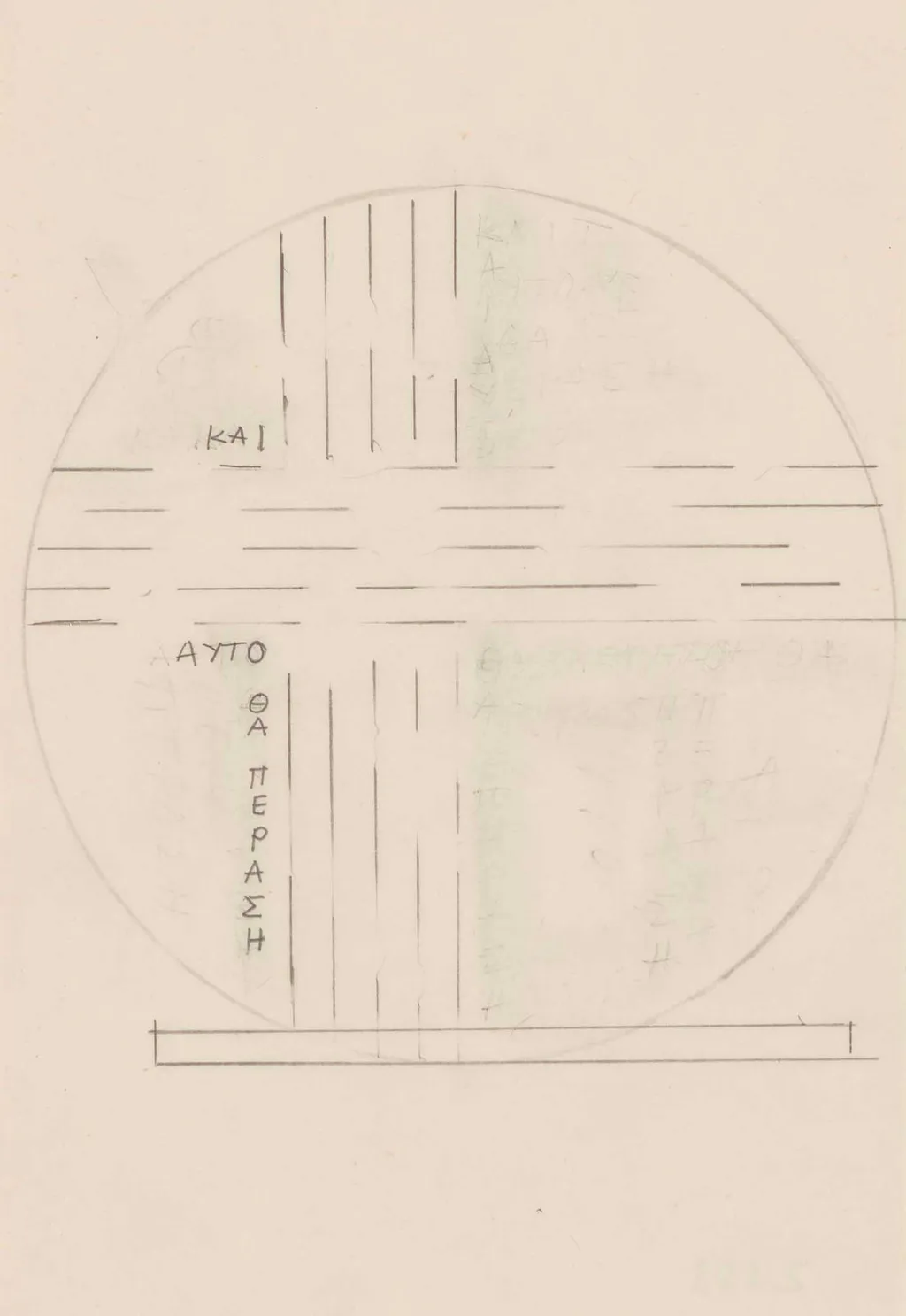
Και αυτό θα περάσει is a drawing by Alex Mylona. It dates from 1984 and is held in the collection of the Metropolitan Organisation of Museums of Visual Arts of Thessaloniki – MOMus.
About this work
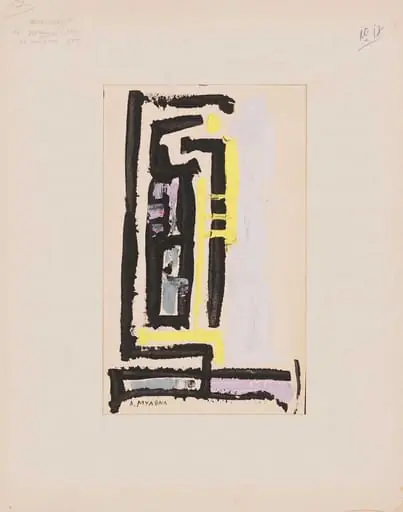
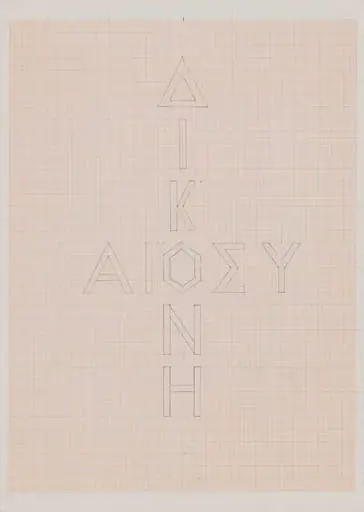
This drawing shows sharp black lines on white paper. It looks like a grid of shifting squares. The lines are firm but not perfect.
Mylona used white marble slabs in the 1980s. She picked stone from a quarry near Athens. Each slab became a calm, abstract shape. The title in Greek means “this too will pass.” It hints at change over time.
Check out more by Mylona, Alex (1920-2016).
Overview
Created in June 1984, this drawing is one of seven preparatory studies by Alex Mylona for a series of marble sculptures. Executed in black ink on white paper, it features an arrangement of irregular squares formed by firm, hand-drawn lines. The work reflects her process of translating spatial ideas into stone, prior to carving thin slabs of Dionysian marble into minimalist geometric forms.
Subject & Meaning
The Greek title, meaning 'this too will pass,' suggests a meditation on impermanence. Though the drawing’s forms are abstract—squares, rectangles, and semicircles—they evoke enduring symbols rather than literal representations. Mylona did not assign titles until after completion, allowing meaning to emerge from the work’s presence rather than preconceived narrative.
Technique & Style
Mylona used precise but deliberately imperfect black lines to map out compositional structures. The drawing’s geometry is deliberate yet human, avoiding mechanical perfection. This approach mirrored her sculptural practice: she favored the natural texture and luminosity of white marble over elaborate carving, letting the material’s inherent qualities guide form.
History & Provenance
The drawing originates from a focused period in the early 1980s when Mylona concentrated on marble slabs sourced from the Dionysus quarries near Athens. These studies were never exhibited as finished works but served as direct conduits to her sculptural output, documenting her transition from concept to material realization.
Context
Mylona’s work emerged within a broader post-war Greek artistic movement that valued material authenticity and restraint. Her choice of local marble connected her to the land’s geological and cultural history, distinguishing her from international abstraction by grounding form in regional specificity and tactile honesty.
Legacy
Though less known internationally, Mylona’s studies and sculptures influenced later Greek artists interested in minimalism and material integrity. Her insistence on marble’s autonomy—rejecting ornamentation in favor of quiet geometry—remains a quiet but persistent reference in contemporary sculptural practice.
Artist & collection
Artist
Alex Mylona (Athens, 1920 – 2016) was a Greek sculptor, known for her multidimensional and experimental approach to art.
Museum
Metropolitan Organisation of Museums of Visual Arts of Thessaloniki – MOMus
Continue through works from the same source collection.