Artwork
Σχέδιο δύο ιταλών στρατιωτών - "κοκορόφτερων"
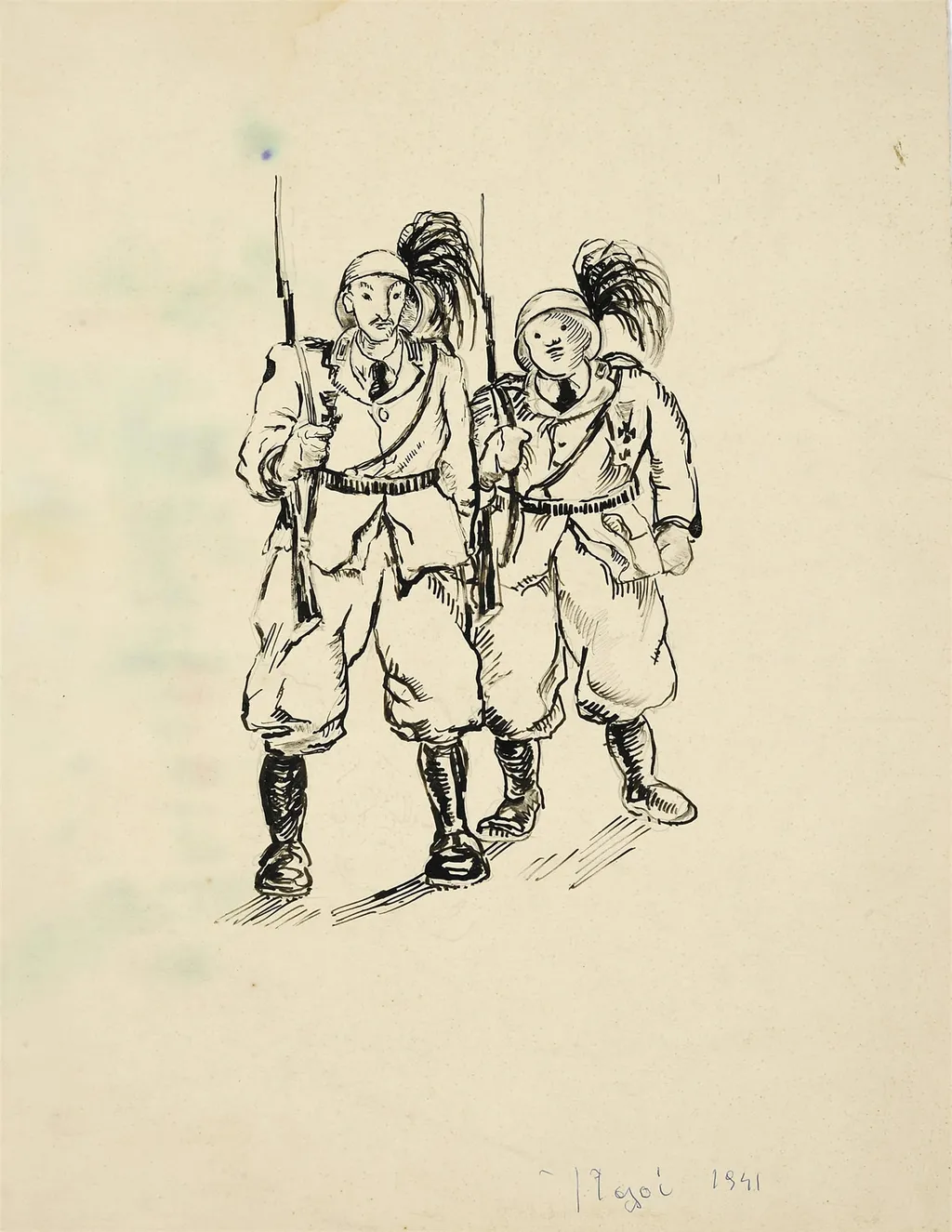
Σχέδιο δύο ιταλών στρατιωτών - "κοκορόφτερων" is a drawing by Vyzantios Periklis. It dates from 1941 and is held in the collection of the Historical & Ethnological Society of Greece.
About this work
The date "1941" is scrawled in the corner, hinting this might be from a time of war.
This sketch shows two soldiers walking side by side. Both wear matching uniforms with tall boots, belts, and feathered hats. One holds a rifle, the other has his hands in his pockets. The drawing is loose and quick, with simple lines and shading.
The date "1941" is scrawled in the corner, hinting this might be from a time of war. The soldiers look tired but determined, their posture relaxed but alert.
Look up cross-hatching to see how artists build shadows with lines like these.
Overview
This 1941 sketch by Vyzantios Periklis depicts two Italian soldiers in uniform, rendered in rapid, economical lines. Executed in pencil or ink, the drawing captures a moment of quiet movement rather than action. The date inscribed in the corner suggests it was made during wartime, likely as a field observation. The work is part of the Museum of Ethnography’s collection, where it serves as a visual record of military presence in Greece during the occupation.
Subject & Meaning
The two soldiers, identified by their feathered hats and tall boots, walk side by side—one carrying a rifle, the other with hands in pockets. Their posture suggests fatigue mixed with vigilance, avoiding dramatic gestures in favor of subdued realism. The term 'kokorofteron,' used locally to describe Italian troops, implies a tone of weary familiarity rather than overt hostility. The image conveys the mundane reality of occupation, focusing on the human presence rather than ideology.
Technique & Style
Periklis employs loose, gestural lines with minimal shading to suggest form and texture. Cross-hatching is used sparingly to indicate shadow on uniforms and boots, emphasizing volume without detail. The sketch’s speed and simplicity reflect its likely origin as a quick observational study, possibly drawn on-site. The absence of background or context directs attention solely to the figures, reinforcing the intimacy and immediacy of the moment.
History & Provenance
Created in 1941 during the Italian occupation of Greece, the drawing likely stems from Periklis’s direct encounters with occupying forces. It entered the Museum of Ethnography’s holdings as part of a broader collection documenting civilian life under foreign control. Its preservation suggests recognition of its value as a personal, eyewitness record rather than a formal military document.
Context
In 1941, Italy’s invasion of Greece led to a prolonged occupation marked by resource strain and civilian resistance. Local populations developed informal terms for foreign troops, such as 'kokorofteron,' reflecting both resentment and dark humor. This sketch, made during the early months of occupation, captures the daily presence of soldiers in Greek towns, offering a quiet counterpoint to official wartime imagery.
Legacy
The drawing endures as a modest but authentic artifact of wartime observation. Unlike propagandistic depictions, it avoids heroism or vilification, instead presenting soldiers as individuals in a tense, ordinary moment. Its inclusion in the Museum of Ethnography underscores its role in preserving the texture of everyday life during conflict, offering future viewers a glimpse into the unspoken realities of occupation.
Artist & collection
Artist
Museum
Historical & Ethnological Society of Greece
Continue through works from the same source collection.
 Bataille des frontières: groupe des soldats britanniques
 German Advance
 Untitled
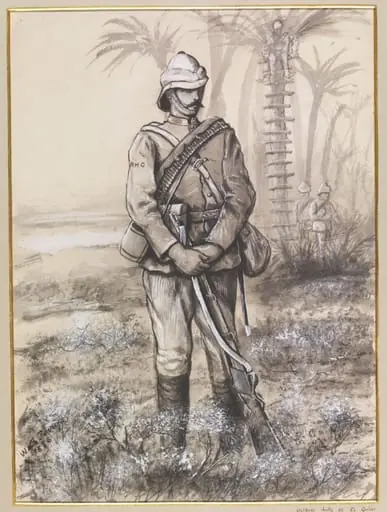 Outpost duty at El Gubat, Morning
 Natură moartă cu rodii
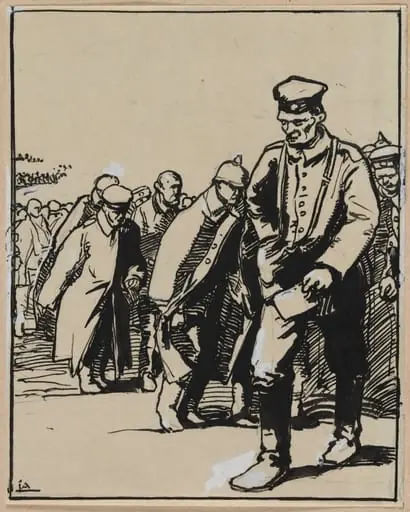 Marche d'un groupe de prisonniers allemands
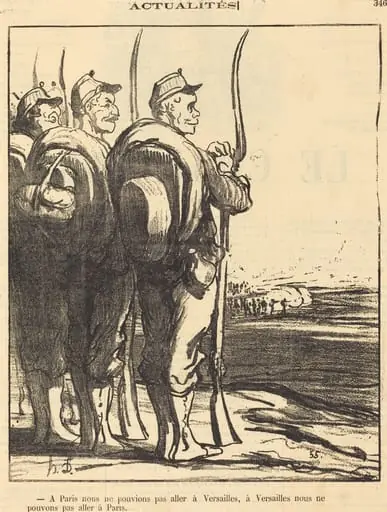 A Paris nous ne pouvions... aller a Versailles...
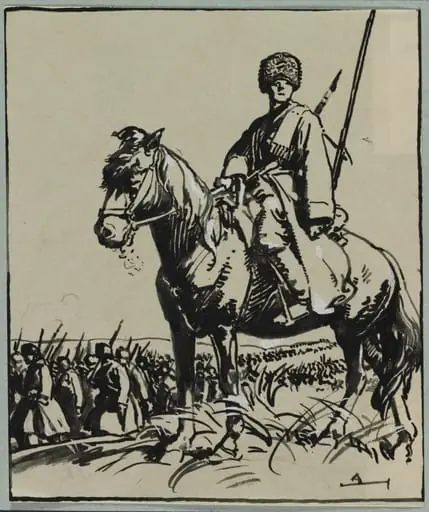 Officier de Cosaques
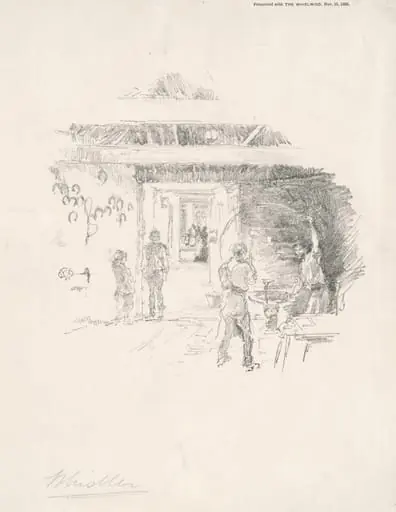 The Tyresmith
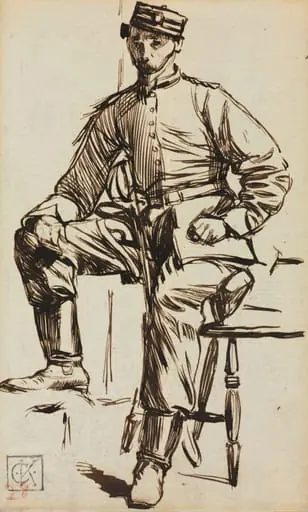 Charles Keene as a Volunteer
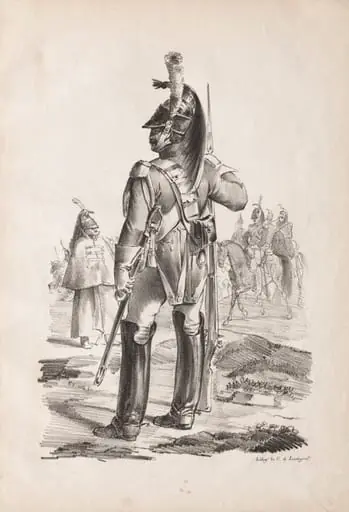 Military Costumes: Grenadier of the Royal Guard
 Untitled