Artwork
Untitled
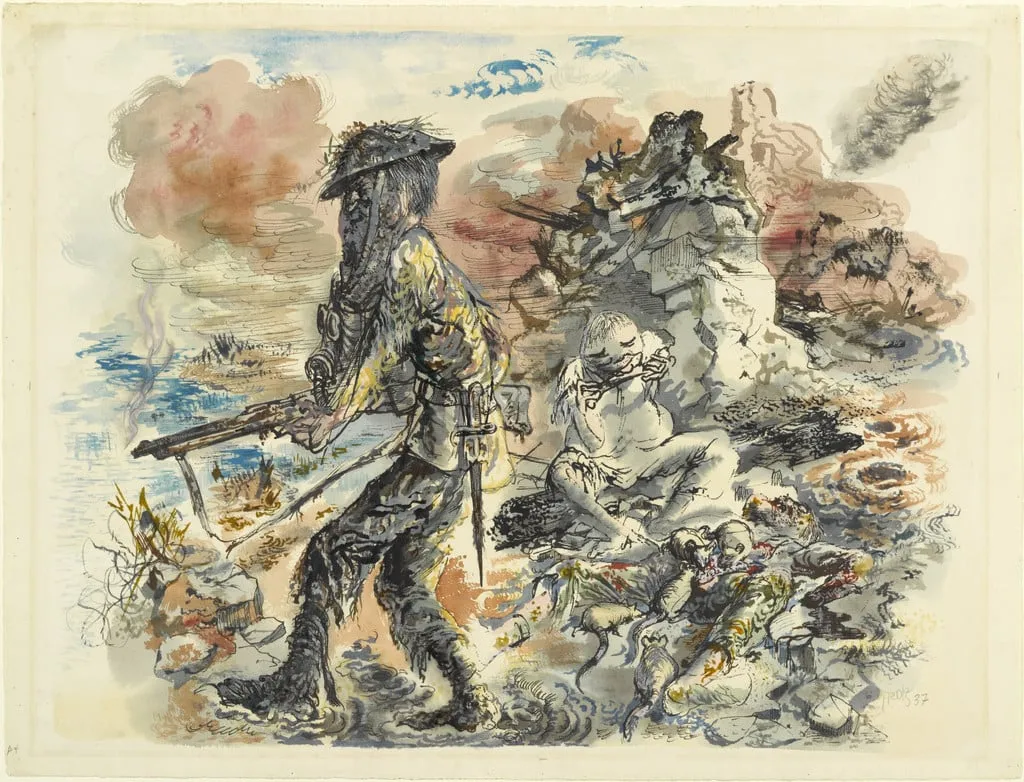
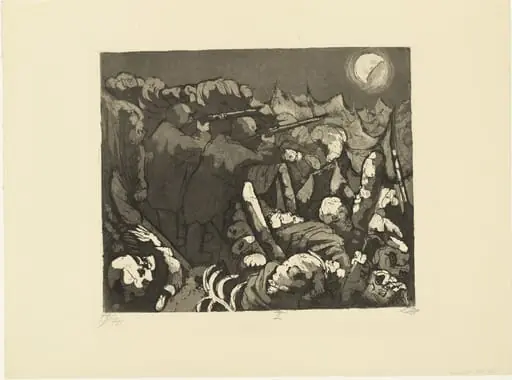
Untitled is a watercolor drawing by George Grosz. It dates from 1937 and is held in the collection of the Museum of Modern Art.
About this work
Overview
The work belongs to a series produced during Grosz’s exile from Nazi Germany, reflecting his disillusionment with political and social decay.
Created in 1937, this drawing by George Grosz combines watercolor, opaque watercolor, and ink on paper. It is part of the collection at The Museum of Modern Art. The work belongs to a series produced during Grosz’s exile from Nazi Germany, reflecting his disillusionment with political and social decay. Its informal medium and spontaneous execution contrast with traditional finished paintings, emphasizing immediacy and emotional urgency.
Subject & Meaning
A solitary, darkly rendered figure strides away, carrying a stick and a sword, suggesting both authority and violence. Behind him, a chaotic tangle of figures and jagged forms evokes societal collapse—crowds entangled in storm-like swirls, ambiguous yet menacing. The lone walker may symbolize retreat or escape, while the turmoil behind hints at the unrest Grosz witnessed in Europe. The bright yellow on the hat offers a jarring contrast, possibly marking a target or a hollow emblem of power.
Technique & Style
Grosz employed loose, rapid brushwork and ink lines to convey agitation and instability. Watercolor washes create muted grays and blues, while opaque watercolor adds dense, uneven areas of tone. The ink outlines are sketchy and unrestrained, avoiding polish in favor of raw expression. The paper’s texture shows through in places, reinforcing the sense of haste and impermanence. This technique mirrors the instability of the era, rejecting refinement for emotional truth.
History & Provenance
Grosz completed this work after relocating to the United States in 1933, fleeing Nazi persecution. It was likely made during his early years in New York, a period marked by introspection and critical reflection on his homeland. The drawing entered MoMA’s collection in 1941, among the first acquisitions of his American-era works. Its preservation reflects institutional recognition of his political art, even as he distanced himself from his earlier German satirical style.
Context
Produced during the rise of fascism in Europe and Grosz’s own displacement, the drawing channels the anxiety of a world unraveling. Unlike his pre-war caricatures, this piece abandons direct satire for symbolic abstraction. The chaotic backdrop echoes Expressionist traditions and the visual language of wartime trauma, aligning with broader European artistic responses to crisis. His move to America did not mute his critique—it transformed it into more personal, haunting imagery.
Legacy
This work stands as a quiet but potent example of Grosz’s later period, where overt satire gave way to somber allegory. It influenced postwar artists grappling with trauma and displacement, particularly those exploring psychological landscapes through gestural media. Though less widely known than his Berlin-era pieces, it remains a key indicator of how political exile reshaped his visual language—shifting from public indictment to private lament.
Artist & collection

Artist
George Grosz was a German artist known especially for his caricatural drawings and paintings of Berlin life in the 1920s.

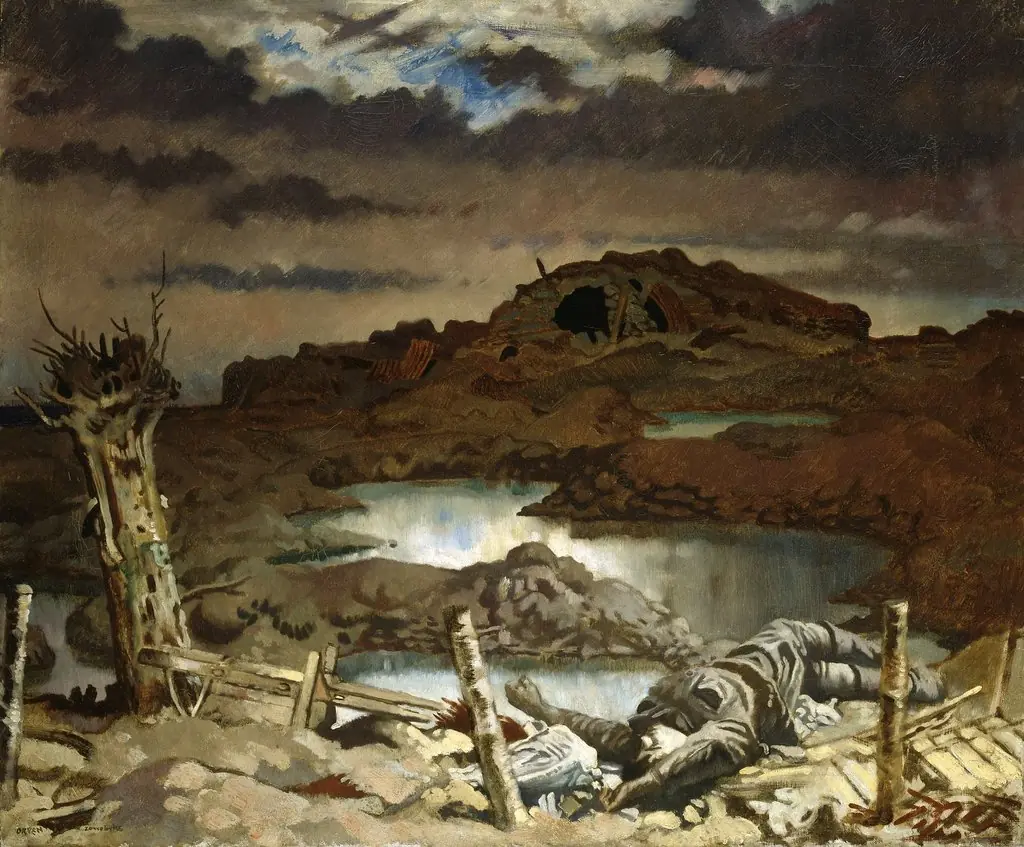 Zonnebeke
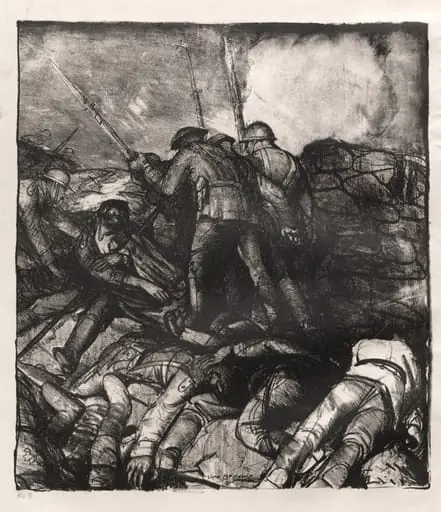 War Series: The Charge, Right Detail, first state
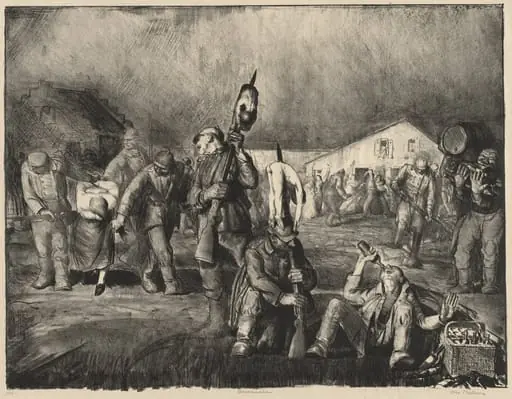 War Series: The Bacchanale
 The Tomb of Nero
 Tail Piece for Chapter XXI from "Lorna Doone"
 War Series: The Charge, Left Detail
 German Advance
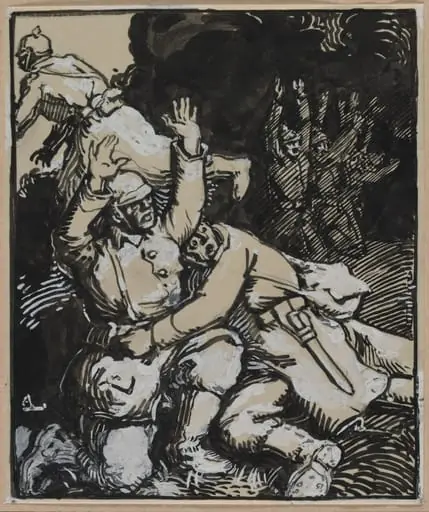 Dans une tranchée, des soldats allemands se rendent
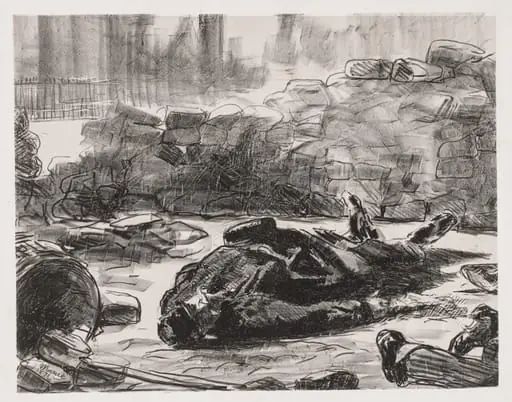 Civil War (Scene of the Commune of Paris)
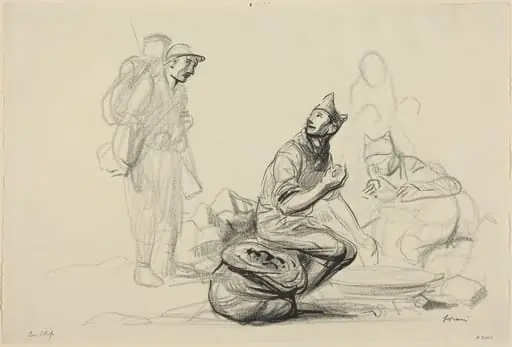 Les chefs (The Chefs)
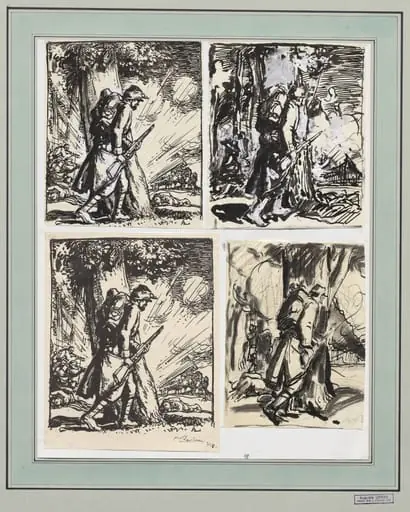 Fantassin à l'abri d'un arbre
 Untitled