Artwork
Angélique
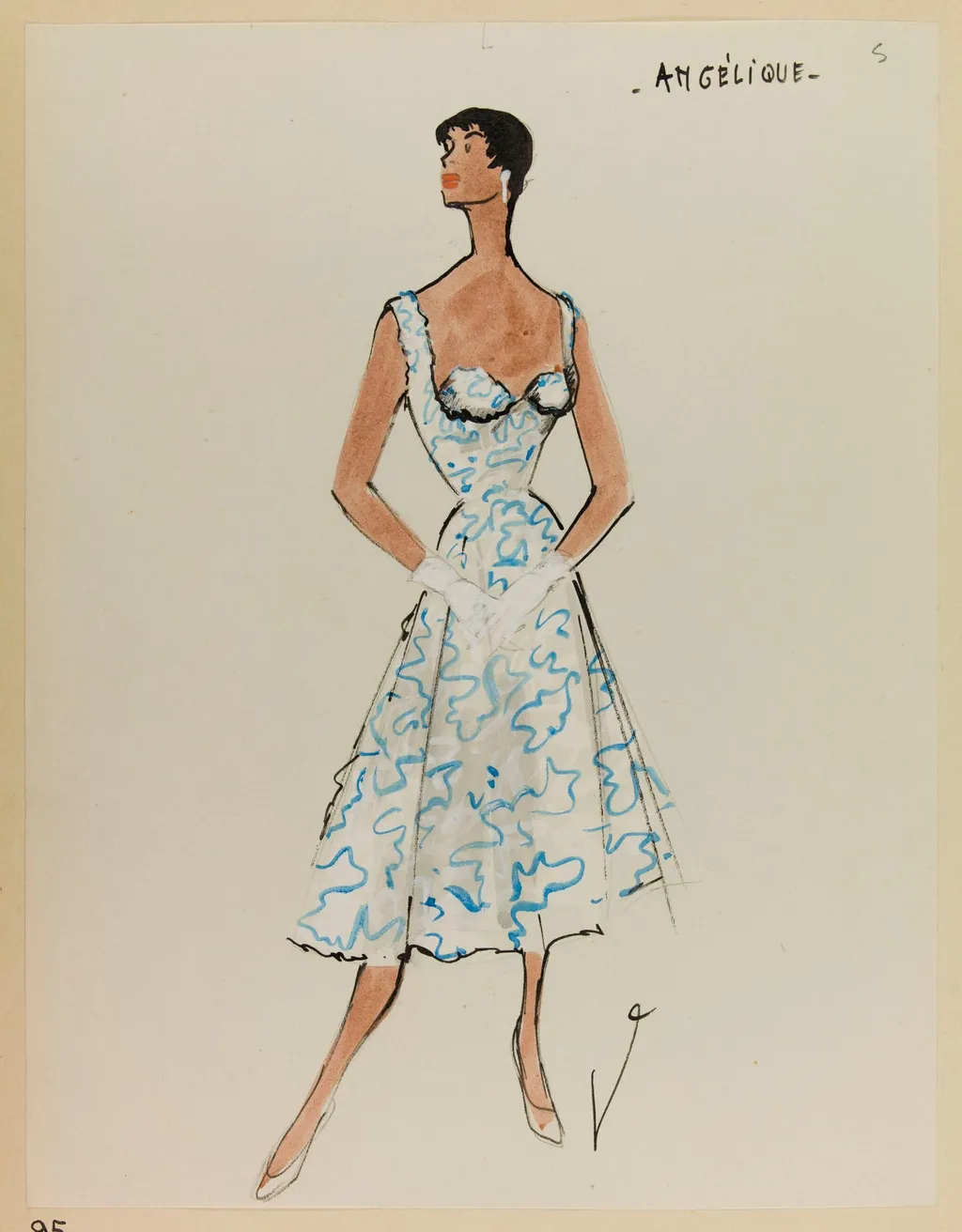
Angélique is a drawing by Marie-Louise Carven. It dates from 1953 and is held in the collection of the Palais Galliera - Musée de la Mode de la Ville de Paris.
About this work
Overview
Created around 1953, *Angélique* is a fashion sketch by French designer Marie-Louise Carven, known for her contributions to early prêt-à-porter fashion.
Created around 1953, *Angélique* is a fashion sketch by French designer Marie-Louise Carven, known for her contributions to early prêt-à-porter fashion. The drawing captures a dress design intended for a petite silhouette, reflecting Carven’s focus on accessible, wearable clothing. Executed in ink with fluid brushwork, the piece belongs to the Museum of Ethnography’s collection, where it serves as a record of postwar French design practices.
Subject & Meaning
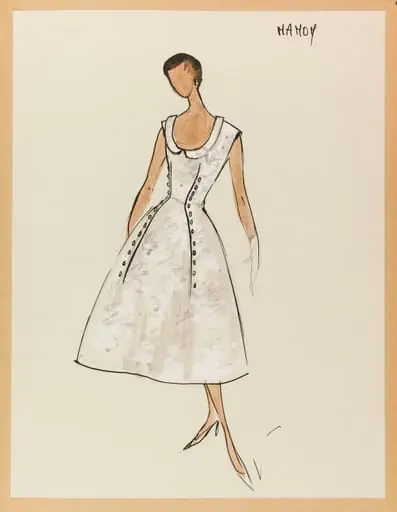
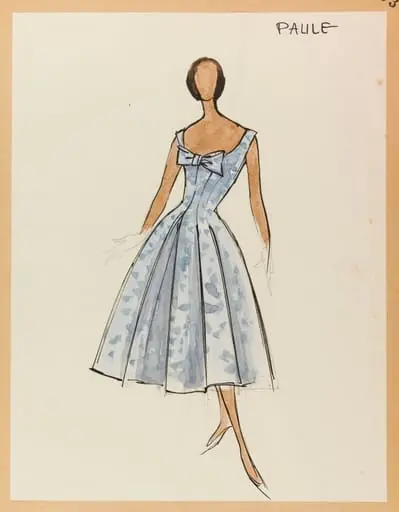
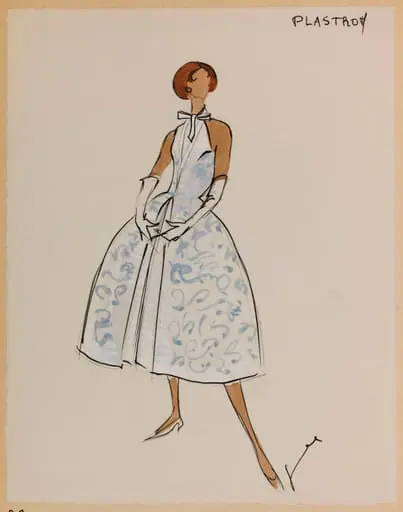
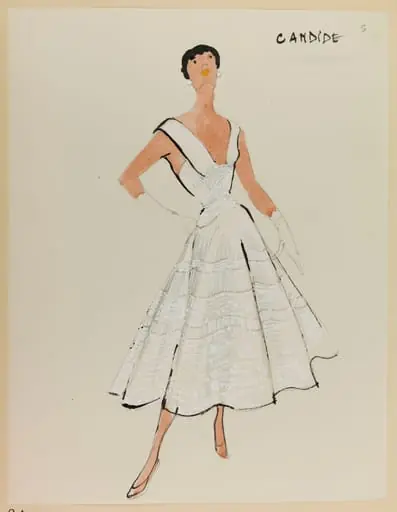
The sketch depicts a woman in a simple, flowing dress with a fitted bodice and flared skirt, suggesting ease of movement and everyday elegance. The name *Angélique*, inscribed in the corner, likely identifies the design rather than the model. The relaxed posture and gentle tilt of the head convey a sense of natural grace, aligning with Carven’s vision of clothing that complements rather than constrains the wearer.
Technique & Style
Carven rendered the design with loose, expressive brushstrokes, using a light base tone and scattered wavy blue lines to suggest fabric texture and movement. The quick, hand-drawn lines emphasize spontaneity and immediacy, characteristic of fashion sketches meant to communicate ideas rather than finalize details. The absence of rigid outlines enhances the dress’s airy, lightweight quality, mirroring the materials she favored.
History & Provenance
Marie-Louise Carven established her fashion house in 1945 and became a pioneer in Parisian ready-to-wear, making her designs more widely available. *Angélique* dates from this formative period, when she was refining her aesthetic of simplicity and practicality. The sketch entered the Museum of Ethnography’s collection as part of a broader effort to document mid-century French textile and fashion culture.
Context
In the early 1950s, Parisian fashion was transitioning from haute couture exclusivity toward accessible ready-to-wear. Carven’s work responded to changing social norms and the growing demand for practical, well-made garments. Her use of gingham and lace, along with designs suited to smaller frames, distinguished her from contemporaries focused on grandeur, positioning her as a voice for everyday elegance.
Legacy
Carven’s sketches, including *Angélique*, illustrate a quiet revolution in fashion: the elevation of simplicity and comfort as design values. Though less celebrated than her haute couture peers, her influence endured in the expansion of ready-to-wear and the normalization of petite sizing. The sketch remains a testament to her commitment to clothing that served real lives, not just ideals.
Artist & collection
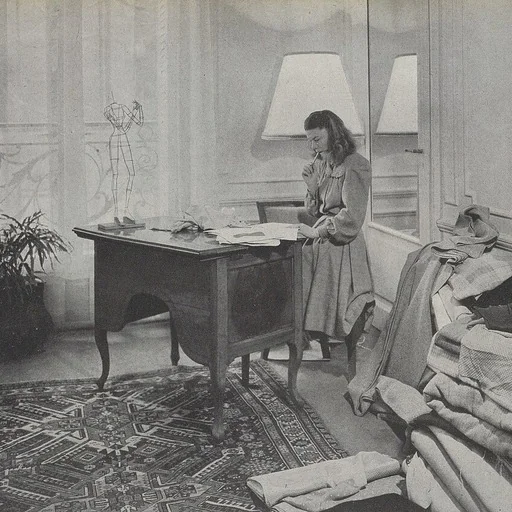
Artist
Marie-Louise Carven (31 August 1909 – 8 June 2015), born Carmen de Tommaso, was a French fashion designer who founded the house of Carven in 1945.
Museum
Palais Galliera - Musée de la Mode de la Ville de Paris
Continue through works from the same source collection.
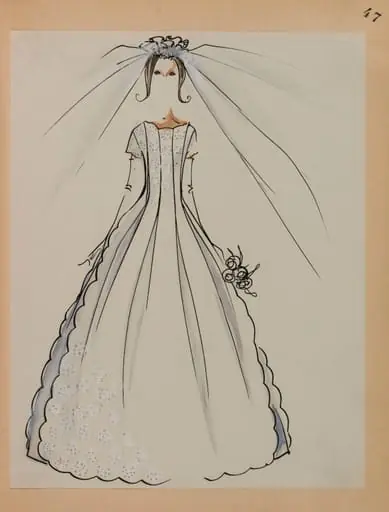 Robe de mariée festonnée et son voile
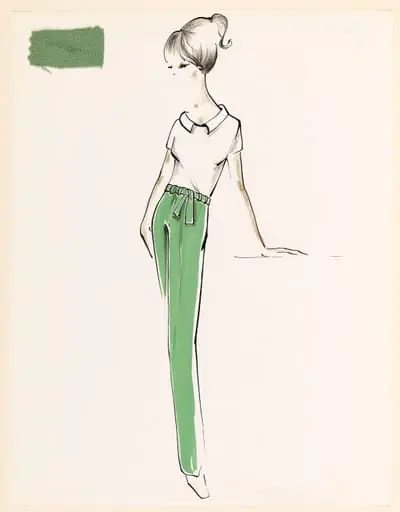 Haut blanc à manches courtes et pantalon vert à ceinture nouée
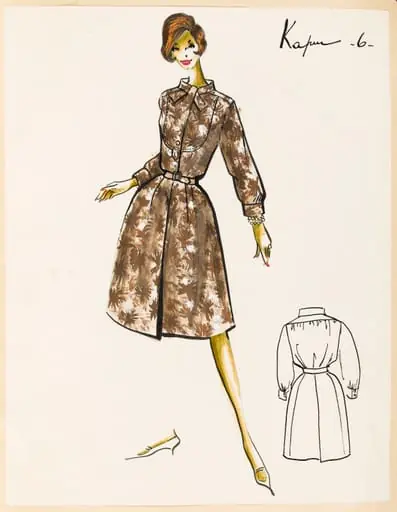 Kapur
Kapur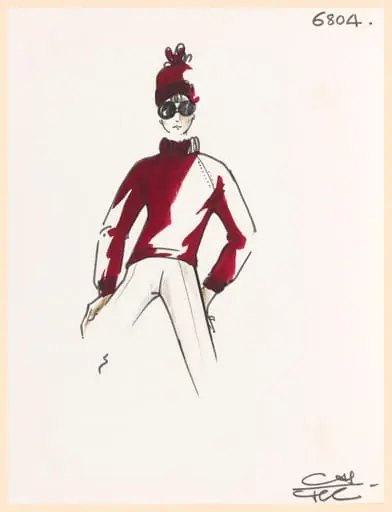 Pull-over à manches longues pourpre, bonnet assorti, pantalon et lunettes de soleil
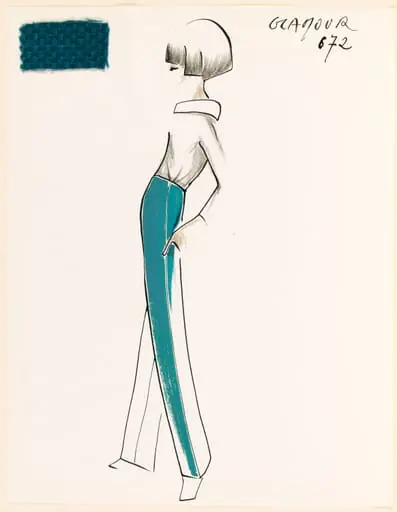 GLAMOUR
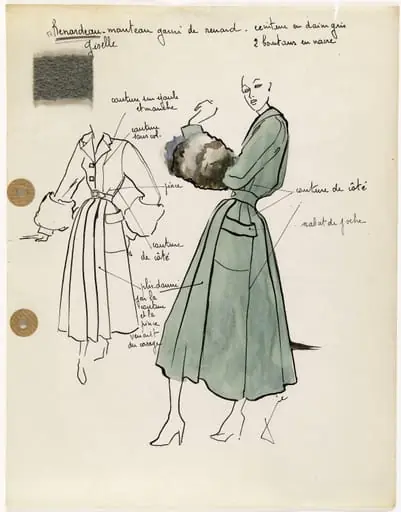 'Renardeau'
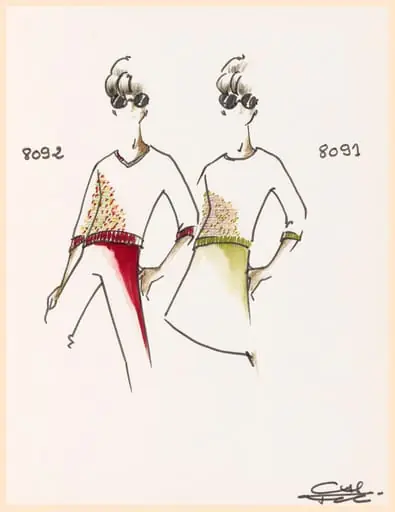 Pull-over à manches trois quarts et à encolure V à motifs multicolores, pantalon cerise et lunettes de soleil
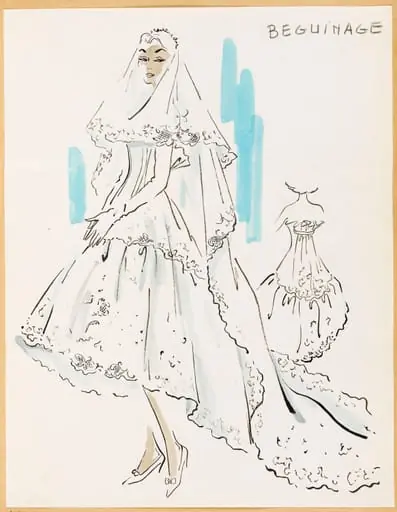 Béguinage