Artwork
Blois
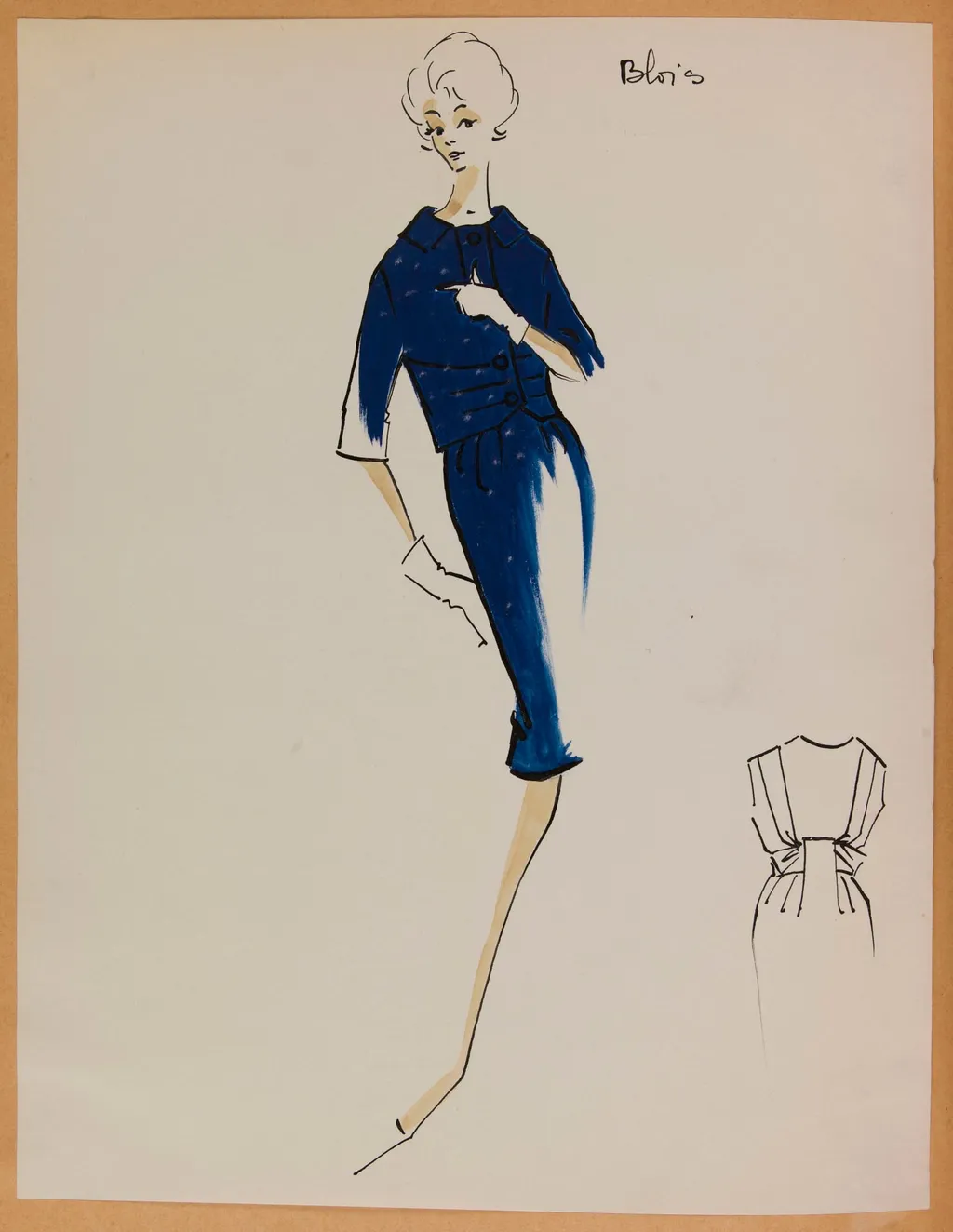
Blois is a drawing by Marie-Louise Carven. It dates from 1958 and is held in the collection of the Palais Galliera - Musée de la Mode de la Ville de Paris.
About this work
If you're interested in learning more about the artist behind this piece, you might want to look up Marie-Louise Carven.
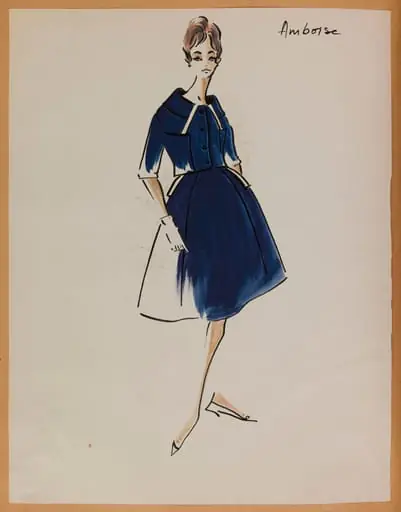
The painting depicts a woman in a dark blue outfit, with a matching jacket and skirt. She has short, white hair and is wearing white gloves. Her left hand is tucked into her jacket, while her right hand is by her side. The background of the painting is a light beige color.
To the right of the woman, there is a small sketch of the back of a dress. The dress appears to be sleeveless and has a bow at the back. The overall style of the painting suggests a fashion illustration from the mid-20th century.
The attention to detail in the woman's outfit and the inclusion of the dress sketch suggest that the artist was interested in exploring the relationship between fashion and art. If you're interested in learning more about the artist behind this piece, you might want to look up Marie-Louise Carven.
Overview
The painting titled Blois, dated circa 1958, is a figurative work that captures a woman dressed in a tailored dark blue ensemble. It resides in the Museum of Ethnography and reflects the visual language of mid-century fashion illustration. The composition combines portraiture with a secondary sketch of a dress, suggesting an intersection between clothing design and artistic representation.
Subject & Meaning
The subject is a poised woman with short white hair and white gloves, her posture restrained yet elegant. Her outfit, precise in cut and color, conveys a sense of refined simplicity. The inclusion of a sketch of a sleeveless dress with a back bow implies a dialogue between the wearer and the garment’s design, hinting at the creative process behind fashion and the identity it constructs.
Technique & Style
Rendered in a clean, linear style with muted tones, the painting favors clarity over ornamentation. The background is a neutral beige, directing focus to the figure and the appended dress sketch. The rendering of fabric and form suggests observational precision, aligning with fashion drawing traditions of the era, where accuracy served both documentation and aesthetic intent.
History & Provenance
The painting is held in the Museum of Ethnography’s collection, though its origin and artist remain unattributed. Its creation around 1958 coincides with the rise of ready-to-wear fashion in Paris, a period when design and personal style became subjects of broader cultural interest. Its presence in an ethnographic context signals an interest in fashion as a social artifact.
Context
In the late 1950s, Parisian fashion was shifting toward accessible, well-constructed garments for everyday women. Designers like Carven emphasized proportion and light materials, influencing how clothing was both worn and depicted. Blois reflects this moment, where fashion illustration moved beyond advertising to become a medium for exploring form, identity, and the body.
Legacy
Blois contributes to the understanding of mid-century fashion as a cultural practice worthy of artistic attention. Its inclusion in an ethnographic museum underscores how clothing functions as a record of social norms and personal expression. The work remains a quiet testament to the quiet artistry embedded in daily dress.
Artist & collection
Artist
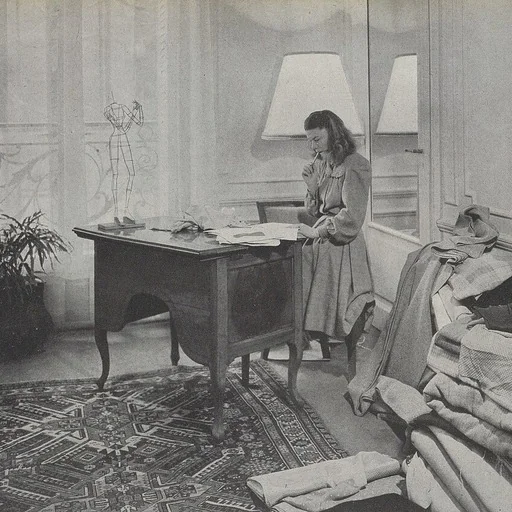
Marie-Louise Carven (31 August 1909 – 8 June 2015), born Carmen de Tommaso, was a French fashion designer who founded the house of Carven in 1945.
Museum
Palais Galliera - Musée de la Mode de la Ville de Paris
Continue through works from the same source collection.
 Robe de mariée festonnée et son voile
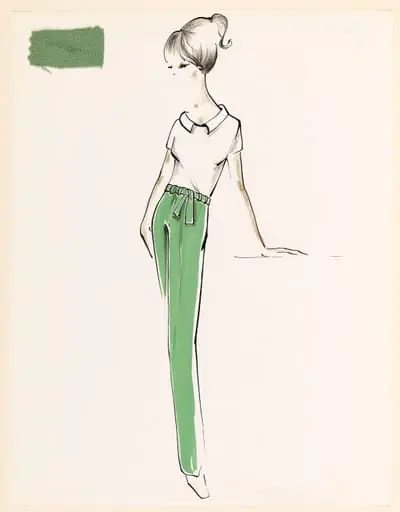 Haut blanc à manches courtes et pantalon vert à ceinture nouée
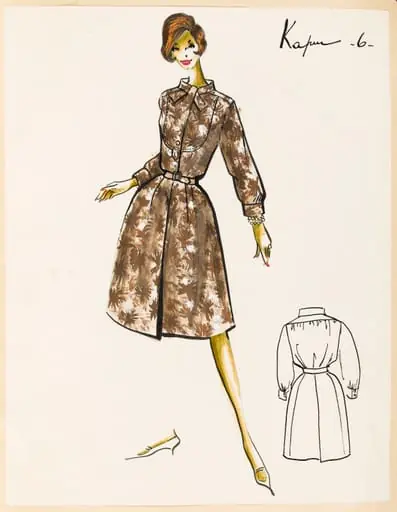 Kapur
Kapur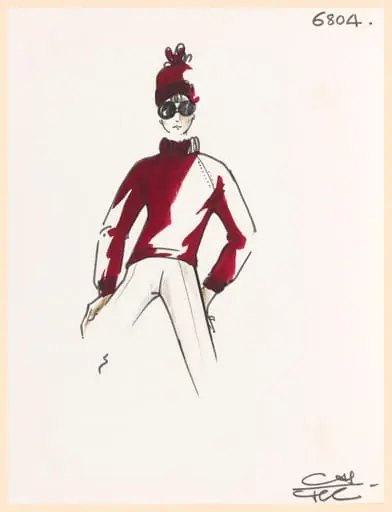 Pull-over à manches longues pourpre, bonnet assorti, pantalon et lunettes de soleil
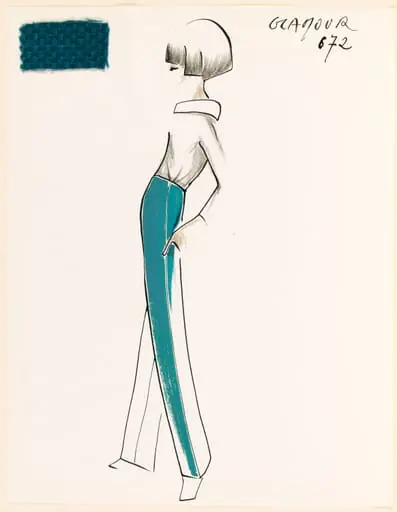 GLAMOUR
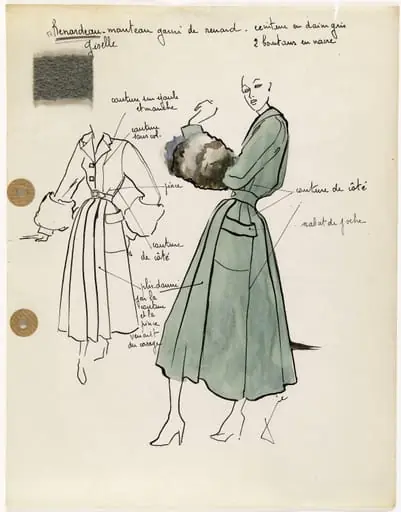 'Renardeau'
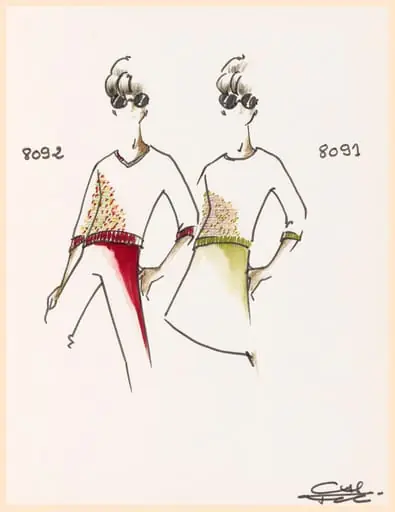 Pull-over à manches trois quarts et à encolure V à motifs multicolores, pantalon cerise et lunettes de soleil
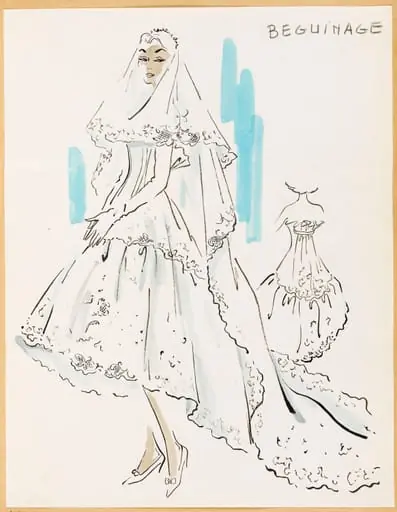 Béguinage