Artwork
Champêtre
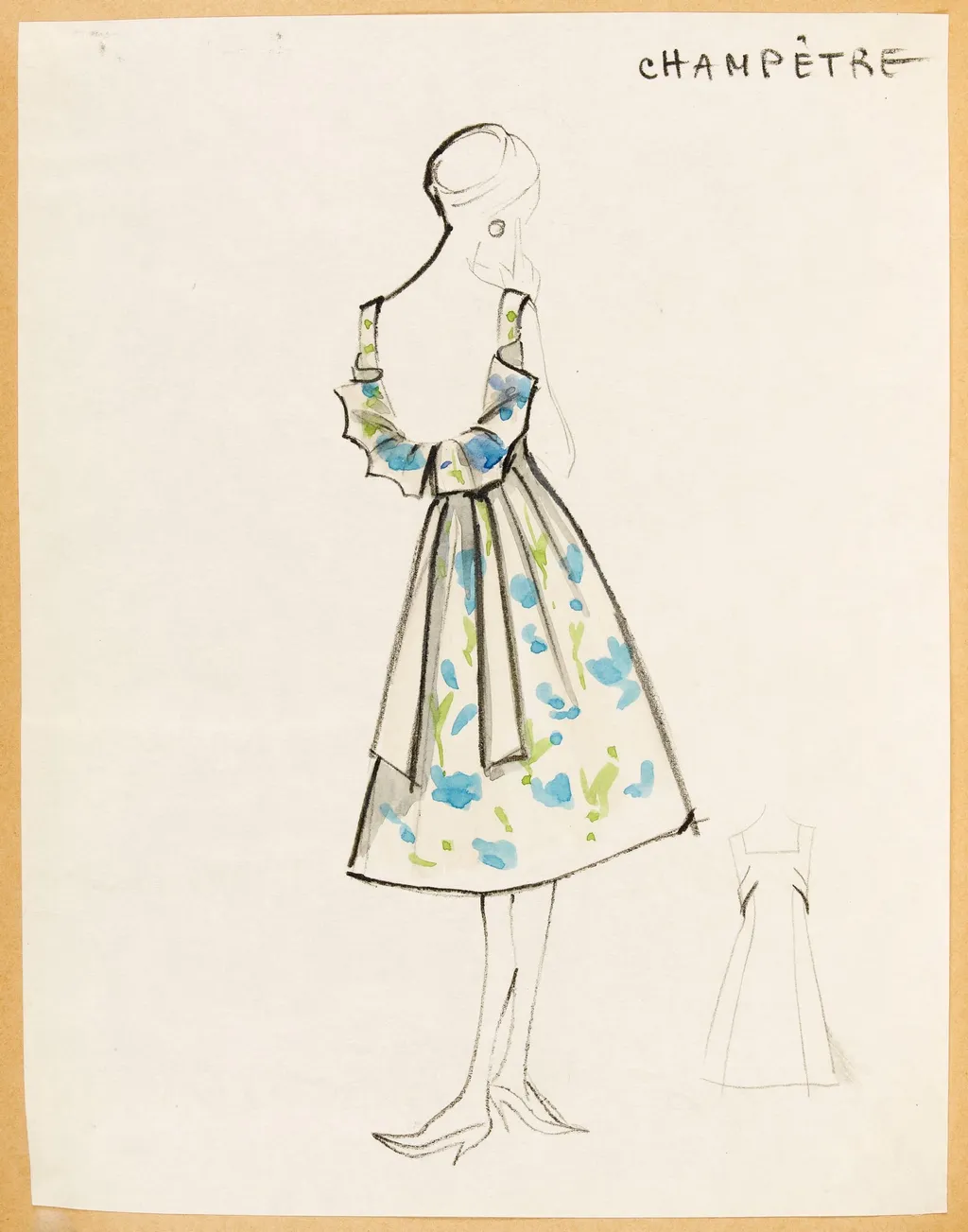
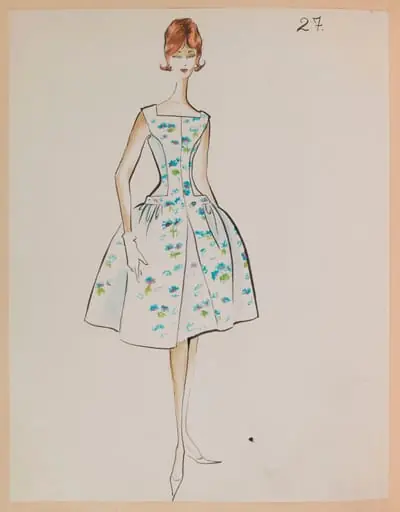
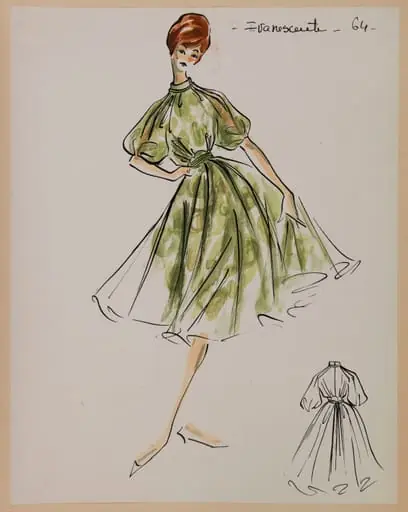
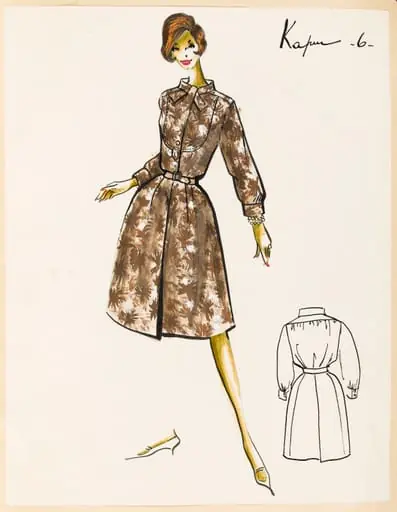
Champêtre is a drawing by Marie-Louise Carven. It dates from 1957 and is held in the collection of the Palais Galliera - Musée de la Mode de la Ville de Paris.
About this work
Overview
The sketch is held in the collection of the Museum of Ethnography, where it is valued as a document of mid-century French fashion practice.
Created around 1957, *Champêtre* is a hand-drawn fashion sketch by Marie-Louise Carven, founder of the Parisian fashion house Carven. The work reflects her interest in lightweight, wearable designs for smaller frames. Executed in ink with minimal detail, it captures a fleeting moment of inspiration rather than a finished design. The sketch is held in the collection of the Museum of Ethnography, where it is valued as a document of mid-century French fashion practice.
Subject & Meaning
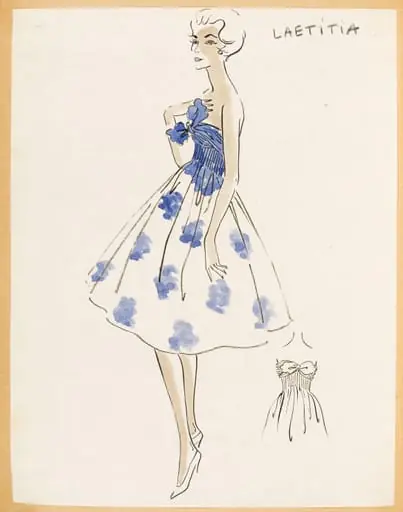
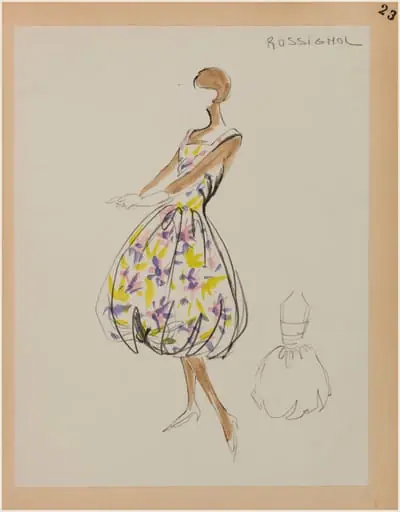
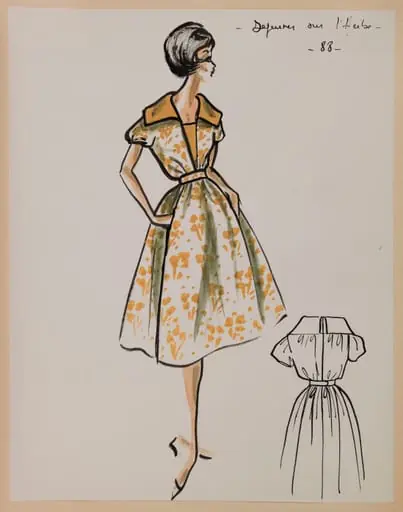
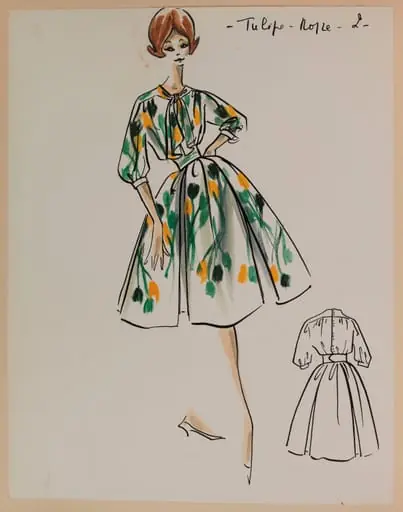
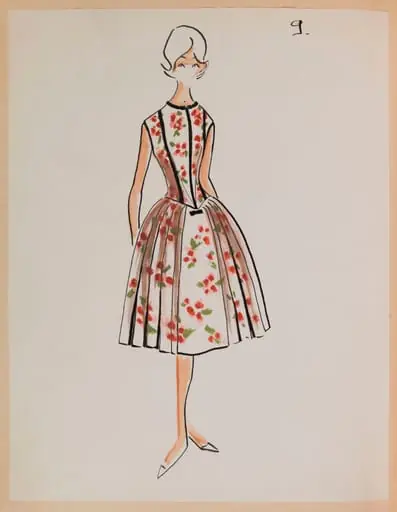
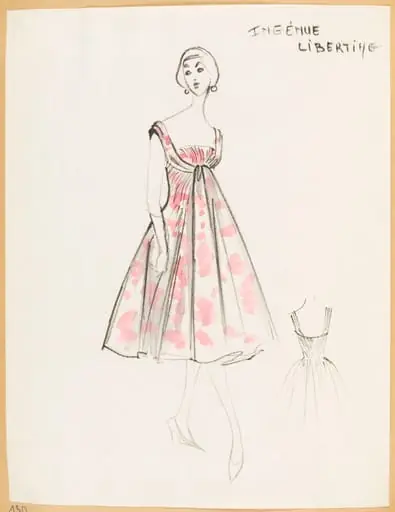
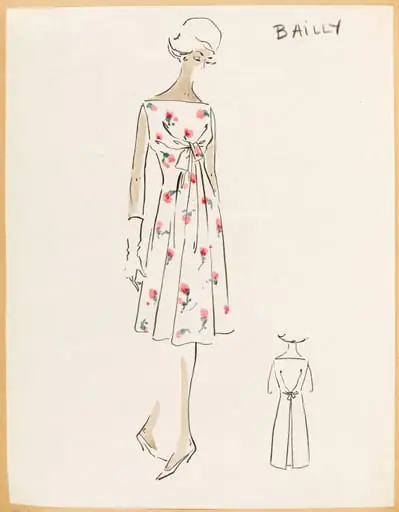
The sketch depicts a woman in a loose, flared dress adorned with abstract blue and green floral motifs, evoking a pastoral or garden setting. The title *Champêtre*, meaning 'rustic' or 'country-like,' reinforces this association with nature and ease. A smaller outline of the same figure beside the main drawing suggests a study in repetition or variation, hinting at Carven’s process of refining silhouettes for everyday wear.
Technique & Style
Carven rendered the sketch with swift, unrefined lines, prioritizing movement and form over precision. The dress is suggested with minimal contours, while the floral pattern appears as spontaneous washes rather than detailed botanical renderings. The handwriting accompanying the image is casual and hurried, indicating it was likely a working note or initial concept. This immediacy reflects her focus on practical design rather than ornamental presentation.
History & Provenance
Marie-Louise Carven established her fashion house in 1945 and was among the first French designers to develop a ready-to-wear line, challenging the exclusivity of haute couture. *Champêtre* dates from the height of her influence in the late 1950s. The sketch entered the Museum of Ethnography’s collection as part of a broader effort to document the cultural and technical dimensions of fashion as a social practice, not merely as luxury.
Context
In postwar France, fashion was shifting toward accessibility and functionality. Carven’s designs responded to changing lifestyles, favoring comfort and simplicity over grandeur. *Champêtre* aligns with this trend, embodying a quiet, domestic elegance. Its floral motif and airy silhouette reflect broader mid-century interests in nature-inspired patterns and relaxed silhouettes, particularly in women’s daywear.
Legacy
Though not a finished garment, *Champêtre* preserves the immediacy of Carven’s creative process. It stands as evidence of her role in democratizing fashion through prêt-à-porter and her attention to the needs of petite figures. The sketch contributes to scholarly understanding of how design ideas evolved from private notes to mass-produced clothing, bridging artisanal tradition and modern industry.
Artist & collection
Artist
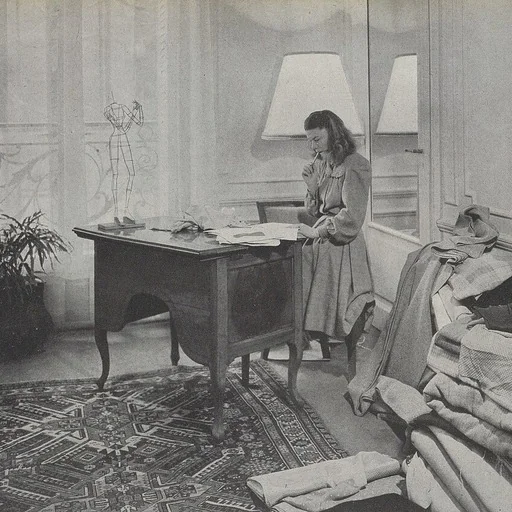
Marie-Louise Carven (31 August 1909 – 8 June 2015), born Carmen de Tommaso, was a French fashion designer who founded the house of Carven in 1945.
Museum
Palais Galliera - Musée de la Mode de la Ville de Paris
Continue through works from the same source collection.
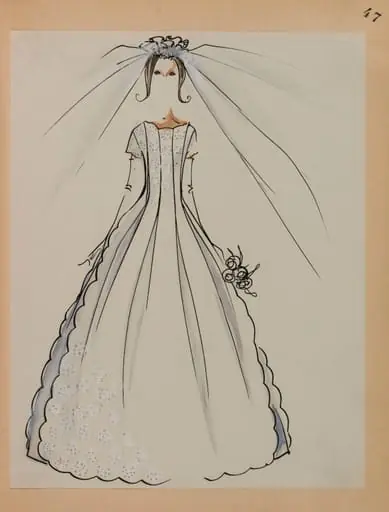 Robe de mariée festonnée et son voile
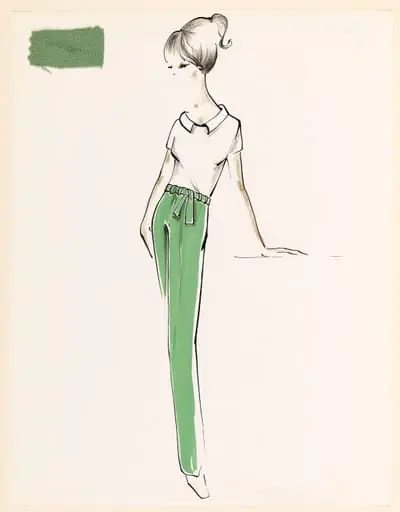 Haut blanc à manches courtes et pantalon vert à ceinture nouée
 Kapur
Kapur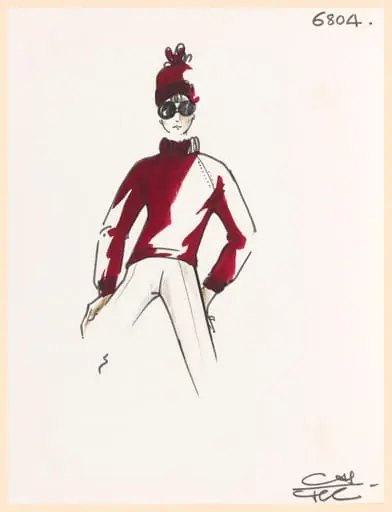 Pull-over à manches longues pourpre, bonnet assorti, pantalon et lunettes de soleil
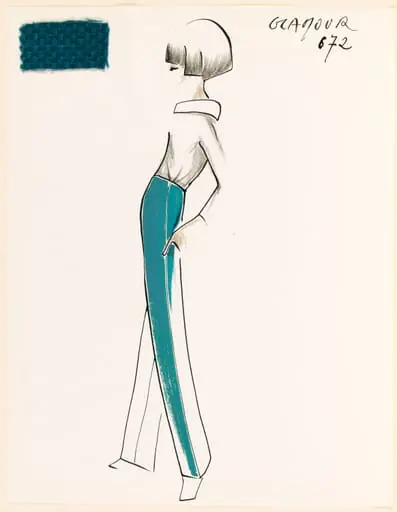 GLAMOUR
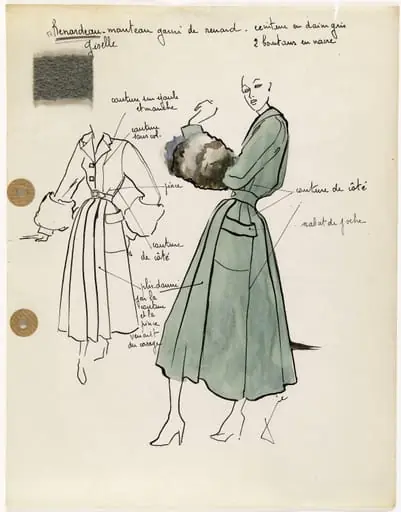 'Renardeau'
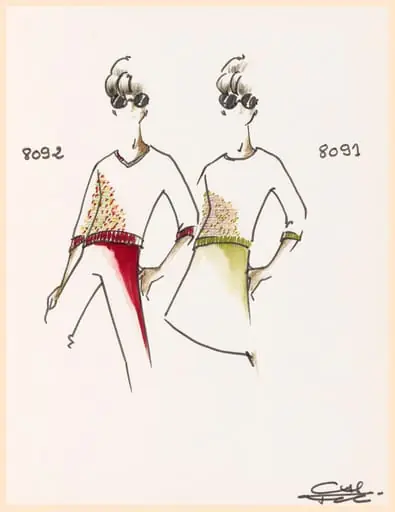 Pull-over à manches trois quarts et à encolure V à motifs multicolores, pantalon cerise et lunettes de soleil
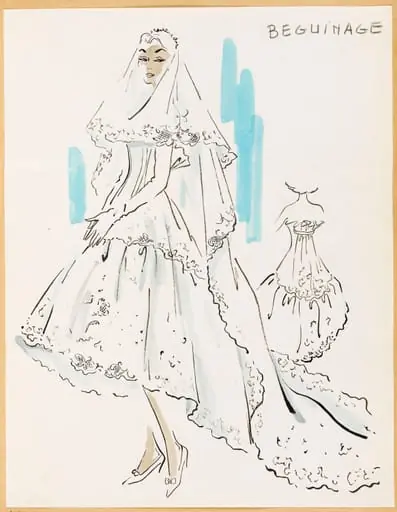 Béguinage