Artwork
Eté 1960
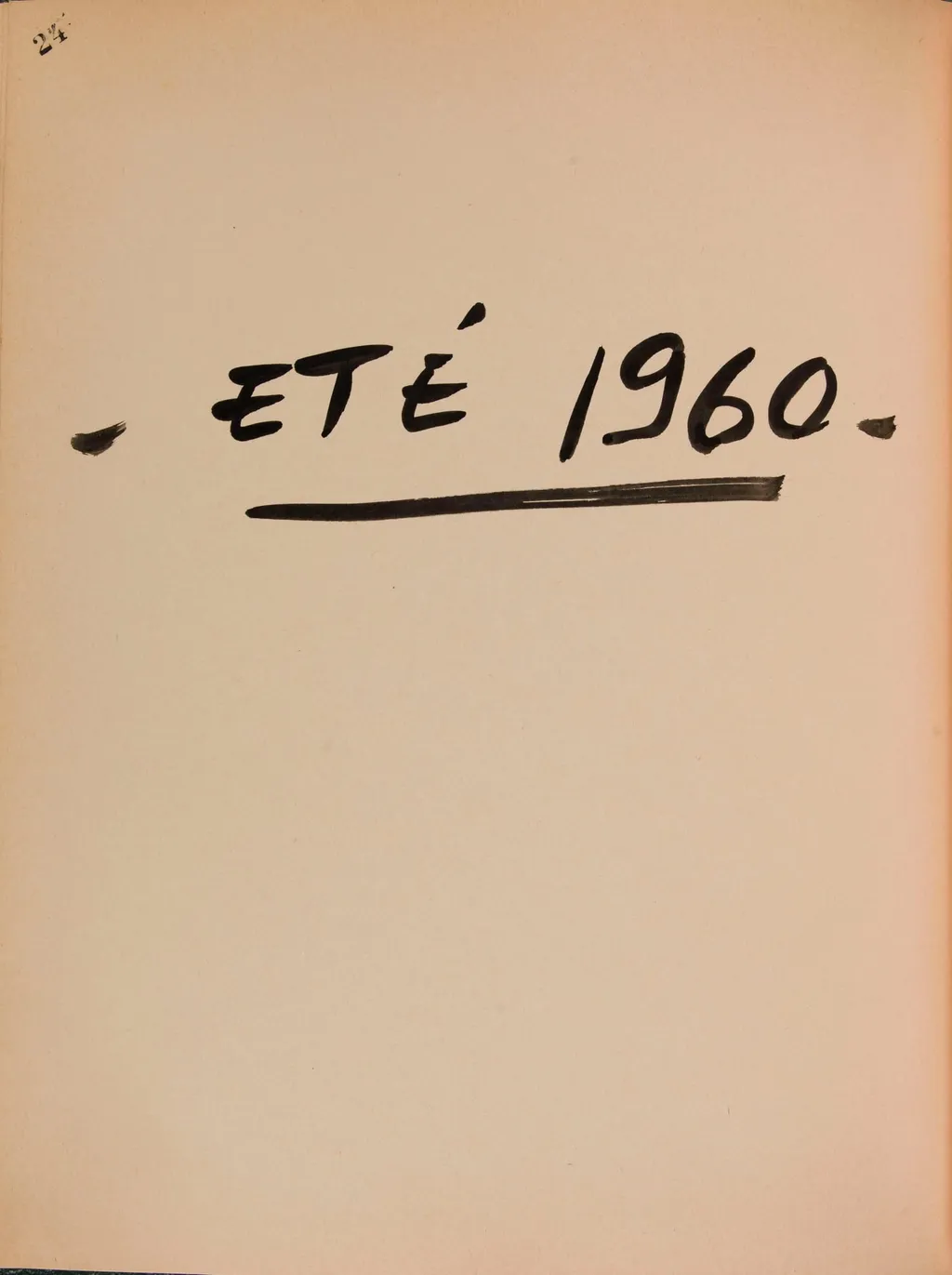
Eté 1960 is a drawing by Marie-Louise Carven. It dates from 1959 and is held in the collection of the Palais Galliera - Musée de la Mode de la Ville de Paris.
About this work
If you're interested in learning more about the artist behind this piece, you might want to look up Marie-Louise Carven.
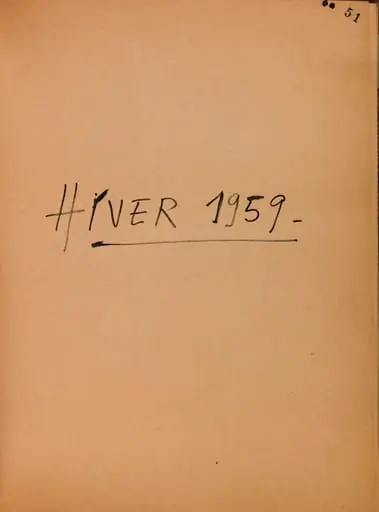
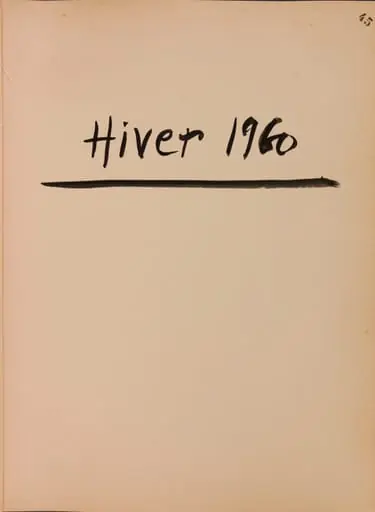
This painting features the words "ETÉ 1960" in black, handwritten-style letters on a light-brown background. The text is centered, with the word "ETÉ" slightly above the year "1960". A short, horizontal line separates the two.
The overall effect is simple yet striking, with the bold text standing out against the muted background.
If you're interested in learning more about the artist behind this piece, you might want to look up Marie-Louise Carven.
Overview
Created around 1959, *Eté 1960* is a textual artwork by French designer Marie-Louise Carven. Though primarily known for fashion, Carven produced this piece as a graphic expression of seasonal identity. It features handwritten text on a muted background, reflecting her design sensibility—minimalist, precise, and grounded in everyday elegance. The work resides in the Museum of Ethnography, where it is contextualized beyond fashion as a cultural artifact of its time.
Subject & Meaning
The piece bears the phrase 'ETÉ 1960' in a casual, hand-drawn script, evoking the immediacy of a seasonal note or label. The separation of 'ETÉ' from '1960' by a thin horizontal line suggests a deliberate pause, perhaps mirroring the transition between seasons or the rhythm of fashion cycles. It functions less as decoration and more as a quiet declaration—an anchor point in time, personal yet universally resonant.
Technique & Style
Carven employed a restrained palette—black ink on light brown—emphasizing legibility and simplicity. The handwritten form avoids mechanical precision, lending warmth and human presence. The composition is centered and uncluttered, with no ornamentation beyond the text and dividing line. This approach aligns with her fashion ethos: clarity over excess, structure without rigidity, and quiet authority in minimalism.
History & Provenance
Marie-Louise Carven founded her fashion house in 1945 and later pioneered ready-to-wear in Parisian couture. *Eté 1960* likely originated as a personal or studio artifact, possibly a design sketch or seasonal marker. It entered the Museum of Ethnography’s collection as part of an effort to document material culture beyond traditional textiles, recognizing fashion’s role in shaping daily life and seasonal awareness.
Context
In the late 1950s, Parisian fashion was shifting toward accessibility and modernity. Carven’s move into prêt-à-porter reflected broader societal changes—urbanization, women’s increasing independence, and the demand for practical elegance. *Eté 1960* emerges from this moment, not as a garment but as a symbolic object: a seasonal timestamp in a culture increasingly defined by fleeting trends and personal expression.
Legacy
Though not a garment, *Eté 1960* endures as a quiet testament to Carven’s influence on how fashion communicates beyond the body. Its inclusion in an ethnographic museum signals a broader recognition of design as cultural record. The work invites reflection on how simple marks—words, lines, textures—can carry the weight of time, identity, and aesthetic philosophy.
Artist & collection
Artist
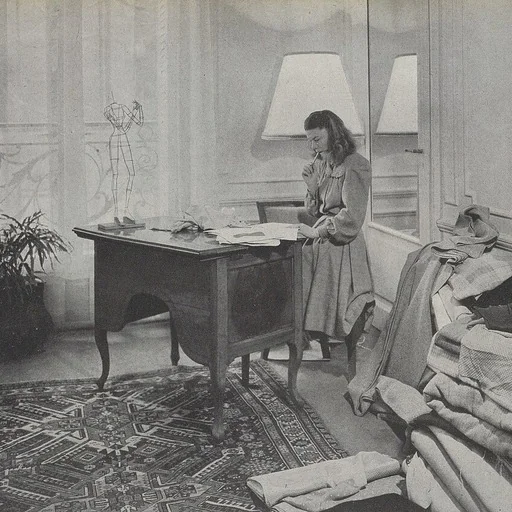
Marie-Louise Carven (31 August 1909 – 8 June 2015), born Carmen de Tommaso, was a French fashion designer who founded the house of Carven in 1945.
Museum
Palais Galliera - Musée de la Mode de la Ville de Paris
Continue through works from the same source collection.
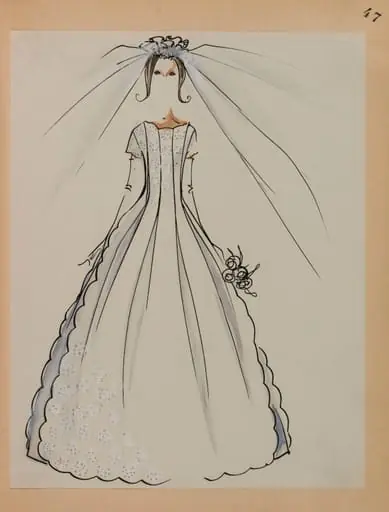 Robe de mariée festonnée et son voile
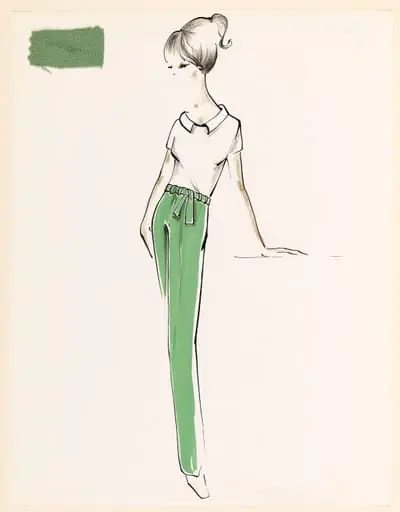 Haut blanc à manches courtes et pantalon vert à ceinture nouée
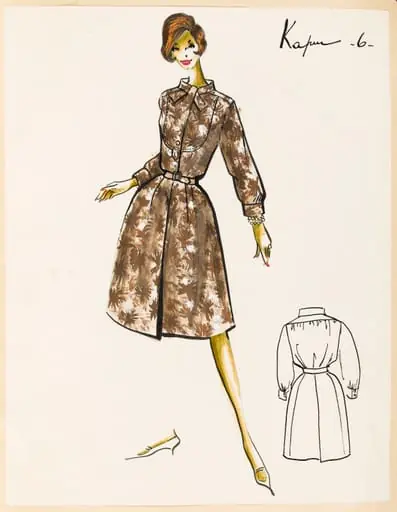 Kapur
Kapur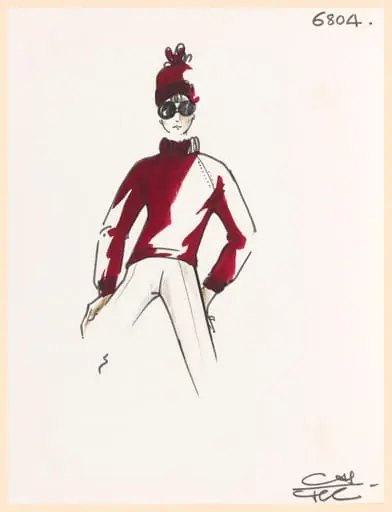 Pull-over à manches longues pourpre, bonnet assorti, pantalon et lunettes de soleil
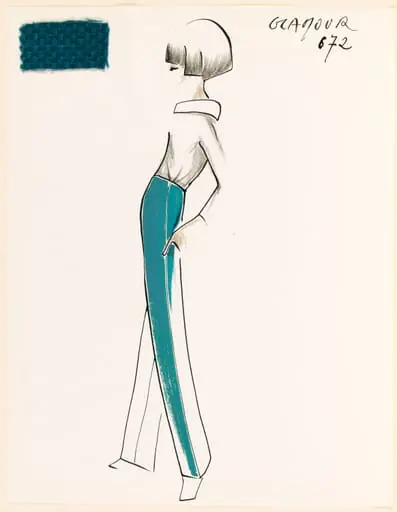 GLAMOUR
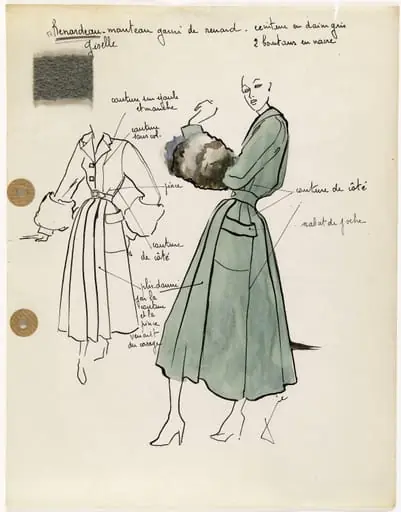 'Renardeau'
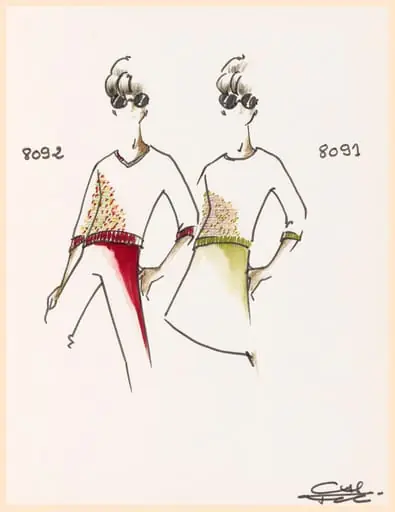 Pull-over à manches trois quarts et à encolure V à motifs multicolores, pantalon cerise et lunettes de soleil
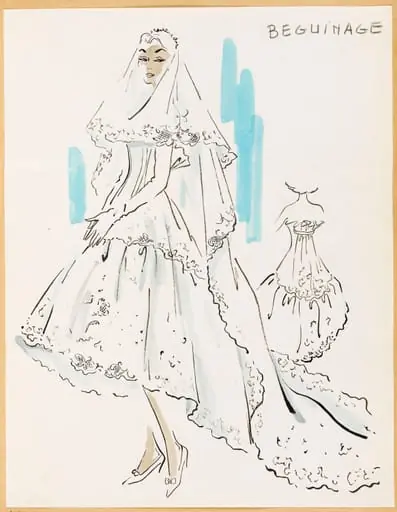 Béguinage