Artwork
Grizzly
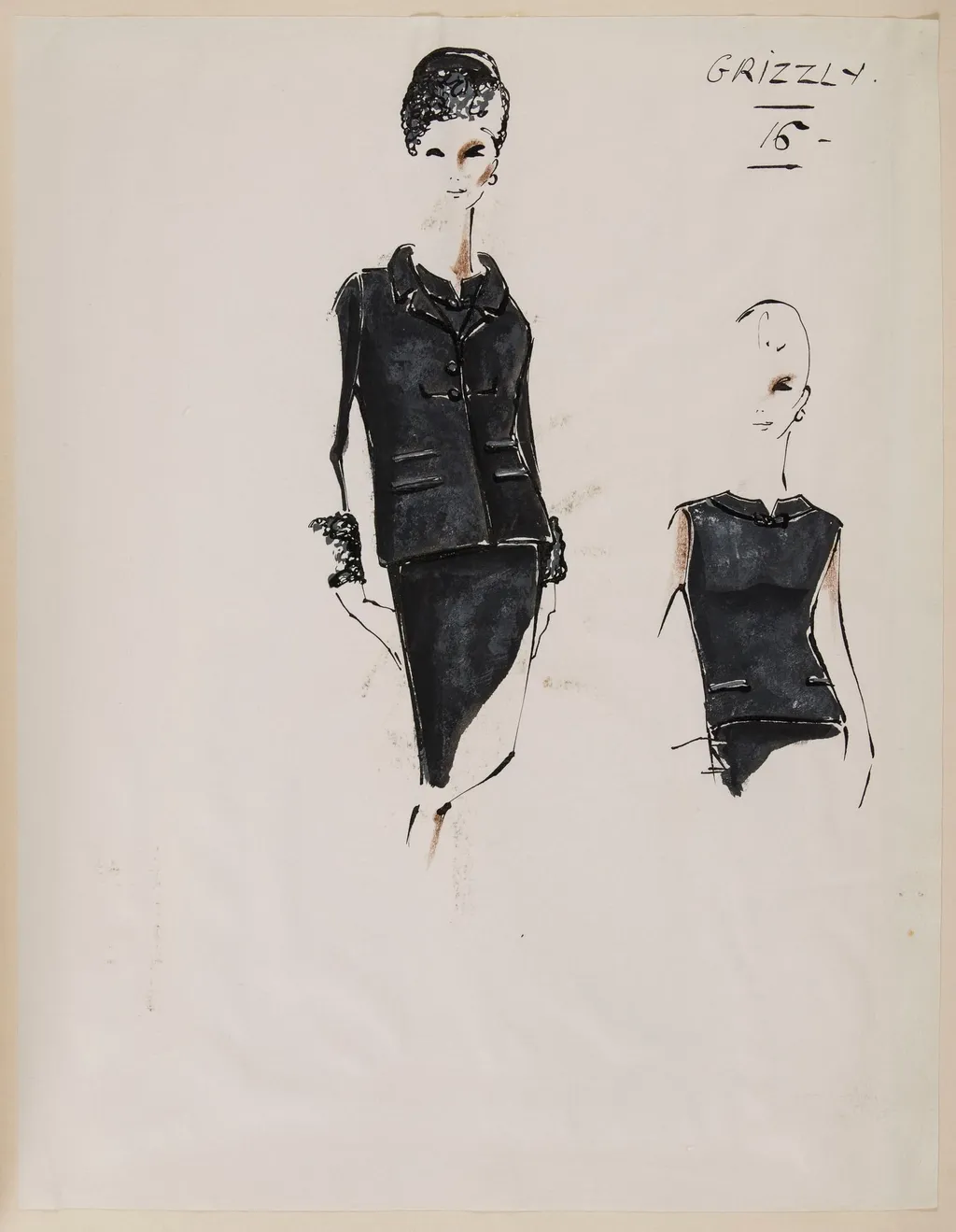
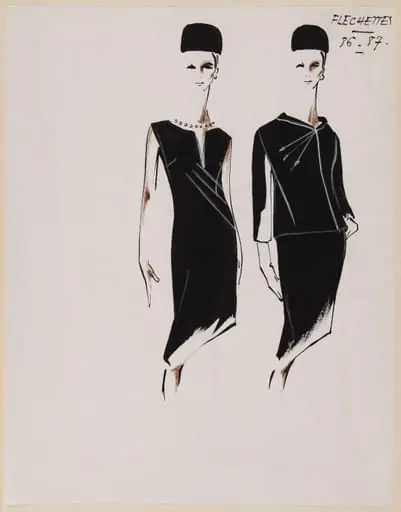
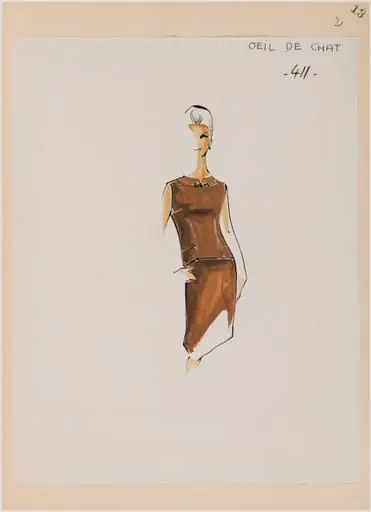
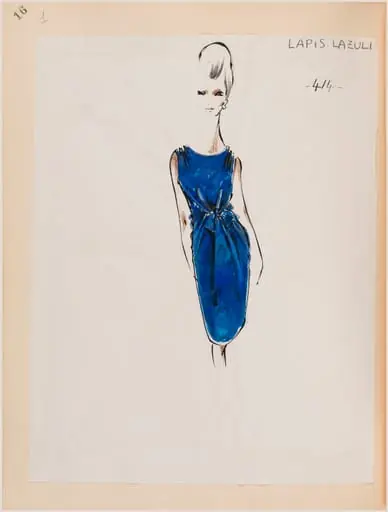
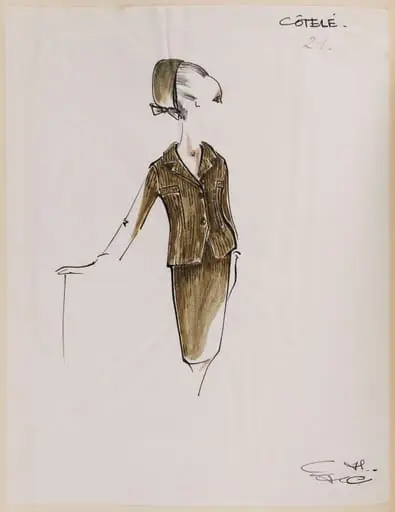
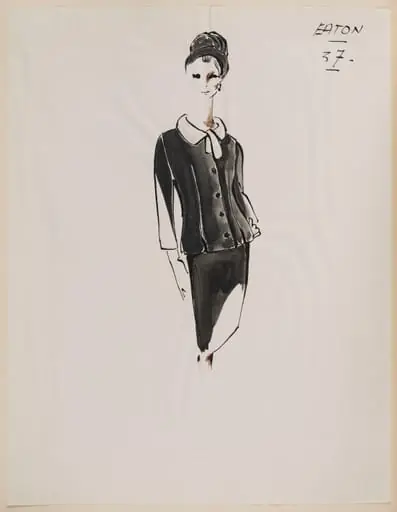
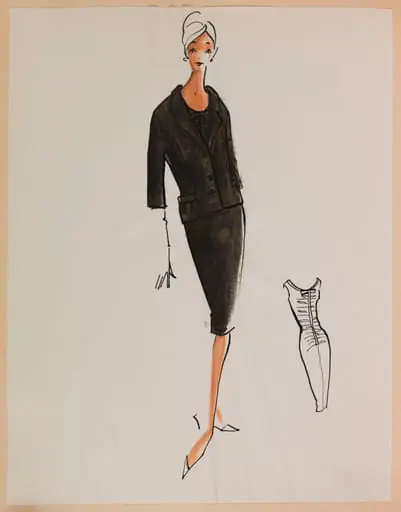
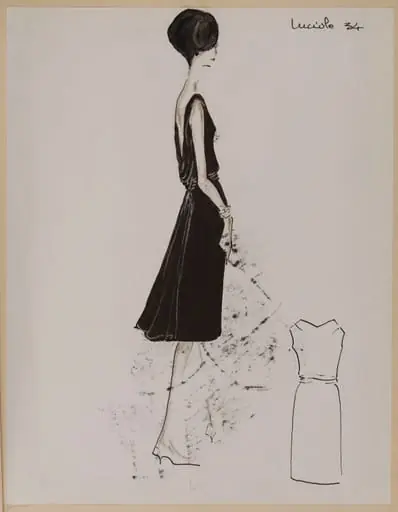
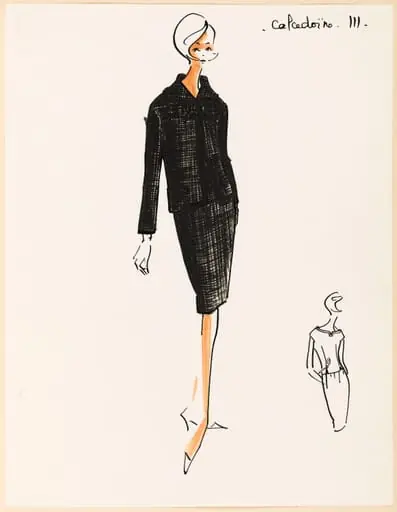
Grizzly is a drawing by Marie-Louise Carven. It dates from 1963 and is held in the collection of the Palais Galliera - Musée de la Mode de la Ville de Paris.
About this work
Overview
The work reflects Carven’s broader design philosophy—clean lines, practical silhouettes, and attention to the female form in everyday movement.
Created around 1963 by French designer Marie-Louise Carven, this ink drawing captures two women in minimalist black attire. Though produced as a fashion study, it is now held in the Museum of Ethnography, suggesting its significance extends beyond commercial use. The work reflects Carven’s broader design philosophy—clean lines, practical silhouettes, and attention to the female form in everyday movement.
Subject & Meaning
The two figures—one standing, one seated—present contrasting yet harmonious postures, emphasizing functionality and ease. Their direct gaze invites engagement, while their outfits, though simple, reveal thoughtful details: buttoned fronts, pockets, and tailored proportions. The illustration avoids ornamentation, instead highlighting how clothing accommodates the body in motion, aligning with Carven’s focus on wearable, modern femininity.
Technique & Style
Rendered in precise black ink on white paper, the drawing employs clean, unadorned lines to define form and fabric. Shading is minimal, relying on contour and structure to suggest volume. The figures’ short, stylized haircuts and subtle facial expressions convey personality without sentimentality. This restrained aesthetic mirrors mid-century modernist design principles, prioritizing clarity over decoration.
History & Provenance
Marie-Louise Carven founded her fashion house in 1945 and was among the first Parisian designers to launch a prêt-à-porter collection. This illustration likely served as a design reference or presentation piece for her studio. Its later acquisition by the Museum of Ethnography indicates recognition of its cultural value as a document of postwar French fashion practice, beyond its commercial origins.
Context
In the early 1960s, Parisian fashion was shifting toward accessibility and youth-oriented styles. Carven’s designs responded to changing social norms, favoring lightweight fabrics and practical cuts for active women. This drawing reflects that transition—its unembellished figures and functional garments align with broader movements toward democratized fashion and the rejection of rigid couture traditions.
Legacy
Though not widely exhibited, the drawing endures as a quiet testament to Carven’s influence on modern dress. Her innovations in ready-to-wear and body-conscious tailoring paved the way for later designers who prioritized comfort without sacrificing elegance. This illustration remains a subtle but significant artifact of how fashion began to serve the lived experience of women, not just idealized forms.
Artist & collection
Artist
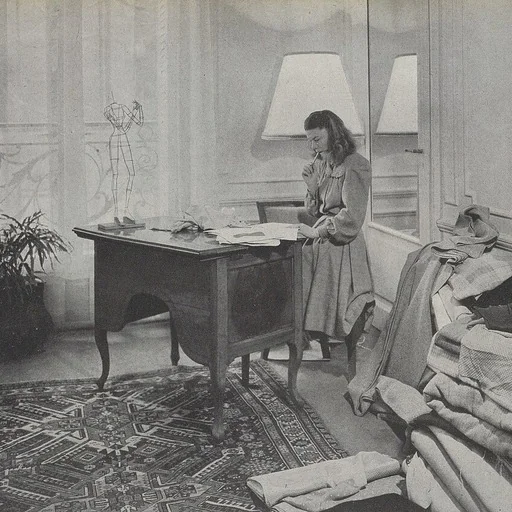
Marie-Louise Carven (31 August 1909 – 8 June 2015), born Carmen de Tommaso, was a French fashion designer who founded the house of Carven in 1945.
Museum
Palais Galliera - Musée de la Mode de la Ville de Paris
Continue through works from the same source collection.
 Robe de mariée festonnée et son voile
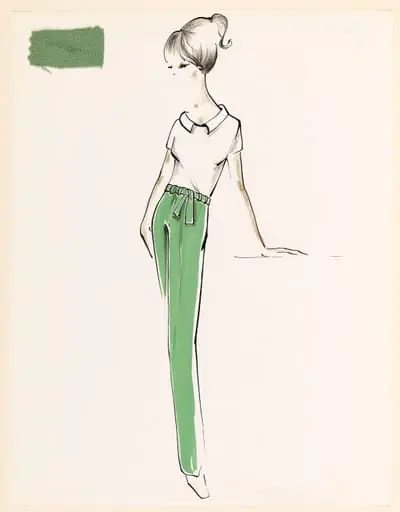 Haut blanc à manches courtes et pantalon vert à ceinture nouée
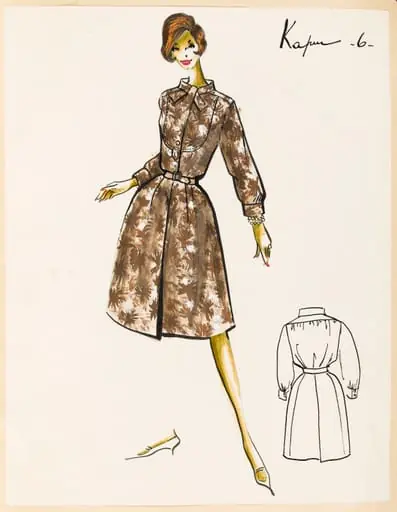 Kapur
Kapur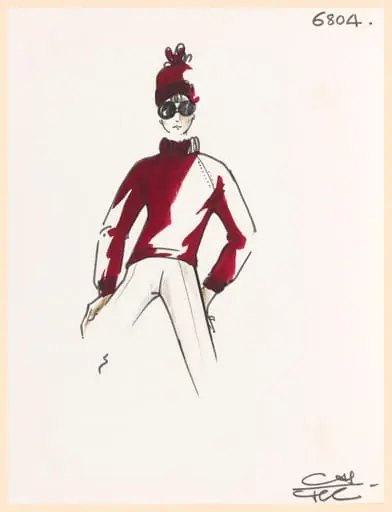 Pull-over à manches longues pourpre, bonnet assorti, pantalon et lunettes de soleil
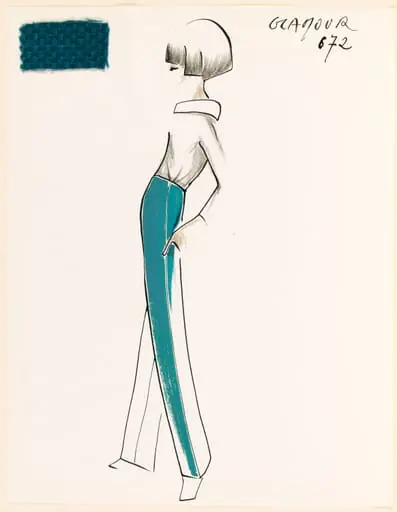 GLAMOUR
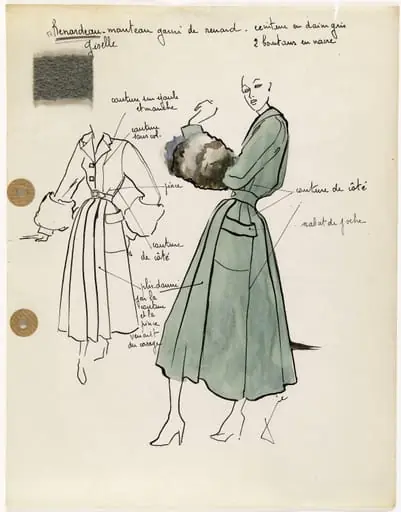 'Renardeau'
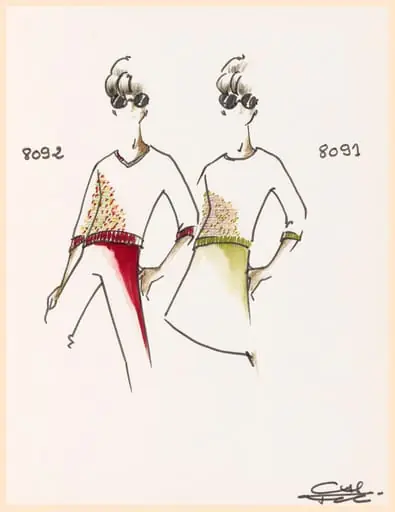 Pull-over à manches trois quarts et à encolure V à motifs multicolores, pantalon cerise et lunettes de soleil
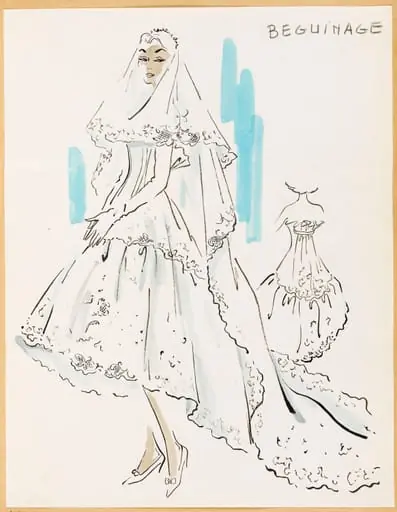 Béguinage