Artwork
'Jungle'
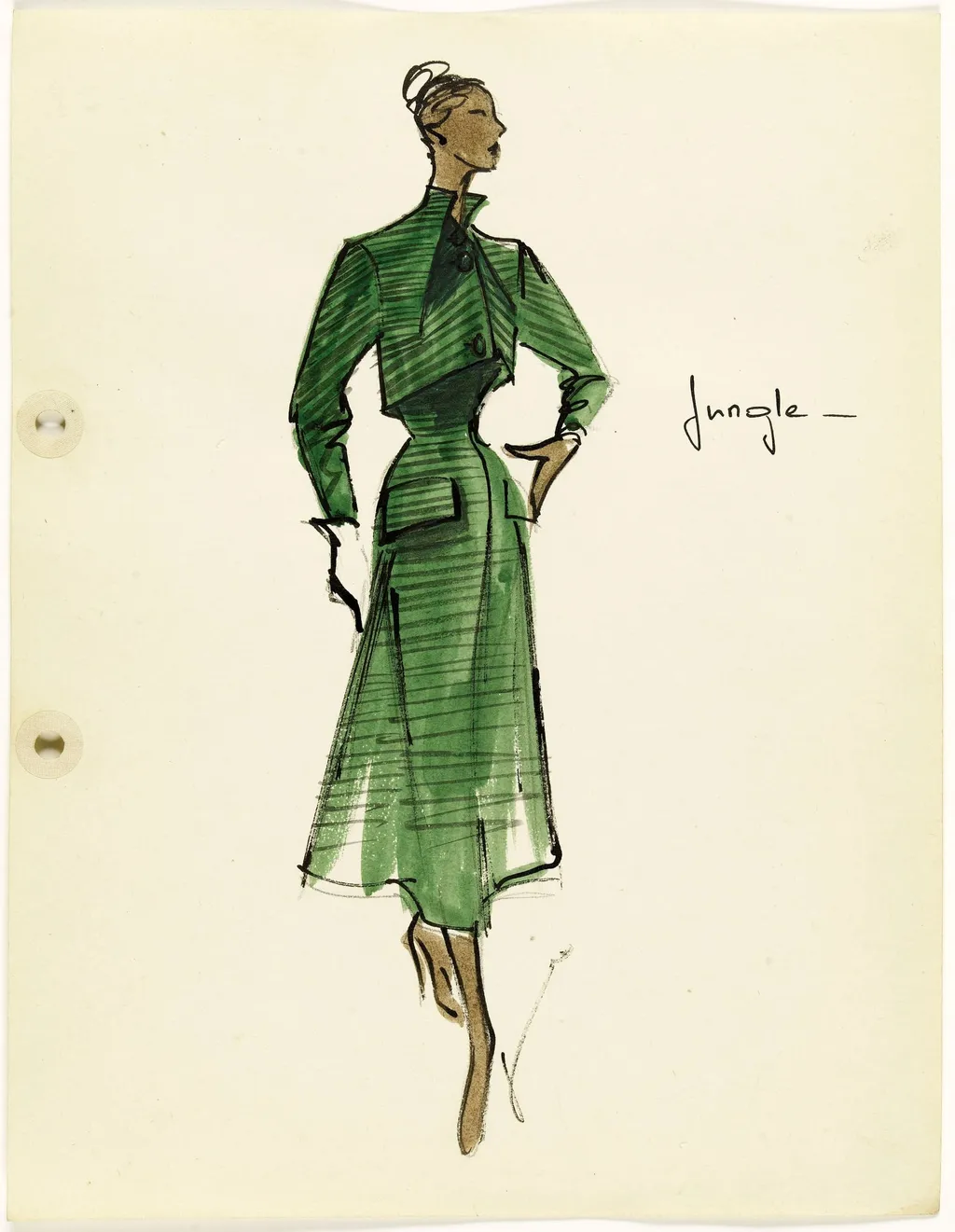
'Jungle' is a drawing by Marie-Louise Carven. It dates from 1951 and is held in the collection of the Palais Galliera - Musée de la Mode de la Ville de Paris.
About this work
Overview
The work reflects her interest in accessible, wearable design and was produced during a period when she was pioneering ready-to-wear fashion in France.
Created around 1951, 'Jungle' is a fashion sketch by Marie-Louise Carven, founder of the Parisian house Carven established in 1945. The work reflects her interest in accessible, wearable design and was produced during a period when she was pioneering ready-to-wear fashion in France. This drawing, now held by the Museum of Ethnography, captures a moment of stylistic experimentation rather than a finished garment.
Subject & Meaning
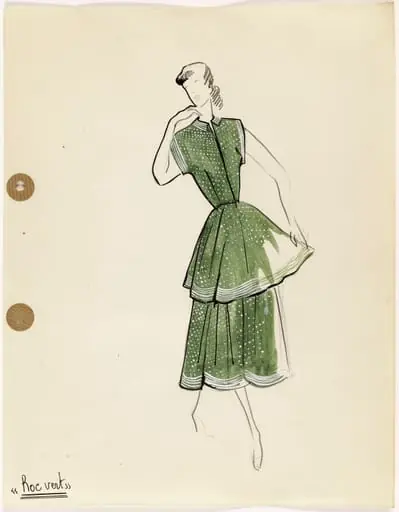
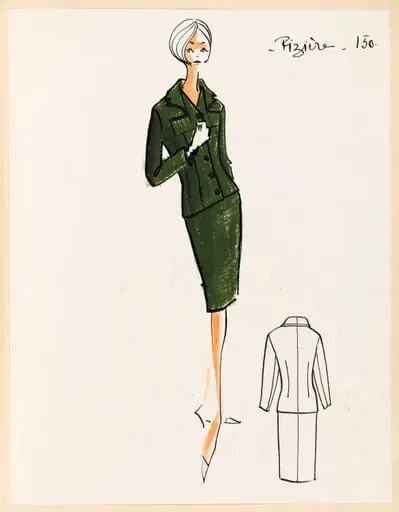
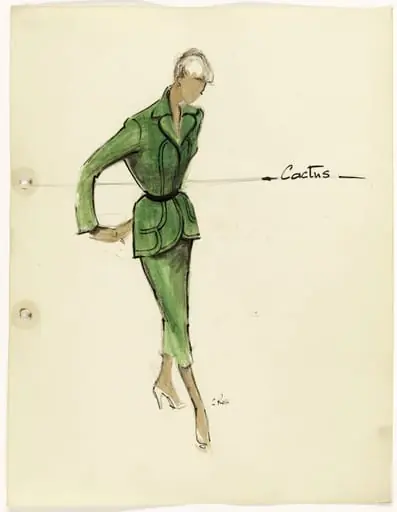
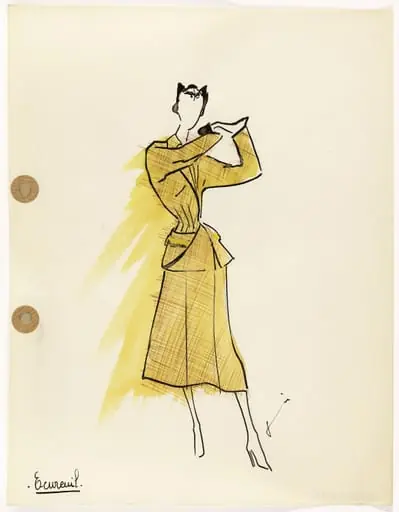
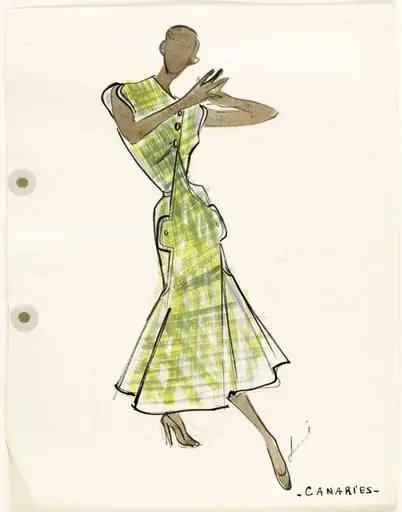
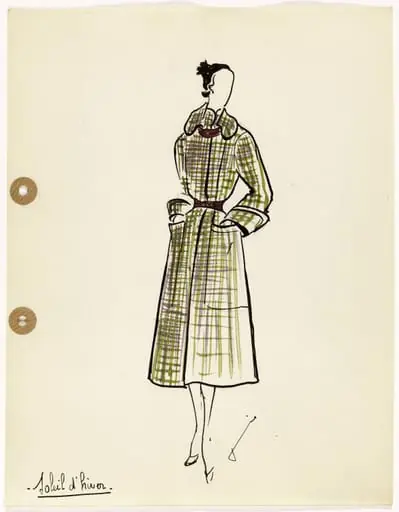
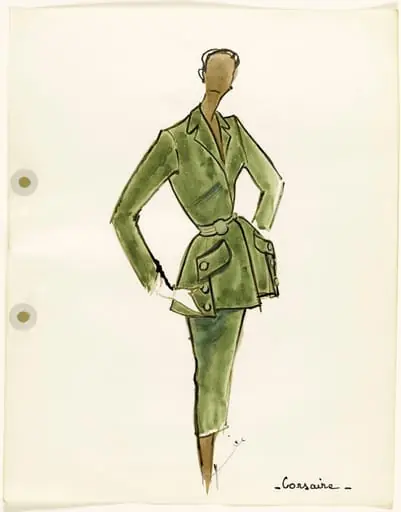
The sketch depicts a woman in a green ensemble — a fitted jacket with wide lapels and a flowing, slit skirt — conveying both structure and motion. Her poised stance, hand on hip, suggests self-assurance. The title 'Jungle' may allude to the lush, organic quality of the fabric draping or the boldness of the color, evoking natural abundance rather than literal imagery. It reflects a postwar fascination with vitality and movement in women’s attire.
Technique & Style
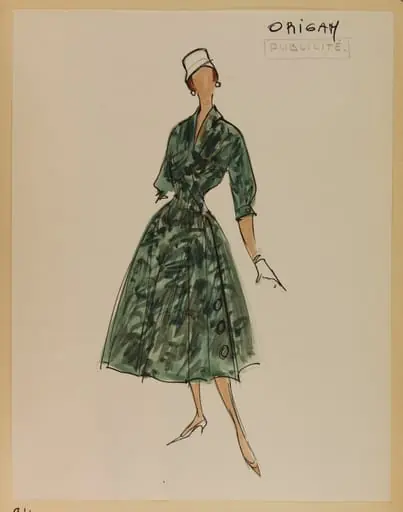
Carven rendered the design with swift, fluid lines that imply texture and motion rather than precise detail. The loose brushwork suggests the weight and drape of fabric, emphasizing how the garment would move on the body. Minimal shading and absence of facial features focus attention on silhouette and form. This approach aligns with fashion illustration practices of the time, prioritizing the garment’s dynamic potential over literal representation.
History & Provenance
The sketch entered the collection of the Museum of Ethnography as part of a broader effort to document fashion as cultural expression. While Carven’s designs were commercially produced, this drawing remains a private artifact of her creative process. Its preservation highlights the museum’s interest in mid-century European design, particularly works that bridge haute couture and emerging ready-to-wear trends.
Context
In the early 1950s, Parisian fashion was transitioning from exclusive couture to more democratic ready-to-wear lines. Carven, one of the first to embrace this shift, designed for women seeking practical elegance. 'Jungle' reflects this ethos — a garment meant for everyday life, yet imbued with theatrical flair. The era’s aesthetic favored bold colors and structured silhouettes, responding to both economic recovery and changing social roles for women.
Legacy
Though not widely exhibited, 'Jungle' stands as a representative example of Carven’s contribution to modernizing women’s fashion. Her integration of playful forms with functional design influenced later generations of designers who prioritized movement and accessibility. The sketch endures not as a commercial product but as a testament to the creative thinking behind accessible fashion in postwar Europe.
Artist & collection
Artist
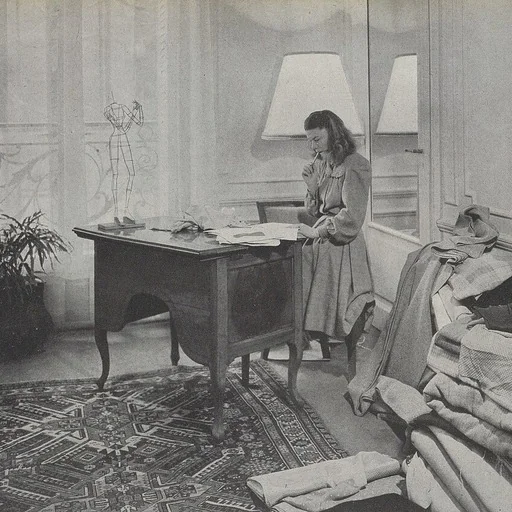
Marie-Louise Carven (31 August 1909 – 8 June 2015), born Carmen de Tommaso, was a French fashion designer who founded the house of Carven in 1945.
Museum
Palais Galliera - Musée de la Mode de la Ville de Paris
Continue through works from the same source collection.
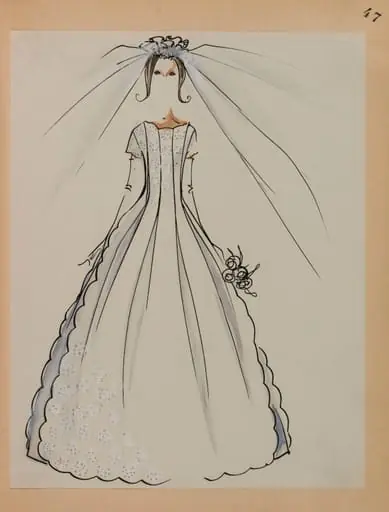 Robe de mariée festonnée et son voile
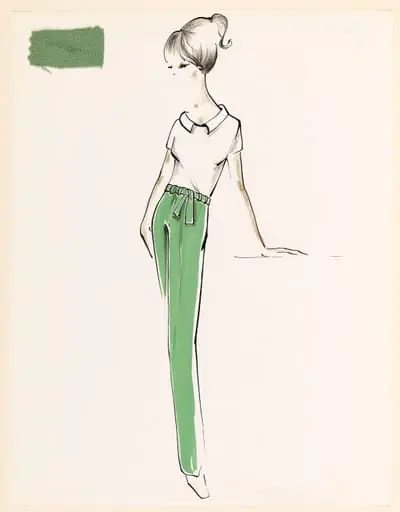 Haut blanc à manches courtes et pantalon vert à ceinture nouée
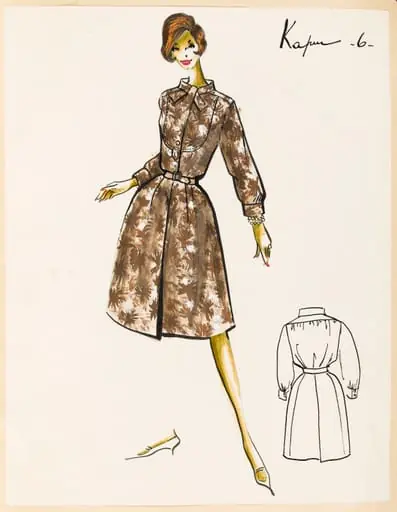 Kapur
Kapur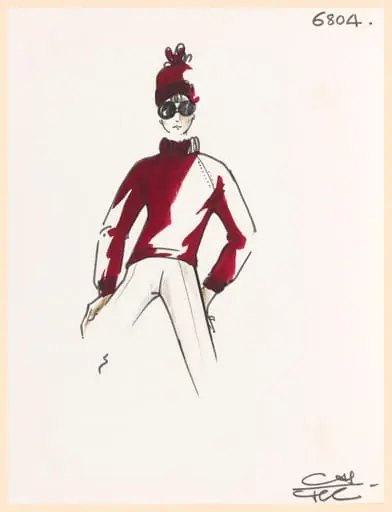 Pull-over à manches longues pourpre, bonnet assorti, pantalon et lunettes de soleil
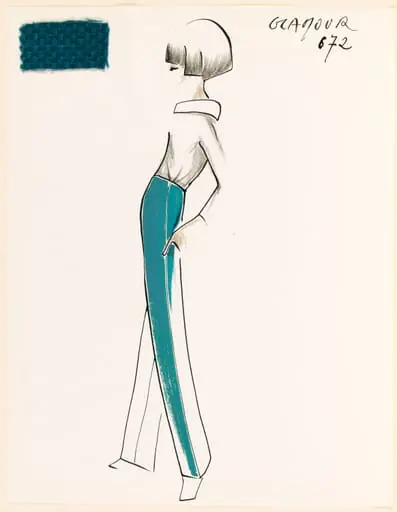 GLAMOUR
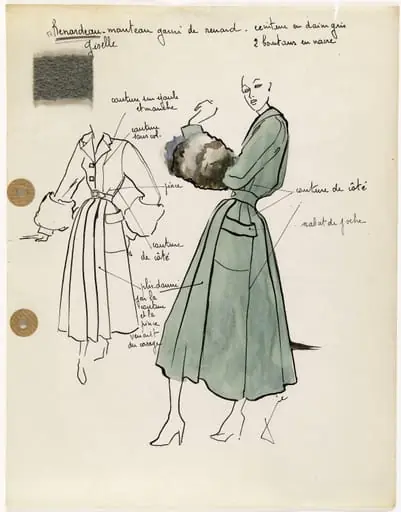 'Renardeau'
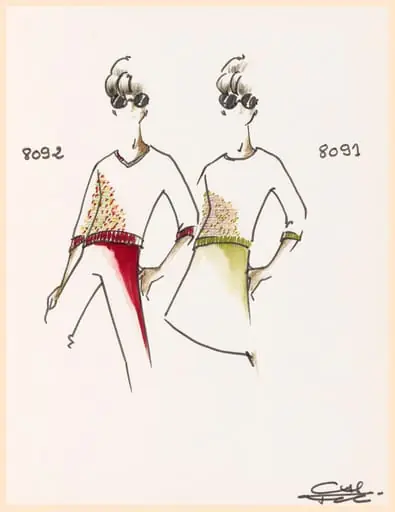 Pull-over à manches trois quarts et à encolure V à motifs multicolores, pantalon cerise et lunettes de soleil
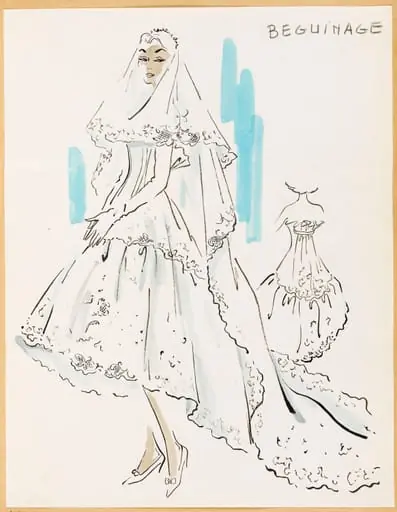 Béguinage