Artwork
'Corsaire'
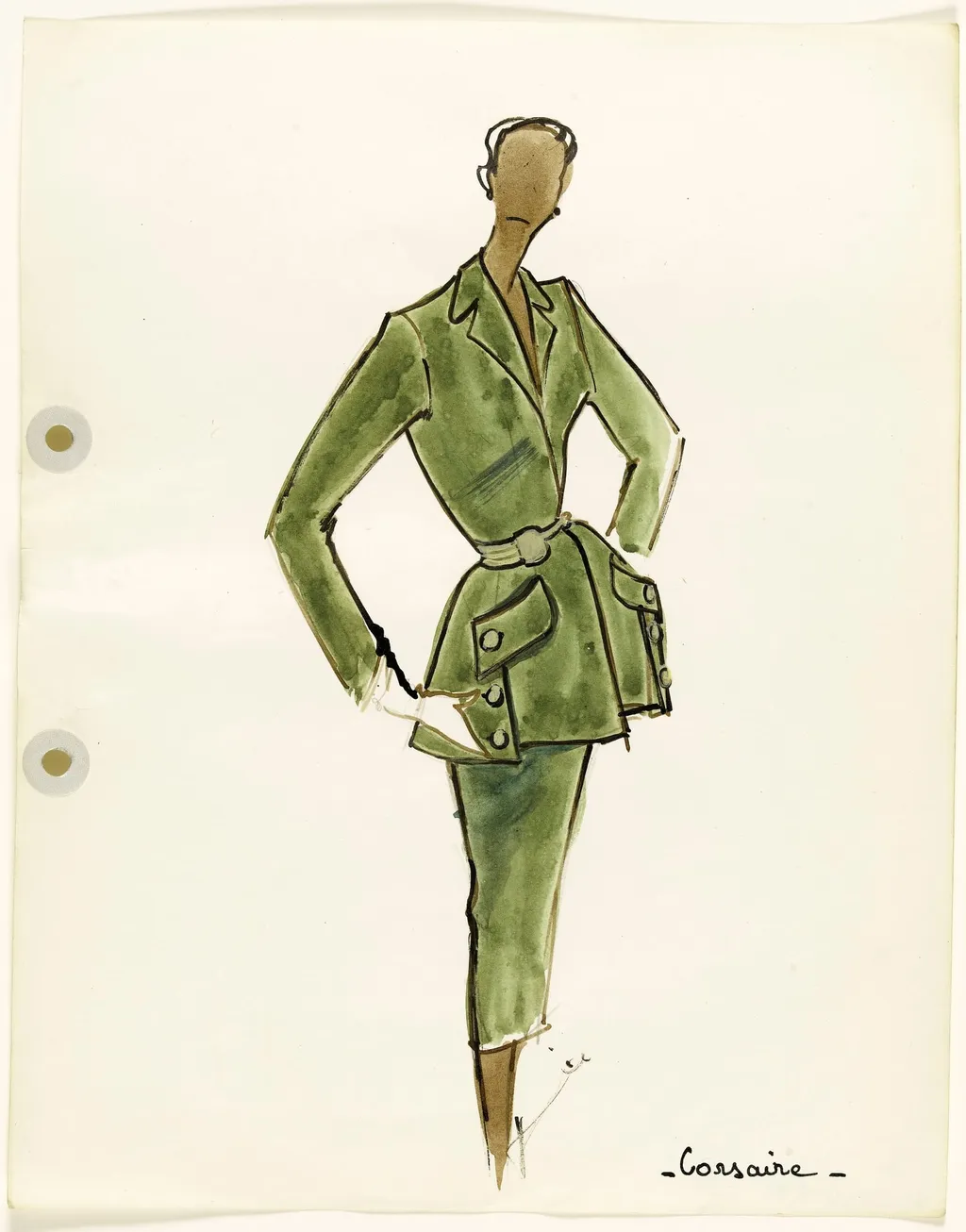
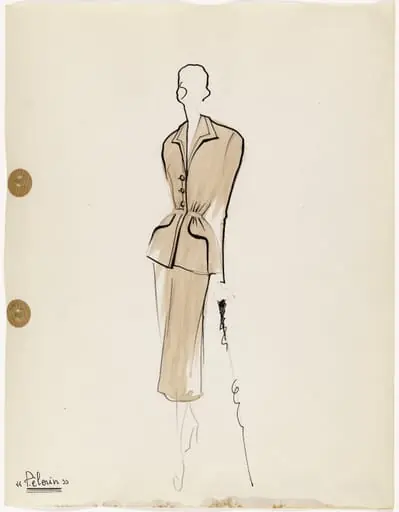
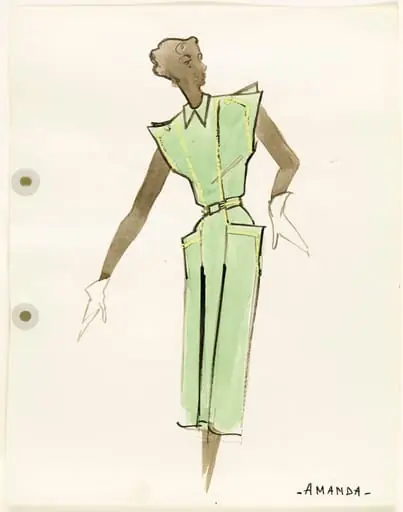
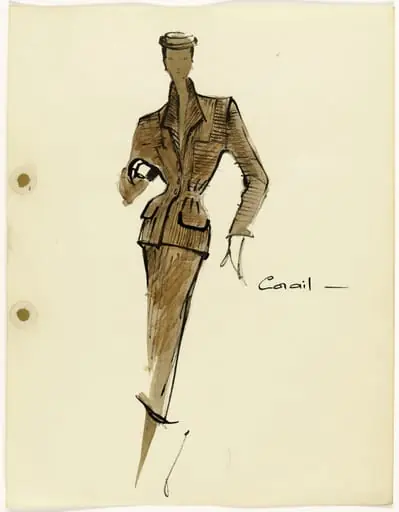
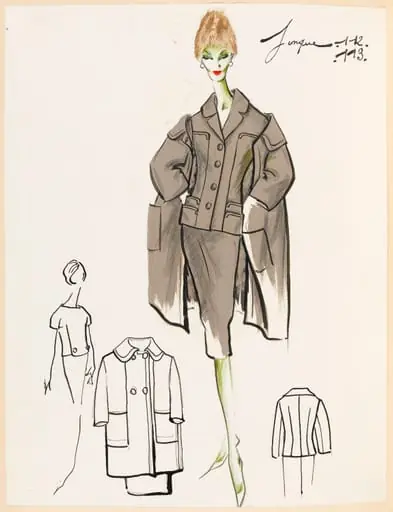
'Corsaire' is a drawing by Marie-Louise Carven. It dates from 1951 and is held in the collection of the Palais Galliera - Musée de la Mode de la Ville de Paris.
About this work
Overview
Corsaire is a 1951 watercolor sketch by French designer Marie-Louise Carven, part of the Museum of Ethnography’s collection.
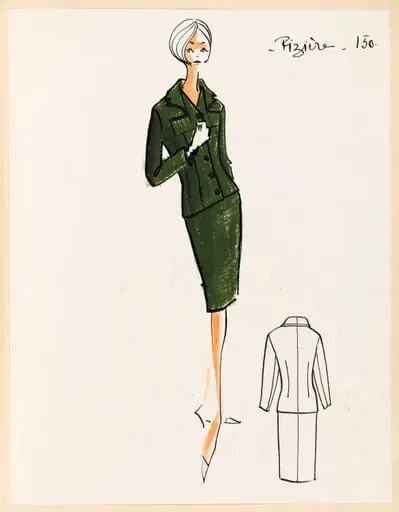
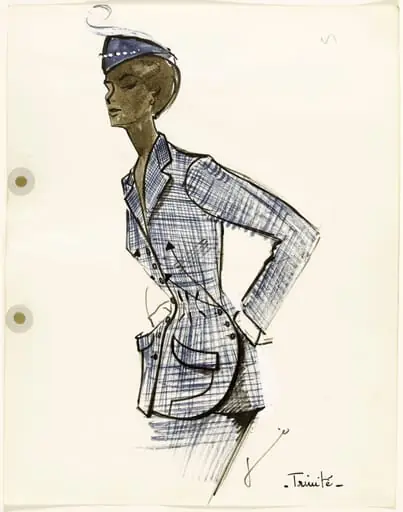
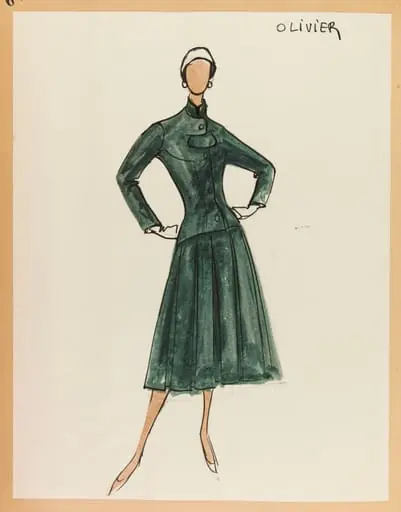
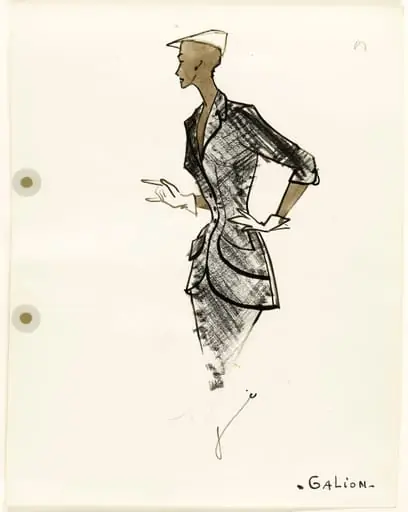
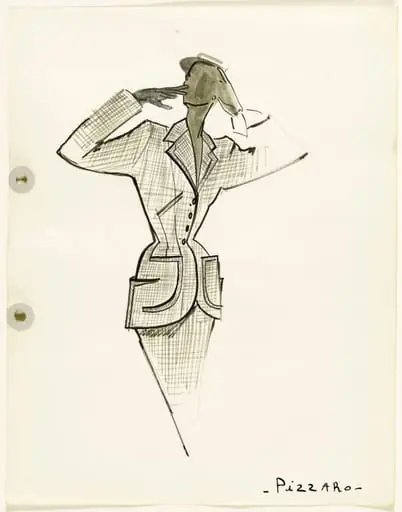
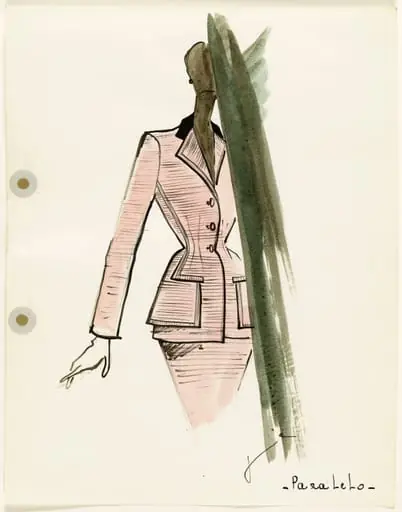
Corsaire is a 1951 watercolor sketch by French designer Marie-Louise Carven, part of the Museum of Ethnography’s collection. It depicts a woman in a tailored green suit, rendered with subtle tonal variations to suggest form and light. The figure’s posture and attire reflect Carven’s focus on refined, wearable design for smaller frames. Though the face is omitted, the composition conveys poise and restraint, characteristic of her aesthetic.
Subject & Meaning
The figure in Corsaire embodies Carven’s vision of modern femininity: composed, unadorned, and grounded in practical elegance. The suit’s fitted jacket and knee-length skirt suggest movement and ease, aligning with her interest in garments that accommodate daily life. The absence of facial features universalizes the subject, emphasizing the clothing’s structure over individual identity.
Technique & Style
Carven employed watercolor to capture the fluidity of fabric and the play of light across the suit’s surface. Shades of green range from muted olive to pale mint, with deliberate darkening along seams and folds to suggest volume. The brushwork is controlled yet expressive, avoiding excess detail in favor of suggestive form. This technique mirrors the precision of fashion illustration while retaining the spontaneity of sketching.
History & Provenance
Created in 1951, Corsaire originates from Carven’s design studio during the early years of her couture house, founded in 1945. The sketch likely served as a preparatory study for a garment in her emerging prêt-à-porter line, one of Paris’s first such collections. It entered the Museum of Ethnography’s holdings through documented acquisition, reflecting its significance as a cultural artifact of postwar French fashion.
Context
In postwar France, fashion was redefining itself amid economic constraints and shifting gender roles. Carven’s focus on petite silhouettes and accessible materials like gingham and lace responded to a demand for practical luxury. Corsaire reflects this moment: a bridge between haute couture’s exclusivity and the rising accessibility of ready-to-wear, emphasizing function without sacrificing refinement.
Legacy
Corsaire stands as a quiet testament to Carven’s influence on democratizing fashion. Her emphasis on fit, lightness, and wearability paved the way for later ready-to-wear movements. Though not widely publicized, sketches like this one illustrate how designers translated aesthetic ideals into tangible garments, leaving a subtle but enduring mark on 20th-century dress.
Artist & collection
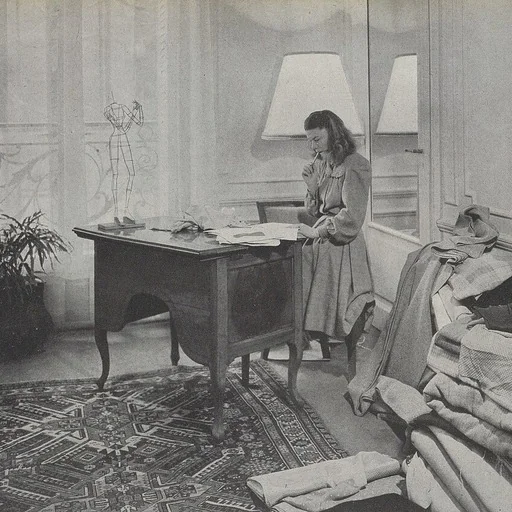
Artist
Marie-Louise Carven (31 August 1909 – 8 June 2015), born Carmen de Tommaso, was a French fashion designer who founded the house of Carven in 1945.
Museum
Palais Galliera - Musée de la Mode de la Ville de Paris
Continue through works from the same source collection.
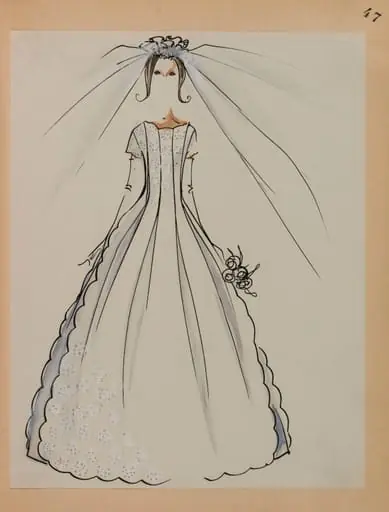 Robe de mariée festonnée et son voile
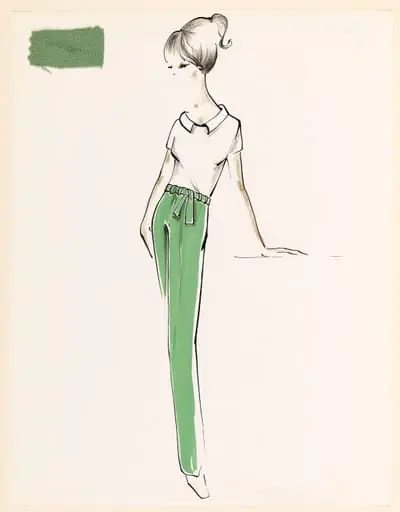 Haut blanc à manches courtes et pantalon vert à ceinture nouée
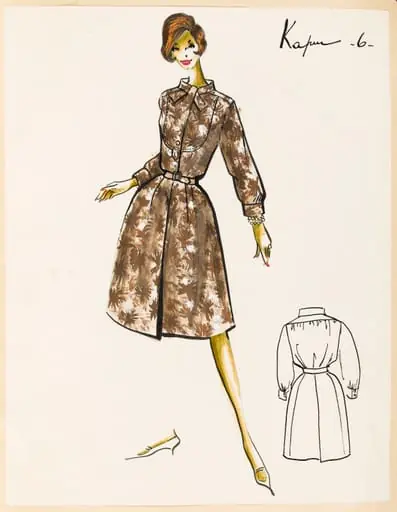 Kapur
Kapur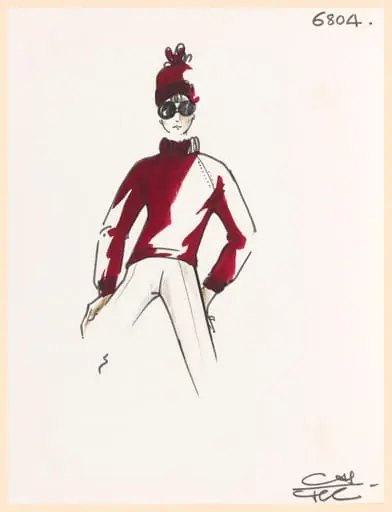 Pull-over à manches longues pourpre, bonnet assorti, pantalon et lunettes de soleil
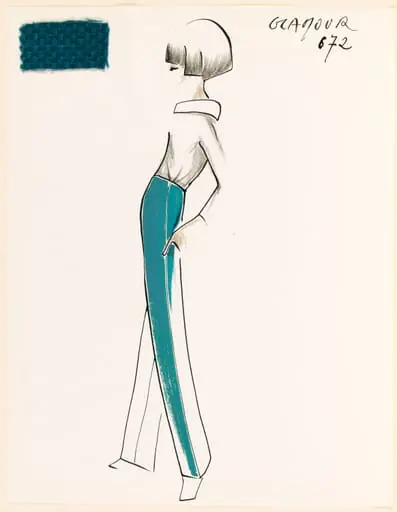 GLAMOUR
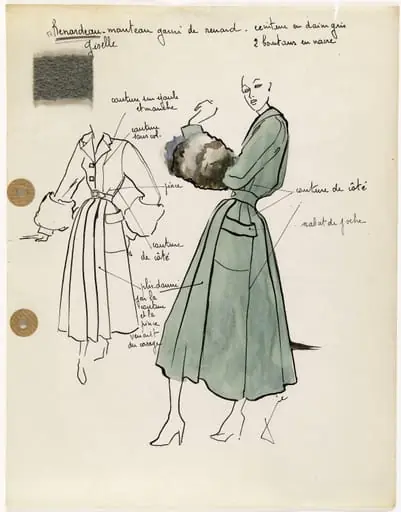 'Renardeau'
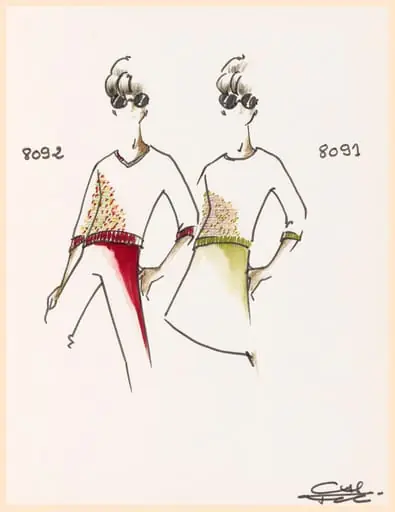 Pull-over à manches trois quarts et à encolure V à motifs multicolores, pantalon cerise et lunettes de soleil
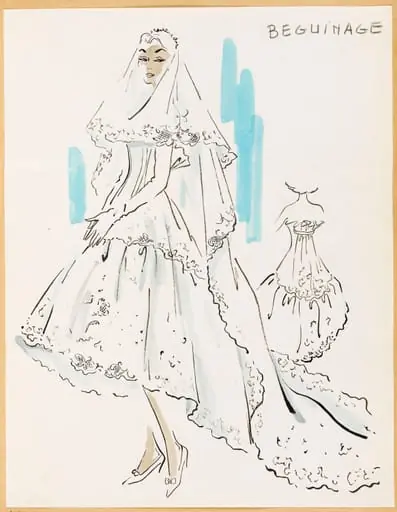 Béguinage