Artwork
La Parisienne
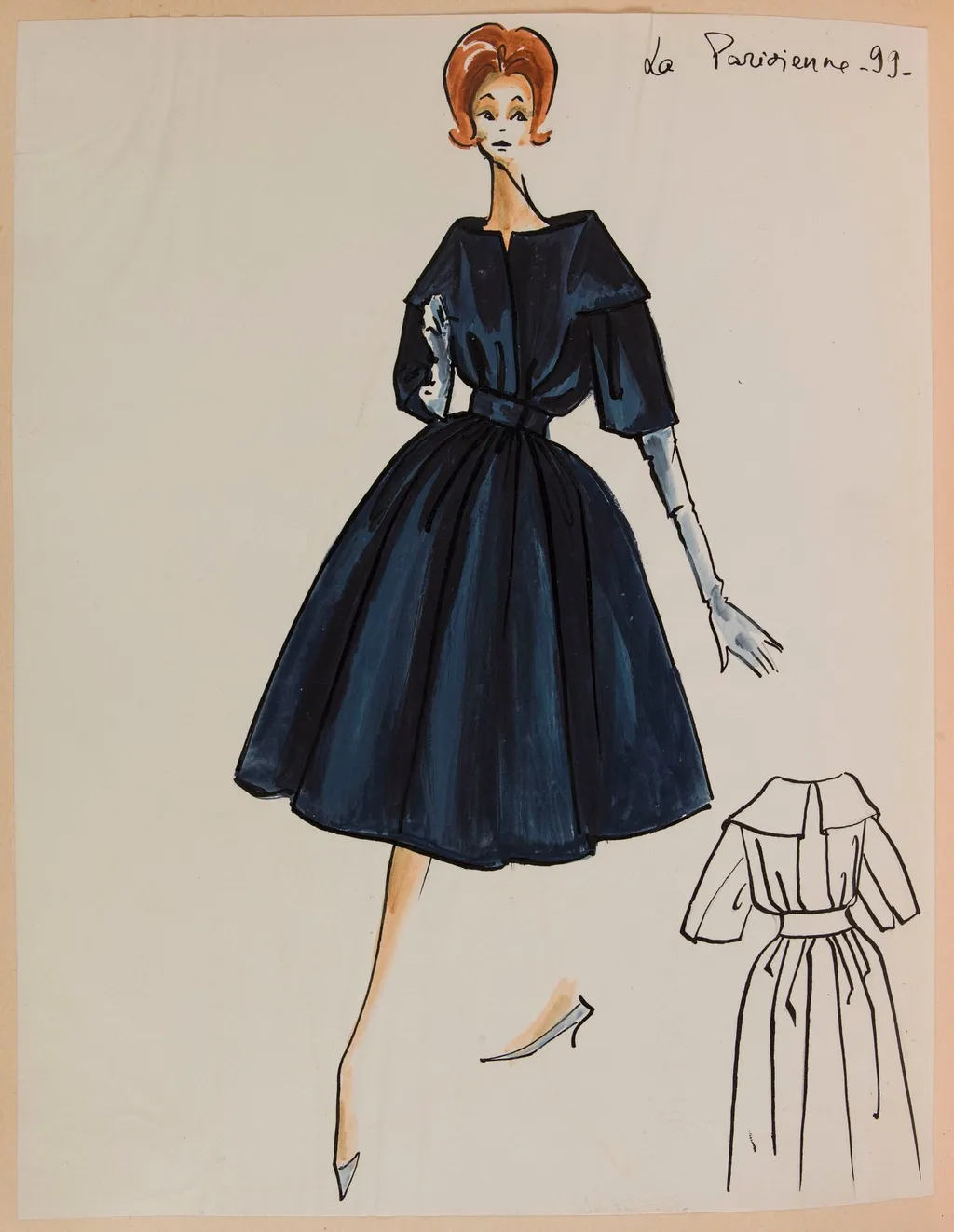
La Parisienne is a drawing by Marie-Louise Carven. It dates from 1958 and is held in the collection of the Palais Galliera - Musée de la Mode de la Ville de Paris.
About this work
Overview
A small supplementary sketch on the corner shows the garment from behind, suggesting its use as a design reference rather than a finished portrait.
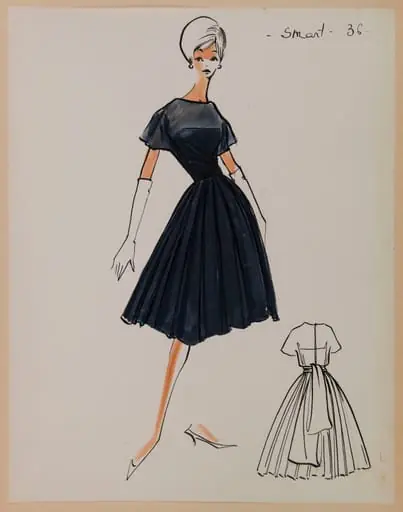
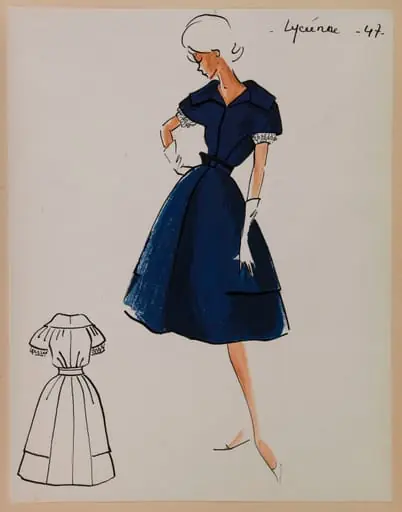
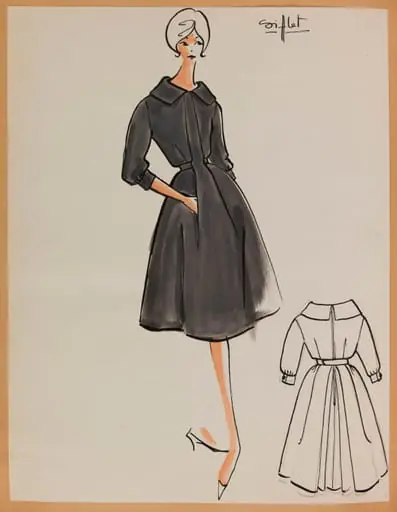
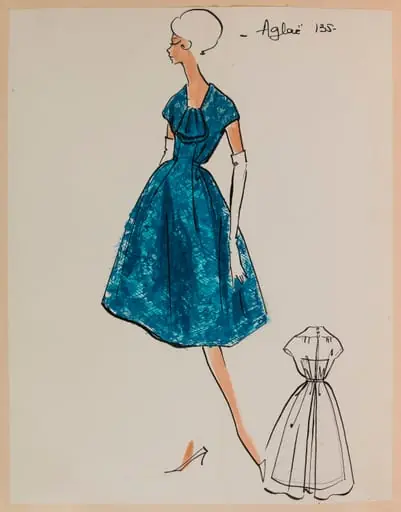
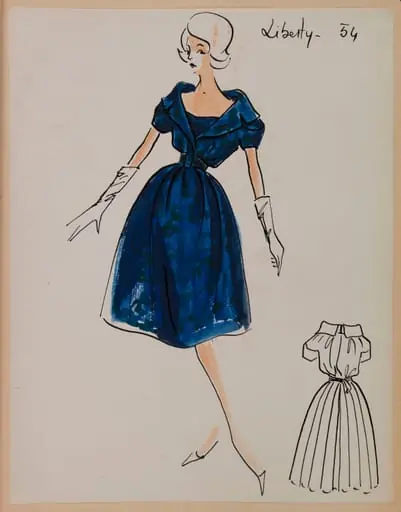
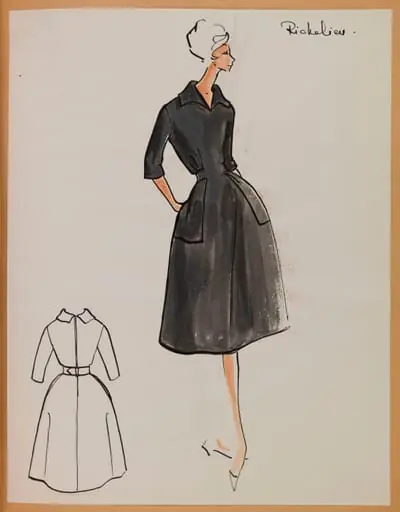
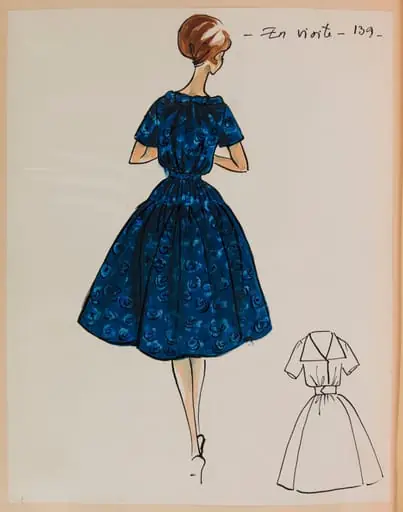
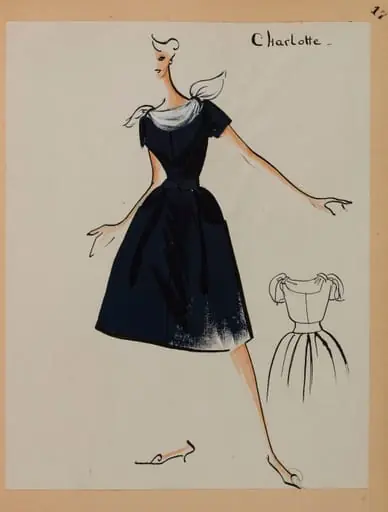
La Parisienne is a pencil and ink sketch from around 1958, created by French designer Marie-Louise Carven. It depicts a woman in a minimalist black ensemble: a short jacket with three-quarter sleeves and a knee-length flared skirt. Rendered with swift, unshaded lines and flat tones, the drawing lacks detail in texture or depth, emphasizing form over realism. A small supplementary sketch on the corner shows the garment from behind, suggesting its use as a design reference rather than a finished portrait.
Subject & Meaning
The figure represents an idealized Parisian woman of the late 1950s—elegant yet unadorned, practical yet poised. The title, La Parisienne, evokes a cultural archetype rather than a specific individual. Carven’s choice of a modest, knee-length silhouette and low heels reflects her design philosophy: clothing suited to everyday movement and urban life. The sketch functions as a typological study, capturing a style associated with French femininity rather than documenting a particular person.
Technique & Style
Carven employed rapid, confident linework and unmodulated color to convey structure without embellishment. The absence of shading, texture, or fine detail prioritizes clarity and reproducibility, typical of fashion illustrations meant for pattern-making. The inclusion of a rear view sketch demonstrates a functional approach—ensuring the garment’s silhouette was understood from all angles. The loose, unpolished quality suggests spontaneity, as if drawn during a moment of design reflection.
History & Provenance
Created during Carven’s active years as a couturier, the sketch likely originated in her atelier as part of her design process. Carven founded her fashion house in 1945 and was among the first to develop a ready-to-wear line, making such studies essential for translating ideas into production. The drawing entered the collection of the Museum of Ethnography, where it is preserved as an artifact of mid-century French fashion practice rather than as fine art.
Context
In postwar France, fashion was shifting toward accessibility and functionality. Carven’s designs catered to petite figures and emphasized lightweight fabrics like gingham and lace, aligning with a growing demand for practical elegance. La Parisienne reflects this era’s aesthetic: restrained, feminine, and rooted in daily life. Unlike haute couture’s theatricality, her sketches prioritized wearability, mirroring broader societal changes in women’s roles and dress.
Legacy
Carven’s work, including this sketch, contributed to the legitimization of ready-to-wear as a serious design discipline. Her focus on fit, movement, and everyday utility influenced later generations of designers who sought to bridge couture and commerce. Though not widely exhibited, such drawings remain valuable records of how fashion was conceived—not as spectacle, but as a responsive, human-centered practice.
Artist & collection
Artist
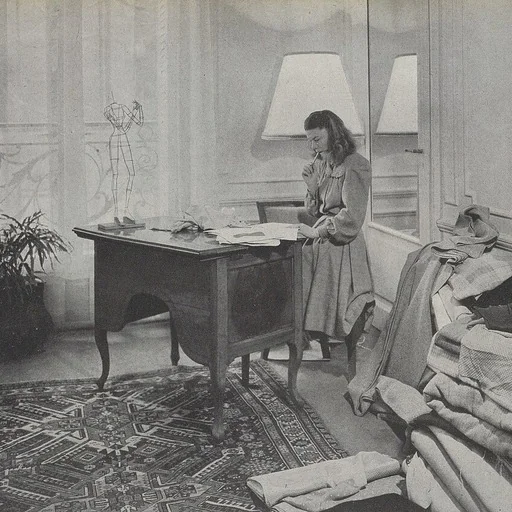
Marie-Louise Carven (31 August 1909 – 8 June 2015), born Carmen de Tommaso, was a French fashion designer who founded the house of Carven in 1945.
Museum
Palais Galliera - Musée de la Mode de la Ville de Paris
Continue through works from the same source collection.
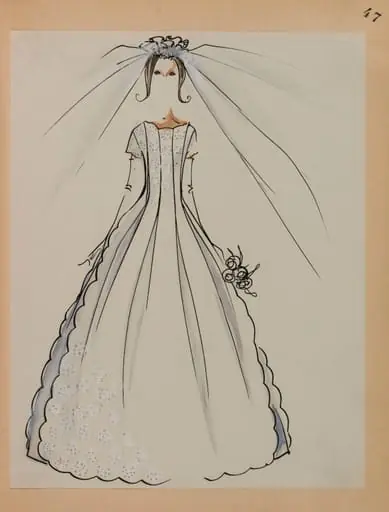 Robe de mariée festonnée et son voile
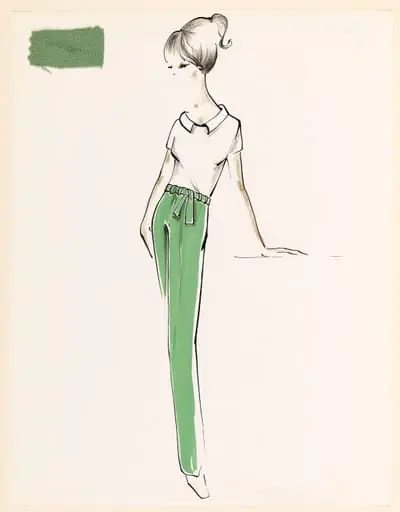 Haut blanc à manches courtes et pantalon vert à ceinture nouée
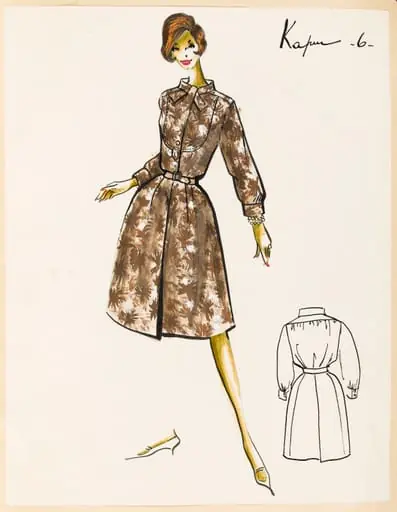 Kapur
Kapur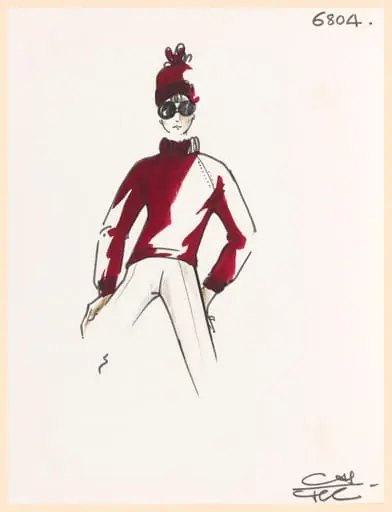 Pull-over à manches longues pourpre, bonnet assorti, pantalon et lunettes de soleil
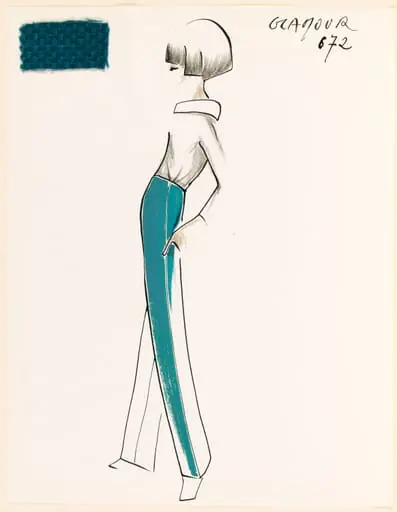 GLAMOUR
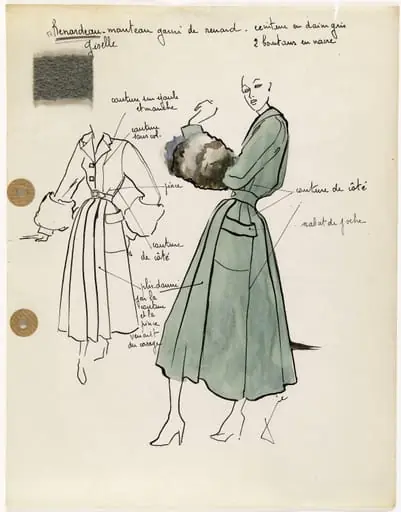 'Renardeau'
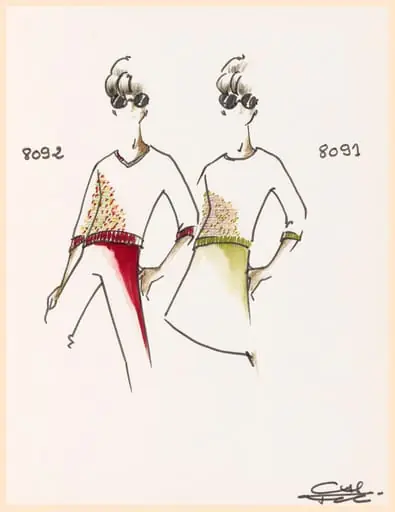 Pull-over à manches trois quarts et à encolure V à motifs multicolores, pantalon cerise et lunettes de soleil
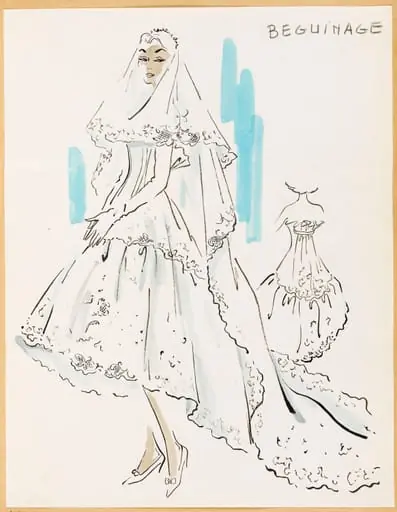 Béguinage