Artwork
Oursin
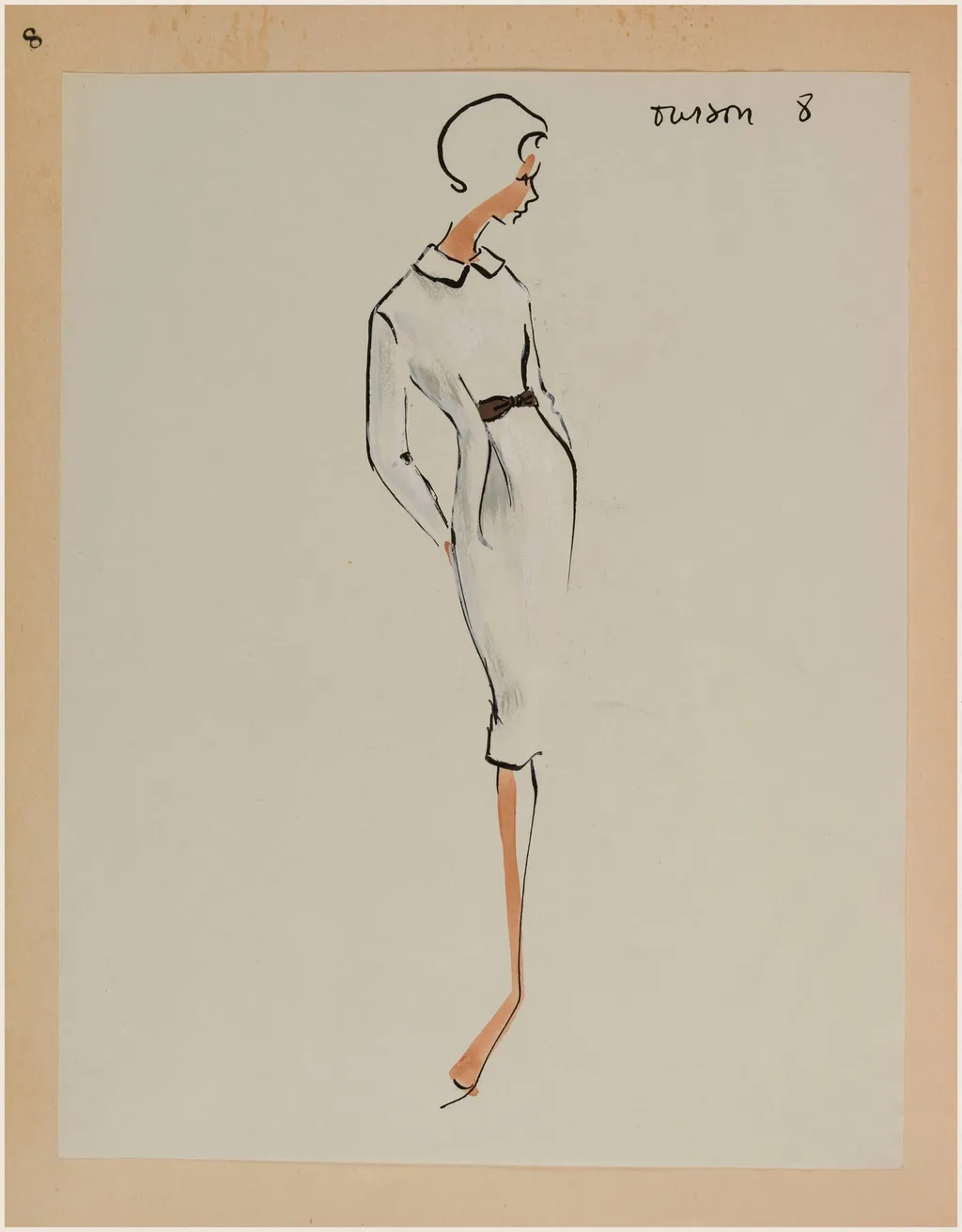
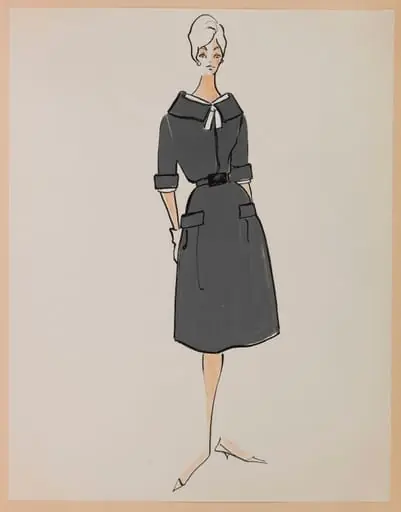
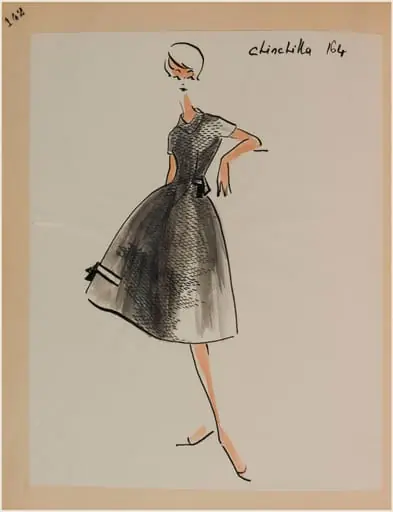
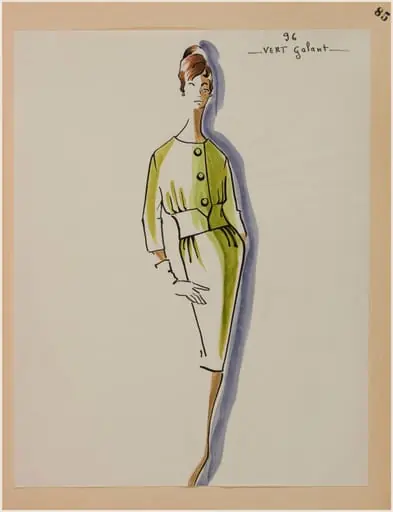
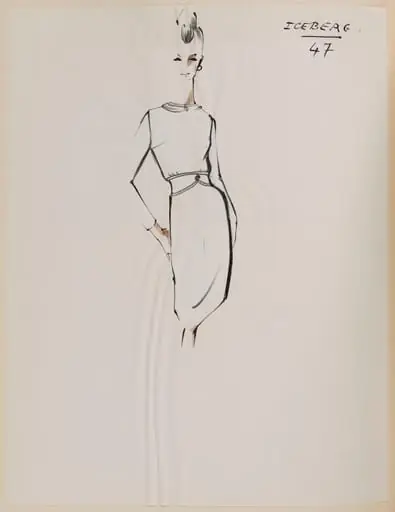
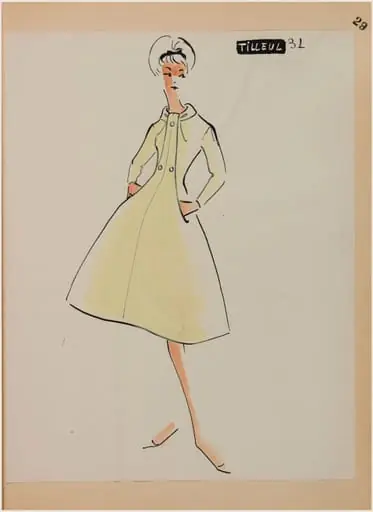
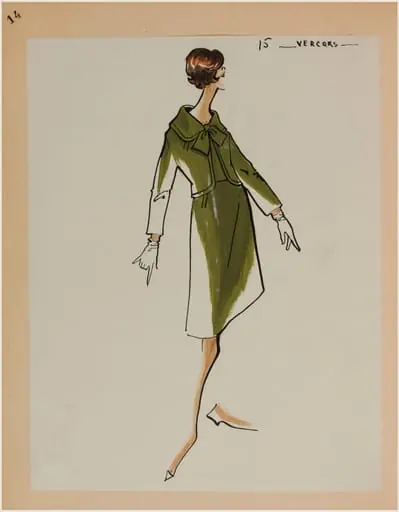
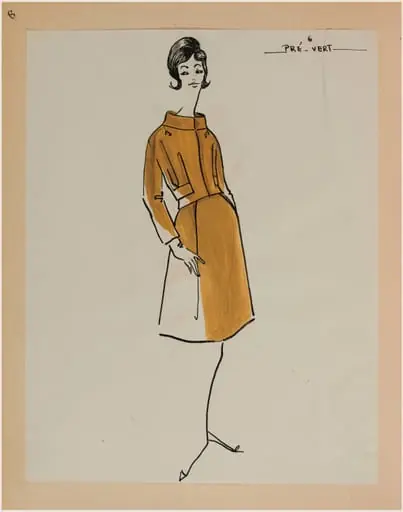
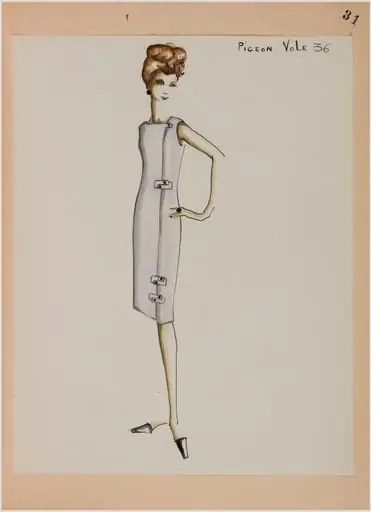
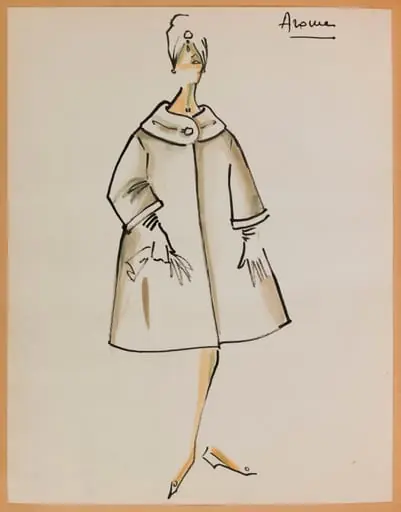
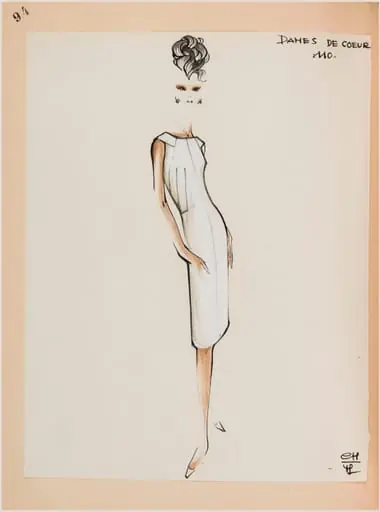
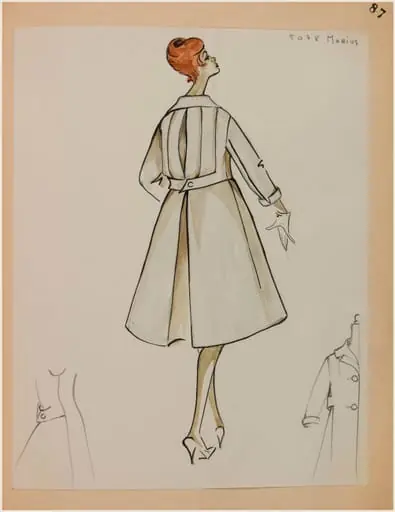
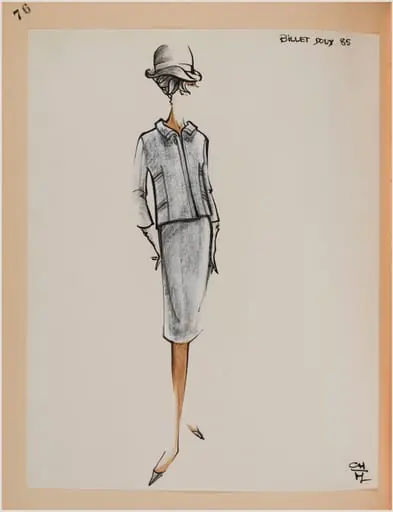
Oursin is a drawing by Marie-Louise Carven. It dates from 1958 and is held in the collection of the Palais Galliera - Musée de la Mode de la Ville de Paris.
About this work
Overview
Though primarily known for her clothing, Carven produced this work as a visual extension of her aesthetic sensibilities.
Oursin is a painted portrait created around 1958, attributed to Marie-Louise Carven, a French fashion designer. Though primarily known for her clothing, Carven produced this work as a visual extension of her aesthetic sensibilities. The piece is part of the Museum of Ethnography’s collection, reflecting its cultural significance beyond fashion. It captures a woman in a minimalist ensemble, embodying the refined elegance Carven championed in her designs.
Subject & Meaning
The subject is a woman facing right, dressed in a white dress with long sleeves and a high collar, cinched by a brown belt. Her bobbed hairstyle and high heels suggest a modern, urban femininity of the late 1950s. The composed posture and direct gaze convey quiet self-assurance. The absence of ornamentation and the neutral background emphasize individual presence over fashion spectacle, aligning with Carven’s philosophy of understated sophistication.
Technique & Style
The painting employs a restrained palette of white, beige, and brown, with soft, even brushwork that avoids dramatic contrast. Forms are simplified, focusing on silhouette and proportion rather than detailed rendering. The background’s muted tone isolates the figure, directing attention to her posture and attire. This approach mirrors the clean lines and functional beauty Carven favored in her garments, translating fashion design into pictorial language.
History & Provenance
Created during Carven’s active years as a designer, Oursin emerged from her personal artistic practice rather than commercial production. It was acquired by the Museum of Ethnography, likely as part of an effort to document mid-century French visual culture beyond fine art. Its inclusion in the collection signals recognition of fashion designers’ broader cultural contributions, positioning the work as a bridge between textile design and portraiture.
Context
In the late 1950s, Parisian fashion was shifting toward accessibility, with Carven pioneering prêt-à-porter for petite figures. Oursin reflects this era’s emphasis on practical elegance and the idealized modern woman. The painting’s quiet demeanor contrasts with the theatricality of haute couture, instead aligning with postwar values of restraint and individuality. It stands as a visual counterpart to Carven’s clothing, reinforcing her design ethos through portraiture.
Legacy
Oursin remains a rare example of a fashion designer’s direct engagement with painting as an expressive medium. Its preservation in a museum of ethnography underscores its role as a cultural artifact, illustrating how personal aesthetics shaped public perceptions of femininity. While not widely exhibited, it contributes to broader understandings of mid-century design culture and the blurred boundaries between fashion and fine art.
Artist & collection
Artist
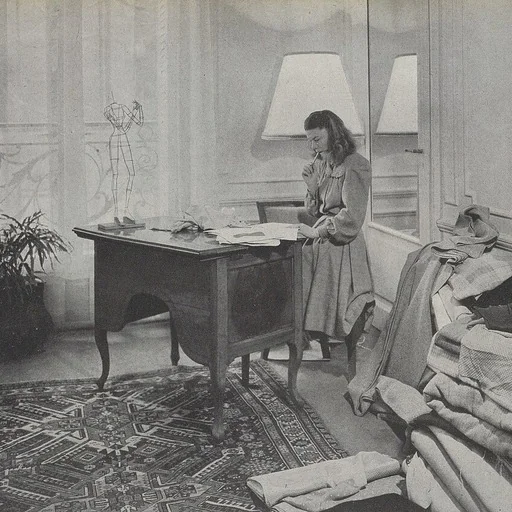
Marie-Louise Carven (31 August 1909 – 8 June 2015), born Carmen de Tommaso, was a French fashion designer who founded the house of Carven in 1945.
Museum
Palais Galliera - Musée de la Mode de la Ville de Paris
Continue through works from the same source collection.
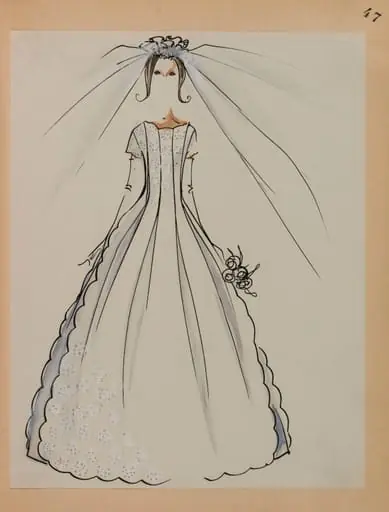 Robe de mariée festonnée et son voile
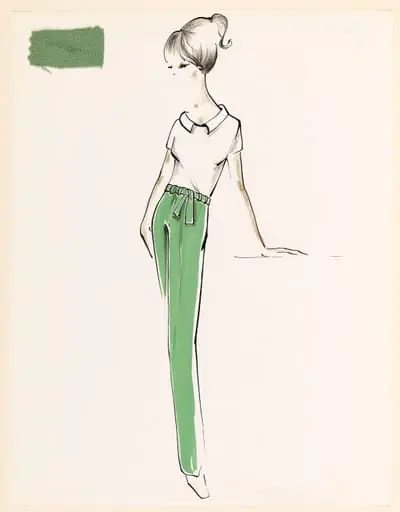 Haut blanc à manches courtes et pantalon vert à ceinture nouée
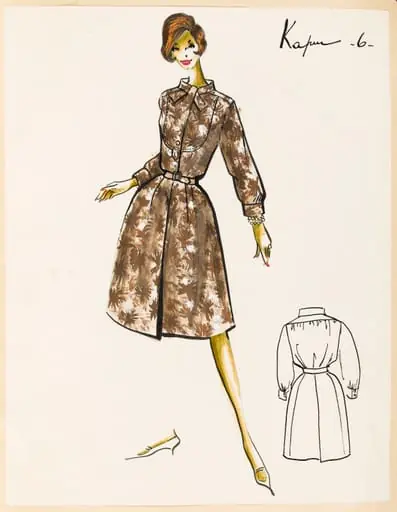 Kapur
Kapur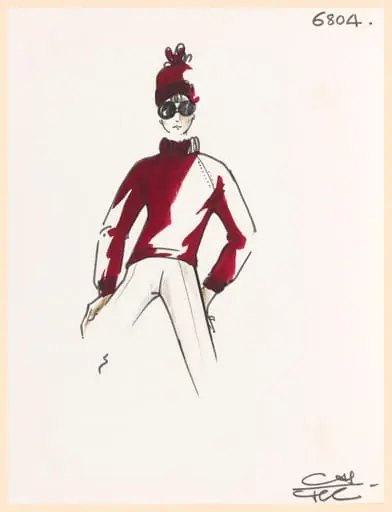 Pull-over à manches longues pourpre, bonnet assorti, pantalon et lunettes de soleil
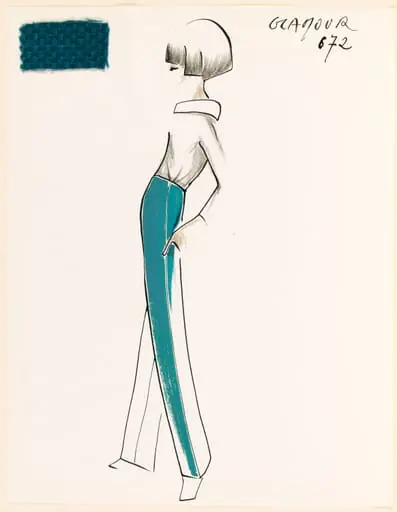 GLAMOUR
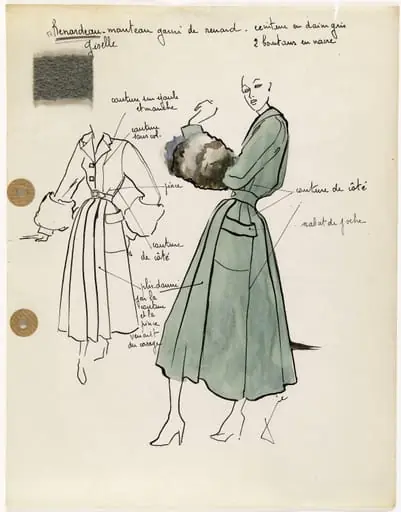 'Renardeau'
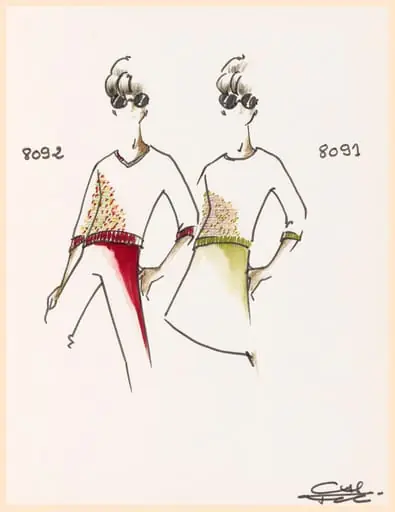 Pull-over à manches trois quarts et à encolure V à motifs multicolores, pantalon cerise et lunettes de soleil
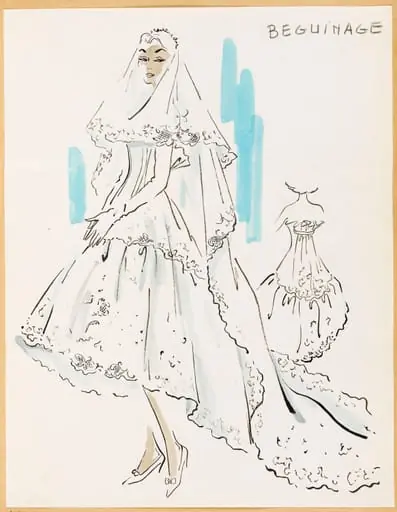 Béguinage