Artwork
Savoie
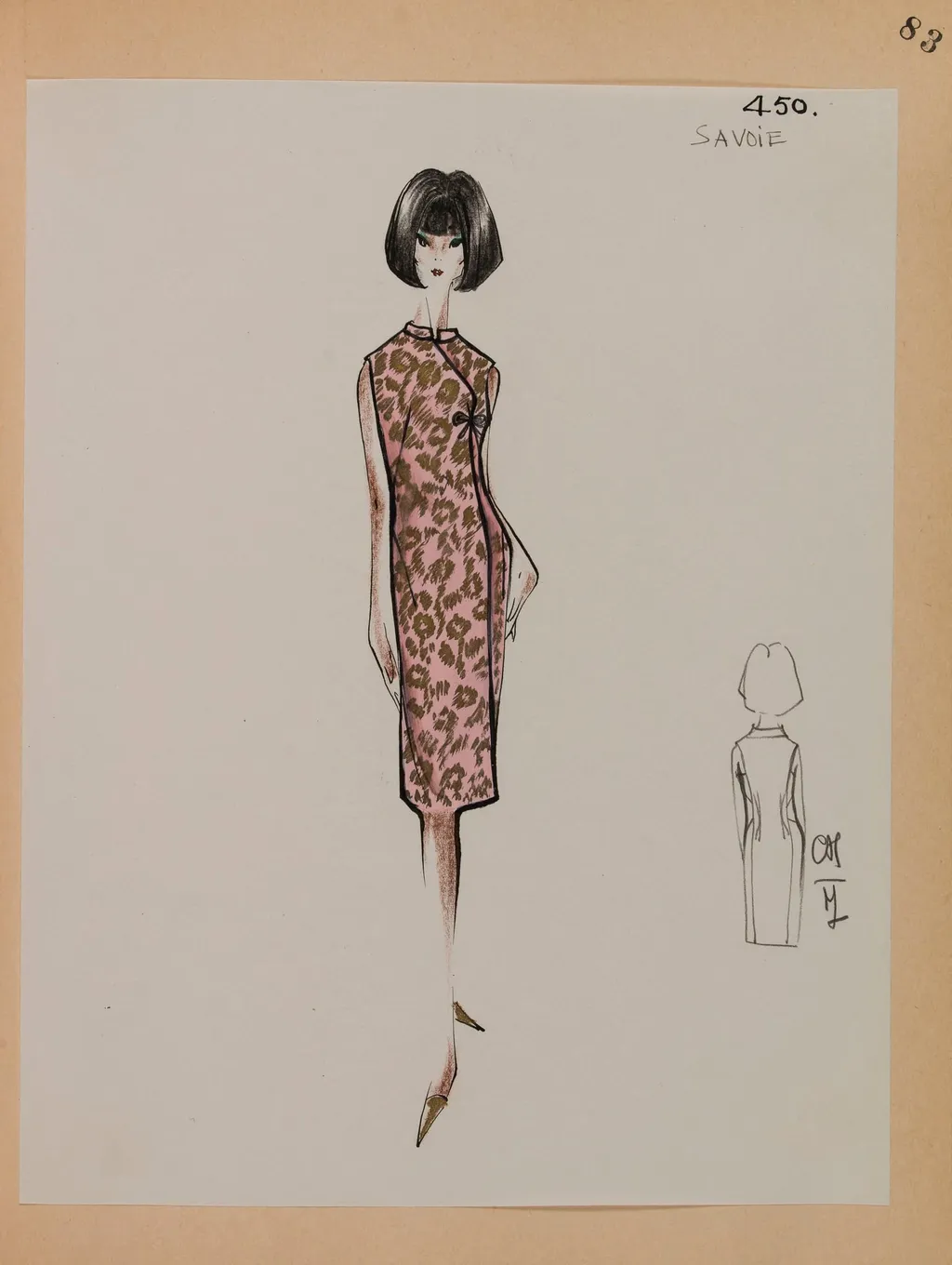
Savoie is a drawing by Marie-Louise Carven. It dates from 1963 and is held in the collection of the Palais Galliera - Musée de la Mode de la Ville de Paris.
About this work
Overview
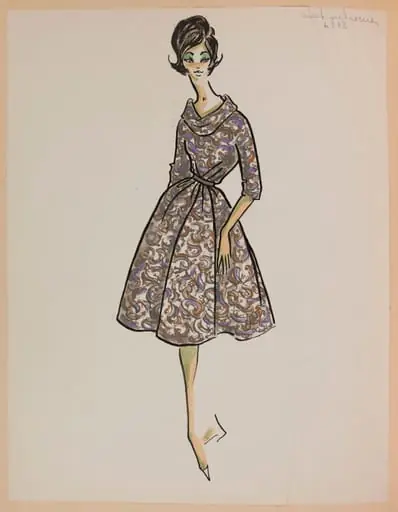
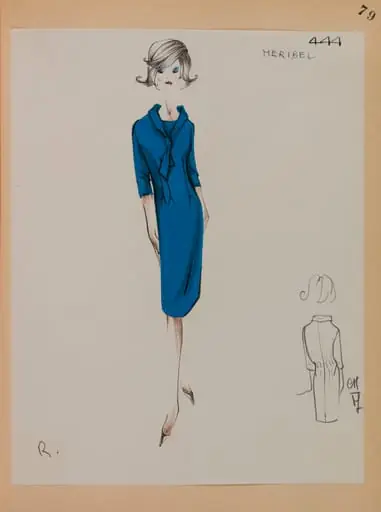
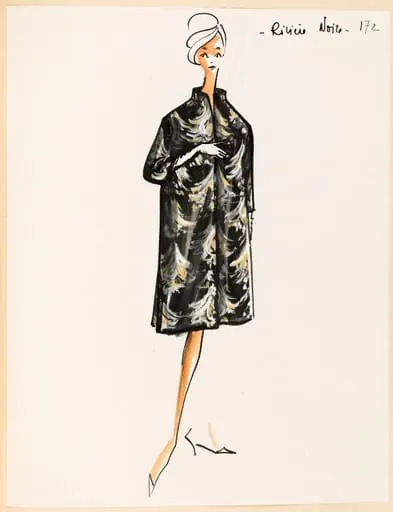
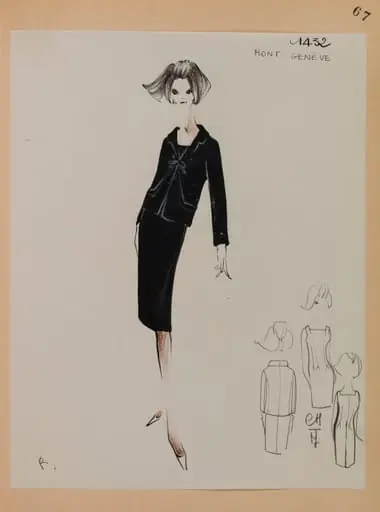
Created around 1963 by French designer Marie-Louise Carven, *Savoie* is a fashion illustration depicting a woman in a leopard-print dress.
Created around 1963 by French designer Marie-Louise Carven, *Savoie* is a fashion illustration depicting a woman in a leopard-print dress. Carven, who founded her label in 1945, was an early adopter of ready-to-wear fashion. This drawing, part of the Museum of Ethnography’s collection, reflects her focus on elegant, accessible designs for smaller frames, blending artistic presentation with commercial intent.
Subject & Meaning
The illustration centers on a woman with a bob haircut and high heels, dressed in a pink-and-brown leopard-print gown. The adjacent sketch of the same dress, rendered in simplified lines, signals the drawing’s purpose: to communicate the garment’s form and pattern clearly. The pose is poised but unembellished, prioritizing the clothing over theatricality, consistent with Carven’s pragmatic approach to femininity.
Technique & Style
Executed in ink or pencil, the drawing combines precise figure rendering with loose, suggestive outlines for the secondary dress sketch. The leopard print is rendered with rhythmic, irregular spots, suggesting texture without heavy shading. The limited palette of pink and brown, along with minimal background detail, directs attention to the garment’s pattern and silhouette, typical of mid-century fashion presentation.
History & Provenance
The drawing entered the Museum of Ethnography’s collection as part of a broader effort to document 20th-century fashion as cultural artifact. Carven’s brand, known for democratizing couture, produced such designs for both haute atelier and emerging prêt-à-porter markets. Its preservation reflects institutional recognition of fashion’s role in everyday life, beyond elite tailoring.
Context
In the early 1960s, Parisian designers increasingly turned to ready-to-wear as consumer demand shifted. Carven’s work, including *Savoie*, aligned with this trend by offering stylish, wearable designs for non-elite clients. The leopard print, then a symbol of modern luxury, was reimagined in softer tones, reflecting a quieter, more personal form of glamour emerging in postwar Europe.
Legacy
*Savoie* exemplifies Carven’s influence in bridging couture craftsmanship with mass-market appeal. Her emphasis on proportion and wearable prints helped redefine women’s fashion for a generation seeking both individuality and practicality. The drawing endures as a quiet testament to the quiet revolution in how clothing was conceived, produced, and consumed in the mid-century.
Artist & collection
Artist
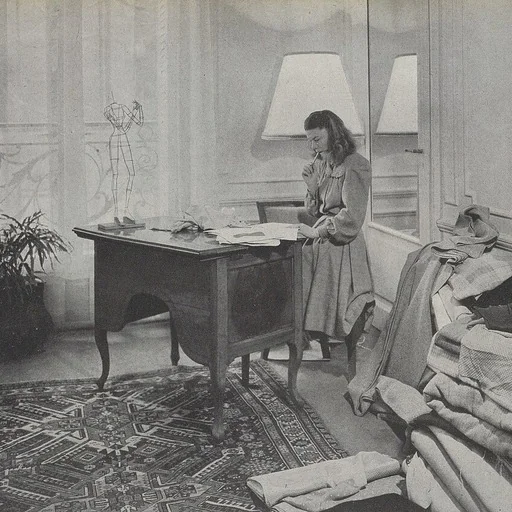
Marie-Louise Carven (31 August 1909 – 8 June 2015), born Carmen de Tommaso, was a French fashion designer who founded the house of Carven in 1945.
Museum
Palais Galliera - Musée de la Mode de la Ville de Paris
Continue through works from the same source collection.
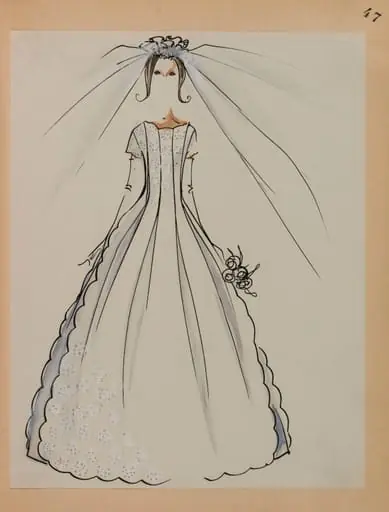 Robe de mariée festonnée et son voile
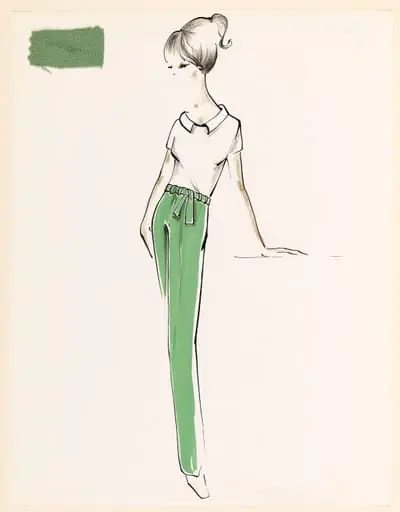 Haut blanc à manches courtes et pantalon vert à ceinture nouée
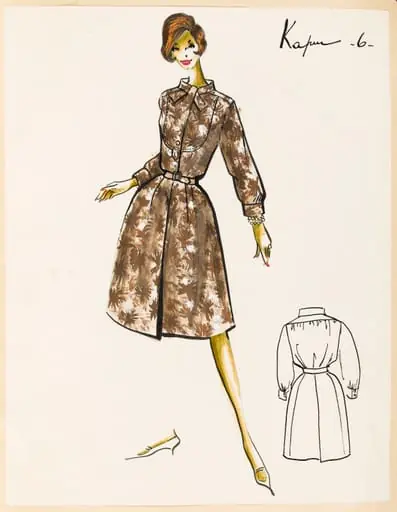 Kapur
Kapur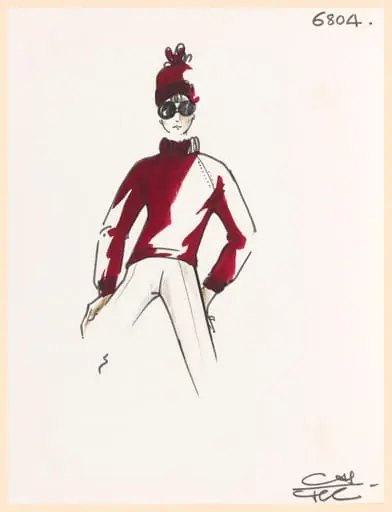 Pull-over à manches longues pourpre, bonnet assorti, pantalon et lunettes de soleil
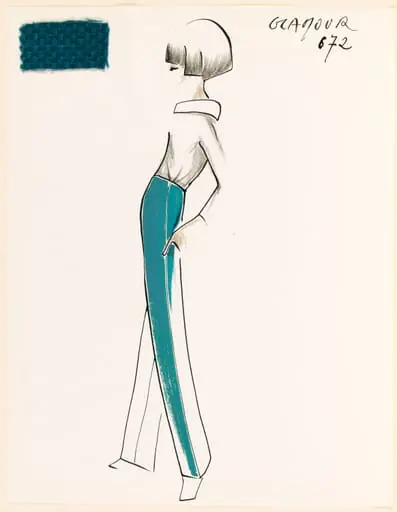 GLAMOUR
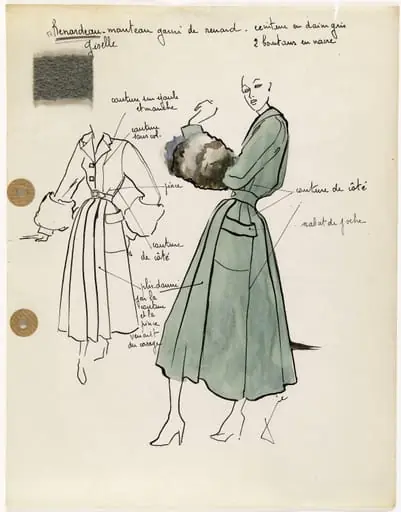 'Renardeau'
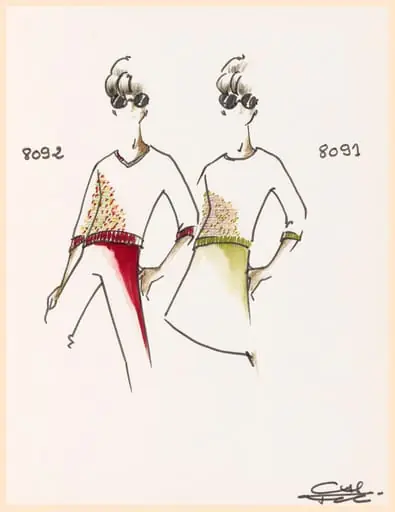 Pull-over à manches trois quarts et à encolure V à motifs multicolores, pantalon cerise et lunettes de soleil
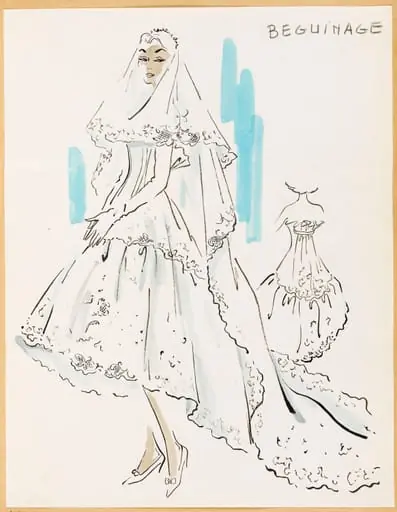 Béguinage