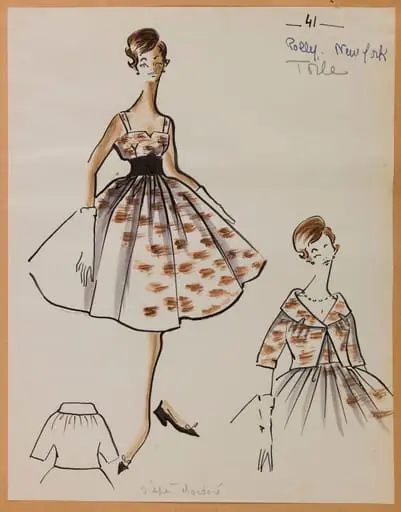
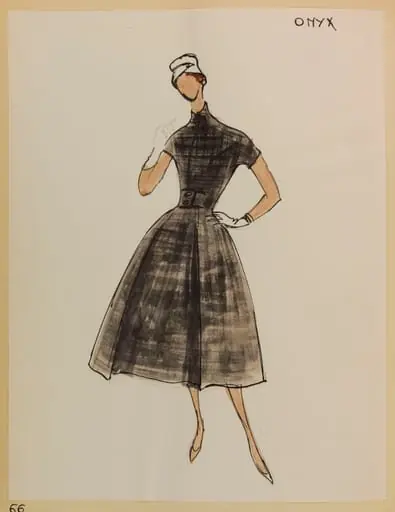
Artwork
Tailleur à jupe plissée
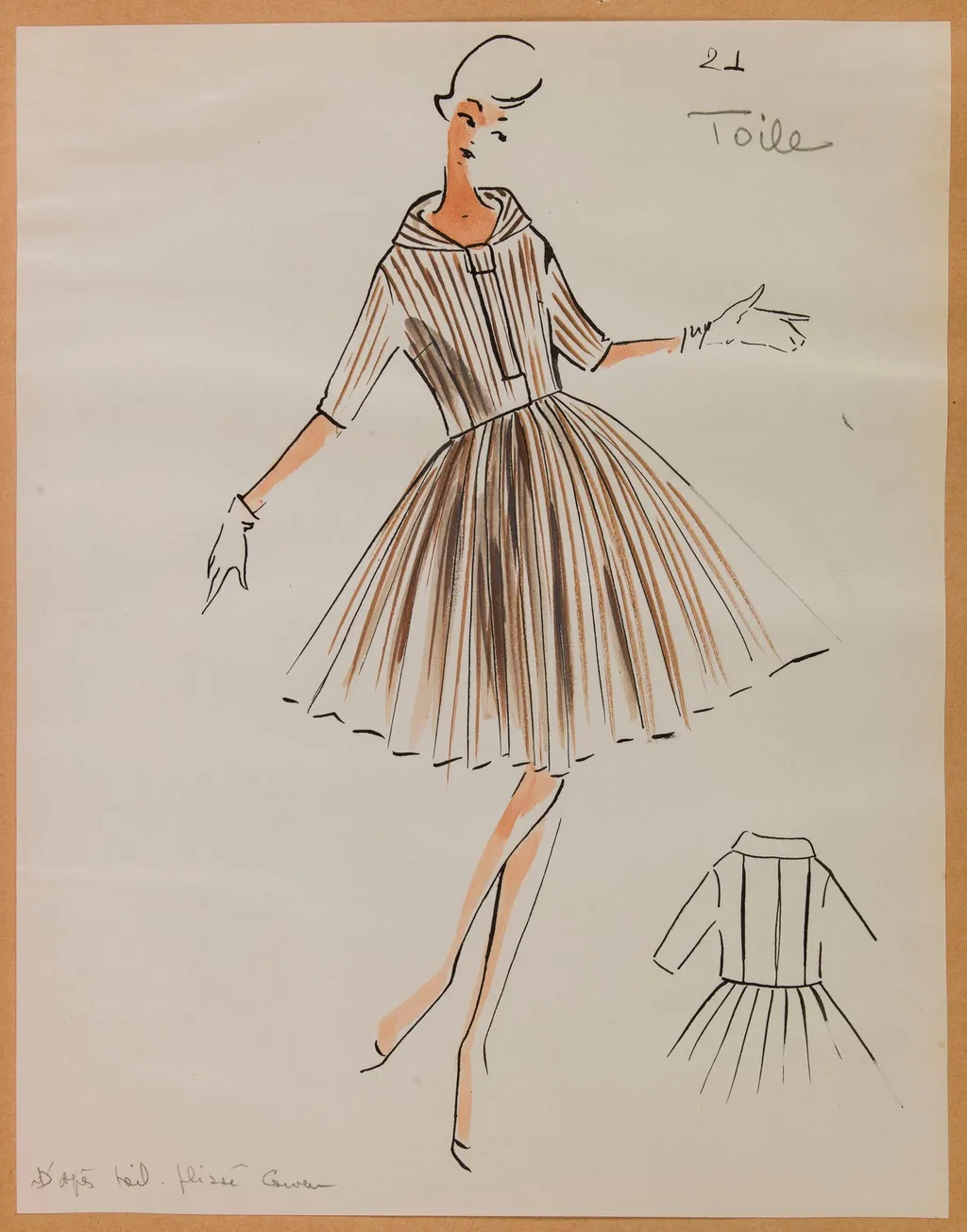
Tailleur à jupe plissée is a drawing by Marie-Louise Carven. It dates from 1957 and is held in the collection of the Palais Galliera - Musée de la Mode de la Ville de Paris.
About this work
Overview
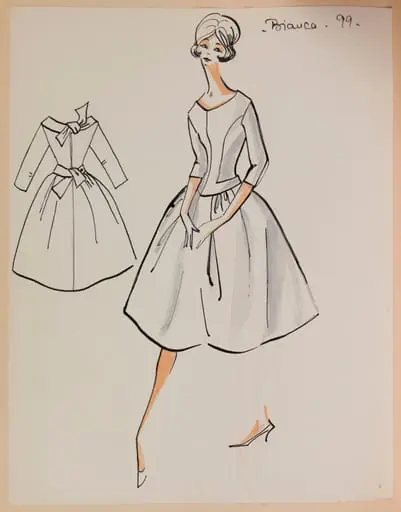
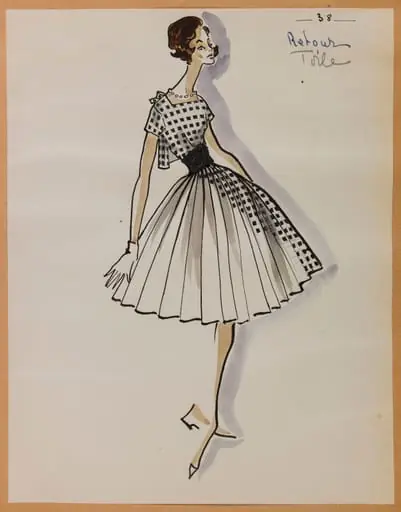
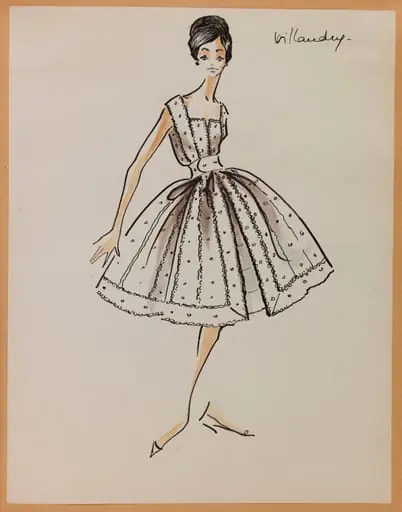
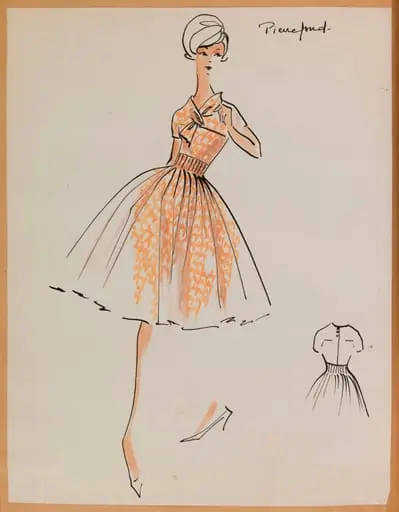
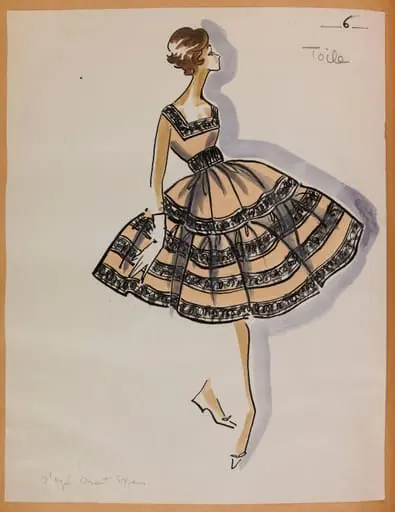
It illustrates a pleated skirt paired with a striped bodice and a hat, rendered in fine line work with minimal color.
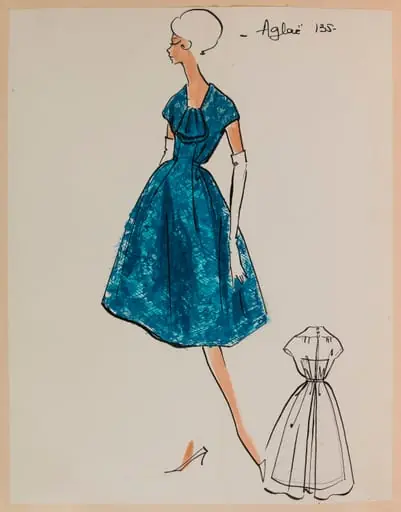
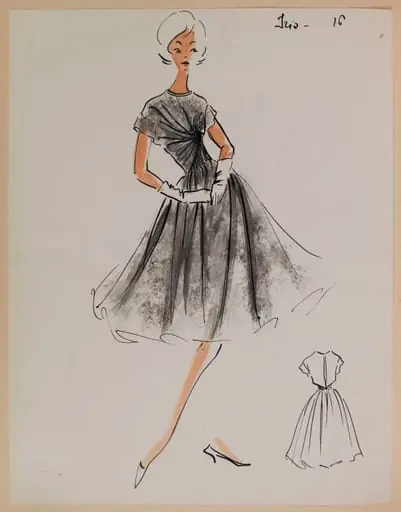
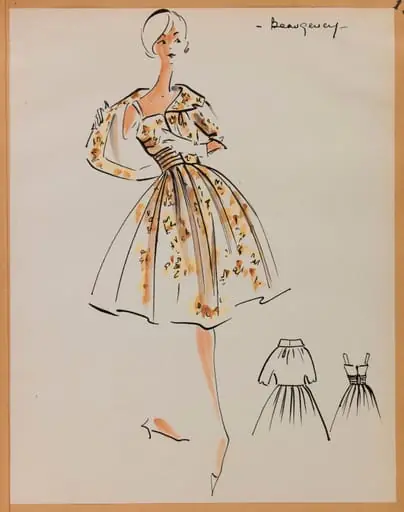
This drawing, dated circa 1957, depicts a tailored ensemble by French designer Marie-Louise Carven. It illustrates a pleated skirt paired with a striped bodice and a hat, rendered in fine line work with minimal color. The figure’s pose and the inclusion of a scaled-down version of the garment suggest it was intended as a design study or presentation piece, likely used to communicate the structure and movement of the clothing to clients or ateliers.
Subject & Meaning
The subject is a woman wearing a practical yet refined outfit characteristic of Carven’s aesthetic: structured yet lightweight, designed for everyday wear. The extended arm and downward-pointing hand imply motion, emphasizing the skirt’s drape and flow. The inclusion of a miniature version of the dress hints at the garment’s scalability and adaptability, reflecting Carven’s focus on wearable, accessible fashion for smaller frames.
Technique & Style
Rendered in ink or pencil on white paper, the drawing uses subtle tonal contrasts—brown and white stripes for the fabric, light orange for the skin—to define form without shading. The pleats are meticulously detailed, suggesting careful observation of fabric behavior. The clean background isolates the figure, directing attention to the silhouette and construction. The scaled-down duplicate in the corner functions as a technical annotation, common in fashion design drafts.
History & Provenance
Created during Carven’s active years as a designer, the drawing originates from her studio’s archive of design studies. It entered the collection of the Museum of Ethnography, likely through donation or acquisition focused on 20th-century material culture. Its presence there underscores its value not merely as fashion, but as a cultural artifact reflecting postwar French domestic life and evolving gendered dress norms.
Context
In the late 1950s, Parisian fashion was shifting toward ready-to-wear, and Carven was among the first to prioritize accessible, petite-sized designs. Her use of gingham, lace, and structured pleats responded to women’s desire for both elegance and ease. This drawing reflects that ethos: a balance of craftsmanship and practicality, aligned with broader societal changes in women’s roles and clothing consumption after the war.
Legacy
Carven’s work helped normalize the idea that fashion for smaller body types deserved thoughtful design. This drawing, preserved in a museum context, contributes to the recognition of fashion as a legitimate field of material culture. It stands as a quiet testament to the precision and intention behind garments once considered merely functional, now understood as expressions of design philosophy.
Artist & collection
Artist
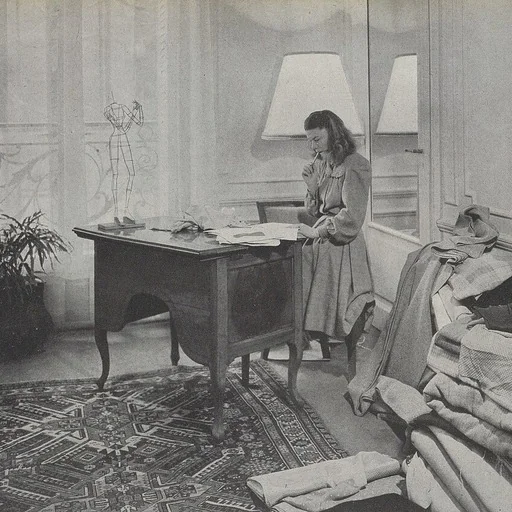
Marie-Louise Carven (31 August 1909 – 8 June 2015), born Carmen de Tommaso, was a French fashion designer who founded the house of Carven in 1945.
Museum
Palais Galliera - Musée de la Mode de la Ville de Paris
Continue through works from the same source collection.
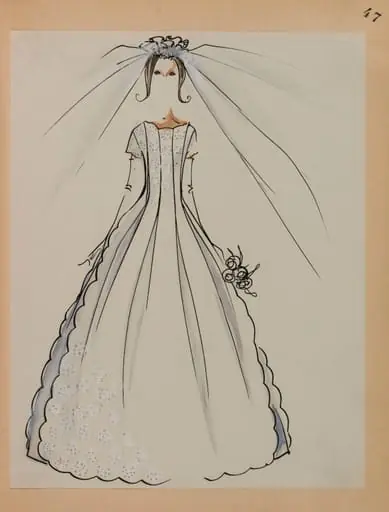 Robe de mariée festonnée et son voile
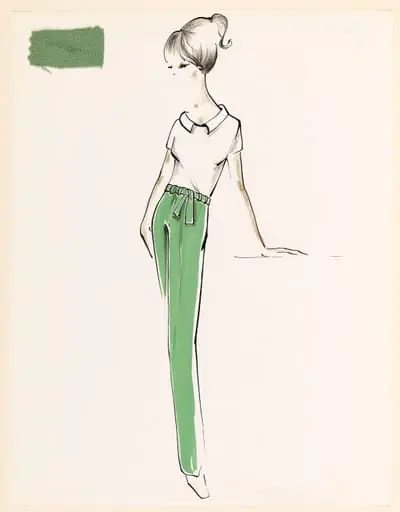 Haut blanc à manches courtes et pantalon vert à ceinture nouée
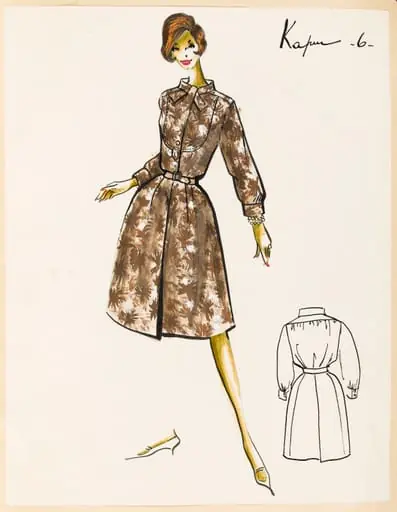 Kapur
Kapur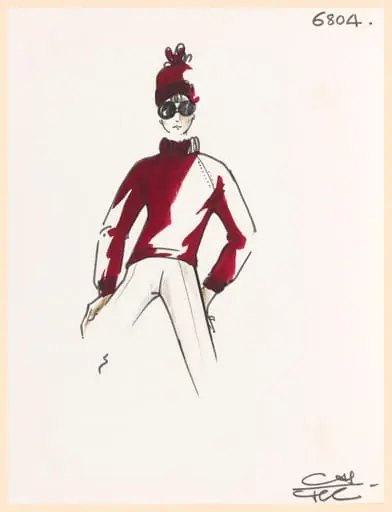 Pull-over à manches longues pourpre, bonnet assorti, pantalon et lunettes de soleil
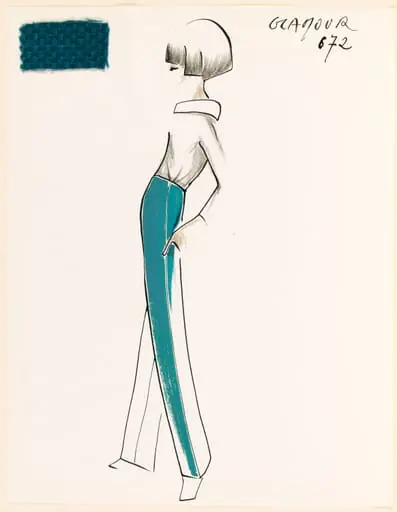 GLAMOUR
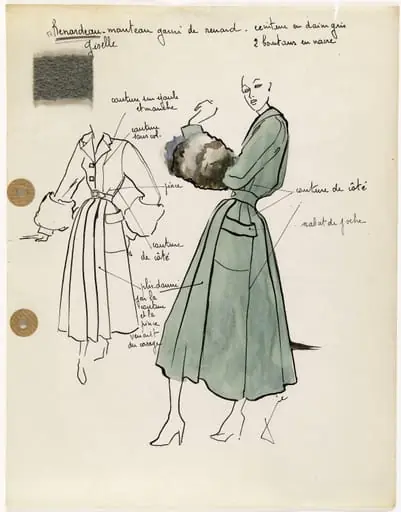 'Renardeau'
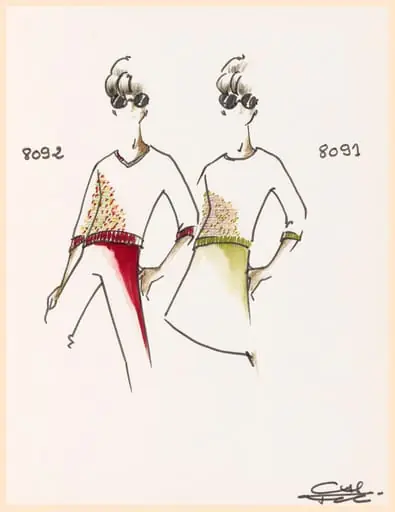 Pull-over à manches trois quarts et à encolure V à motifs multicolores, pantalon cerise et lunettes de soleil
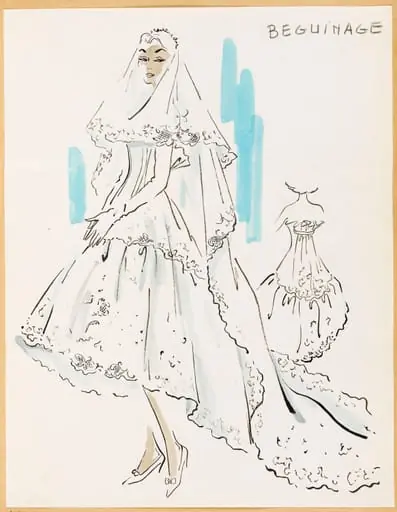 Béguinage