Artwork
Allegorical portrait of Marchese Niccolò Maria Pallavicini (1650-1714)
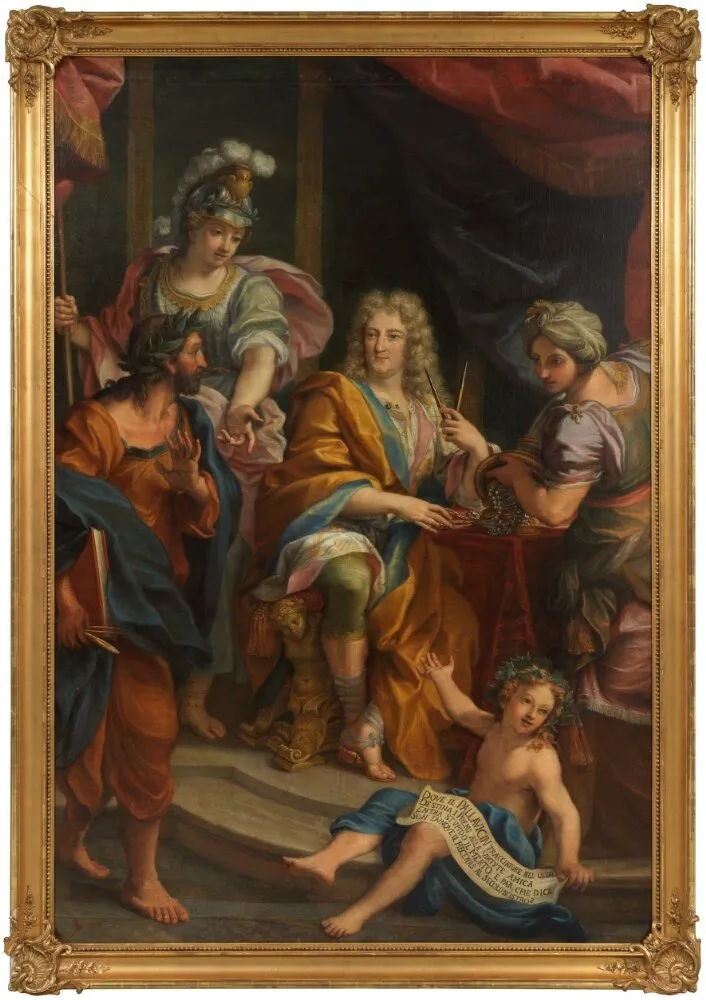
Allegorical portrait of Marchese Niccolò Maria Pallavicini (1650-1714) is an oil painting by the Rococo painting artist Unknown. It dates from 1700 and is held in the collection of the Nationalmuseum.
About this work
Overview
Dark background tones heighten the vibrancy of the costumes and focus attention on the central figure through strong contrasts of light and shadow.
This oil painting depicts Marchese Niccolò Maria Pallavicini, an Italian nobleman of the late 17th century, seated at a table amid a group of figures in ornate attire. The composition centers on his quiet activity—writing or sketching—while others observe. Dark background tones heighten the vibrancy of the costumes and focus attention on the central figure through strong contrasts of light and shadow.
Subject & Meaning
The scene is not a literal portrait but an allegory, presenting the marchese as a patron of learning and authority. Figures surrounding him hold symbols of power and knowledge—a scepter and a book—suggesting his role in governance and intellectual life. The elaborate costumes imply a ceremonial or symbolic setting, reinforcing his status within the cultural and political elite of his time.
Technique & Style
The artist employs chiaroscuro to model forms and create spatial depth, directing the viewer’s gaze toward the marchese’s illuminated figure. Richly detailed fabrics in red, gold, and blue contrast against the muted background, enhancing the theatricality of the scene. Brushwork is precise in rendering textures, particularly in the folds of garments and the surface of the table, reflecting a refined Baroque sensibility.
History & Provenance
Commissioned during Pallavicini’s lifetime, the painting likely originated in Genoa, where he held influence. It remained within family collections for generations before entering public ownership. Documentation links it to the Pallavicini family’s tradition of commissioning allegorical imagery to affirm their social and political standing in early 18th-century Italy.
Context
In late 17th-century Italy, noble families used portraiture not merely to record likeness but to project identity through symbolic narratives. This work aligns with a broader trend among aristocrats to associate themselves with intellectual and civic virtues. The presence of allegorical figures reflects the humanist ideals still influential in elite circles despite the dominance of absolutist courts.
Legacy
The painting endures as a document of aristocratic self-representation in the Baroque era. While not widely exhibited, it contributes to scholarly understanding of how Italian nobility visualized authority beyond mere likeness. Its symbolic language offers insight into the intersection of personal identity and public role in early modern European society.
Artist & collection

 Domestic Scene
 Giacomo and Cardinal Marco, investing Andrea, Abbot of San Zeno, with his Benefice
 The Nymph of Fontainebleau
 Portrait of a Woman
 Madonna and Child with Saints in the Enclosed Garden
 Venus and Minerva
 Family Group of Four on Sofa
 Wall painting from Room H of the Villa of P. Fannius Synistor at Boscoreale
 Allegori över konung Karl XI:s fredliga regeringr
 The Arts, represented by the royal couple Johann Wilhelm von der Pfalz and Maria Anna Louisa de' Medici
 Liberal arts pay homage to Johann Wilhelm, Palatine of the Rhine, and his wife
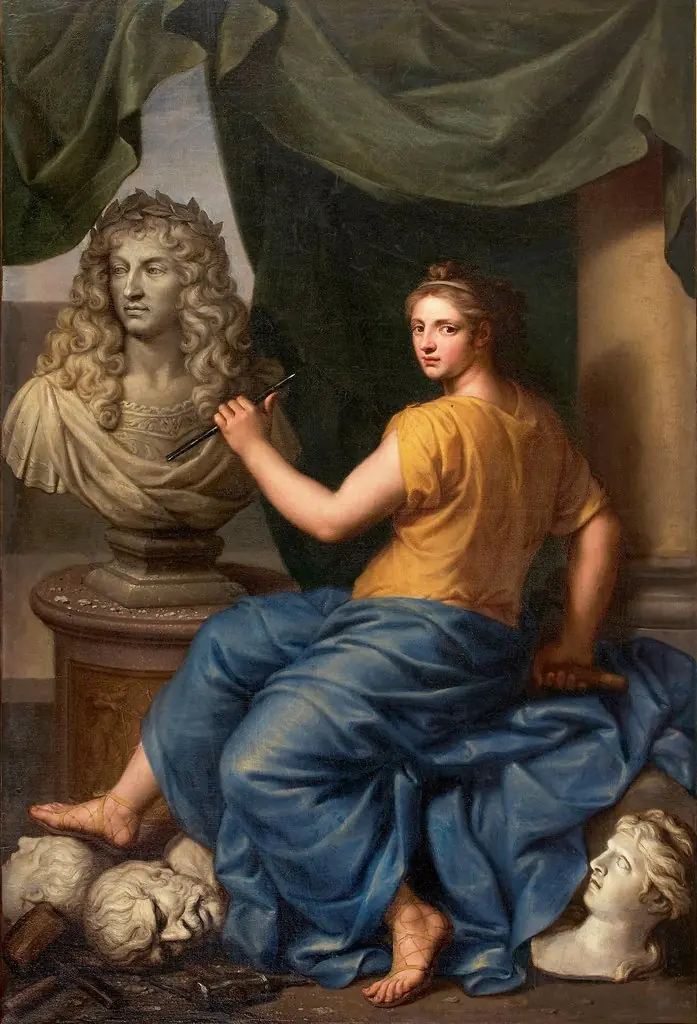 La Sculpture travaillant au buste du roi Louis XIV
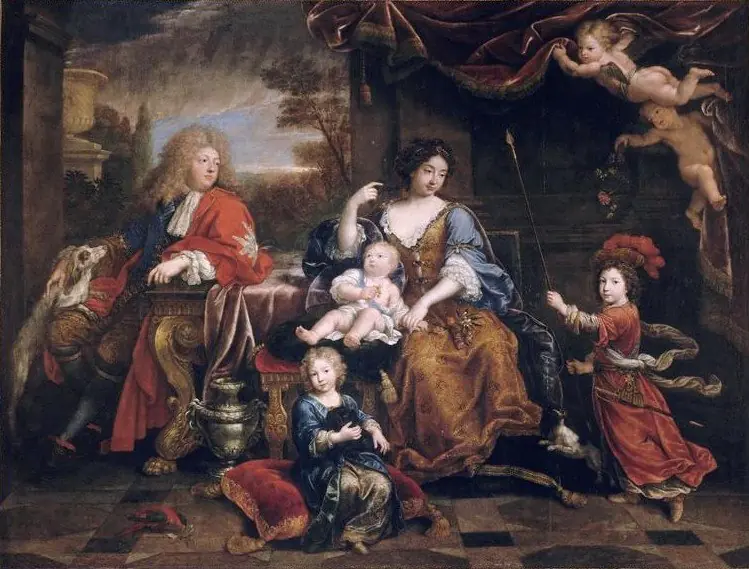 The family of the Grand Dauphin, Louis of France (1661-1711)
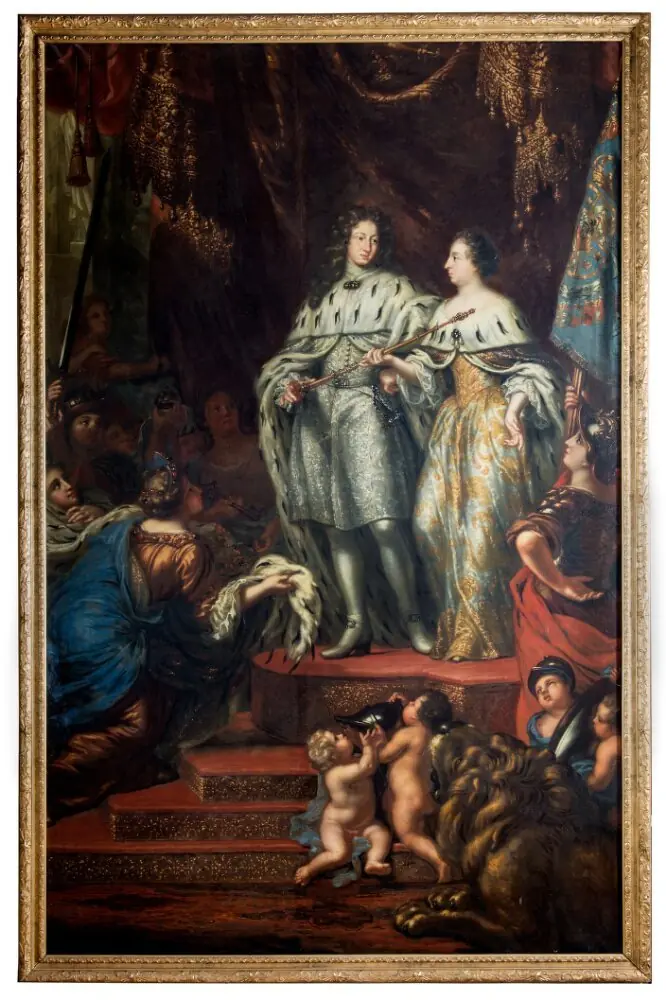 Allegori över hur konung Karl XI mottager regeringen av sin moder Hedvig Eleonora
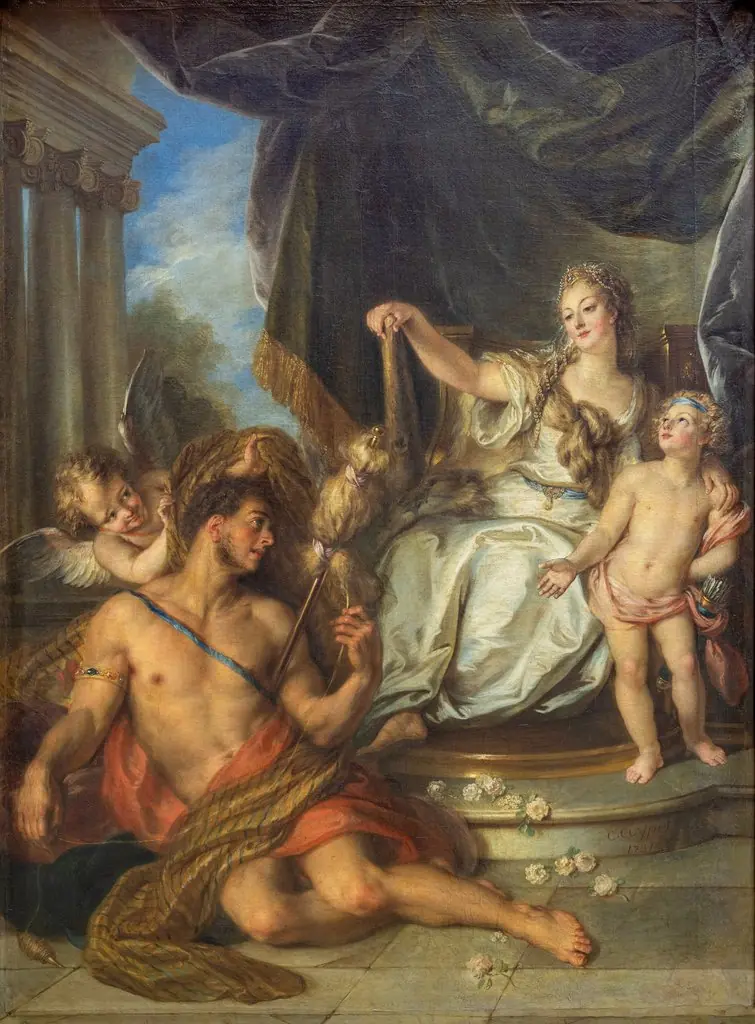 Hercules and Omphale
 Untitled
 The Triumph of History over Time
 Emperor Charles VI and Gundacker, Count Althann
 Bathsheba at her bath
 Toilet of Venus