Artwork
Childhood portrait of Adam Potocki
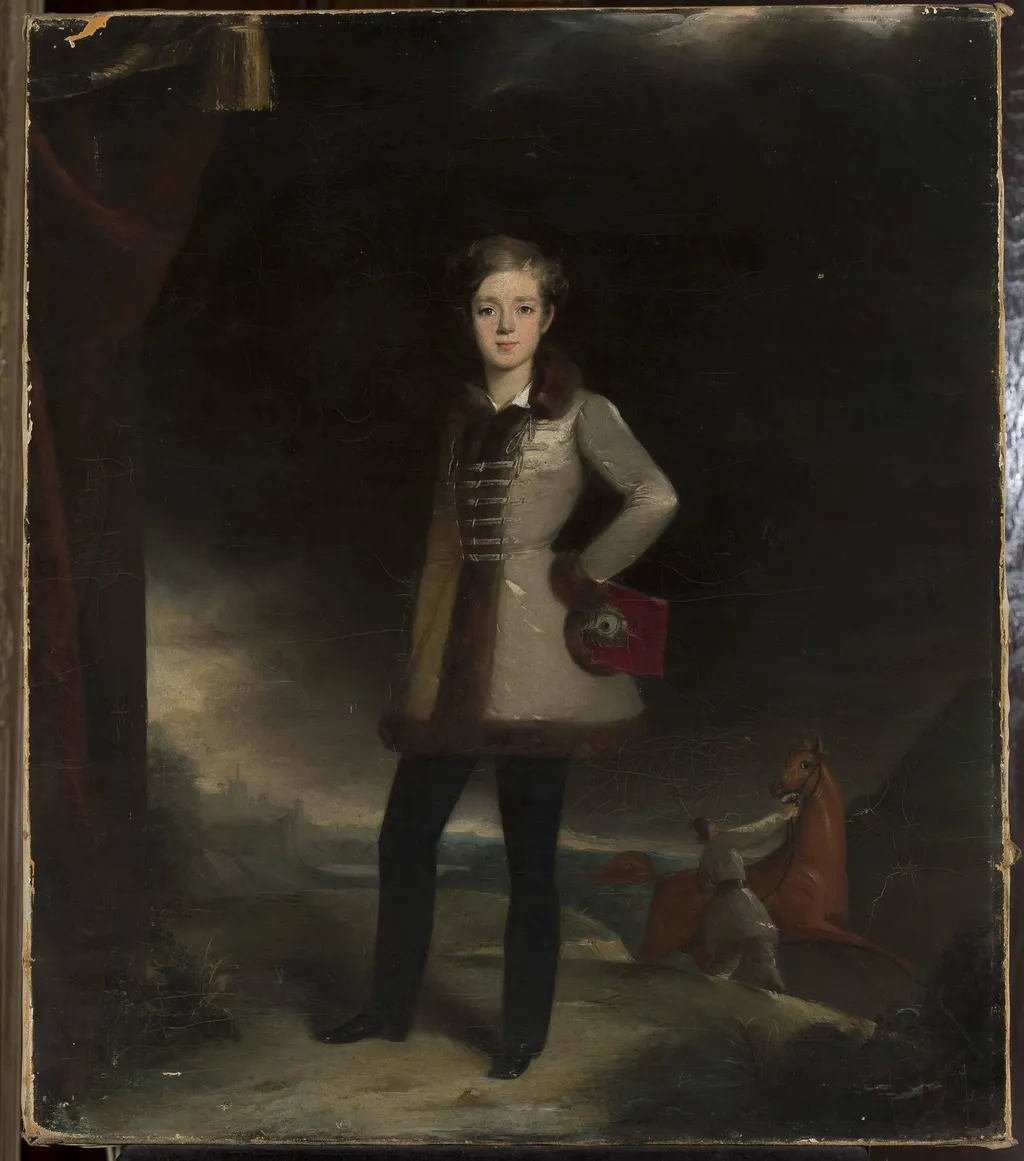
Childhood portrait of Adam Potocki is an oil painting by Unknown. It dates from 1830 and is held in the collection of the National Museum in Warsaw. This oil painting captures Adam Potocki as a young boy, rendered with careful attention to detail and atmospheric depth.
About this work
Overview
This oil painting captures Adam Potocki as a young boy, rendered with careful attention to detail and atmospheric depth.
This oil painting captures Adam Potocki as a young boy, rendered with careful attention to detail and atmospheric depth. Set against a shadowed backdrop, the figure emerges through deliberate contrasts of light and dark. The composition centers on the child’s poised stance and direct gaze, emphasizing presence over narrative. The inclusion of a horse and dog in the rear adds subtle context without distracting from the subject.
Subject & Meaning
Adam Potocki, depicted in formal attire, appears self-assured, his posture and expression conveying dignity beyond his years. The red book in his hand may symbolize education or lineage, common motifs in aristocratic portraiture of the period. The animals behind him—horse and dog—likely reference his social standing and domestic life, reinforcing his identity as a member of a noble family rather than a mere child.
Technique & Style
The artist employs chiaroscuro to model the boy’s form, using sharp transitions between light and shadow to define volume and texture. The white fur trim and fabric folds catch the light, while the dark background recedes, isolating the figure. Brushwork is precise yet restrained, favoring clarity over flourish. The palette remains muted except for the vivid red of the book, which anchors the composition visually.
History & Provenance
The portrait was likely commissioned by the Potocki family, prominent Polish nobility, during the late 18th or early 19th century. It remained within the family’s collection for generations before entering a public institution. Documentation is limited, but stylistic elements align with portraiture practices among Eastern European aristocracy during the period of Romanticism’s rise.
Context
In early 19th-century Poland, portraits of noble children served as assertions of lineage and social continuity, especially amid political instability. The emphasis on quiet confidence, rather than overt grandeur, reflects a shift toward intimate, psychologically nuanced representation. The inclusion of animals and minimal setting echoes broader European trends in aristocratic portraiture, where nature and domesticity subtly affirmed status.
Legacy
The painting endures as a quiet example of how portraiture conveyed identity beyond mere likeness. Its restrained drama and psychological subtlety distinguish it from more ornate contemporary works. Though not widely exhibited, it contributes to the understanding of how Polish nobility used visual culture to preserve familial prestige during a turbulent historical era.
Artist & collection

 Domestic Scene
 Giacomo and Cardinal Marco, investing Andrea, Abbot of San Zeno, with his Benefice
 The Nymph of Fontainebleau
 Portrait of a Woman
 Madonna and Child with Saints in the Enclosed Garden
 Venus and Minerva
 Family Group of Four on Sofa
 Wall painting from Room H of the Villa of P. Fannius Synistor at Boscoreale
 Ferdinand Charles, Archduke of Further Austria
 Portrait of Maria Luisa of Savoy, Queen of Savoy
 Portrait of Frederik V in Anointment Robe
 Fredrik V, 1723-66, konung av Danmark och Norge
 Ivan III or Ivan VI Antonovich. Full-length Portrait
 Portrait of Francis of Austria (1768-1835)
 Portrait of Adrien Maurice de Noailles (1678-1766)
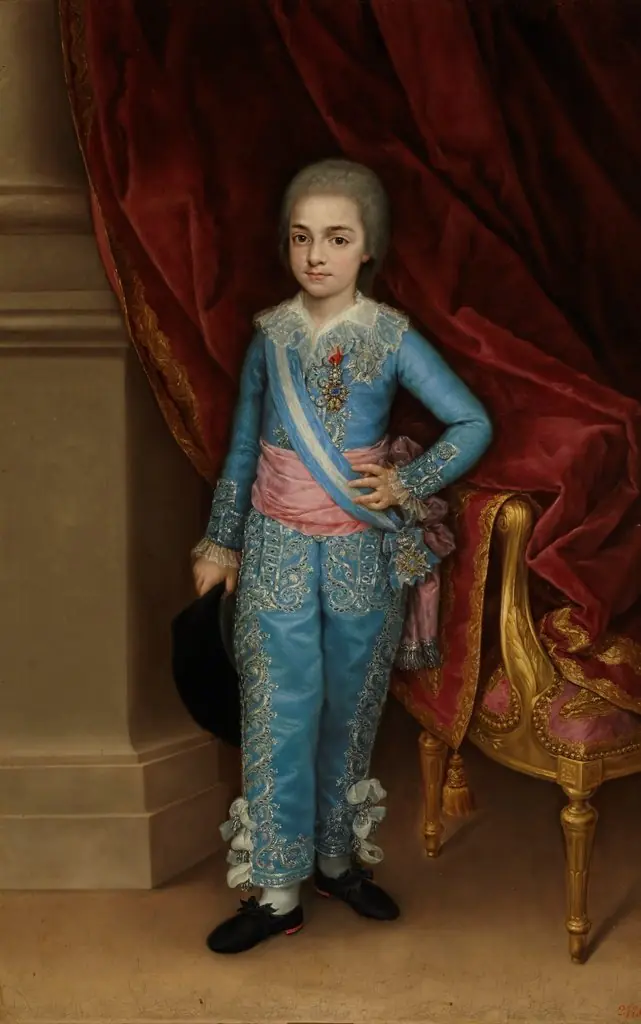 Ferdinand VII as a Boy
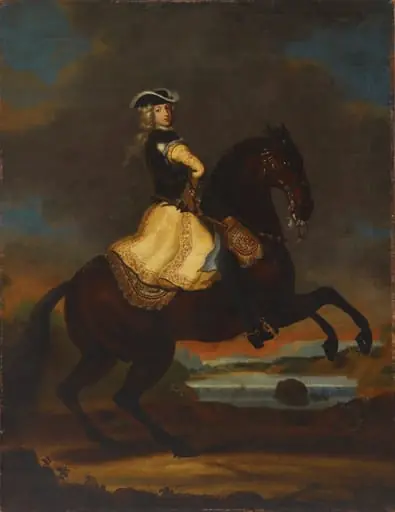 Kuningas Kaarle XII
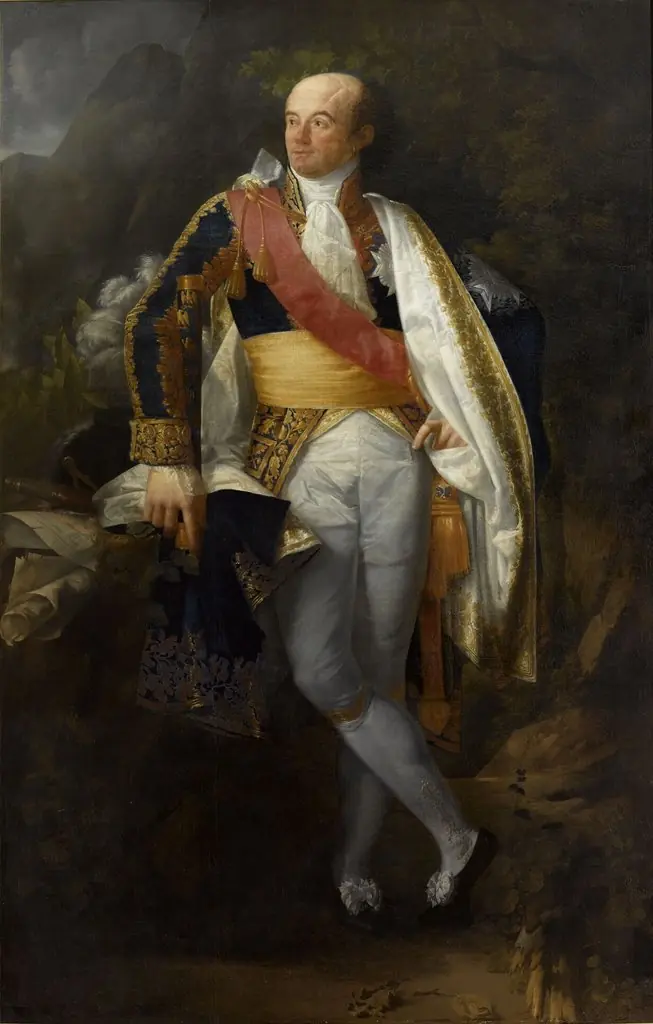 Dominique-Catherine, marquis Pérignon, maréchal de France (1754-1818)
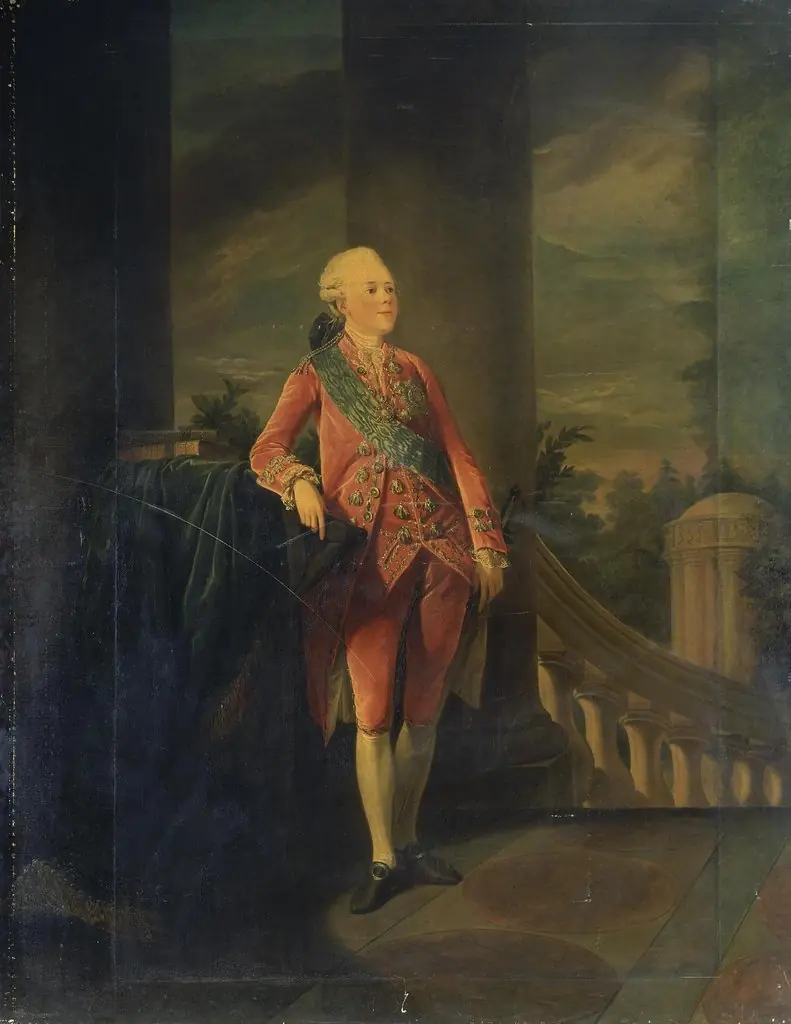 Portrait of Grand Duke Pavel Petrovich
 Childhood portrait of Paul I