Artwork
Woman with a pipe
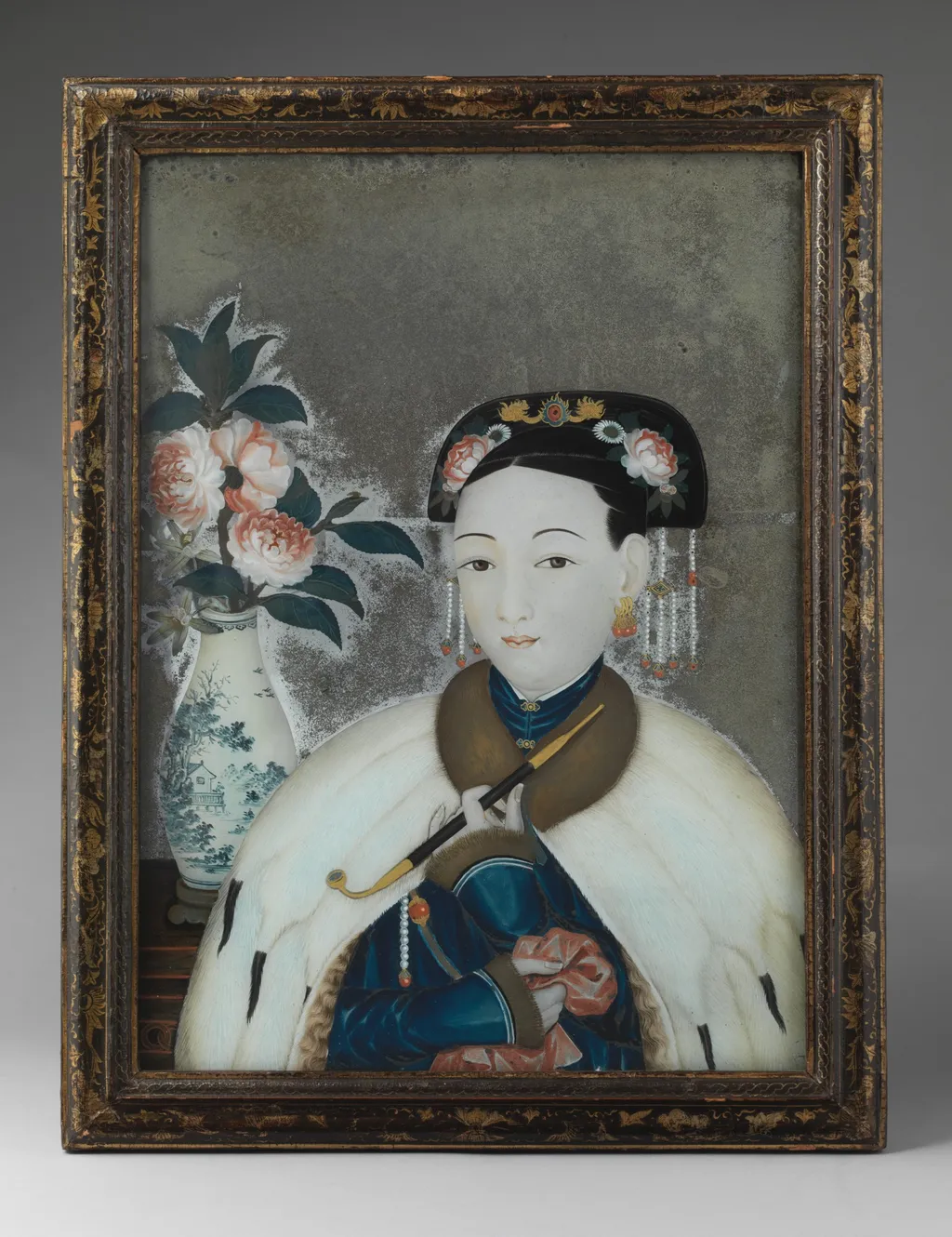
Woman with a pipe is an unspecified painting by the Rococo painting artist Unknown. It dates from 1767 and is held in the collection of the Metropolitan Museum of Art. This painting portrays a woman dressed in traditional Chinese garments, including a blue jacket and a white fur-lined cape.
About this work
Overview
This painting portrays a woman dressed in traditional Chinese garments, including a blue jacket and a white fur-lined cape.
This painting portrays a woman dressed in traditional Chinese garments, including a blue jacket and a white fur-lined cape. She holds a pipe in her right hand, a gesture that invites contemplation. The composition is anchored by a vase of pink flowers on the left, echoing the floral motifs in her headpiece. The quiet arrangement suggests a moment of stillness, balancing personal ritual with decorative elements.
Subject & Meaning
The woman’s posture and attire evoke a sense of dignified solitude. The pipe, often associated with leisure or introspection, contrasts subtly with the ornate headpiece, hinting at layered social identity. The floral decorations—on her head and in the vase—may symbolize transience or cultivated beauty, reinforcing a theme of quiet elegance amid everyday ritual.
Technique & Style
The artist employs subtle contrasts of light and shadow to model the figure’s form, particularly along the curve of the cape and the folds of the jacket. The background remains muted, directing focus to the subject. Delicate brushwork defines the texture of fur and fabric, while the flowers are rendered with soft precision, contributing to a restrained, harmonious aesthetic.
History & Provenance
The painting’s origins are not fully documented, but its stylistic elements suggest it was created during a period of cross-cultural artistic exchange in early 20th-century China. It likely emerged from a studio familiar with both traditional Chinese portraiture and emerging modernist influences. Its current location and ownership history remain unclear in available records.
Context
During the early 1900s, Chinese artists increasingly blended indigenous motifs with Western techniques, responding to both domestic change and international exposure. This work reflects that tension: the subject’s attire is traditional, yet the composition’s balance and lighting show awareness of European realism. The pipe, uncommon in classical depictions, may signal evolving gender roles or personal expression.
Legacy
Though not widely exhibited, the painting contributes to a quieter strand of early modern Chinese art that prioritized introspection over spectacle. Its focus on a solitary female figure, adorned yet unidealized, offers a counterpoint to more overtly political or mythological works of the era. It remains a quiet testament to individual presence within shifting cultural landscapes.
Artist & collection

 Domestic Scene
 Giacomo and Cardinal Marco, investing Andrea, Abbot of San Zeno, with his Benefice
 The Nymph of Fontainebleau
 Portrait of a Woman
 Madonna and Child with Saints in the Enclosed Garden
 Venus and Minerva
 Family Group of Four on Sofa
 Wall painting from Room H of the Villa of P. Fannius Synistor at Boscoreale