Artwork
明代帝后半身像册(二)-孝端显皇后
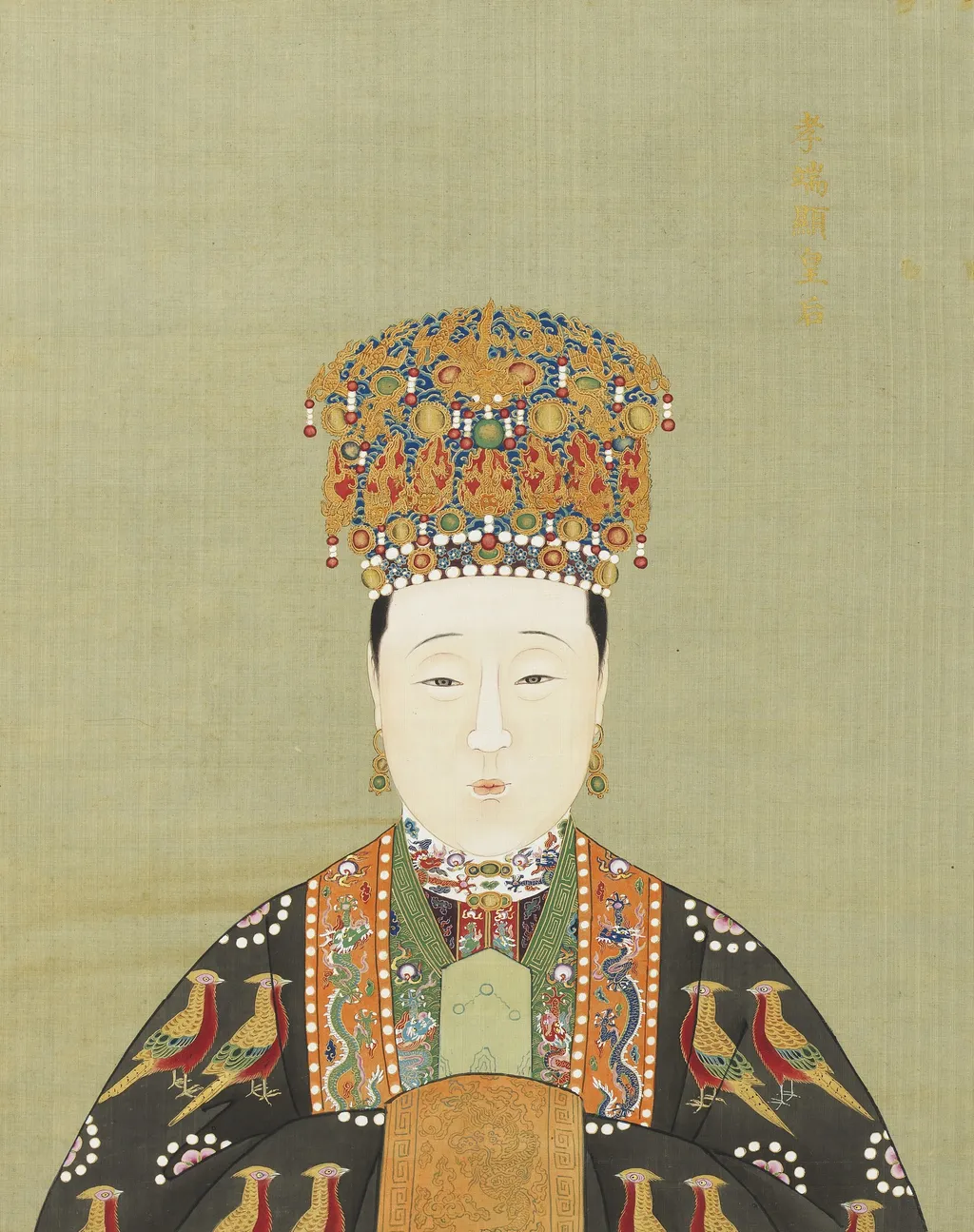
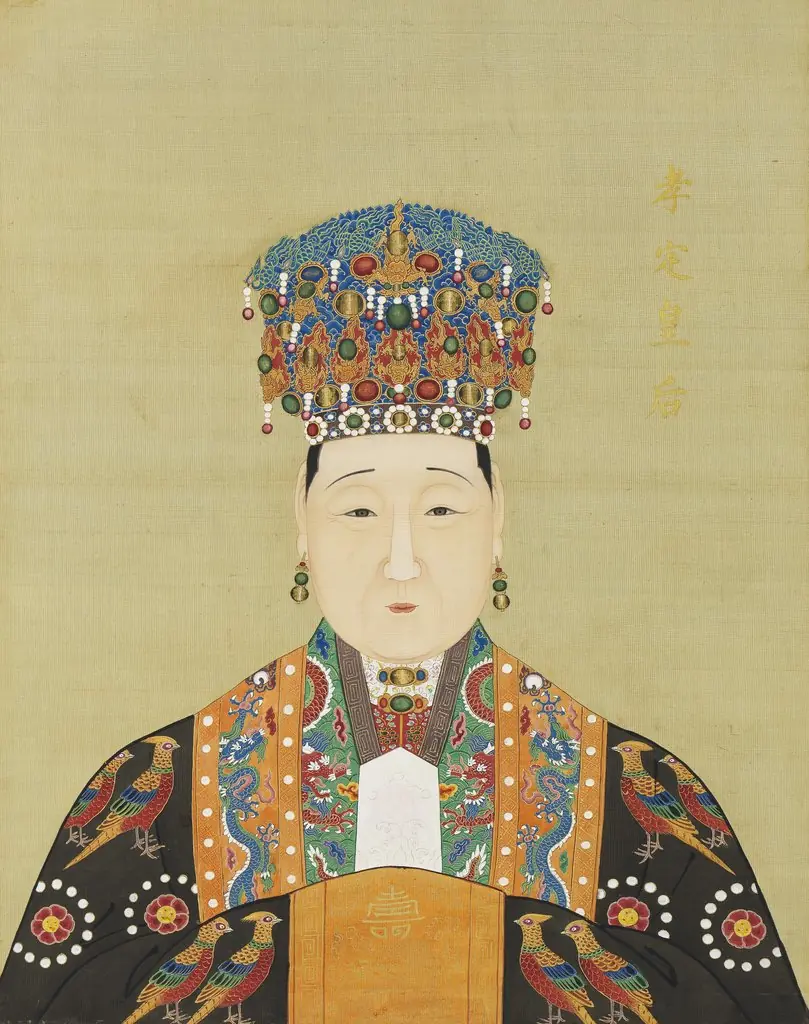
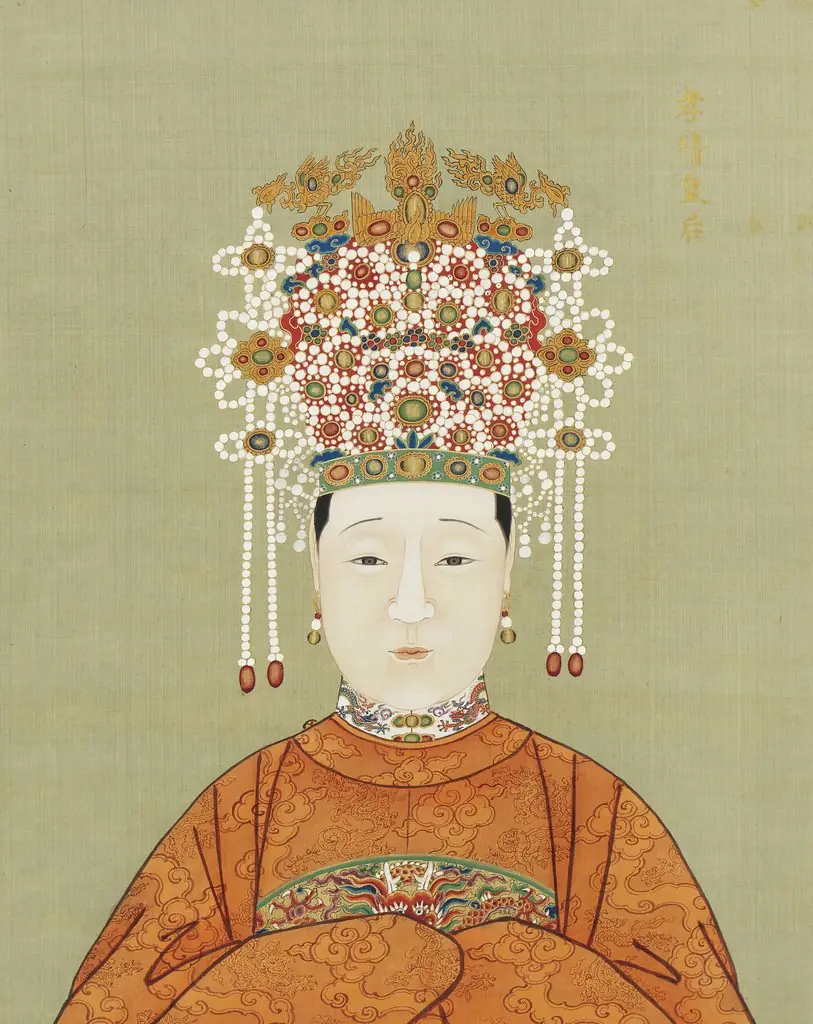
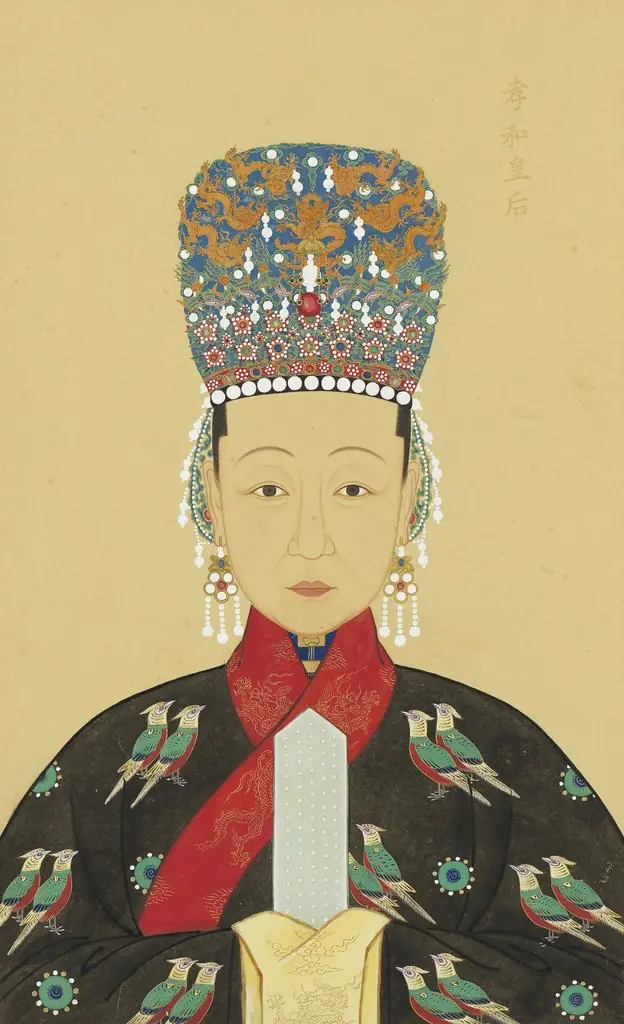
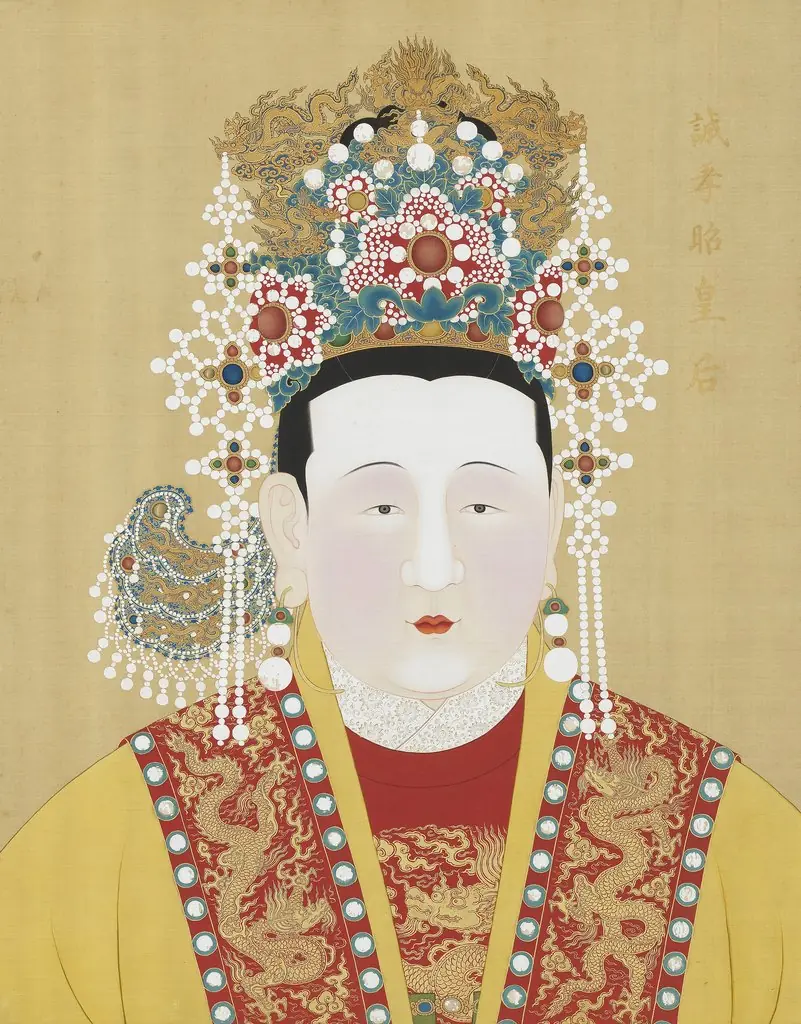
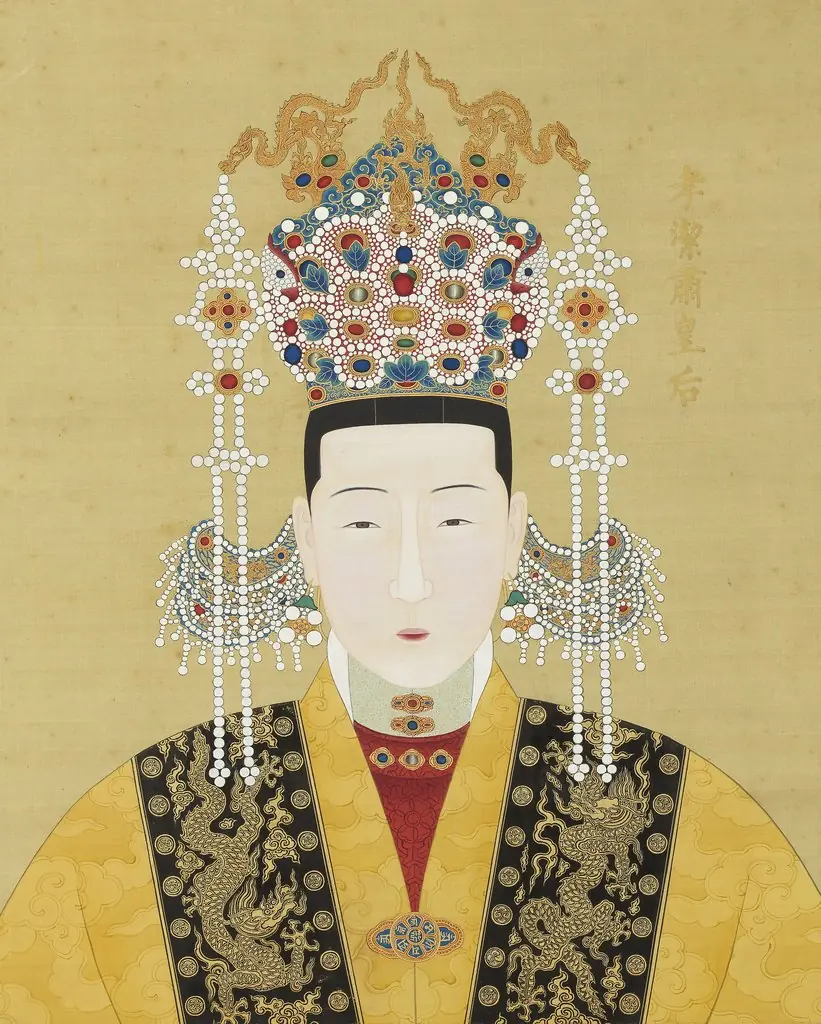
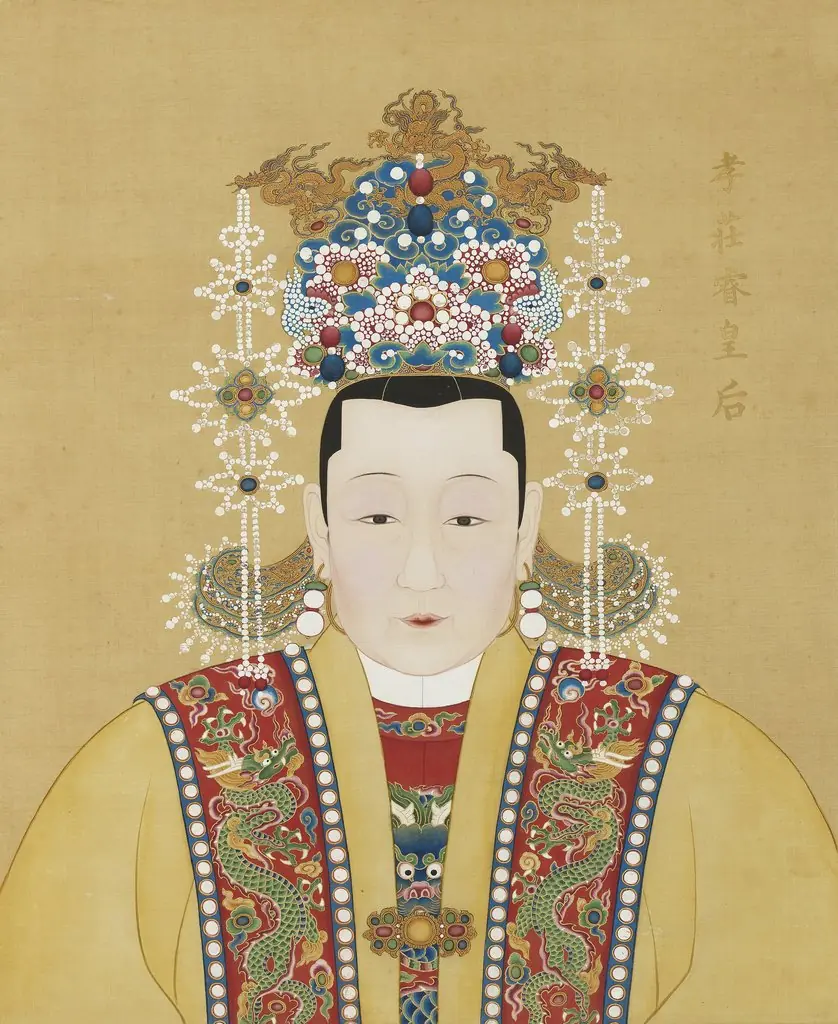
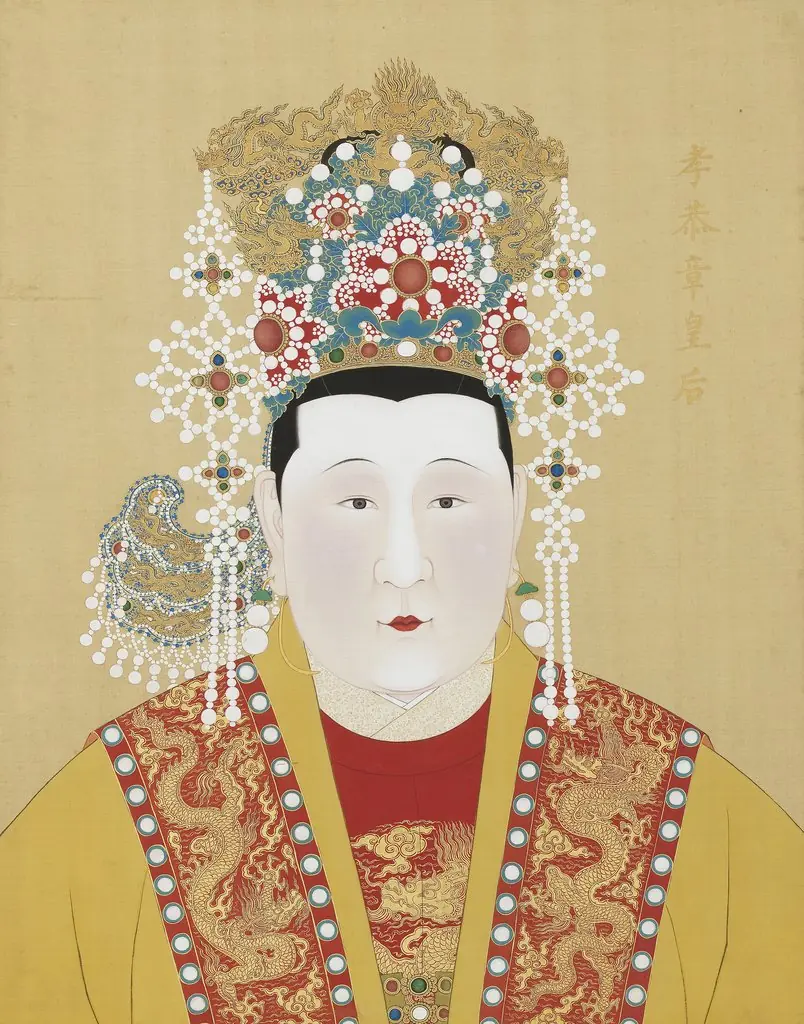
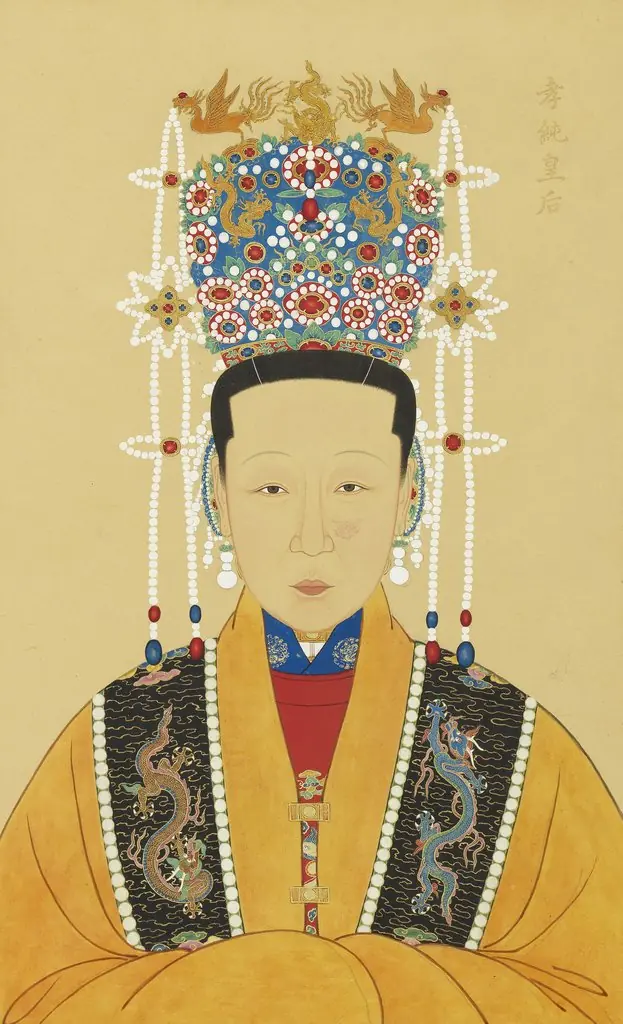
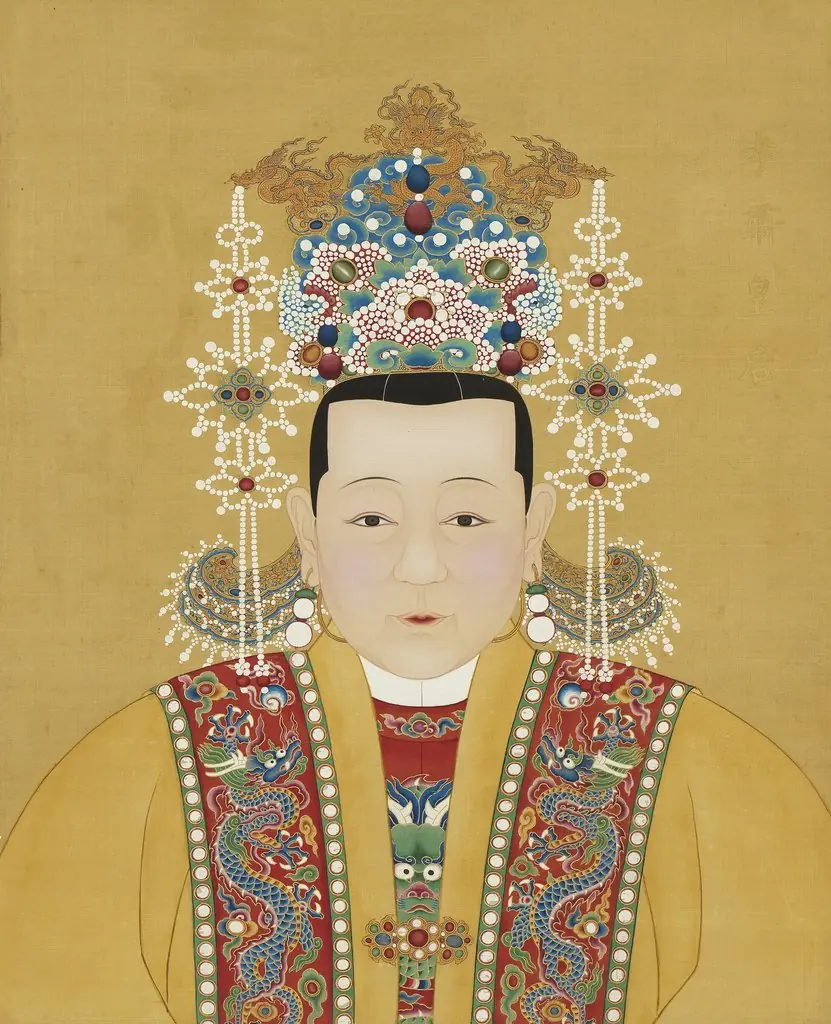
明代帝后半身像册(二)-孝端显皇后 is an unspecified painting by Unknown. It dates from 1850 and is held in the collection of the National Palace Museum. This portrait is one of a pair of half-length imperial portraits from the Ming dynasty, depicting Empress Xiaoduan.
About this work
Overview
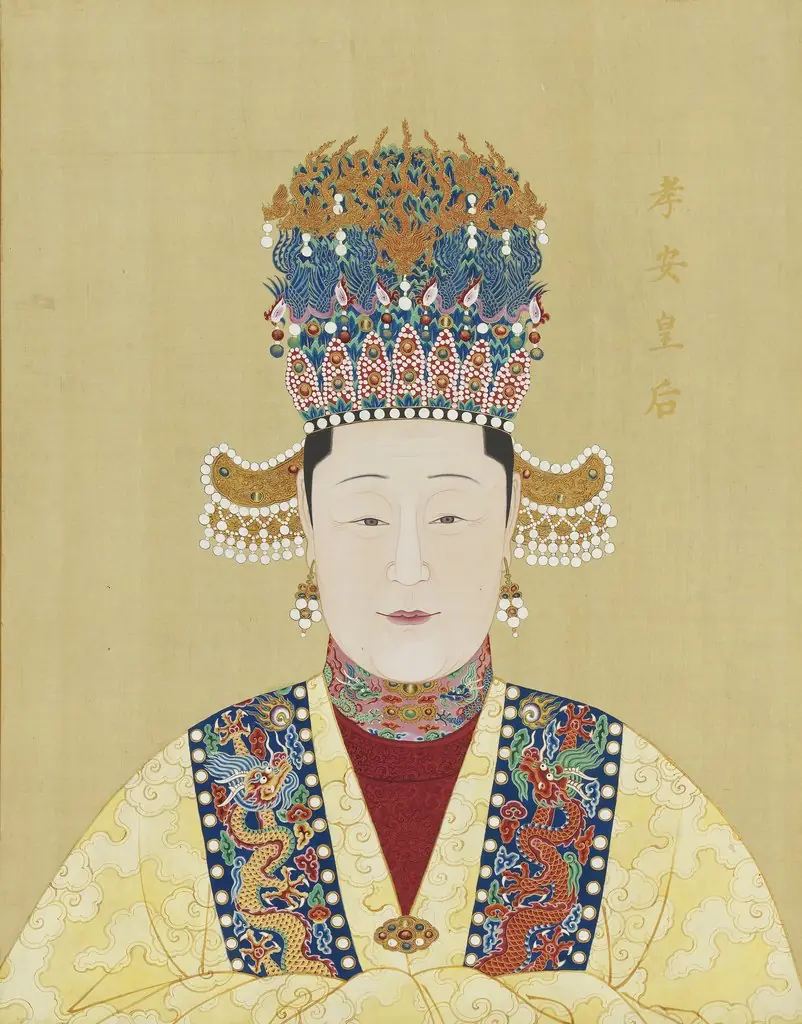
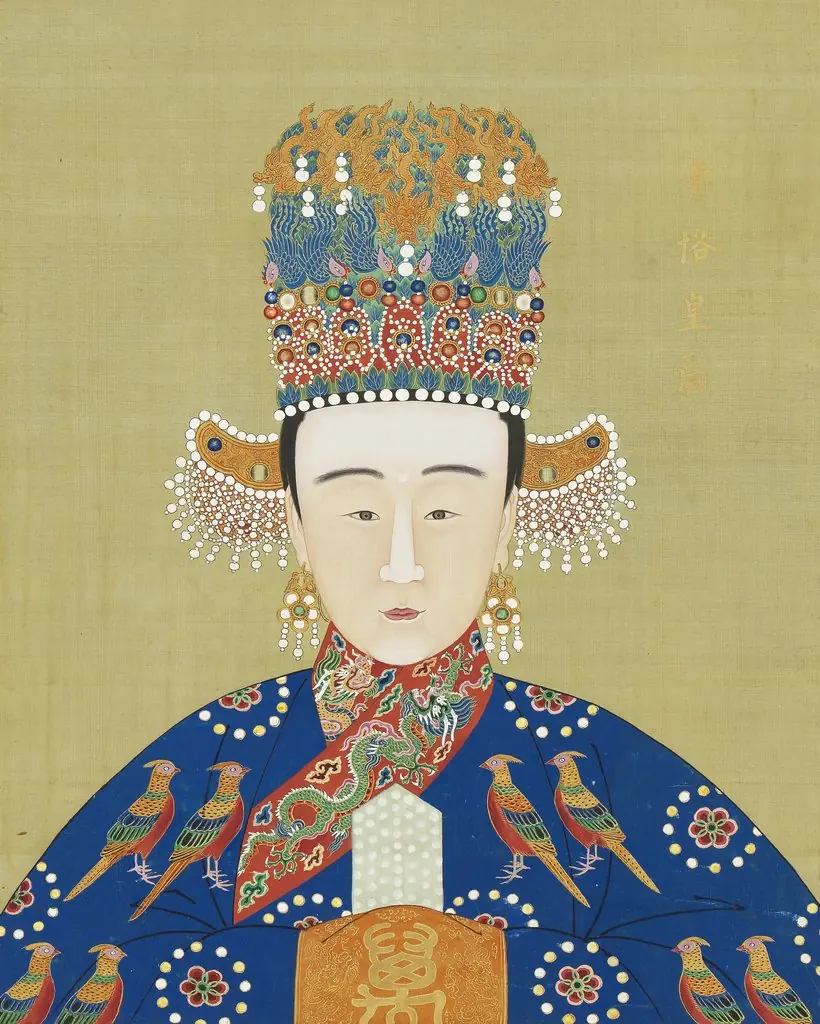
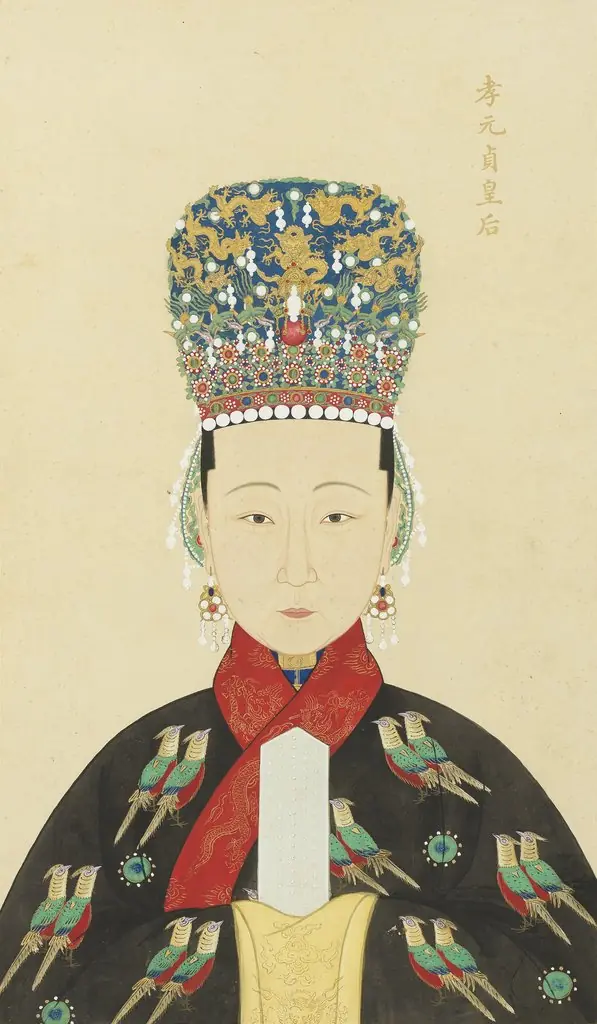
This portrait is one of a pair of half-length imperial portraits from the Ming dynasty, depicting Empress Xiaoduan. Rendered in the formal court style, it presents the subject from the chest upward against a plain background. The composition emphasizes regal stillness and ceremonial attire, adhering to conventions of Ming imperial portraiture designed to convey authority and lineage.
Subject & Meaning
Empress Xiaoduan, consort of the Wanli Emperor, is portrayed in full ceremonial regalia, her posture and expression deliberately restrained to reflect Confucian ideals of composure and dignity. The elaborate headdress and embroidered robe signify her status as empress consort, while the bird motifs symbolize virtue and celestial harmony, reinforcing the moral and cosmic legitimacy of the imperial family.
Technique & Style
Executed in ink and color on silk, the painting employs fine brushwork to render intricate textile patterns and delicate ornamentation.
Executed in ink and color on silk, the painting employs fine brushwork to render intricate textile patterns and delicate ornamentation. Facial features are rendered with subtle modeling, avoiding individualized expression in favor of standardized imperial iconography. The flat, unadorned background focuses attention entirely on the figure and her symbolic attire, typical of Ming court portraiture.
History & Provenance
The portrait originated in the Ming imperial collection and was likely part of a set commissioned to honor deceased emperors and empresses. It remained in the Forbidden City until the early 20th century, when it was transferred to the National Palace Museum in Taipei along with other imperial artifacts following the political upheavals of the 1940s.
Context
Ming court portraits served ritual and political functions, displayed in ancestral halls to affirm dynastic continuity. These images were not personal likenesses but standardized representations governed by strict protocols. The use of specific motifs, colors, and headwear was codified by sumptuary laws, ensuring visual consistency across generations of imperial figures.
Legacy
This portrait contributes to a broader corpus of Ming imperial imagery that continues to inform scholarly understanding of court culture and gendered authority. As part of the National Palace Museum’s collection, it remains a key reference for studies of Chinese dynastic portraiture, textile symbolism, and the visual language of power in late imperial China.
Artist & collection

 Domestic Scene
 Giacomo and Cardinal Marco, investing Andrea, Abbot of San Zeno, with his Benefice
 The Nymph of Fontainebleau
 Portrait of a Woman
 Madonna and Child with Saints in the Enclosed Garden
 Venus and Minerva
 Family Group of Four on Sofa
 Wall painting from Room H of the Villa of P. Fannius Synistor at Boscoreale