Artwork
明代帝后半身像册(二)-孝懿庄皇后
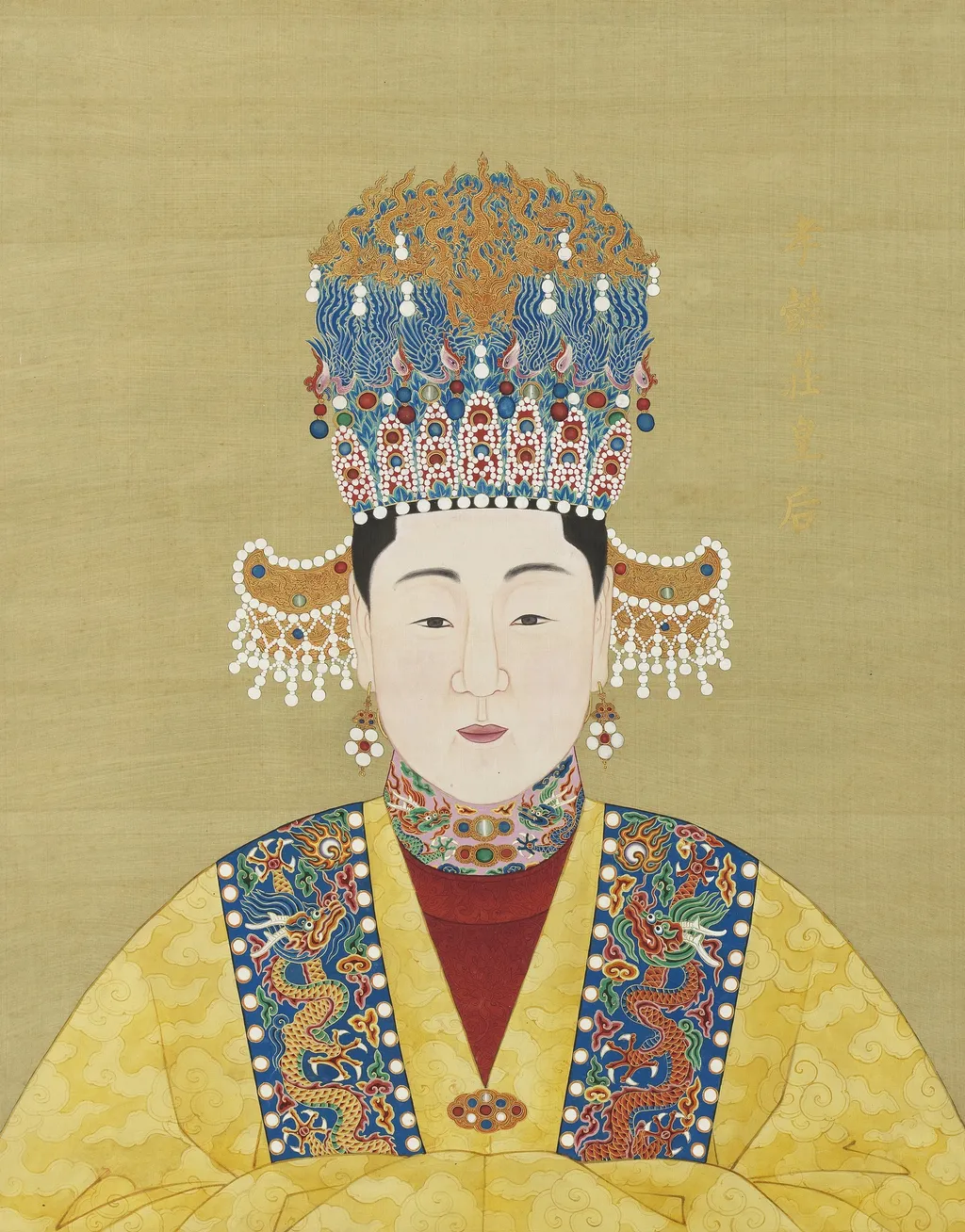
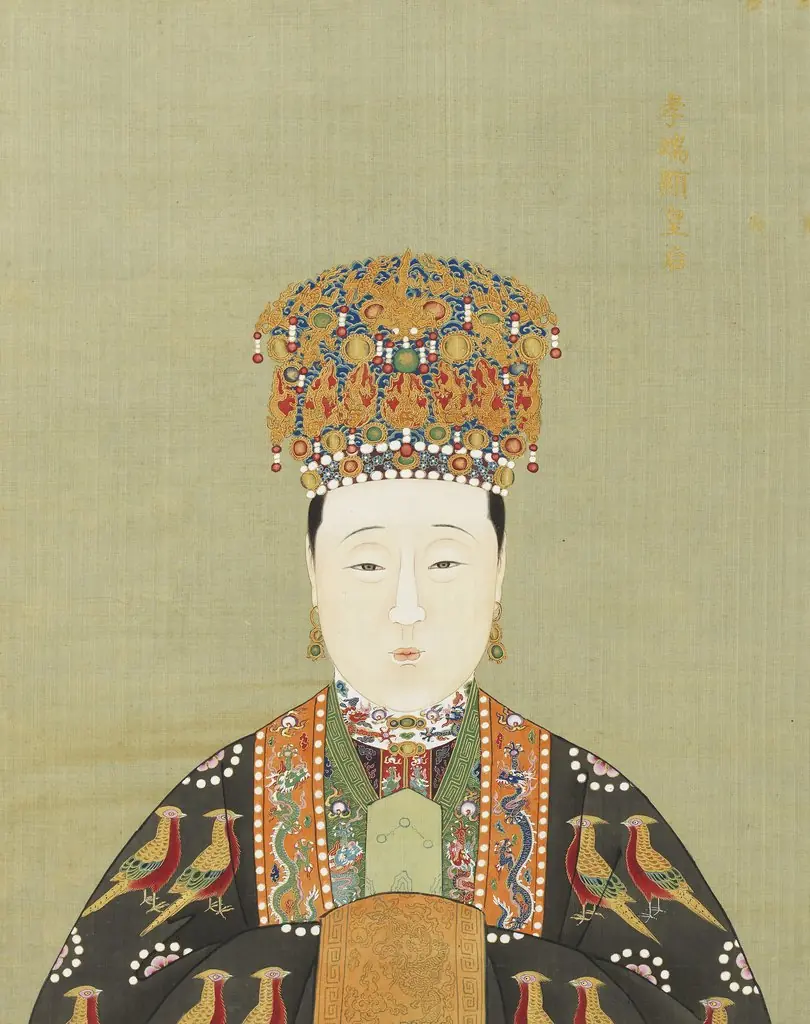
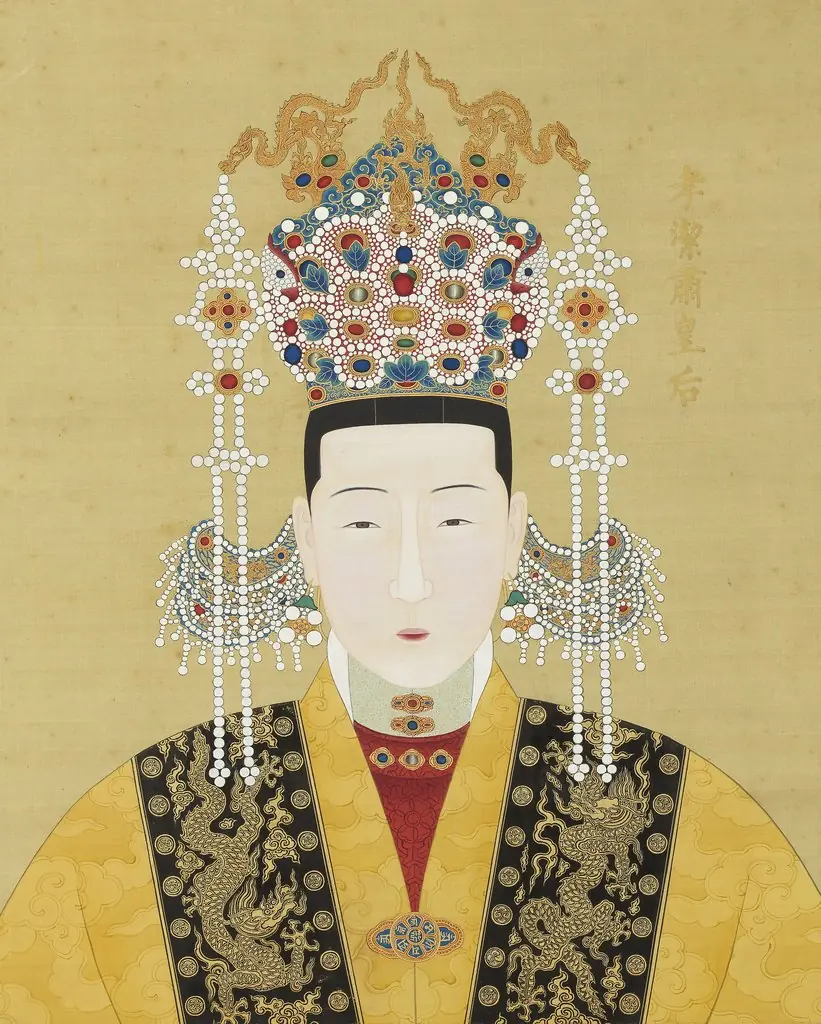
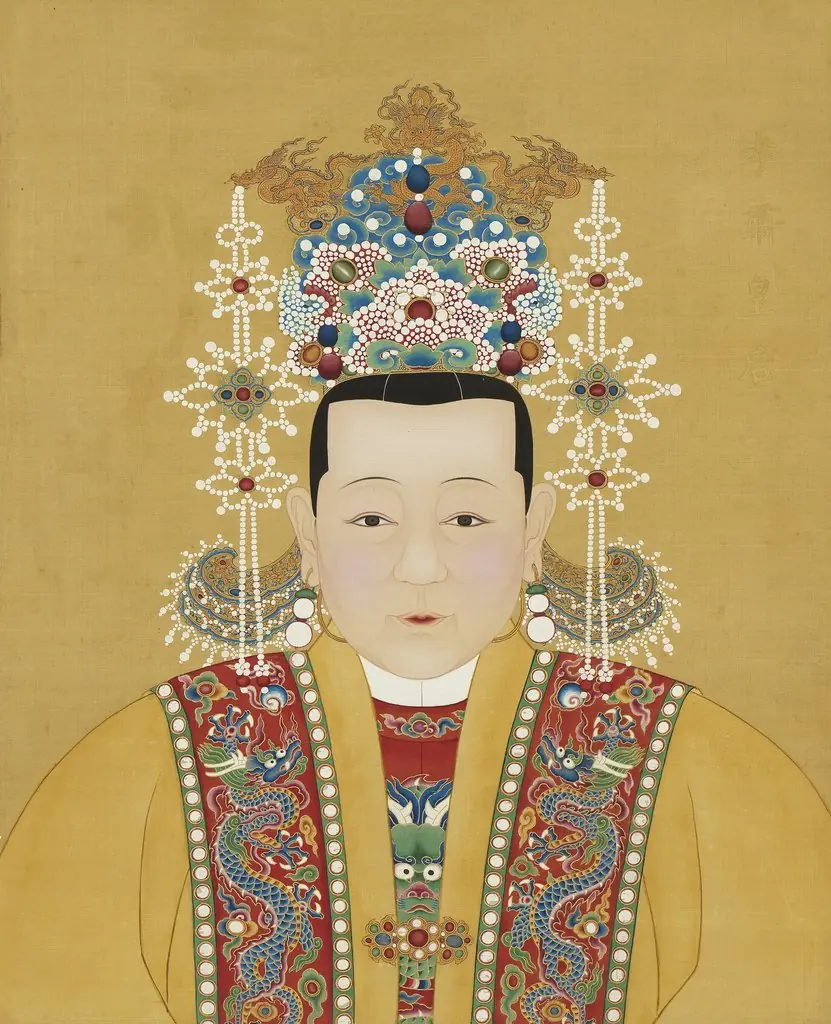
明代帝后半身像册(二)-孝懿庄皇后 is an unspecified painting by Unknown. It dates from 1850 and is held in the collection of the National Palace Museum. This portrait is one of a pair from a明代 imperial album depicting empresses in formal attire.
About this work
Overview
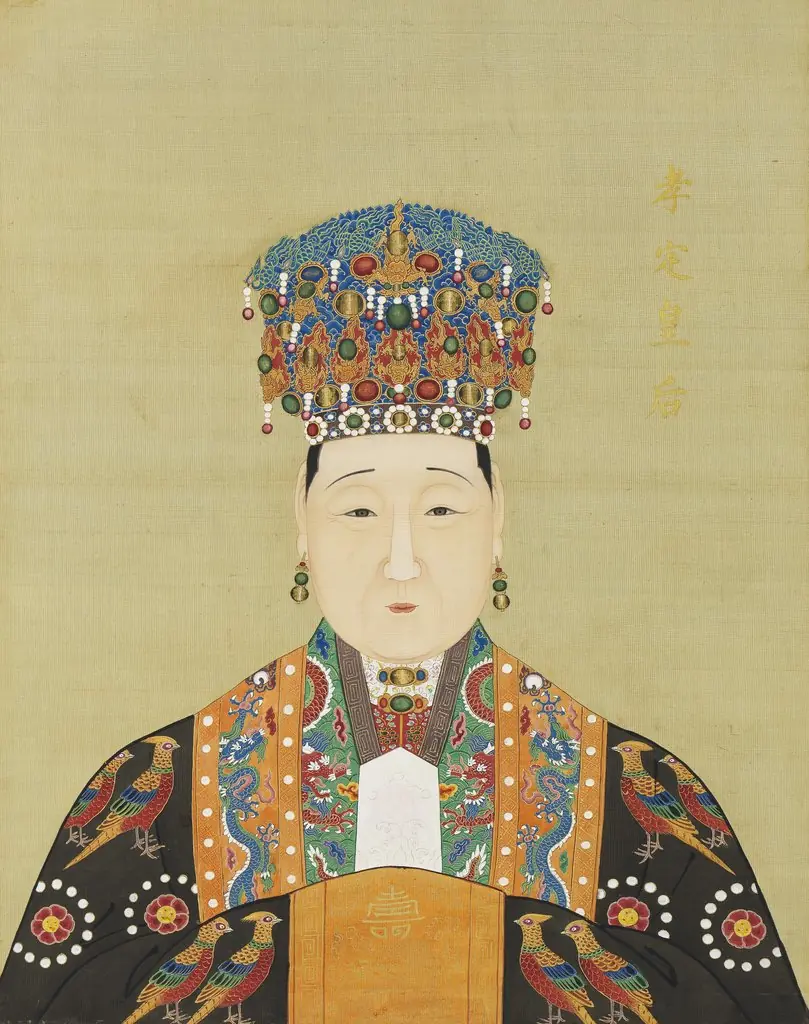
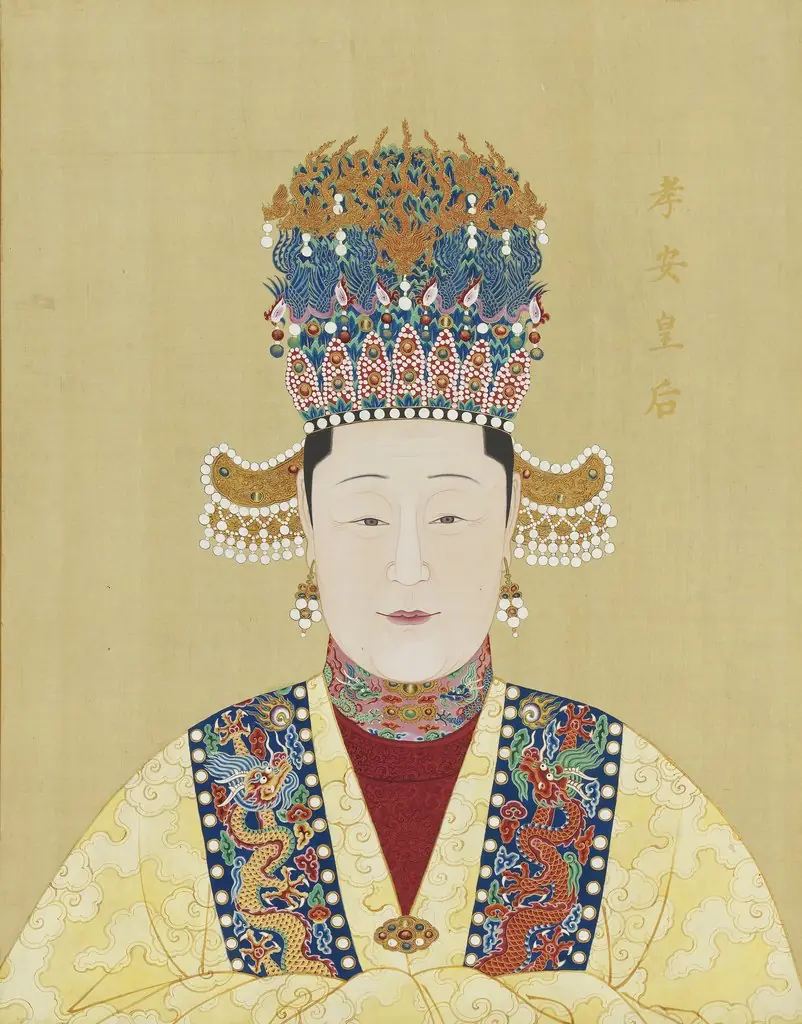
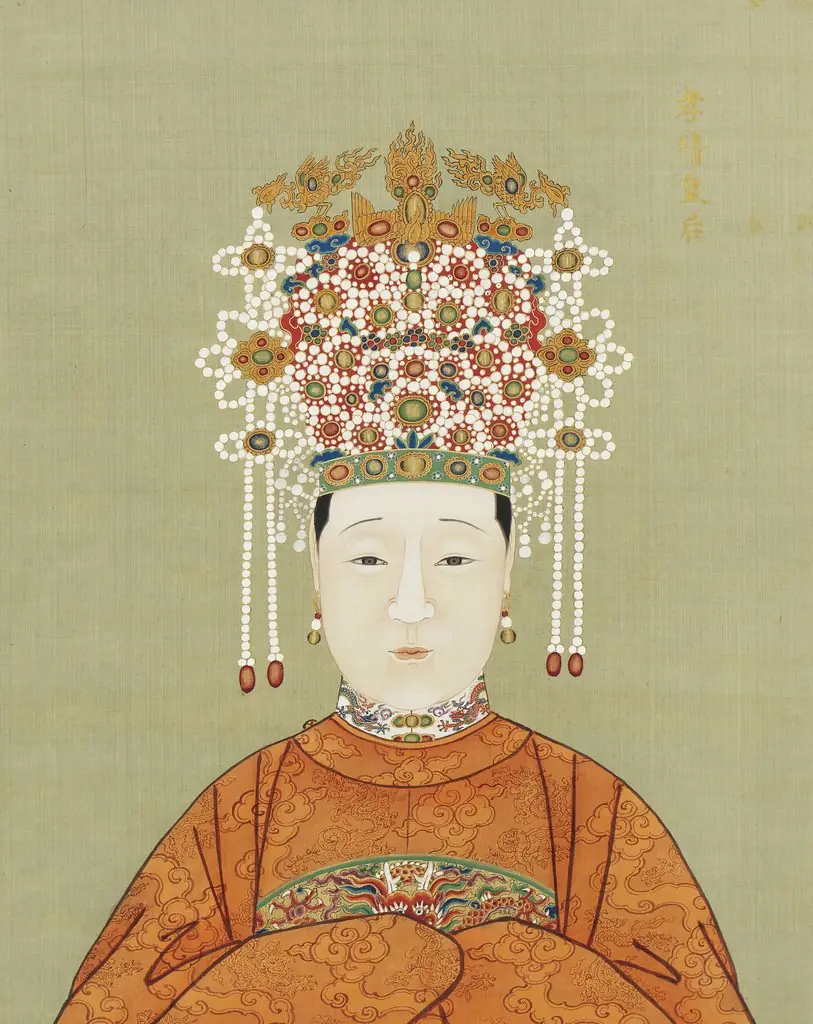
This portrait is one of a pair from a明代 imperial album depicting empresses in formal attire. Executed in ink and color on silk, it presents孝懿庄皇后 in ceremonial dress, rendered with precise detail and restrained elegance. The work belongs to a series commissioned to document the visual identity of the imperial family, emphasizing status through regulated costume and symbolism.
Subject & Meaning
The dragon motifs on her robe signify imperial authority, while the elaborate headdress and dangling earrings reflect courtly protocol and feminine virtue.
The subject,孝懿庄皇后, is shown in full regalia befitting her rank as empress. The dragon motifs on her robe signify imperial authority, while the elaborate headdress and dangling earrings reflect courtly protocol and feminine virtue. The restrained palette and symmetrical composition convey dignity rather than personal expression, aligning with Confucian ideals of order and hierarchy in the imperial household.
Technique & Style
The portrait employs fine brushwork to render textures of silk, metalwork, and gemstone embellishments. Colors are applied in flat, layered washes with minimal shading, typical of Ming court painting. Gold leaf accents highlight the headdress and dragon embroidery, while the neutral tan background isolates the figure, focusing attention on the ceremonial attire and its symbolic elements.
History & Provenance
Created during the Ming dynasty, the portrait was likely produced in the imperial painting academy for archival or ritual purposes. It remained in the imperial collection until the early 20th century, when it was transferred to the National Palace Museum in Taipei following the relocation of artifacts from Beijing. Its survival in near-original condition is rare among court portraits of this period.
Context
This portrait belongs to a broader tradition of imperial portraiture established in the Ming court to reinforce legitimacy and continuity. Similar images were displayed in ancestral temples or used in state ceremonies. The strict adherence to costume codes reflects the dynasty’s emphasis on ritual propriety, where dress functioned as a visual language of power and lineage.
Legacy
The portrait serves as a key reference for understanding Ming court aesthetics and gendered representation in imperial iconography. It informs modern scholarship on how authority was visually constructed in late imperial China. As part of the National Palace Museum’s collection, it continues to be studied for its technical precision and cultural significance within the broader context of East Asian royal portraiture.
Artist & collection

 Domestic Scene
 Giacomo and Cardinal Marco, investing Andrea, Abbot of San Zeno, with his Benefice
 The Nymph of Fontainebleau
 Portrait of a Woman
 Madonna and Child with Saints in the Enclosed Garden
 Venus and Minerva
 Family Group of Four on Sofa
 Wall painting from Room H of the Villa of P. Fannius Synistor at Boscoreale