Artwork
Page from Tales of a Parrot (Tuti-nama): text page
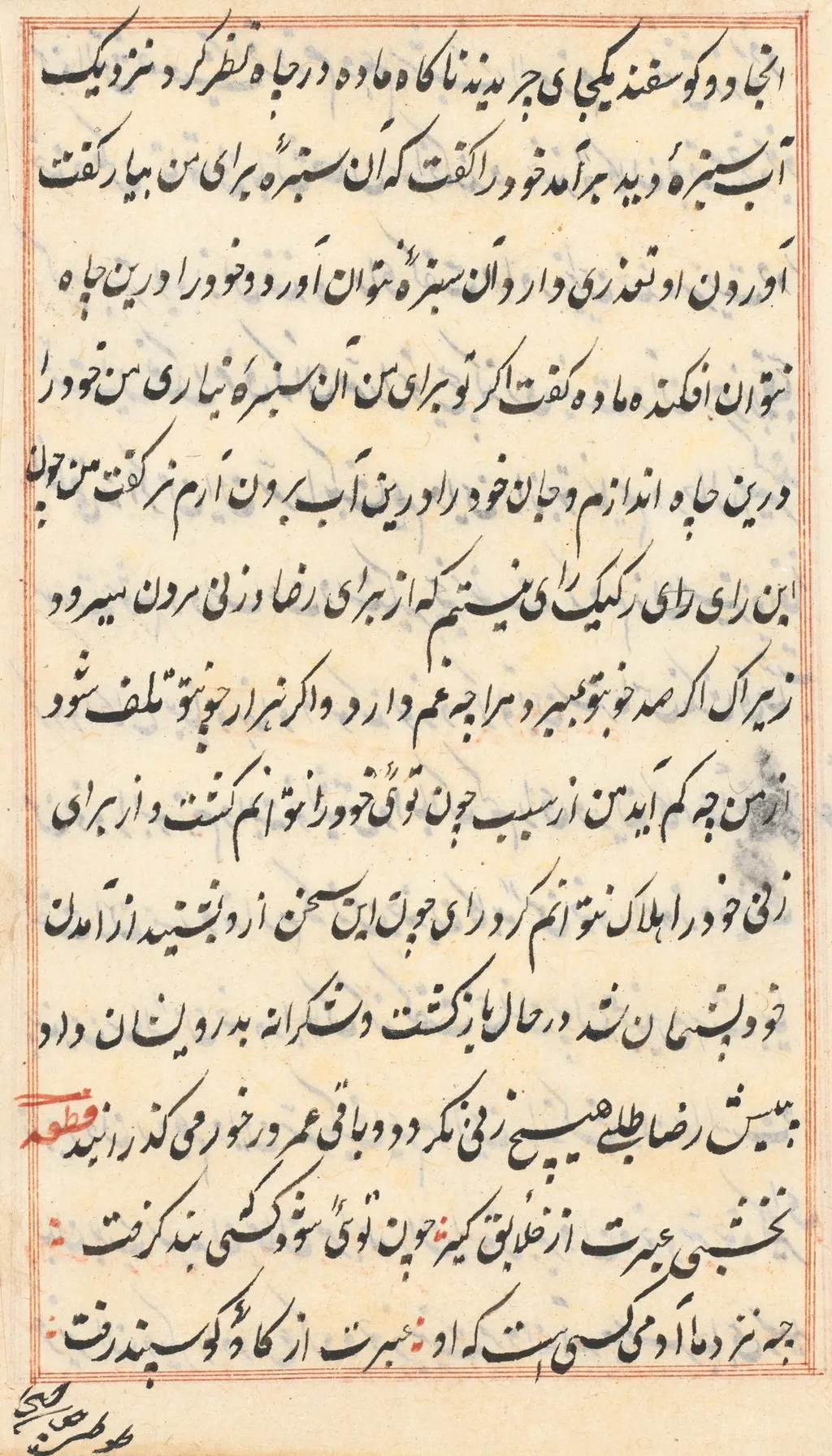
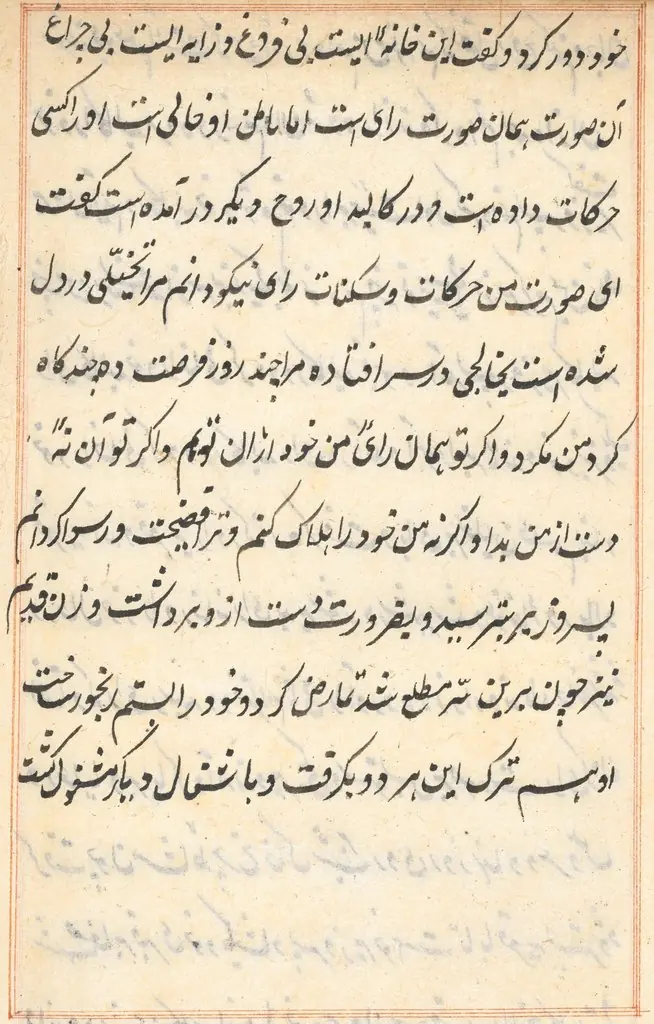
Page from Tales of a Parrot (Tuti-nama): text page is an unspecified painting. It dates from 1560 and is held in the collection of the Cleveland Museum of Art. This object is a single leaf from the illustrated manuscript known as *Tales of a Parrot* (Tuti‑nama).
About this work
Overview
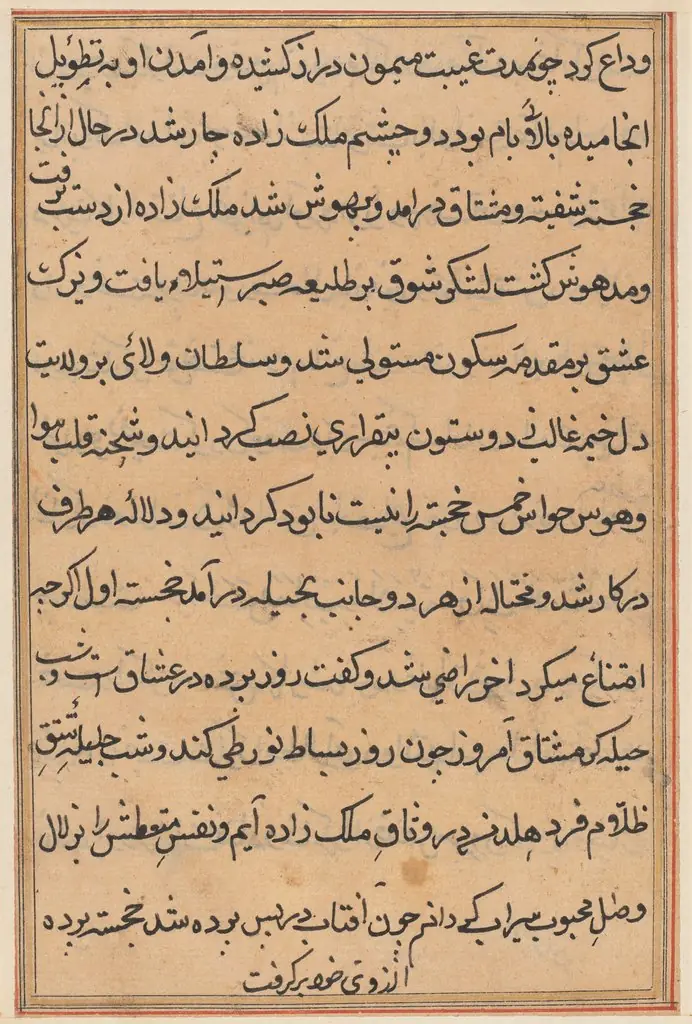
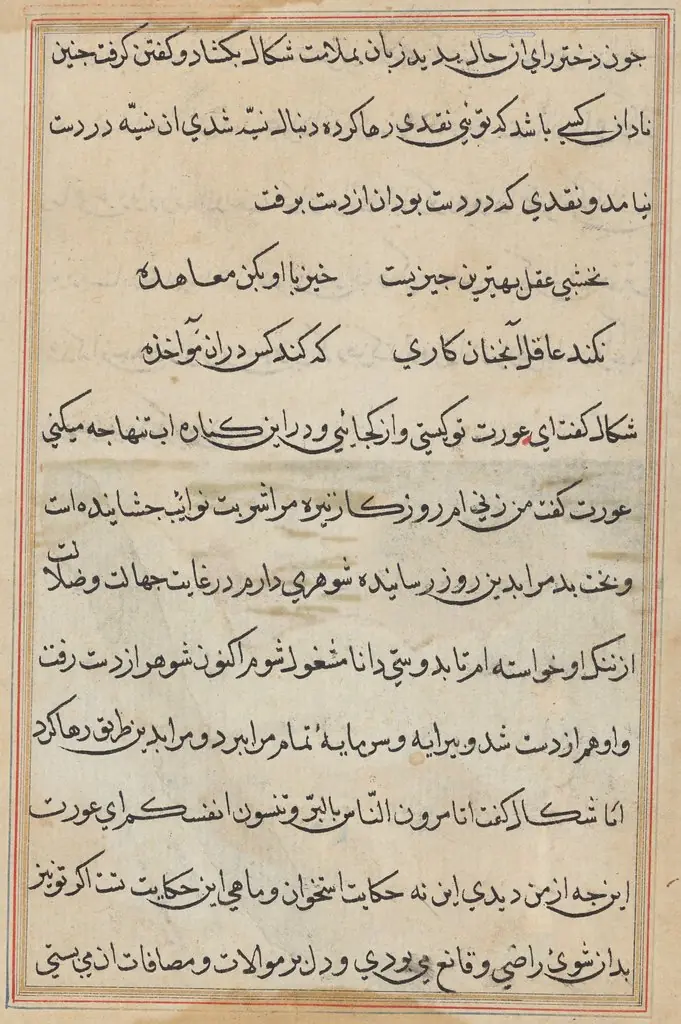
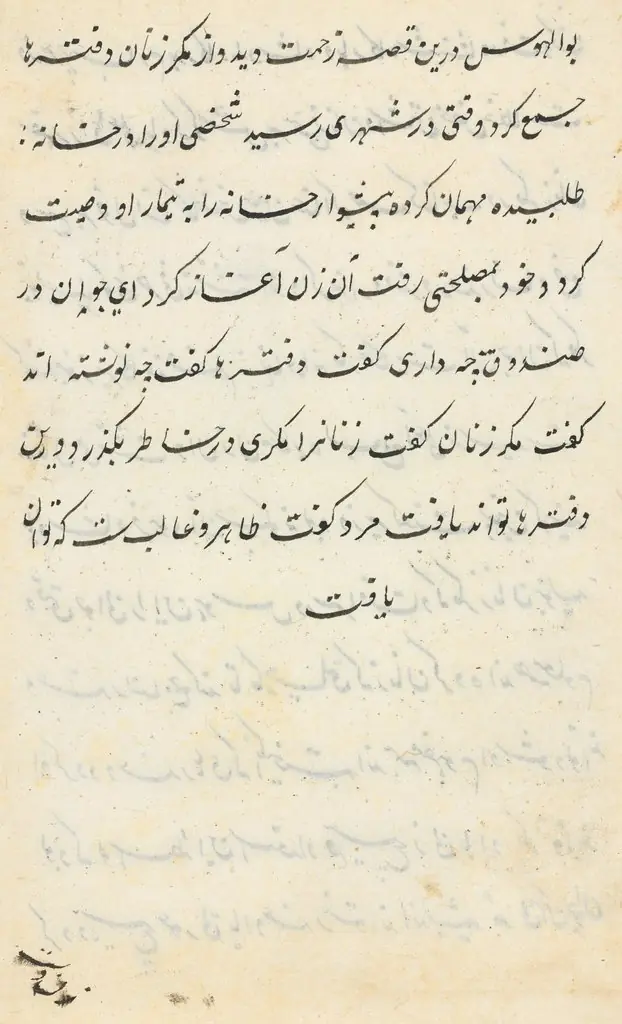
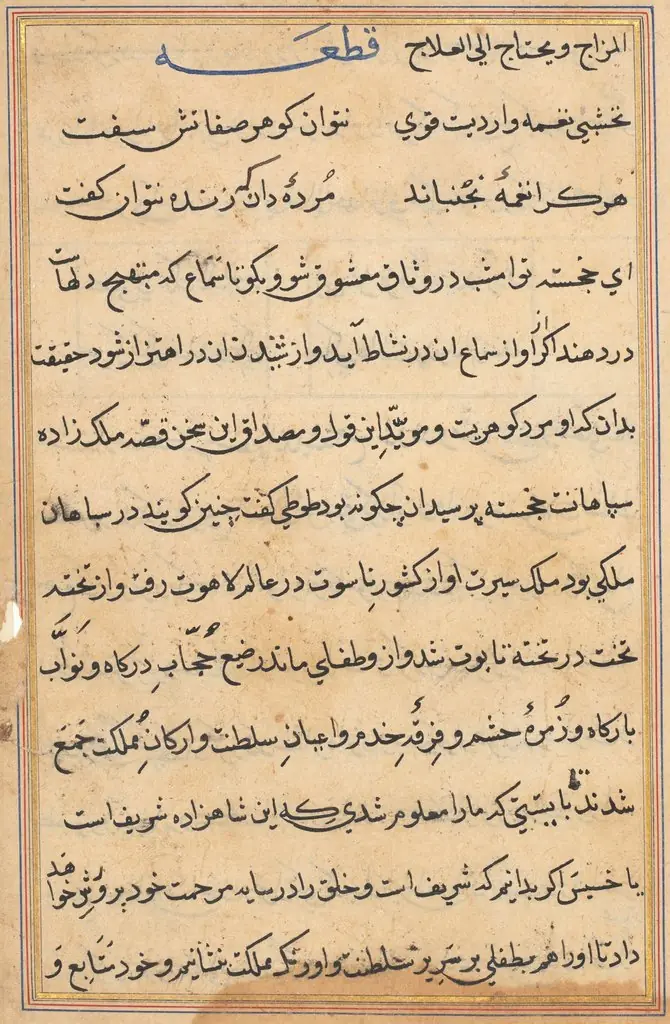
This object is a single leaf from the illustrated manuscript known as *Tales of a Parrot* (Tuti‑nama). The page functions as a textual sheet rather than a pictorial illustration, and it is executed in ink on paper, presenting a dense block of calligraphic script framed by a narrow red border.
Subject & Meaning
The written material consists of a continuous narrative rendered in a flowing, looping script. Small red marks intersperse the black ink, and tiny dots punctuate the ends of lines, likely serving as visual pauses that guide the reader through the story.
Technique & Style
The calligrapher employed black ink with varying pressure, producing lines that range from light to slightly darker tones. The script is tightly packed yet orderly, with each line aligned in neat rows. A thin red border outlines the page, and occasional faint red accents appear within the text, adding subtle contrast.
History & Provenance
The page originates from a Persian manuscript tradition, where illustrated books often combined prose and miniature painting. Although the specific date and origin of this leaf are not detailed, such works were commonly produced for elite patrons in the Islamic world between the 15th and 18th centuries.
Context
Within the broader *Tuti‑nama* manuscript, this textual page would have been interleaved with decorative miniatures that visualized key episodes. The dense script reflects the literary culture of the period, emphasizing the importance of storytelling and moral instruction.
Artist & collection

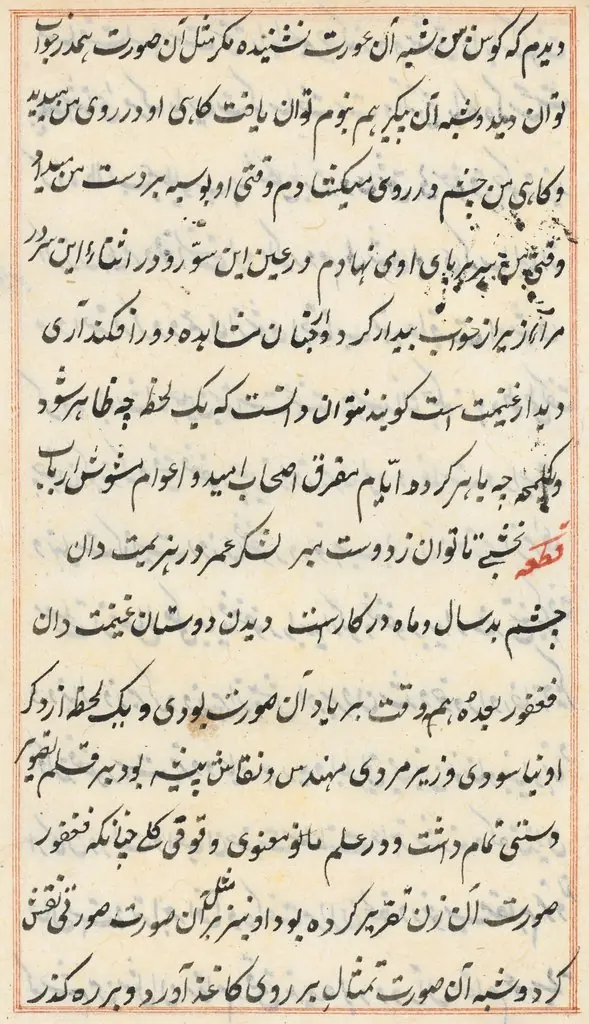 Page from Tales of a Parrot (Tuti-nama): text page
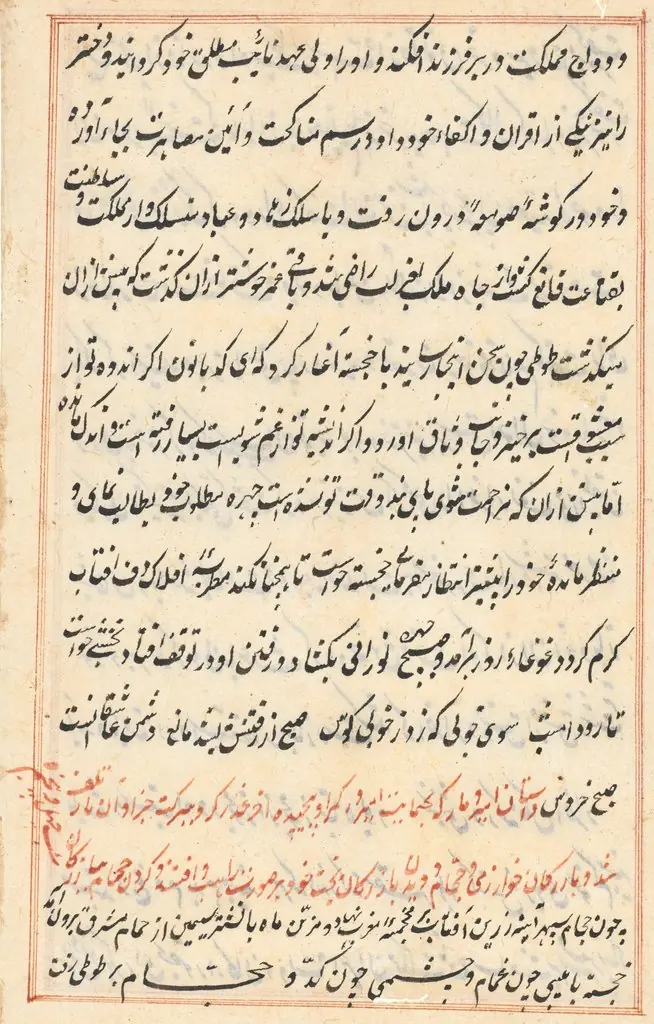 Page from Tales of a Parrot (Tuti-nama): text page
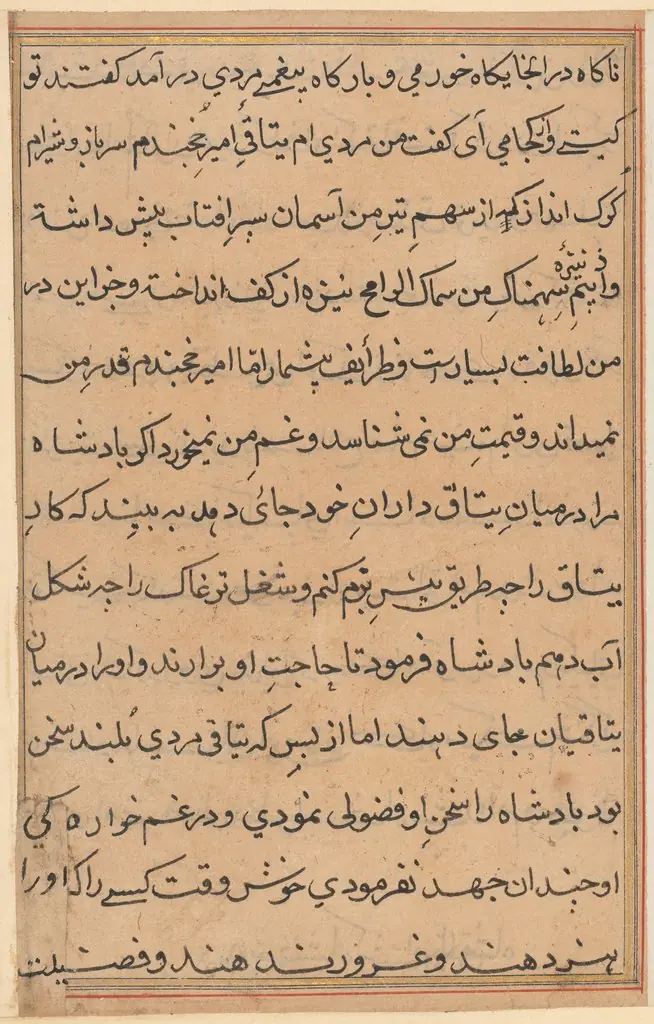 Page from Tales of a Parrot (Tuti-nama): text page
 Page from Tales of a Parrot (Tuti-nama): text page
 Page from Tales of a Parrot (Tuti-nama): text page
 Page from Tales of a Parrot (Tuti-nama): text page
 Page from Tales of a Parrot (Tuti-nama): text page
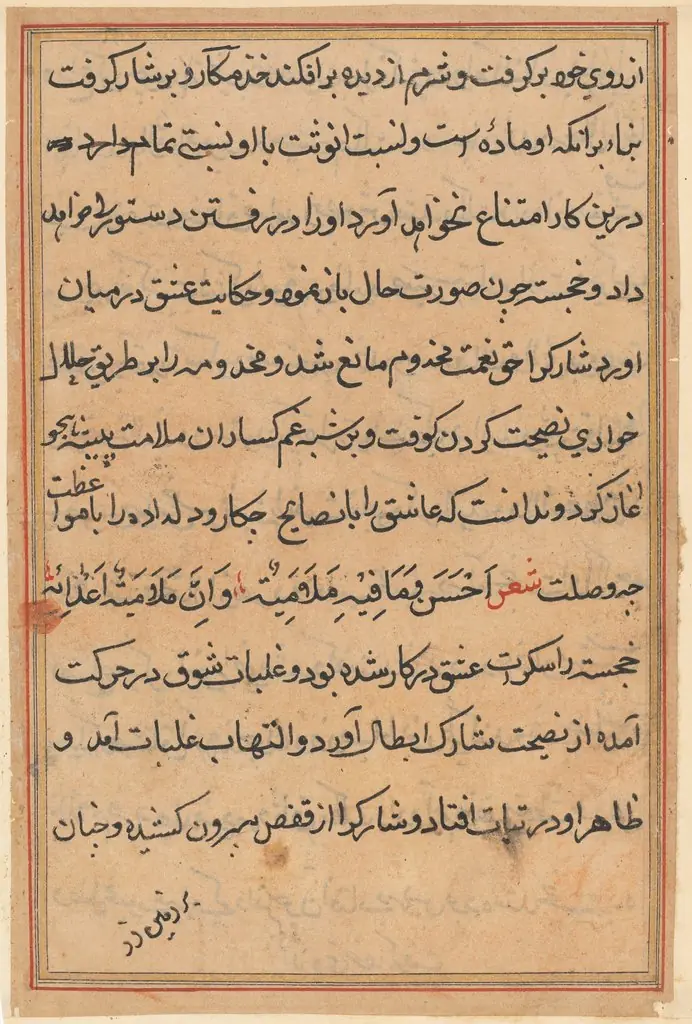 Page from Tales of a Parrot (Tuti-nama): text page
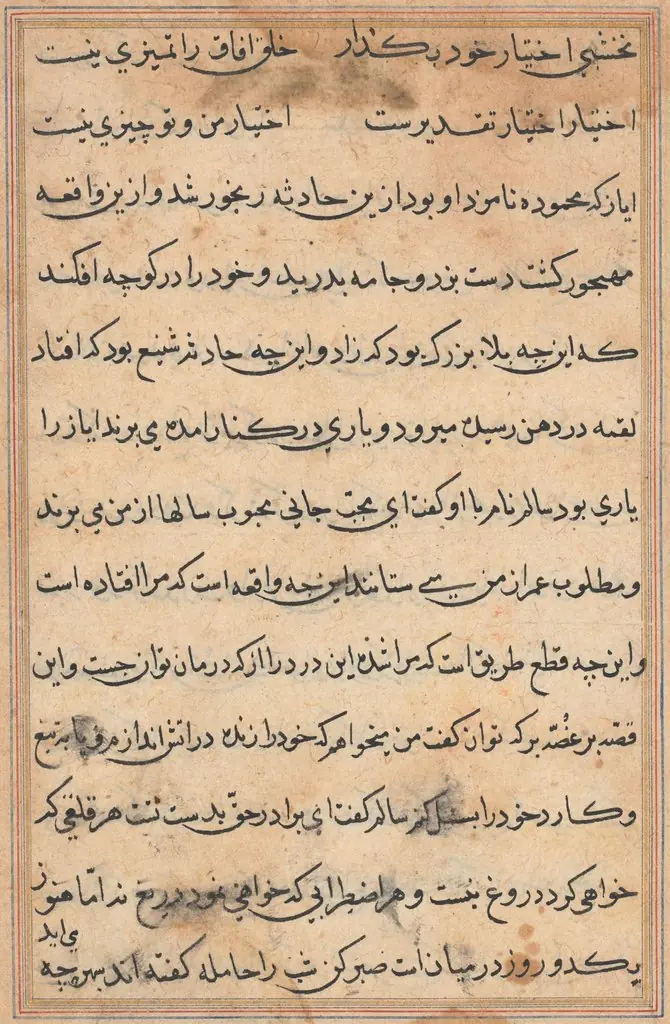 Page from Tales of a Parrot (Tuti-nama): text page
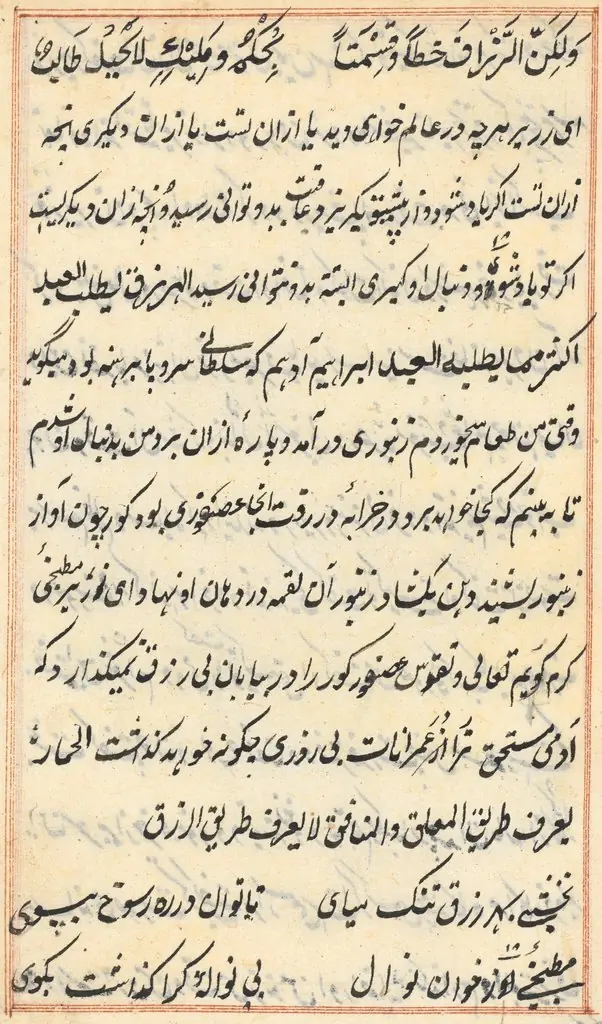 Page from Tales of a Parrot (Tuti-nama): text page
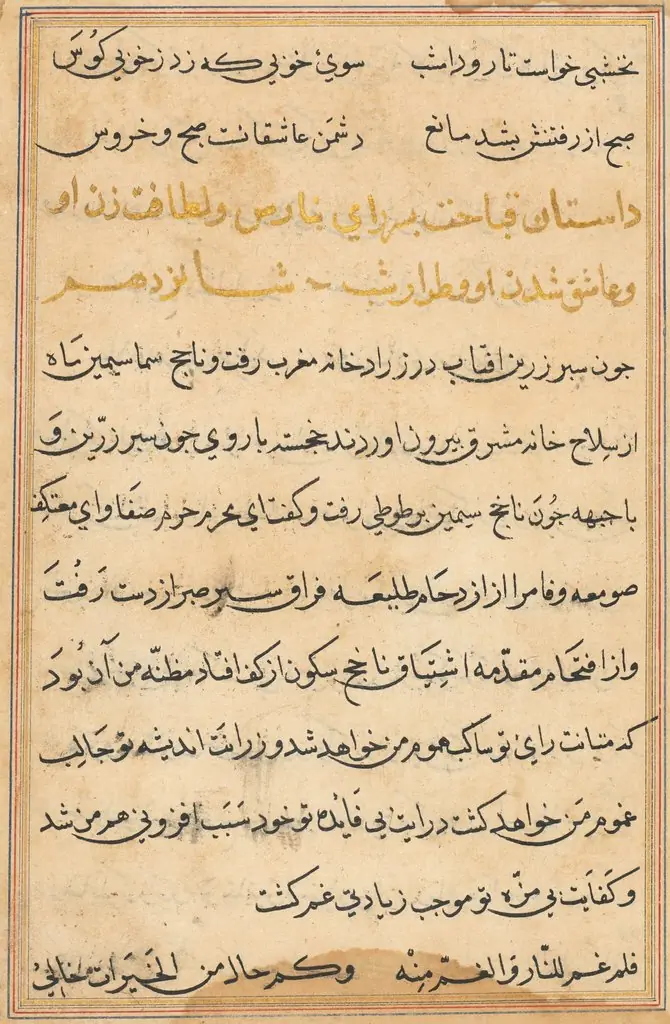 Page from Tales of a Parrot (Tuti-nama): text page
 Page from Tales of a Parrot (Tuti-nama): text page